
Features
COLLEGE OF SURGEONS OF SRI LANKA

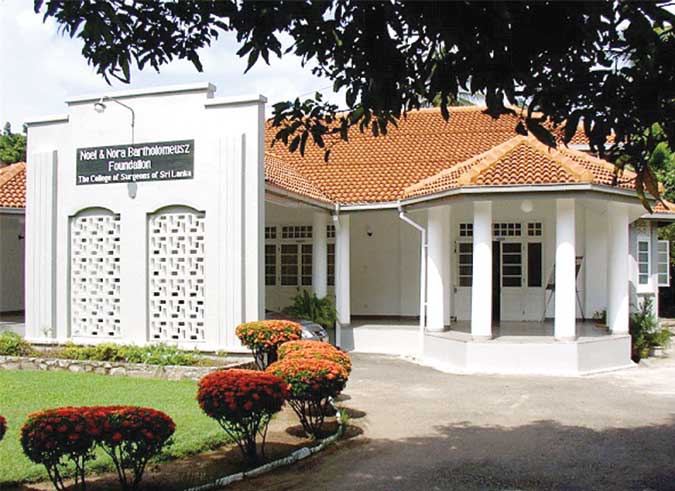
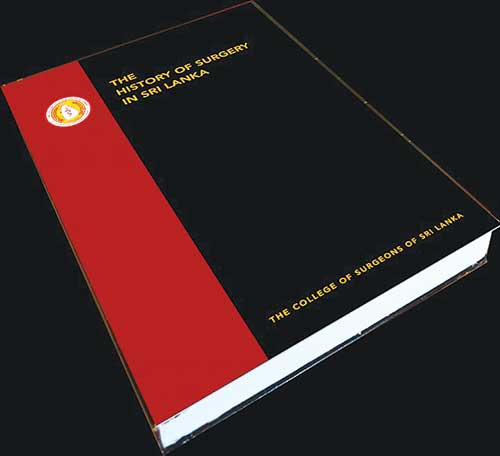
“HISTORY OF SURGICAL SERVICES IN SRI LANKA FROM EARLIEST TIMES TO 2021”
by KAMALIKA PIERIS
In 2022, the College of Surgeons of Sri Lanka celebrated its 50th anniversary by publishing, a History of Surgical services in Sri Lanka from the Earliest Times to 2021.” The book examines both schools of surgery known in Sri Lanka, the indigenous system practiced in ancient times and the western one which is practiced today. It offers much new information on the ancient system of surgery and provides definitive information on the western system which replaced it.
The book documents the evolution of modern surgery in Sri Lanka, from its beginnings, when surgeons worked with limited resources and produced good results. The book then goes on to provide a comprehensive, up to date, account of the development of contemporary operative surgery in Sri Lanka, with special emphasis on the individual surgeons who pioneered the sub-disciplines and those who are carrying on the tradition today. It is a definitive work on modern surgery in Sri Lanka
The College of Surgeons said it had several goals in mind when it planned this book. Firstly, to ensure that present day surgeons know about the past, secondly, to show the steady evolution of surgery “amidst odds” to the intelligentsia as well as the doctors, and thirdly, to show the range of sub specialties that are now available island wide and how they were developed. That explains the size of the book.
The book is a large, heavy tome of over 500 pages, profusely illustrated with fine color photographs on quality paper, making it look like a coffee table book, which it is not. It is a very comprehensive, reliable academic work, consisting of texts written by experts, collated and edited by Channa Ratnatunga, a former President of the College of Surgeons. It is a mammoth work and a magnificent achievement.
The section on ancient medicine starts with a comprehensive political history written on invitation by the eminent historian KM de Silva. I found three unique items in this section. Firstly, there is a pie chart of the royal capitals of Sri Lanka, indicating the period of time for each capital, starting with Anuradhapura and ending with Kandy. I have not seen such a pie chart before. It is original and very instructive.
Secondly there are two maps which I have not seen before. One is a map of the route taken by Dutugemunu, when he advanced from Magama to Anuradhapura to oust Elara. The other is a map of Vijayabahu I campaign, to oust the Cholas, illustrating the pincer movement used. Both seem to be original to this book.
The colour photographs in this chapter call for special comment. I have not seen such a profusion of photographs in any history book. They are a varied, interesting collection. They include the earliest potsherd with writing, a pillar edict, a copper plate, a sannasa, a moonstone, the Vatadage, a stone bridge, a map of ancient irrigation works, the ancient sluice discovered at Maduru oya and a beautiful panoramic shot of Kalawewa.
There are other firsts in this section. For the first time ever, scattered references on operative surgery have been gathered together. In addition to the well known documents, the History lists two items which are not well known.
We are told that the Buddhist commentary Kankavitarani refers to 8 kinds of surgical operations and provides a list of instruments for each type. The Historical Manuscripts Commission of 1933 had found dozens of medical manuscripts in personal collections and temples. Purana vihara, Pelmadulla had a manuscript dealing with surgical operations, which had been copied in Sinhala, in 1862.
The compilers have looked for information on the surgical techniques of ancient times. They found one statement on surgical training. In Visuddhimagga, Buddhagosa had made an observation on how surgeons were trained. Pupils are trained in the use of the scalpel by learning to make an incision on a lotus leaf placed in a dish of water, he said. They must make the incision without cutting the leaf in two or pushing the leaf into the water.
The chapter titled, ‘Surgical anecdotes from the Culawamsa’ studies the Mahavamsa data from a surgeon’s point of view. It notes that King Buddhadasa (337-365 AD).has practiced operative surgery. He had treated a snake that had a tumor in its belly. The King had slit open the belly of the snake, taken out the tumor, applied medicine to the wound and cured the snake.
Buddhadasa is also credited with impossible operations, the History said. Buddhadasa had performed an operation for correction of a mal position of a foetus. He had also split the cranium of a patient and removed a toad who had grown inside it, then reconstructed the bisected cranium. Surgeons did not think these operations were likely.
Parakramabahu I (1153-1186) knew medicine, a fact which is rarely mentioned in accounts of this king. Mahavamsa says Parakramabahu I had done a ‘ward round’ surrounded by physicians. He had checked on the medicine given to patients, instructed on mistakes made and by his own hand skillfully showed the use of instruments. “To skilful physicians who were quick at identifying illness and were well versed in textbooks of medicine Parakrama Bahu gave a stipend according to their expertise and made them practice their art day and night,” said the Mahavamsa.
The History of Surgery has an extensive section on surgery during the British administration. it gives the names of the surgeons of this period and the work they did. A. M de Silva, who belonged to a later generation of this group, had removed a foreign body from the trachea of a patient using a magnet tied to a piece of string lowered into the trachea through a tracheotomy.
Surgeons who came after him had interesting observations to relate. When Milroy Paul was stationed in Jaffna in 1931, he found that the brass oil lamp in the operating theatre was not to be used for operations. It must be kept intact for the annual audit. So no operations were performed at night.
ATS Paul recalled that in the 1930s and 1940s surgeons wore waistcoats in Colombo, despite the hot weather. Each week a day was set apart for operations of paying patients in an operating theatre specially reserved for them. It had marble flooring imported from Italy.
The first surgeons were “General Surgeons” who were expected to deal with all surgical cases that came their way. They were sent to the provincial hospitals as well as the General Hospital, Colombo. The book features, one by one, province by province, all the hospitals that offered general surgery. There is a descriptive note on each hospital and photographs of all the surgeons who are currently working there and those who were there in the past.
In the early period, when there were no specialist surgeons, the general surgeons had voluntarily engaged in specialist surgery. They did this as a service. This is not well known. The pediatric surgical service at Lady Ridgway Children’s Hospital in Colombo was for a long time run by general surgeons who agreed to operate there.
General surgery eventually gave way to surgical specialties. The book allocates a separate chapter to each specialty, written by specialists in that subject. The chapters follow a set pattern. How the specialty started, its entrenchment in Colombo and its development in each of the provinces. This is given in great detail, with much description, and includes a table which shows the expansion of the specialty in each province, by number of beds and number of surgeons. Every chapter carries biographical information on each of the surgeons, past and present, who practiced that specialty.
Each chapter ends dramatically with an eye catching map showing the surgeons available in this specialty in the island as at 2021. This is presented in a novel manner, with photographs of the surgeons, neatly blocked with arrows linking them to the province they are working in. This is original and very effective.
History of Surgery
records that surgical specialties were introduced to the state health sector in the late 1950s. Specialist surgeons did not find it easy to establish their specialties in a hospital. The Ministry of Health sent them for training, appointed them as specialists on their return, got them the surgical instruments they asked for and then forget about them. The rest was up to the personal initiative of the surgeon. Urology is a good example.
Urology was established as a specialty in Sri Lanka in 1954 in the General Hospital, Colombo. Dr G.N. Perera was the sole urologist for the whole country at that time. He had just 10 beds, no house officers and had to share operating time with other surgeons.
Decades later, In Kurunegala the urologist only had a single afternoon operating session a week but with the support of the anesthetist and nurses, he operated from 2 pm to 7 pm. The Inner Wheel club had helped to develop the urology ward and clinic in Kurunegala.
Dr. AML Beligaswatte, in Kandy, was asked to treat a VVIP with a urological condition. Dr.Beligaswatte had explained that he could not carry out the necessary surgery as he did not have the facilities. Within two months he had all the equipment he needed.
One of the earliest surgical specialties available in Sri Lanka was heart surgery. Between 1954 and 1975 625 cases of hole in the heart, were corrected. Heart surgery in Sri Lanka has received much praise.
In 2008 US Cardiac Surgeon Dr J.R.Torstveit stated in an interview with the Daily News that Sri Lanka was on par with the best when it came to open heart surgery on children. The success rate at Lady Ridgway Hospital had gone beyond 95 % which places it on par with the very best in countries like US and UK. This was attributed to the selfless dedication and commitment by both local doctors and authorities.
India did a survey of heart surgery in Bangladesh, Bhutan, Nepal, Maldives, Pakistan and Sri Lanka and this was reported in Indian Heart Journal in 2017. The number of cardiac operations done in Sri Lanka, compared to its population was far superior to that of any other South Asian nation, including India, it said.
Transplant surgery started in Sri Lanka on the initiative of three doctors, H. Sheriffdeen, Rizvi Sherif and Geri Jayasekera. These three have not, in my view, received the recognition due to them for their successful introduction of transplant surgery in Sri Lanka.
In 1978, these three doctors, observed that patients were going to India for renal transplants. They discussed the possibility of setting up a renal transplantation programme in Sri Lanka. This first venture into transplant surgery was carefully planned over a period of time. Sheriffdeen used his sabbatical leave to undergo training in renal transplantation in the UK and USA. Rizvi Sheriff set up the necessary dialysis unit in 1980-1985, first in the private sector at Lanka Medicare hospital t and later in the National Hospital, Colombo.
Sheriffdeen returned after training in 1981 and preparatory work for kidney transplant started. .A high level team was assembled for the first operation. This consisted not only of the operating theatre team, but also specialists from other subjects such as pathology and physiology. Nurses were specially trained. A specialist on dialysis and technicians from a private lab were brought in. The team also had an adviser on medico- legal issues.
In 1985 the first living donor kidney transplant operation was successfully carried out by this team at Rutnams Private Hospital, Colombo as permission to carry out this operation in the National Hospital was denied.
Two years later, National Hospital had its first kidney transplantation operation, done by the same team. First pediatric transplantation was also done there in 1987 by them. in 1997 the first transplant using organs from brain dead person (cadaveric) took place at the same hospital.
There were legal issues involved in transplant surgery. The Sheriffdeen team lobbied the Minster of Health and obtained the Transplantation of Human tissues Act no 48 of 1987. With the development of transplant surgery, there was also the need to find donors, and doctors Island wide were alerted about the need to obtain organs from brain dead persons.
The first pediatric renal transplant program in the island was developed at Peradeniya Teaching Hospital in 2004. Peradeniya teaching Hospital is recognized today as the only unit that provides Pediatric kidney transplant service in Sri Lanka. The Medical Faculty at Peradeniya greatly supported this venture and is very proud of its achievement in pediatric transplant surgery.
Initially local doctors had to go to UK to quality as surgeons. Apart from the expense, this had two other disadvantages, said History of Surgery . The surgical illnesses in the west were different to those in Sri Lanka and the operation theatre facilities were far superior. on their return doctors found it difficult to work using the limited facilities in the provincial hospitals. Doctors should be trained in the environment in which they will be working and there is a clear need for local Post graduate medical training”, said the senior surgeons in Sri Lanka.
In 1973, the Advisory Committee on Postgraduate Medical Education recommended to the government that it should start to train medical specialists locally. The Postgraduate Institute of Medicine (PGIM) was set up for this purpose at the University of Colombo. In 1980 the government decided that the degree of Master of Surgery given by the PGIM would be the only qualification recognized in the state health sector.
That was the end of the foreign qualification but the foreign link was retained. The examinations were conducted at the Medical Faculty, Colombo jointly with examiners from the Royal College of Surgeons, London. The written papers for the first MS Part 1 was held, under police guard at a neutral venue, the Agrarian Research and Training Institute, in Colombo, as the GMOA was opposed to local post graduate qualifications.
The ready support given by the medical profession to this sudden transfer of qualifications from London to Colombo has not, in my view, received the appreciation it deserves. This venture, would not have succeeded if not for the whole hearted support of the specialists who were already in service in Sri Lanka.
Local postgraduate training in surgery was an important factor in the development of surgery in Sri Lanka said the History of Surgery. The general and specialized services expanded over the last four decades specifically due to the PGIM. The PGIM training in surgery is much in demand in the region and there are more than a dozen foreign students in the progamme. The PGIM could be an important regional center in the future, it added.
History of surgery is a gold mine of medical biography. The biographies are presented in three clusters, 1860-1910, 1911-1948 and 1949-1975. These biographies are neat and well written. The biographies focus on the professional career of the surgeon, not his personal life. They record the hospitals the surgeon worked in, appointments held and contributions made to surgery. Anecdotes and reminiscences from fellow surgeons, seamlessly woven together by the Editor, make these biographies come alive. Each biography has a pleasing photograph beside it.
There is a clever double use of the biographies. The development of general surgery in Sri Lanka during this period is shown through these biographies. We learn that it was R.L.Spittel who had introduced masks and gloves for the surgeons. Nicholas Attygalle was the first to train his assistants and registrars to conduct operations directly under his supervision. They went on to do major operations on their own.
Biographies are also woven into the rest of the book. The sections on surgical specialties carry biographical information on each surgeon who worked in that specialty, in the early days and today. The section on provincial and teaching hospitals provide at least a mention of each of the surgeons who had worked there, at one time or another.
One of the striking features of this book, is the enormous number of photographs included in it .It is most unusual for a work of this type to have so many photographs of such clarity and good quality. The majority of the photographs are photos of surgeons. They are part of the biographical slant in the book .But they are also cleverly used to function as lists. For instance, instead of an inanimate list of names we have photographs of all the doctors who had worked in a specific hospital. In History of Surgery the editors have used not only photographs, but lists, tables and maps, very cleverly as a substitute for text. .This must be applauded.
This History has been well researched and each chapter has a long list of references at the end. It is printed on high quality paper, well bound and at the grossly under priced rate of Rs. 7,500 a very worthwhile purchase. The book ends with the hope that “in the future we will be able to both innovate and lead the world in the management of the common surgical disorders we see in Sri Lanka “.
“History of Surgery” published by the College of Surgeons of Sri Lanka, priced at Rs 7,500. is available at the College of Surgeons office , No 6, Independence Avenue, Colombo 7.


by Jehan Perera
The NPP government is going after powerful figures from the past and present who have engaged in corruption, fraud and criminal activity in a way that no previous government in Sri Lanka has done. Former ministers, politicians and senior state officials are among those facing investigations and legal proceedings. The government has placed before Parliament a document listing 50 cases involving corruption, fraud and other crimes. These include not only financial offences but also cases relating to the Easter Sunday attacks, the killings of Lasantha Wickrematunge and Wasim Thajudeen, the disappearance of Prageeth Ekneligoda and attacks on journalists Keith Noyahr and Upali Tennakoon.
The significance of this effort is that it can demonstrate that nobody is above the law, regardless of political connections or social standing, which will help restore public confidence in institutions that have long been distrusted. It could also recover public resources, improve the investment climate and strengthen the foundations for a more prosperous and just Sri Lanka. When criticised for focusing on the past and not the present, the government position is that these investigations were initiated under earlier governments, particularly between 2015 and 2019, and that it is now allowing investigators to proceed to deal with the backlog without political interference.
But there is an aspect of the government’s approach that is less justifiable. While pursuing past wrongdoing by powerful individuals, it is also advancing a triumvirate of draft laws that could give the state sweeping powers over citizens, organisations and dissent in the present and future. The draft Prevention of Terrorism legislation, the Prevention of Organised Crimes Bill and the NGO Registration and Supervision Bill raise serious questions about the over-centralisation of power. Each of these laws strengthens the powers of the state while weakening the rights and safeguards that protect people from their misuse and thus questions the basic rights of people in democracy where ‘the power of the people is vested in the government’. This is a recipe for future misrule rather than the rule of law. As the well-known saying goes, power corrupts and absolute power corrupts absolutely.
Proposed Laws
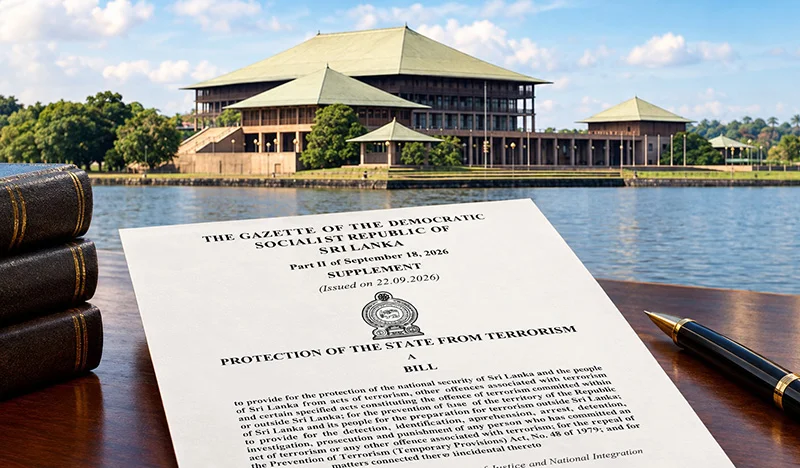
The real test of system change, for which the government obtained an overwhelming mandate, requires not only a government willing to hold others accountable, but one prepared to subject itself to the same principles of legality, transparency and restraint. The three proposed laws that are particularly important in this regard are the Protection of the State from Terrorism Bill, the Prevention of Organised Crimes Bill and the NGO Registration and Supervision Bill. Each of these draft laws has been presented as serving a legitimate purpose. Preventing terrorism, combating organised crime and ensuring that NGOs do not facilitate money laundering or terrorist financing are proper responsibilities of the state. Sri Lanka has international obligations in these areas, and no responsible government can disregard them. However, the existence of a legitimate objective does not justify every means adopted to achieve it.
The proposed Protection of the State from Terrorism Bill illustrates the problem. Although its definition of terrorism draws on a model developed by a former United Nations Special Rapporteur, the Human Rights Commission of Sri Lanka has warned that the definition of terrorism extends beyond the model and could bring legitimate political protest, trade union action and civil disobedience within the scope of counter-terrorism legislation. Its concerns also include prolonged detention, inadequate judicial oversight and restrictions on access to legal counsel. These are objections that go to the heart of the relationship between the citizen and the state. The government cannot credibly promise to protect democratic freedoms while creating powers that could be used to restrict them. It is necessary for the government to reassess the draft through transparent consultation and revise provisions that could criminalise legitimate dissent.
The Prevention of Organised Crimes Bill raises similar concerns. It is presented as giving effect to the United Nations Convention against Transnational Organised Crime, which Sri Lanka ratified in 2006. The Centre for Policy Alternatives (CPA) has argued that the convention does not require many of the bill’s provisions. The proposed law extends to a broad range of offences, permits detention orders lasting up to a year, makes confessions to police admissible for purposes of legal evidence, and introduces extensive surveillance powers. A law intended to dismantle criminal networks should not create a parallel system of exceptional powers that could be applied far beyond organised crime. Nor should safeguards developed through years of experience with abuses under the Prevention of Terrorism Act be weakened through legislation bearing a different name. The government should review whether or not existing laws could be used effectively to control these crimes or whether each exceptional power is necessary.
Civil Society
The proposed NGO Registration and Supervision Bill presents another test of the government’s intentions. The government may reasonably seek transparency in the finances of organisations receiving public or foreign funds, including measures to prevent money laundering and terrorist financing. It seeks to justify its overreach on the grounds of meeting the internationally mandated requirements of the Financial Action Task Force (FATF) for the Asia-Pacific region. But these objectives do not justify placing civil society and NGOs under excessive administrative control when even the FATF ranks them as low to medium risks. The draft bill would require registration and renewal, impose extensive obligations on organisations and empower authorities to suspend or deregister them on broadly framed grounds. It is important to redraft provisions that confer excessive discretion over registration, renewal, suspension and deregistration of NGOs.
Among the concerns raised by United Nations human rights special rapporteurs with regard to the draft NGO law are provisions requiring organisations to align with government policies and restrictions that could affect advocacy, dissent and freedom of association. The implications extend well beyond organisations that engage directly with the government. Community groups, human rights organisations, independent researchers and organisations working on reconciliation or accountability could find their activities constrained by uncertainty over how these provisions might be interpreted. Organisations that criticise government policies are not thereby working against the country. Their freedom to do so is part of what distinguishes a democracy from a system in which the government determines which opinions and activities are acceptable.
The government has generated considerable public goodwill through its pursuit of corruption and criminality. It should not assume that this goodwill gives it an unlimited mandate to strengthen the coercive powers of the state. The NPP knows from its own history that governments can treat dissent as a threat and use the machinery of the state against their opponents. There is still time to correct the drafts through transparent public consultation, narrow definitions of offences, meaningful judicial control over detention and surveillance, and effective remedies against arbitrary decisions. A government that pursues corruption while weakening safeguards against state abuse risks undermining its own achievements. Besides bringing to light the abuse of power by previous governments, the NPP government needs to build a system in which no future government can abuse power in the belief they can get away with it.

 By Ramya Kumar
According to the Quality Assurance Council (QAC) of the University Grants Commission (UGC), quality assurance (QA) refers to “the means (i.e. the policies, attitudes, actions, procedures, etc.), by which an institution can guarantee with confidence and certainty, that the standards and quality of its educational provision are being maintained and enhanced”.
An expansive structure has been in place since 2005 to govern and implement QA processes within the state university system. The QAC is the focal point at the UGC that implements external reviews of state universities and institutes. Each university has its own Centre for Quality Assurance (CQA) tasked with performing QA in line with QAC directives. Faculties, in turn, have Internal Quality Assurance Cells (IQAC) performing their own QA; they are answerable to the CQA.
The big question is whether this all-encompassing top-down QA system, that in many ways undermines the internal dynamics of university governance, actually supports universities to enhance the quality of education. This article highlights some concerns.
Top-down check-box activities
The QAC conducts external reviews of universities and degree programmes. A review team appointed by the UGC (who may or may not have experience in the institution/programme in question) examines the self-evaluation report submitted by the said institution/programme. The team then conducts a site visit to verify the claims made in the university’s self-evaluation report, clarify issues identified during the desk review, and examine how QA procedures operate in practice. The team holds meetings with the university administration, members of the Council and Senate, Deans, Heads of Departments, academic and non-academic staff, students, and others. Following the visit, a draft report is submitted to the relevant institution/programme for comment before final publication. The reviewed institution/programme then prepares and publishes an action plan addressing the recommendations, with subsequent monitoring of progress.
There are some worthy QA initiatives under implementation, such as improving facilities for students with disabilities and strengthening mechanisms to address sexual- and gender-based violence. However, for the most part, QA activities have little to do with improving the quality of education. They are mostly preoccupied with monitoring faculty and department websites, digital transformation, student feedback, subject evaluation, course evaluation, peer evaluation, and, more recently, staff appraisal. These activities, which consume an inordinate amount of time—so precious at understaffed universities—have become check-box activities completed to generate evidence for the next review. Below is an excerpt of a conversation between two academics (1 and 2) that conveys how QA plays out at universities (reproduced with permission).
1: … .it’s like social media you know, like posting things on Facebook or twitter or Instagram. When people do a lot of social media, everything they do, they do thinking, “okay I’m going to post it in this way… this I have to put on my Instagram.” QA is a little like that… everything is considered in light of, “ah we can use this for the review, as evidence… for example very recently we were encouraged to have all the things that we do in our department in the faculty newsletter so then they can put in the review. Every little thing has to be noted down….
2: And with pictures and all…
1: At the very least it has to be written so that you have written evidence .. you can’t be doing something for the sake of doing something or because it is good for the department … and sometimes people tell me “oh yea that’s a good idea we can fit that under this x, y section of the review..”
2: Yea, and nobody really thinks about the actual outcome… whether it’s actually helping anyone..
1: I also find that a lot of the words that we used in different ways have now been co-opted to the QA discourse ..including quality.. I can’t actually say what I want as an “outcome”, for example, that the outcome of this workshop is that my students “think about” … then I am told “ah but no that’s not one of the Bloom’s taxonomy words, “think about”.…
2: And the worst part is these medical and agriculture people, these types of people go around spreading it like some kind of gospel!
1: Yea, this cookie cutter way of doing things, they think is the height of innovativeness or creativity, when actually it is so mundane … for me the most awful thing about it is like some fungus of mundanity has taken over through QA reviews.
2: yea, when you say QA, my mind closes off immediately and I stop listening…
Auditing everything but power
QA leaves out crucial aspects of university governance. For instance, there is no review or assessment of the “quality” of university administrations under Criterion 1 or the integrity of procedures governing the promotion of academic staff under Criterion 6 of the institutional reviews.
The majority in the Council—the university’s executive and governing body, which is responsible for selecting the Vice-Chancellor (VC)—are appointed in ad hoc fashion. Apart from the Ex-Officio members in the Council (VC, Deans, etc.), and the two members elected by the Senate, the remainder are appointed by the UGC with no formal consultation or vetting procedure. The VC appointment process described in UGC Circular No. 03/2023 exemplifies how an ostensibly technical process can become entangled in political sycophancy. The Registrar invites applications for the position of VC through advertisement. Applicants must submit a curriculum vitae, a statement of vision for the university and supporting documents. The University Council appoints a three-member Search Committee of senior academics to encourage “eminent persons” to apply, while the UGC appoints a former VC from another university to “observe” the selection process.
A Special Meeting of the University Council is convened. Candidates are interviewed and must make a presentation to the Council Members, followed by questions. Each Council member “gives marks” for seven prescribed criteria: strategic focus (20%), effective leadership (20%), holistic thinking/conceptual skills (10%), academic and research excellence (15%), personal integrity (10%), professional communication (10%) and managerial competence (15%). Marks are averaged, and the Council recommends three candidates to the UGC in rank order. The UGC-appointed observer separately submits a confidential report on the selection process.
This procedure is expected to guarantee quality, but does it? Applications are submitted to the Council Members, who have been appointed on questionable bases, and who are expected to review the applications and give scores, based on objective assessments. But, in reality, most Council Members are manipulated by VC candidates, who often have personal ties with them. The UGC-appointed observer usually has no genuine interest in the outcome. And there is no way for anyone to actually question the Council’s decision once it is made. Although the highest-ranked candidate may ultimately be appointed, the selection remains a political decision made by the President, who retains the discretion to appoint any one of the three.
External reviews also do not look into the promotions of academic staff, except to scrutinise whether there are policies and procedures in place to govern promotion. Academic staff may apply for promotion to Professor once they satisfy the prescribed eligibility requirements, which typically include the period of service, academic qualifications, research and publication achievements, teaching experience, and contributions to the university and wider community. Applications are evaluated against specified criteria, with research output and academic contributions assessed through documentary evidence and expert evaluation. Under the UGC’s scheme for Professors, two experts from outside the applicant’s institution assess specified aspects of research and knowledge dissemination. Again, beneath this technical process, which is externally evaluated, lies a problematic points-based scheme that can be manipulated and abused with impunity.
Rethinking university QA
Like the VC election process and the schemes of promotion for academic staff, QA reviews are open to manipulation. Before a review, there is a chaotic rush to complete evidence gathering and reporting. Academics leave all other work aside, including at times their teaching, to focus on completing documentation and preparing reports. The standardised criteria in the review manuals and scoring sheets often do not reflect differences in disciplines and institutional contexts. But this does not really matter because any serious problems experienced by institutions or programmes are hastily brushed under the carpet to conceal any evidence that could taint the review. The goal is to obtain an A or at least a B grade at whatever cost.
QA may result in positive change if it moves beyond top-down check-box activities towards internally designed and owned processes encompassing all aspects of university governance, led by departments and faculties, and supported by adequate resources. The current QA system needs to be dismantled and replaced by procedures that are accountable, not to the UGC, but to our students and the communities we serve.
(Ramya Kumar is attached to the Department of Community and Family Medicine, Faculty of Medicine, University of Jaffna)
. Kuppi is a politics and pedagogy happening on the margins of the lecture hall that parodies, subverts, and simultaneously reaffirms social hierarchies.
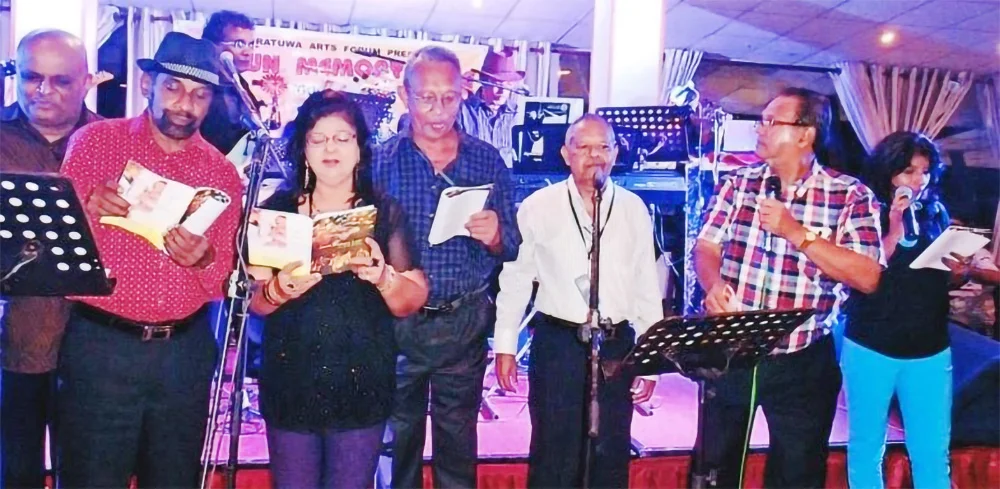
 Yes, Down Memory Lane, the beloved Sing-Along concert series that first struck a chord, way back in 1997, returns for its landmark 20th edition this Saturday, 17th October, at the beautiful Bolgoda Grand Resort, Moratuwa town centre.
Having celebrated its glorious 25th anniversary with the show in 2023, this milestone 20th concert promises to be even more special.
The organisers, the ever-popular Moratuwa Arts Forum, are pulling out all the stops to present yet another unforgettable evening, brimming with camaraderie, fellowship, and pure nostalgia.
Get ready for two-and-a-half hours of non-stop singing as veteran vocalists, from the Moratuwa Arts Forum, will take the stage to lead and inspire the happy audience to sing, sing and sing to their hearts’ content.
The repertoire? Absolutely magical, according to the organisers.
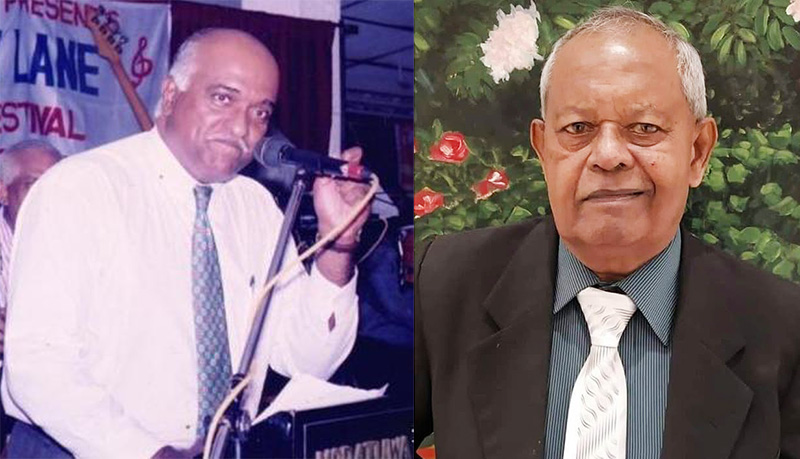
Veteran Arun Dias Bandaranaike: Will handle the evening’s proceedings / Priya Peiris: Event Conceptor
Around 40 golden oldies — from timeless English vintage evergreens and hits from the 50s to the 90s, to toe-tapping calypsos, soulful American plantation melodies, rousing cowboy and Dixieland favourites, aa well as cherished Sinhala standards. All to be sung with much gusto!
This year’s dedicated organising committee comprises Brian Coorey (Chairman), Priya Peiris (Event Conceptor), Hiran Fernando, Suranga Fernando, Viranjan Perera, Hemka Fernando and Neelesh Silva. Guidance and support comes from Moratuwa Arts Forum President Sarana Guneratne and Secretary Chandani Silva.
Adding his signature charm to the evening, as Master of Ceremonies, will be the veteran Arun Dias Bandaranaike.
Don’t miss this landmark celebration of music and memories!
For further details, contact Hiran Fernando on 0772636446 or WhatsApp 0783636446.

Cabinet approves redrafting of State Assets Management Act
Cooperative Employees Commission Act No. 12 of 1972 to be amended
Dilki Wathsala Marambage appointed as Director General of the Department of Technical Education and Training
Declaration of Naakolagane Sanctuary under the Fauna and Flora Protection Ordinance
Cabinet approves transfer and maintenance of selected roads presently under PC’s and Local Authorities to the RDA
Obtaining financial facilities for the Water Supply and Sanitation Improvement Program (Sub-program 2) from the ADB

‘Dates have the highest sugar content to fight Coronavirus’

Sunday Island 27 December – Headlines

#SundayIsland 17th December – Headlines

Sunday Island – 28th March

Sunday Island Headlines – 21 March

Sunday Island – 21st February – Headlines
-

 Features6 days ago
The Sri Lankan who made Scottish history
-

 Sports6 days ago
Nissanka absence opens door for Sri Lanka’s young guns
-

 News5 days ago
NDB fraud Rs 60mn more than reported
-

 News7 days ago
Gnansara Thera to be assigned to prison printing section: Officials
-

 News5 days ago
Removing monk’s robes matter for Sangha to decide: Mahanayake Theras
-
 News7 days ago
OIC of FCID summoned before Maligakanda Magistrate
-

 Features6 days ago
Future of Sri Lanka’s state university system: Should it be shut down and reopened?
-
 News6 days ago
Shiranthi R remanded until 13 Oct.