
News
Author V.V. Ganeshananthan goes beyond labels to tell the story of war, terrorism and Lanka’s Tamil community in Brotherless Night

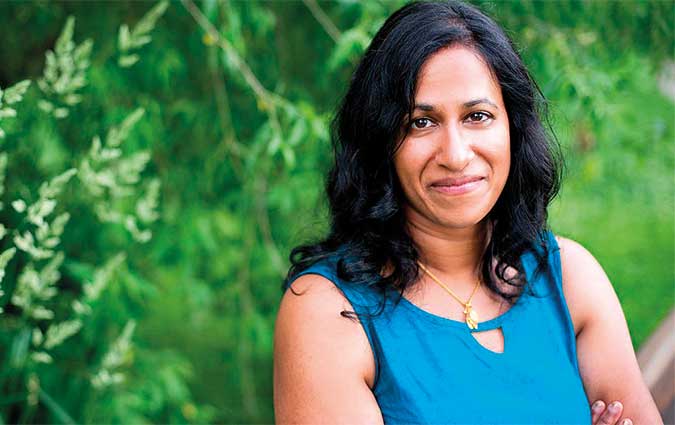
The opening line of V.V. Ganeshananthan’s sophomore novel, Brotherless Night, will give you pause. Maybe you’ve settled down in an armchair with a cup of tea, or maybe you’re leaning against a shelf in a bookstore, on the prowl for your next big read. Either way, the opening line will disarm you.
“I recently sent a letter to a terrorist I used to know.” In a way, the line speaks to the specific challenges of documenting the Sri Lankan civil war. Thousands of narratives clamour for precedence, and no single strand of politics, empathy or logic can do justice to them all. What Ganeshananthan, 43, American writer and journalist of Lankan Tamil descent, seeks to do is bring obscured voices back into the conversation. And for that, she first dismantles the very language of terrorism.
“I recently sent a letter to a terrorist I used to know.” In a way, the line speaks to the specific challenges of documenting the Sri Lankan civil war. Thousands of narratives clamour for precedence, and no single strand of politics, empathy or logic can do justice to them all. What Ganeshananthan, 43, American writer and journalist of Lankan Tamil descent, seeks to do is bring obscured voices back into the conversation. And for that, she first dismantles the very language of terrorism.
“One of the things that the rhetoric of terrorism seeks to do is to make the terrorist unintelligible,” says the author over a Zoom call from Minneapolis, where she teaches creative writing at the University of Minnesota. “The majority of people who have been referred to in that way are not unintelligible. Discussing their motivation doesn’t justify it, it just tries to understand it and to think about how someone might have arrived at that point
Ganeshananthan had been working on her first novel, Love Marriage (2008), about a Sri Lankan family fractured by the civil conflict, when she stumbled upon a significant piece of research. In 1987, a Tamil Tiger had gone on a widely-publicised hunger strike at the Nallur Kandaswamy Temple in northern Sri Lanka. His speeches were broadcast on some TV channels, and people from all over the Jaffna peninsula came to watch and to participate. After 12 days of abject theatricality, he died.
“The incongruity of that setting, the broad spectrum of people who were in attendance, the different stories that people were attempting to tell, and the way that those stories argued with each other… It was one of the first ways that I found my path to the point of view that I eventually used in Brotherless Night,” Ganeshananthan says.
Even though her book isn’t really about the hunger strike, it does manifest a lot of its broader themes. What motivates someone to become a militant? What makes them a martyr? And what happens, then, to the people they love and who love them? The character of Sashi, an aspiring doctor, coming of age during the first years of the war, was initially conceived to be the vantage point from which Ganeshananthan could question the events surrounding the hunger strike. Eventually, she emerged as a quiet but resolute protagonist in her own right.
“Sashi sometimes doesn’t actually know if she is doing things of her own volition or not,” says Ganeshananthan. “Sometimes she is and people think she is not, and sometimes she isn’t and people think she is and sometimes she herself can’t tell the difference.”
As the novel progresses, Sashi’s expression of her free will grows stronger, nurtured by University of Jaffna professor Anjali Premachandran. This character was inspired by real-life professor and activist Dr. Rajani Thiranagama, who was assassinated allegedly by the LTTE for speaking out against their atrocities, and was most recently commemorated by Shehan Karunatilaka in his Booker-winning novel The Seven Moons of Maali Almeida. Interestingly Thiranagama’s sister, Nirmala Rajasingam, narrates the audiobook for Brotherless Night.
The book is the product of over a decade of research into the Sri Lankan civil war, which saw Ganeshananthan poring over written accounts, unearthing old photographs, and speaking to those who had lived through it first-hand. Over the course of her conversations with survivors of the war, she repeatedly came across narratives that hadn’t often been documented.
In one chapter in the book, a militant comes to Sashi’s neighbour’s house and asks her to prepare food for his battalion. “How generous of you to say ‘ask’ when she has no choice,” Sashi’s brother Aran responds, articulating the sort of coded coercion that was often imposed on the civilian community.
“Some of that coded language is easier to represent in fiction,” Ganeshanthan says. “The form itself has an elasticity that allows me to represent truths of the community without subjecting them to a kind of verification that might be painful. I don’t think the people who went through this should have to prove it.”
In another chapter, the government requests all Tamil boys of a certain age to come in for what they claim will be a simple security check, necessitated by the increase in anti-state violence. Citizens are made to believe that if they comply, they will be absolved of all suspicion. Instead, all the boys who present themselves for checking are detained without cause, and released only after the women of Jaffna protest.
“There have been stories of women in the war, but the ones that have taken centrestage have by and large been of women who took up arms,” says Ganeshananthan. “The stories I grew up with were of women civilians who were doing things like helping their elderly move homes every time they got displaced, or studying by candlelight, or waiting it out in their houses when there was shelling. I have a lot of respect for these women.”
In many ways, Brotherless Night is a feminist novel, one that centres on women, students and civilians whose lives have been disrupted by war. It is a novel that exalts domestic labour and caregiving as valiant war-time efforts, and especially honours the sacrifices made by the medical fraternity.
It is also, in a way, a coming-of-age novel dedicated to young people whose lives have been defined by a conflict they had no choice but to respond to. “I’m not interested in justifying atrocities committed by either the state or non-state actors. What I am interested in, is restoring all people to the conversation,” Ganeshananthan signs off. (The Hindu)

Latest News
Sun directly overhead Nittambuwa, Algama, Malwana, Aranayake, Meegahakiula and Panamkadu about 12.09 noon today (04)


The sun is going to be directly over the latitudes of Sri Lanka from 28th of August to 07th of September due to its apparent southward relative motion.
The nearest places of Sri Lanka over which the sun is overhead today (04) are Nittambuwa, Algama, Malwana, Aranayake, Meegahakiula and Panamkadu about 12.09 noon.
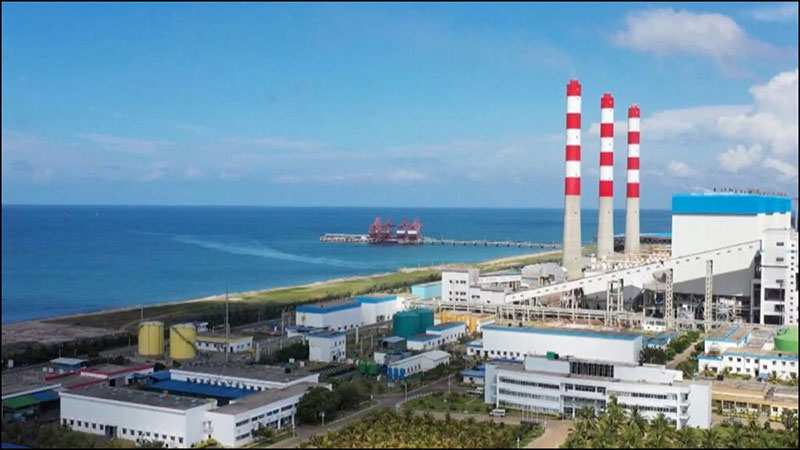
Plant’s output cut from 270 MW to 140 MW amidst dwindling stocks; energy analysts warn system remains “at a razor’s edge”
By Ifham Nizam
The Norochcholai coal-fired power plant is now digging into the last dredges of its coal stock, with two operational units forced to slash generation from around 270 MW to just 140 MW on Sunday as the plant ran critically short of fuel, according to independent energy analysts and sources familiar with the National System Operator (NSO).
The sudden reduction of approximately 130 MW in coal generation has once again exposed the fragile state of the country’s power supply arrangements, with the plant understood to have coal stocks sufficient only until Friday night.
“This is not how a coal plant is expected to operate. They are digging up the last dredges of coal from the plant,” an independent energy analyst told The Island.
The analyst questioned why the units had been allowed to reach this stage without earlier intervention, arguing that at least one unit should have been deloaded around 10 days ago to conserve the remaining coal.
Had that been done, the analyst said, the country could also have reduced its dependence on more expensive diesel-fired generation during the period when
coal stocks were being conserved.
The latest NSO generation figures highlight the continuing pressure on the system.
Around 7 p.m. on Sunday, when the night peak was reached, total demand stood at 2,552.7 MW. Coal contributed only 282 MW, while major hydro accounted for 1,215.8 MW and thermal-oil generation for 791.9 MW.
The night peak of 2,552.7 MW was substantially higher than the daytime peak of 2,246 MW, according to the NSO Generation Summary for August 30.
The most immediate concern is the remaining coal stock at Norochcholai.
Sources said the plant has coal only to Friday night, making the timing of the next shipment critical.
The first shipment under the emergency arrangement is expected to arrive on Friday, September 4, but the coal unloading will have to begin on the same day if
the power plant is to continue operating without further significant deloading.
That creates another potential vulnerability, with rough sea conditions posing an additional challenge to unloading operations.
Energy sector sources said that even the arrival of the September 4 shipment would not completely eliminate the danger.
The next shipment under the new coal tender would need to commence unloading around September 15. Any significant delay beyond that could again force the Norochcholai units to operate at reduced output.
“We are still at a razor’s edge”
The independent energy analyst said the situation should not be viewed merely as a question of whether a particular vessel arrives on time.
The situation also means that any further reduction in coal generation could have a direct impact on the use of oil-fired power generation, potentially increasing the cost of electricity generation.
The latest NSO figures already show the important role being played by thermal-oil generation during the evening peak, when demand rises sharply.
The analyst questioned the rationale behind allowing the coal units to continue operating at higher loading until stocks reached critically low levels instead of taking measures earlier to stretch the available inventory.
News
22A: BASL decides against making written submissions after SC refuses to grant it right of reply
The Bar Association of Sri Lanka (BASL) has informed the Supreme Court that it would not tender written submissions in respect of the petitions challenging the 22nd Amendment to the Constitution, which were heard on September 1 and 2.
The BASL said it had initially decided not to make written submissions after being deprived of the right of reply when the Solicitor General, appearing for the State, made submissions and explained the rationale and justification for the Bill.
The BASL pointed out that the Solicitor General, who made submissions at the end of the second day of the hearing, had not made a policy document available to the petitioners.
It also said the petitioners had not been given an opportunity to respond orally to the Solicitor General’s submissions or to address the Court on certain questions raised by the judges during their exchanges with the Solicitor General. (SF)

Devapathiraja clinch U15 Division I title with 33-run win over Royal

Mandhana’s record ton powers India into semi-finals

Sun directly overhead Nittambuwa, Algama, Malwana, Aranayake, Meegahakiula and Panamkadu about 12.09 noon today (04)

Showers expected in the Uva, Central and Eastern provinces and in Polonnaruwa and Mullaittivu districts after 2.00 p.m

Norochcholai digs into dwindling coal stocks, two units slash generation

22A: BASL decides against making written submissions after SC refuses to grant it right of reply

‘Dates have the highest sugar content to fight Coronavirus’

Sunday Island 27 December – Headlines

#SundayIsland 17th December – Headlines

Sunday Island – 28th March

Sunday Island Headlines – 21 March

Sunday Island – 21st February – Headlines
-

 Features5 days ago
“Wrap Me Up in My Blazer”— A Gentlemanly Bradby Reminiscence
-

 Features4 days ago
When Sri Lankan stories find their own voice
-
 Features5 days ago
JVP/NPP government as seen from outside by Lionel Bopage now domiciled in Australia
-
 News4 days ago
BASL takes exception to Justice Ganepola being denied a place in SC
-

 Editorial6 days ago
Govt. trying to dupe UN Rapporteur?
-
 Features5 days ago
Prof. Savitri Goonesekere: What has she done?
-

 Features5 days ago
World Trade Politics: Canada rebuffs Trump’s tariff blackmail
-
 News5 days ago
Legal avenues explored to bring back Mahendran, aka Harjan Alexander