
Editorial
Traps and duplicity


Friday 30th October, 2020
Smaller states located in strategic locations in the world are in the same predicament as poor damsels in rough neighbourhoods; they suffer abuse at the hands of big powers that masquerade as liberators. The US has come forward to liberate Sri Lanka from what it calls a Chinese debt trap!
US Secretary of State Mike Pompeo has come and gone. He uttered some diplomatic sweet little nothings, as it were, in public, but the State Department had delivered its message to Colombo even before he landed here. Couched in diplomatese, it gave Sri Lanka a choice between China and the Western bloc; it can be paraphrased as ‘either you are with us or you are with our enemy’.
Opinion is divided on the much-propagated claim that Sri Lanka finds itself in a Chinese debt trap. The pro-western groups think it is trapped well and truly, and others are convinced otherwise; they maintain that the US and its allies are vilifying China, which poses formidable challenges to the US on all fronts, and has come to Sri Lanka’s assistance.
A trap by any other name is as constricting, one may say with apologies to the Bard. The Millennium Challenge Corporation (MCC) compact, which the US is keen to sign with Sri Lanka, can also be considered a trap, given its subtext and what is explicit in the Acquisition and Cross Service Agreement (ACSA) and the Status of Forces Agreement (SOFA). Anyone who believes that the US is driven by altruism to help Sri Lanka is being naïve.
Following talks with Pompeo, the government grandees are behaving like the proverbial mute who gulped down a bitter herbal concoction or kasaya. Discussions with Pompeo have apparently dumbed their tongues. Before the last general election, they had the public believe that they would not sign the MCC compact, which an expert committee appointed by them has said, should not be inked unless it is presented to Parliament and approved with amendments.
Sri Lanka was made to walk into a trap in the early noughties, when the Tokyo Co-Chairs tied an aid pledge (USD 4.5 billion) to progress to be made in peace talks between the then UNP-led government and the LTTE. Lured by the prospect of receiving a huge aid package, that administration compromised national security to keep the LTTE at the negotiating table, but in vain. Even after the LTTE had walked away from talks, the US and other Co-Chairs, to wit, the EU, Japan and Norway, made Sri Lanka stick to a fragile truce, which the LTTE violated with impunity. That peace process, which the LTTE made the most of it to prepare for Eelam War IV, ended in disaster.
Sri Lanka has been caught in a human-rights trap, which the US laid in the form of a country-specific resolution, in Geneva, and cannot extricate itself try as it might. This resolution has been used to besmirch the reputation of high-ranking military officers who were instrumental in defeating terrorism, making this country safe for all communities to live in, and helping rekindle democracy in the North and the East. The US has imposed a travel ban on incumbent Army Commander and Chief of Defence Staff Lt. Gen. Shavendra Silva and his family, citing unsubstantiated allegations of human rights violations during the final stages of war.
Pompeo gave an evasive answer, on Wednesday, when he was asked to comment on the current status of US action against Lt. Gen. Silva. He said: “It is a legal process in the US. We always continue to review it. We want to make sure we get it technically, factually and legally right.” He has left us baffled. It is before imposing a travel ban that the State Department has to ‘get it technically, factually and legally right’. The act of slapping a travel ban in a hurry and then reviewing it is nothing but unfair.
Washington has earned notoriety for its duplicity anent travel bans related to human rights violations. In 2005, the US denied the then Chief Minister of Gujarat Narendra Modi a visa owing to his alleged involvement in the 2002 Hindu-Muslim riots in his state. The US government insisted that the travel ban on Modi was based on the Immigration and Nationality Act, which ‘makes any government official who was responsible for or directly carried out at any time particularly severe violations of religious freedom ineligible for a visa’. But the White House rolled out the red carpet for Modi after he became the Indian Prime Minister! The US did so because it needed a formidable ally in Asia to support its campaign against China.
As for ‘getting it technically, factually and legally right’, didn’t the US care to consult its own defence expert, Lt. Colonel Lawrence Smith, who was working at the US Embassy in Colombo as its defence attache during Eelam War IV, which ended in 2009? Having studied what had taken place during the war, Smith, attending an international defence seminar, in Colombo, in 2011, dismissed allegations of war crimes levelled against the Sri Lankan military. Forty countries were represented at that event. Is it that the State Department chose to ignore his evidence-based observations and embarked on a diplomatic witch-hunt? It is a shame that the Sri Lankan Foreign Ministry functionaries did not allow journalists to question Pompeo freely on this issue; they allowed only one journalist to raise questions.



Politics is more about pure theatre than actual delivery anywhere in the world. This is arguably more so about Sri Lankan politicians, their parties, and successive governments. It is therefore only natural that the incumbent government ensures that maximum possible pollical mileage accrues to it from the repatriation of Sri Lankan criminals arrested overseas. Among the underworld characters brought back here during the past two years or so are several drug kingpins, Shiran Basik being the latest.
Perhaps, it would not have been possible to bring back Basik if he had not filmed some Iranian missile attacks on targets in the United Arab Emirates (UAE) and stored the videos thereof in his mobile phone, drawing the attention of the UAE law enforcement authorities, who arrested him. Nevertheless, Sri Lanka has gained tremendously from his arrest and extradition, for he ran his narcotics operation from Dubai, which has become a haven for Sri Lankan criminals on the run.
Police are investigating alleged links between Basik and a number of prominent politicians, and eight of them are expected to be arrested and questioned as investigators widen their probe into his financial dealings and network of associates, according to media reports. All those who have been in league with criminals must be brought to justice.
Among those who are to be interrogated on their alleged links to Basik include a sitting MP, four former ministers, and at least one of them is said to be a woman. Police are also investigating allegations that Basik provided large sums of money to some politicians during election campaigns. Drug dealers are known to lavish funds on politicians and political parties during elections through various fronts. This may explain why Kudu Lal, who was the main supplier of heroin in Colombo, was allowed to flee the country during the SLFP-led UPFA government in 2010.
The nexus between drug dealers and politicians is only too well known. It has now been revealed that drug barons have invested their black money in films and teledramas. The police have found that Basik had contacts with several artistes and even financed some films and soap operas. This shows how the drug Mafia has spread its tentacles over various fields.
Basik’s beneficiaries are said to include some popular filmmakers-turned-lawmakers, allegedly representing both the ruling party and the Opposition. Responding to allegations levelled against them on social media, two of them have claimed that they were unaware of the actual sources of finance for their films or teledramas. Curiously, they tear into their political opponents, claiming that they have information about the latter’s ill-gotten wealth stashed away in other countries. So, how can these artistes-turned politicians who have allegedly benefited from Basik’s largesse claim that they did not know their benefactors’ identities and backgrounds, just like Pip, the orphan, in Dickens’ Great Expectations. Even if the drug dealers concerned had used fronts to finance or sponsor movies and soap operas, an investigation is called for because the artistes who have benefitted from drug money must be held answerable. Some of these politicians are ardent campaigners for good governance and have embarked on a mission to institutionalise accountability. Let them be urged to set an example to others by surrendering to the police instead of trotting out lame excuses. What they have alleged to have done amounts to money laundering.
Following the assassination of Sarath Ambepitiya, an upright High Court judge, we revealed that Kudu Nauffer, who masterminded the murder, had used a front to sponsor food and beverages served at a judicial officers’ function. A drug dealer, named Shiyam, and his wife, posed as wealthy garment factory owners, before being arrested with a huge stock of heroin in their Ward Place residence, where they had entertained political and business leaders among others. Kudu Lal had himself elected to the Colombo Municipal Council. In 2002, the then IGP T. E. Anandaraja attended a drug dealer’s party in a Colombo hotel. In 2013, a drug dealer obtained a letter from the then Prime Minister D. M. Jayaratne’s office, requesting the Customs to clear some freight containers on a priority basis; the Customs detected 131 kilos of heroin, concealed in one of them. Such is the socio-political clout of drug barons.
One may recall that while Makandure Madush, known as Sri Lanka’s Napoleon of Crime, was operating from overseas, his father died in a road accident. Among the mourners at the funeral of the underworld kingpin’s father were many politicians from both the government and the Opposition. Madush was dominating the underworld at the time, generously helping politicians and artistes, some of whom were arrested with him in Dubai in 2019. He was killed while in police custody. The police claimed an underworld gang had been shot dead in a crossfire. Politicians who had benefited from him must have heaved a sigh of relief.
It is hoped that the police will ensure the safety of Basik and ascertain more information from him about politicians, artistes and others who have benefited from his drug money either directly or indirectly.

Saturday 29th August, 2026
The JVP-NPP government has responded to UN Special Rapporteur on the independence of judges and lawyers, Margaret Satterthwaite’s statement on its move to increase the retirement ages of judges, according to media reports. It has reportedly sought to justify its controversial move by repeating the same old arguments in defence of the 22nd Amendment to the Constitution (22A). Satterthwaite in her statement has warned Sri Lanka that its proposed constitutional amendment to extend superior court retirement ages could undermine judicial independence. One could not agree with her more.
Government politicians and their apologists claim that the Bar Association of Sri Lanka (BASL) and the Opposition have misled the UN, the International Association of Judges, the Commonwealth Lawyers Association, LAWASIA, etc., over 22A. What they should realise is that before issuing statements, these organisations conduct in-depth studies of issues and draw their own conclusions. The fact that they have endorsed the position of the BASL does not mean that they have been misled.
Going by media reports, the government in its response to the UN has muddied the water. It has said the retirement ages of all judges will be extended as part of a broad strategy to expedite the disposal of cases and clear a massive case backlog. But it is obvious that it first sought to increase the retirement age of the SC judges, and when it drew heavy criticism, it sought to mask its real intention by undertaking to extend the retirement age of the CA of judges as well. When its move ran into still more resistance, it proposed to increase the retirement ages of all judges.
What has drawn heavy criticism is not the move to raise the retirement ages of judges as such but the fact that the government has sought to extend the retirement ages of the serving judges of the SC and the CA. Hence so many petitions against 22A. The Judicature (Amendment) Bill, aiming to increase the retirement ages of the High Court judges, District Court judges and Magistrates, has not run into resistance, for they are not specified in the Constitution, much less listed under ‘the Independence of the Judiciary’ unlike those of the SC and CA judges.
The SC has twice articulated or reaffirmed the principle that a constitutional amendment altering the retirement age or period of office of incumbent Supreme Court or Court of Appeal judges would affect judicial independence and engage Article 3, thereby requiring a referendum. The principle was expressly stated in the 2022 Inland Revenue (Amendment) Bill determination and reaffirmed in a subsequent SC judgement. This has been the position of independent legal professionals as well. They have warned that 22A will lead to a conflict of interest on the part of the incumbent judges who are to hear the petitions challenging it. They have rightly argued that 22A has to be placed before the people at a referendum.
The government is doing everything in its power to shift the battle over 22A to the political front, but the issue has now been internationalised, and the hearing of the petitions against 22A will be under intense international scrutiny.
The government may be able to fool some people in this country with its absurd arguments and rhetoric, but there is no way it can dupe the discerning public and the international community into believing its claim that 22A is not tailored to benefit some serving judges and it is aimed at expediting the administration of justice.
Friday 28th August, 2026
Sri Lanka boasts a hydraulic heritage dating back more than two millennia and has a long history of harnessing water for agriculture and human settlement, but its urban water bodies are struggling with pollution. It has tamed rivers and built huge reservoirs since Independence, but lakes and canals in its urban centres have become watery versions of the Augean Stables, demanding a Herculean effort to restore them. No government has proved equal to the task. Among these polluted water bodies are two lakes; one is located close to the western seafront, and the other nestles in the hills.
Lake Gregory, a watery jewel adorning green-clad Nuwara Eliya, is as much a paradox as pleasure turning to poison in Keats’ Ode on Melancholy, which speaks of “beauty that must die” and “joy … bidding adieu”. Beneath its placid surface lurks a danger invisible to visitors drawn to its scenic beauty.
The Central Environmental Authority (CEA) has said Gregory Lake is highly polluted, and its water could pose serious health risks, according to Nuwara Eliya District Coordination Committee Chairman Manjula Suraweera Arachchi, MP. He has told the media that the CEA presented its findings about lake pollution at a recent committee meeting. That Lake Gregory is facing a serious deterioration in water quality, with agricultural and urban pollution contributing to its degradation, is public knowledge, but nobody seems to care.
The pollution of Lake Gregory is mainly due to fertilisers, pesticides and other agrochemicals washed from agricultural land and urban wastewater and runoff. Studies conducted by universities have identified sewage, domestic waste and organic matter as significant sources of pollution. But no action has been taken to block these sources of pollution.
Lake Gregory is a vital wetland ecosystem as well as a major tourist attraction. Tourists, both local and foreign, do not consider a trip to Nuwara Eliya complete without a boat ride in this scenic lake. They risk exposure to splashes of polluted water. It has been reported that the Ministry of Environment, the Urban Development Authority and the Irrigation Department are working on measures to address the problem. This is good news, but when they will clean up the lake is anybody’s guess. It is hoped that they will not go on talking indefinitely as pollution worsens. Thousands of people will continue to enjoy water sports and recreational activities, ranging from relaxed paddle boats to high-speed jet skis in the lake, unaware of health risks. Shouldn’t at least an official warning of severe water pollution be issued?
There are many countries from which Sri Lanka can learn how to keep its urban lakes clean. Malaren in Sweden and Lake Geneva, Switzerland, serve as the best examples. Singapore’s Marina Reservoir also provides a striking example of managing an urban water body in a densely built-up city. Some developing countries, too, have successfully restored polluted urban lakes, but only a few can match Stockholm’s example of maintaining a major urban lake as a high-quality source of drinking water. What Sri Lanka needs most to maintain its urban water bodies properly is a political will to do so.
Beira Lake is perhaps worse than Lake Gregory. Its pollution is mostly due to untreated or partially treated sewage, illegal sewer connections, urban runoff, solid waste and industrial discharges. Recent research has revealed excessive levels of organic pollutants, nutrients and, in some areas, heavy metals in the lake, which also promotes algal growth responsible for its green appearance.
The success of projects to clean up Beira and Lake Gregory hinges on the elimination of the sources of pollution. Experts have stressed the need to identify and block illegal sewage and wastewater connections entering the lakes and their storm-water network besides intercepting polluted stormwater and diverting it for appropriate treatment.
One can only hope that urgent action will be taken to put an end to the toxic legacy of the two vital lakes.

Lanka tracks 11 US-sanctioned Iranian tankers off coast

House to debate abolition of Chief of Defence Staff post

Mass graves tragic evidence of failed states – Rathnayake

Legal avenues explored to bring back Mahendran, aka Harjan Alexander

Nanda Malini Ascocenda: A flower that carries the name of a legendary voice

Vijita Fernando, literary personality, dies months short of her 100th birthday

‘Dates have the highest sugar content to fight Coronavirus’

Sunday Island 27 December – Headlines

#SundayIsland 17th December – Headlines

Sunday Island – 28th March

Sunday Island Headlines – 21 March

Sunday Island – 21st February – Headlines
-

 News5 days ago
Missing doctor’s body found in Mahiyanganaya
-
 News5 days ago
Australia declines to release Finance Secy Suriyapperuma’s citizenship details
-
 News5 days ago
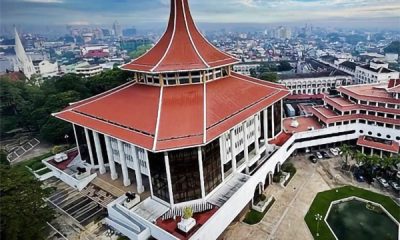
22A: BASL suggests CJ recuse himself from hearing petitions
-

 News2 days ago
Eight politicians in drug kingpin probe
-

 Editorial6 days ago
Govts. drag feet as undergrads age
-
 Features4 days ago
Insights from Chieftains of Uva: Genealogy of two Kandyan Families – Part II
-

 Features4 days ago
Export diversification: Missing the wood for the trees – Part I
-
 Business2 days ago
Sri Lanka opens up: A new season of direct connectivity