
Business
HNB ranked among Sri Lanka’s Top 5 Corporates

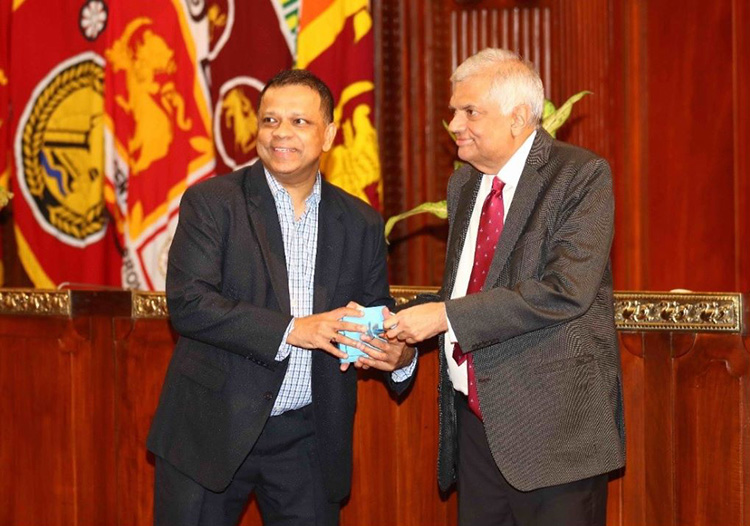
Sri Lanka’s most innovative bank, HNB PLC’s commitment to banking excellence and its resilient performance over the past year, helped to secure a Top 5 position on Business Today Top 40 for 2022.
“Over the past 4 years, Sri Lanka has been challenged and tested like never before. HNB’s performance in that time is a testament to the power of adaptability. In responding to the crisis, our organization prioritized assistance to SMEs, organizations and individuals most in need, while doubling down on our efforts to drive radical digital transformation across every aspect of the bank.
“Our performance in this year’s Business Today rankings is a powerful validation of that journey, and we take this opportunity to extend our sincere gratitude to the HNB team, and to our valued customers for powering our success at such a crucial moment. Moving forward, we remain committed to delivering seamless and frictionless banking experiences and support our nation’s collective mission to revive and rejuvenate our economy,” HNB Managing Director/CEO, Jonathan Alles stated.
HNB’s ranking was based on its strong financial performance, pioneering initiatives in digital transformation, and its extensive support for communities, enterprises and individuals impacted by Sri Lanka’s economic crisis. By the end of the year, HNB maintained assets, advances and deposits in excess of Rs. 1 trillion during which time, deposits grew by over 30% Year-on-Year (YoY) to Rs. 1.4 trillion.
HNB has been regularly featured among the Top 10 of Business Today’s rankings, ever since they were first launched in 1997. Business Today’s Top 40 Rankings were compiled following a series of stringent evaluations of all applicants by a panel of respected corporate sector veterans. Each of the nominees for this year’s rankings was assessed on their quality of growth, corporate governance and long-term vision.
Based on its recent performance, HNB was also crowned as the Best Retail Bank in Sri Lanka for the 13th occasion at the prestigious International Excellence in Retail Financial Services Awards 2023 hosted by the Asian Banker Magazine.
In addition to driving outstanding financial performance, over the recent past, HNB was also ranked among the Top 1,000 World Banks by the prestigious Banker Magazine, in addition to being recognized as Sri Lanka’s Best Corporate Citizen at the prestigious Ceylon Chamber of Commerce Best Corporate Citizen Sustainability Awards 2022 (CCC BCCSA). Notably, HNB has also been consistently ranked among Sri Lanka’s Top 10 Best Corporate Citizens for 13 consecutive years.











By Ifham Nizam
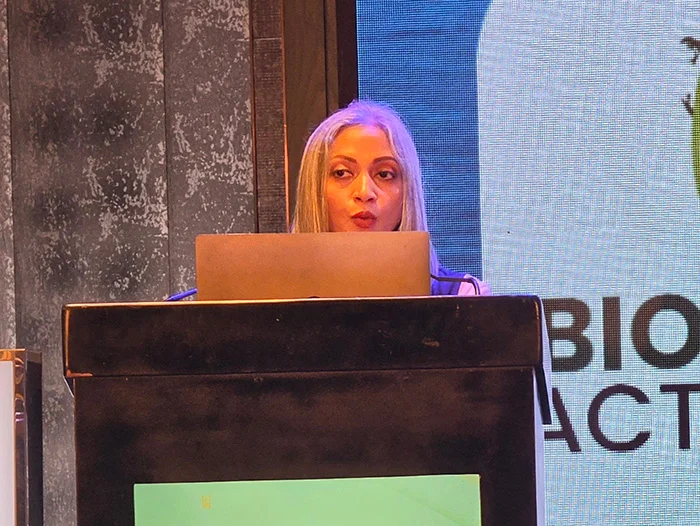
The next wave of blue growth will depend not merely on recognising the value of the ocean, but on turning conservation, business and finance into a pipeline of credible, investable projects, UNDP Country Economist Dr. Vagisha Gunasekara said.
Addressing the 11th Annual Technical Sessions of the Biodiversity Action Forum 2026 at Shangri-La Colombo yesterday, Dr. Gunasekara challenged the private sector to move beyond broad commitments to ocean conservation and ask a more practical question: how can businesses, banks, investors and conservation organisations work together to create projects that are commercially viable while delivering measurable environmental and social benefits?
Delivering the keynote address on “The Next Wave of Blue Growth: Private Sector Entry Points for Productive Investment, Conservation, CSR and Blue Finance,” she said the discussion should move from why the ocean matters to how the private sector could participate in the blue economy.
‘The private sector is already in the blue economy, whether it recognises that exposure or not, she said.
The challenge, she added, was whether businesses would engage deliberately with the opportunities and risks associated with marine and coastal ecosystems or wait until environmental degradation translated into higher costs.
Dr. Gunasekara said healthy reefs, mangroves, seagrass beds, clean beaches and productive fishing grounds should no longer be viewed merely as environmental assets.
‘They are productive economic infrastructure, she said.
Such ecosystems underpin tourism, fisheries, food security, coastal protection, livelihoods, shipping and logistics, while supporting biodiversity and a range of economic sectors.
‘When a road is not maintained, there is an economic cost and we know it. But when a reef, a lagoon, a mangrove system or a fishing ground is not maintained, we often fail to see the cost until it is already showing up in lower productivity, weaker tourism value, higher risk and lost livelihoods, she said.
For Sri Lanka, this has particular significance given the country’s extensive maritime space.
‘We are more ocean than island, Gunasekara said, pointing out that the country’s economic imagination had not yet fully caught up with its geographical reality.
‘When we talk about the economy, we talk about agriculture, industry, tourism, trade, investment and infrastructure. But how often do we treat the ocean as infrastructure? Too often, we just treat it as scenery, she said.
Gunasekera stressed that marine degradation was not simply an environmental problem but increasingly a business risk.
Tourism and hospitality depend on beaches, reefs, marine life and clean coastal environments, while seafood and aquaculture depend on healthy ecosystems and responsible production.
Coastal logistics and infrastructure require climate-resilient shorelines and predictable planning, while coastal real estate faces exposure to erosion, flooding and climate-related risks.
For finance and insurance, the challenge is increasingly about understanding, pricing and managing these risks.
‘These risks show up on hotels’ occupancy rates, they show up in fisher catch volumes, they show up in export access, they show up in insurance exposure, they show up in infrastructure damage, in the cost of capital as well, she said.
Gunasekara outlined four major pathways through which the private sector could engage with the blue economy.
The first is productive activity, including sustainable tourism, aquaculture, fisheries, value addition, cold chains, maritime logistics, vessel and marina services, blue technology, renewable energy and other marine services.
The second is CSR and ESG, where companies could move away from one-off initiatives, such as beach clean-ups, towards structured, long-term and measurable corporate engagement.
This could include supporting coastal community livelihoods, monitoring and citizen science, ocean literacy, supplier traceability and measurable nature-positive outcomes.
The third is conservation partnerships, involving private-sector engagement with marine protected areas, restoration sites and conservation landscapes.
Such partnerships, she stressed, should not be confused with privatising nature or weakening public oversight.
Instead, the question should be how business could support effective management, visitor services, restoration and community-based conservation within clear regulatory frameworks.
The fourth pathway is finance, covering blended finance, blue bonds, guarantees, reef insurance, blue carbon, payments for ecosystem services, conservation loans and bankable project pipelines.
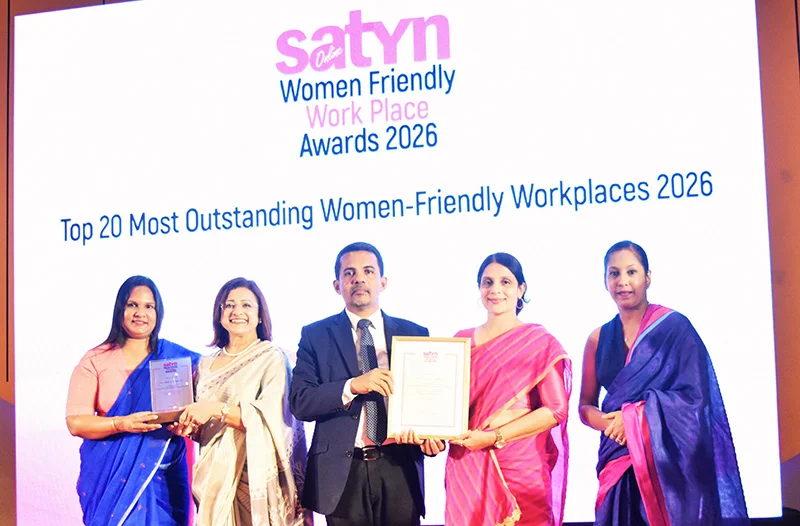
Union Bank has been recognised at the Satyn Women-Friendly Workplace Awards 2026 for the second consecutive time, reaffirming the Bank’s commitment to building a diverse, inclusive workplace where women are empowered to lead, grow and thrive. Thishani Dissanayake, Vice President Marketing said “Union Bank continues to support and empower women at every level providing diverse opportunities for growth and this award is a proud reflection of the dedication, efforts and strength of all women at Union Bank”.
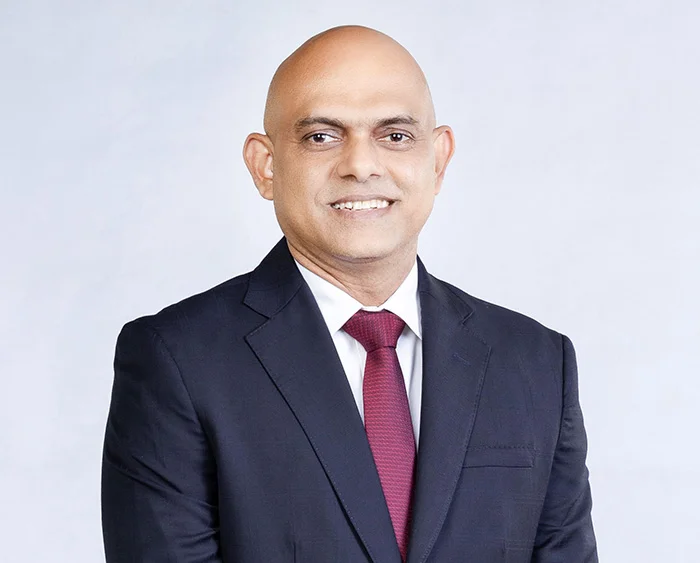
Seylan Bank PLC has announced the appointment of Krishan Thilakaratne, Non‑Executive Director, as the Deputy Chairman of the Board with effect from 17th August 2026.
Thilakaratne was appointed as a Non-Executive Director to the Board in 2018, and the progression to Deputy Chairman, reaffirms his long‑standing governance role and leadership capacity.
He currently serves as Director/CEO of LOLC Finance PLC and is a member of the Senior Management Team of LOLC Holdings PLC.
Thilakaratne carries over three decades of experience in banking and finance. He began his career at Seylan Bank in September 1990, at the age of 19, as a Banking Assistant, before joining LOLC Group in 1995. Today, he counts more than 31 years of expertise in management, credit, channel management, marketing, factoring, portfolio management, and Islamic finance.
He holds extensive international exposure, serving on boards in Southeast Asia and Central Asia, including the Philippines, Indonesia, Pakistan, Kyrgyzstan, Kazakhstan, Tajikistan, Uzbekistan, and Egypt. His leadership roles extend to LOLC Moliya, Tajikistan, OJSC Micro Finance Company ‘ABN’, Kyrgyzstan, Finance, Kazakhstan, Prasac Microfinance Institution Ltd, Cambodia, LOLC Egypt, and additionally advising Lombard Micro Finance Company in Tajikistan.
In Sri Lanka, Thilakaratne has contributed significantly to the financial services sector, serving as a Board Member of the Credit Information Bureau of Sri Lanka (CRIB), Commercial Insurance Brokers (Pvt) Ltd. He has also held the position of Chairman of the Finance Houses Association of Sri Lanka (FHASL), the apex body for Non‑Bank Financial Institutions.
A Passed Finalist of the Chartered Institute of Management Accountants (CIMA) UK and Associate Member of the Institute of Bankers of Sri Lanka (AIB), Thilakaratne has completed the Strategic Leadership Training Programme in Microfinance at Harvard Business School, USA.

UPDATE: Flash flood on Nepal-Tibet border kills more than 100, with hundreds of tourists missing

At least eight killed, hundreds missing after Nepal flash flood

India close in despite Sooriyabandara, Kamindu fifties

Advisory for High Waves for the sea areas extending from Colombo to Pottuvil via Galle, Matara and Hambantota

We must create social awareness to ensure the physical and mental well-being of children with disabilities – PM

BCCI AGM set for September 18 in Mumbai

‘Dates have the highest sugar content to fight Coronavirus’

Sunday Island 27 December – Headlines

#SundayIsland 17th December – Headlines

Sunday Island – 28th March

Sunday Island Headlines – 21 March

Sunday Island – 21st February – Headlines
-
 News6 days ago
Country’s first woman Surveyor General appointed
-

 Business5 days ago
SriLankan Airlines makes ShakthiSAT Mission possible for talented Sri Lankan student
-

 Sports7 days ago
Tharanga, Weber headline stellar Lausanne javelin field
-

 Features6 days ago
Medical education in Sri Lanka: Then and now
-
 Business7 days ago
Mannar’s offshore opportunity: the dollar question behind Sri Lanka’s oil and gas search
-

 Latest News6 days ago
Imran Khan moved to private hospital amid deteriorating health
-

 Latest News6 days ago
Government has declared 21, 22 and 23 August 2026 as national days of mourning
-

 Features4 days ago
My secondary schooling after Royal Primary