
Features
Marxism and nationalism: A never-ending debate (Part II)

By Uditha Devapriya
Immediately after independence, the Sri Lankan Left faced an ideological dilemma for which it had not really been prepared. The government, headed by a comprador bourgeoisie, perhaps the most conservative and right-wing in Asia at the time, stepped in to deprive the estate Tamils of their citizenship. This slowly deprived the Left of its base in the plantations across the Uva and the South, right into the country’s south-western quadrant, limiting it to the cities, the working class. Elsewhere, in peasant strongholds, it made some strides. But the government’s careful, calculated cultivation of nationalist sentiment pre-empted the Left from mobilising them for a radical, truly emancipatory political project.
The government’s actions impacted these groups profoundly, adversely. The conventional reading of what happened next is this: lacking popular support among estate Tamils and the Sinhala middle-classes, the Left eventually pegged itself to the latter, compromising on its earlier, laudably progressive stance on languages and paving the way for a rapprochement with the SLFP. The latter, in the conventional reading, is often dismissed as a chauvinist and majoritarian party, in effect the political base of the Sinhala nationalist right. Anyone who chose the path of cohabitation with them, so the interpretation goes, shared or at least were complicit in the ideology of the nationalist right. Ergo, the Old Left is faulted if not chastised for bedding with the beast, with the harbinger of Sinhala chauvinism.
There is some truth to these allegations, and not all of them can be denied. But the dilemma the Left faced at the time could not have been more acute or complex. On the one hand, it lost the one community on whose behalf it had organised strikes and campaigns against the British and the UNP government. Such actions proved more than anything than the Left’s project did not just transcend ethnic distinctions, but also centred firmly on class issues. On the other hand, the UNP government proved itself capable, for a while at least, of rousing traditionalist elements, Sinhala and to a lesser extent Tamil, against the Left, on the basis of the latter’s supposed hostility to the past and to history.
Here the comprador bourgeoisie found a ready ally in conservative sections of the clergy. By that I mean not just the Christian clergy, including the Catholic and the Protestant. Their opposition to the Left was evident enough: they requested people not to vote for Marxist candidates, given Marxism’s “hostility” to religious values. The Buddhist clergy also sided with this view, and opposed or criticised monks who took to political activism. The latter, at least until after 1956, almost invariably swayed to the Left.
The point I am trying to get to here is simple. By 1956, the Left’s prospects had declined so badly that individual parties, including the LSSP, were already conceding the difficulty of forming a Left government. The 1956 election proved to be epochal here for two reasons. Firstly, it showed that the UNP’s hold over traditionalist elements was not absolute: these elements, disgruntled by the UNP’s policies, could defect to other parties, particularly those promising an alternative to the status quo which was less radical than the Marxist Left. In response the Left had to think of and come up with creative strategies, with which it could defeat the government while distancing itself from the Opposition. Eventually it settled on a policy of oppositional unity: thus, in some electorates it contested against other Opposition candidates, while in others it withdrew in favour of those candidates.
Secondly, the election showed how otherwise progressive ideals, once marginalised, could be reconfigured in pursuit of less than progressive ends. That is not to deny the immense vitality and popularity of the calls for Sinhala Only. Such calls underlay genuine grievances against the political establishment. Yet, instead of incorporating these grievances into an all-encompassing emancipatory project, the Sinhala middle-classes contented themselves on gaining the upper hand for themselves and for their identity. The tragedy here, for which we are still paying the price, is that such campaigns undermined the spirit with which the Left had earlier called for instituting the vernacular at official levels. The latter call was, in every respect, progressive, and it deserved being pursued till the very end. But the hysteria which usually accompanies elections in Sri Lanka eventually drowned it.
What I am critiquing here, essentially, are the political ideals of Sinhala nationalism. This, however, is a contradiction in terms: to have political ideals you must be part of a political project, and contemporary Sinhala nationalism, despite its rhetoric, has never had a properly coordinated political project against imperialism and neoliberalism. In that sense, I suppose, Sinhala nationalism is not hegemonic in the same way Hindutva is hegemonic in India, even if it shares much with the ideology of the RSS. The main problem with or limitation in Sinhala nationalism is that in its pursuit of national liberation, it defines the nation as the preserve of one collective, and overlooks or ignores the heterogenous character of not only the nation, but also that collective.
The truth is that Sinhala is not monolithic, and nor is Tamil. All claims to the contrary, no matter how enticing they may be, are facile and false.
Throughout the colonial period, the Left proved itself capable of tapping into the immense anti-imperialist potential of nationalist groups, while distancing itself from the comprador right’s alliances with such groups. The dynamics changed after independence, and by 1956 the Left had no choice but to question its former positions and, if possible, revise them. It did this with the hope – plausible as it appeared to be at the time – that the SLFP, and the Bandaranaikes, could be relied on to provide a ballast for a socialist advance in the country. But the Bandaranaikes were, for all intents and purposes, Bonapartists, who could sway to the Left or the Right depending on the situation. S. W. R. D. Bandaranaike did not live long enough to tilt completely to the right: it remains to be seen what he would have done had he survived his assassination. Yet, as his support for Philip Gunawardena’s Paddy Lands Bill showed, he was willing to support the Left in whatever way he could.
But Sinhala nationalism is deeply and utterly chameleonic: it is capable of turning against its allies. In 1975, spurred on by fears that the Left would unionise workers in plantations, the Sirimavo Bandaranaike government moved to expel the LSSP and the Communist Party from its ranks. The Left’s efforts at land reform, important as they were, fell short of what they had originally aimed at, largely because the SLFP’s right-wing sabotaged them. The Left, in all this, had to both adjust to and fight against such forces, and in doing so it paid a heavy price: not just expulsion from international Left collectives, but also rejection by the very milieus it had staked so much for. The great lesson of 1977 in that sense was that Sinhala nationalism, regardless of anti-imperialist potential, will never be a substitute for anti-imperialist politics so long as its purveyors fail to look beyond its cultural dimensions. The nationalist allegation against the Left today – that it is soft on minority issues, that it is not nationalist enough – is but a continuation of these conjunctions and contradictions.
Given all this, how should the Left reorganise itself? I recommend two strategies. First, it should try to weed away what Dayan Jayatilleka, at the Philip Gunawardena Oration in 2015, described as the rootless cosmopolitanism of many of our Left ideologues. There is nothing objectionable in being cosmopolitan: many of the original stalwarts of the Sri Lankan Left, after all, had been part of the aptly named “Cosmopolitan Crew.” But there is a difference, a distinction, between the cosmopolitanism espoused by these figures and the rejection, not of nationalism but of nationhood itself, by Left ideologues today. To quote Jayatilleka’s essay in Gramsci Today, “The Great Gramsci: Imagining an Alt-Left Project”,
“Our left contemporaries learned from much of what [Gramsci] wrote on hegemony and culture but missed one of his most important themes, that of the nation, nation building and state building. He understood that the left had abandoned those tasks and argued that picking up where Machiavelli left off was a task of the left, by which he meant wrestling with the tasks of nation and state building. Indisputably an internationalist, he notably criticized ‘cosmopolitanism’ as a doctrine that hampered the task of nation building.”
Simply put, national liberation is as much about liberation as it is about nationhood. The one cannot be weaned, still less cut off, from the other. Any group that attempts this does so at the risk of marginalising itself and pushing itself down an abyss.
Second, the Left should embark on embracing the ideals of nationhood without affirming, or associating with, the tenets and principles of the nationalist right. What constitutes the nationalist right is obviously a matter for conjecture, if not debate. The finer details need not concern us here. What is important is that the Left build bridges with communities which have been targeted by the nationalist right, and then attempt to convert them. This is not as difficult as it may seem. The strategy is to get these communities to realise that any national liberation project must focus on the nation, and the fundamental cleavage in any nation is not between ethno-religious groups, but between the masses and the elite. To quote a Sri Lankan poet, “the only minority is the bourgeoisie.” That should be the refrain of the Left as well, especially in its engagements with the Sinhala middle-classes.
It remains to be seen whether the Left can or will achieve a rapprochement with these groups. The Left tried once, and for a while it succeeded. Yet for reasons outlined above, it failed to transform that into the basis for a socialist advance in Sri Lanka. To castigate it for such failures would be to cry over spilt milk. But they certainly represent failures of the sort the Left should avoid today. To put it simply here, then, if the Left is to build a front against the economic right, it should be wary of allying itself with the nationalist right, but it should also recognise the anti-imperialist potential of nationalist movements without viewing and dismissing all as right-wing and reactionary. The latter, for me, is as bad an error as the Left’s act of capitulating to such forces. It does no harm at all to account for the specificity of these movements, or to recognise their distinctiveness. That hardly constitutes a regressive act for the Left; it in fact constitutes the only sensible alternative the Left has.
NB: This essay has benefited extensively from conversations with Dr Dayan Jayatilleka, Vinod Moonesinghe, and Shiran Illanperuma, as well as Pasindu Nimsara Thennakoon, who remains fascinated by the possibilities of the Sri Lankan Left.
The writer is an international relations analyst, researcher, and columnist who can be reached at udakdev1@gmail.com.


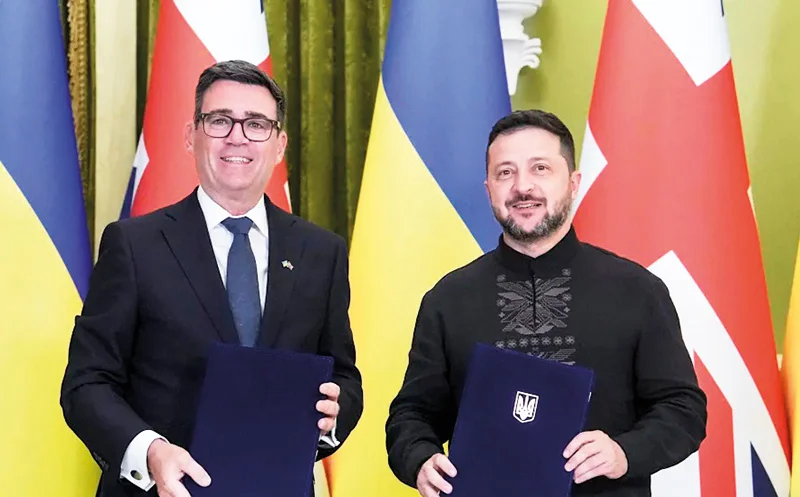
 The present offer by the UK to strengthen Ukraine’s defense capabilities in the missile technology field in particular comes as ‘a stitch in time’ and the initiative is also likely to be appreciated considerably by democratic opinion world wide for the possible morale-boosting effect it would have on Ukraine. Besides continuous arms support, the conviction that the world’s frontline democracies are behind it would prove a huge plus in Ukraine’s eyes in its grinding fightback against the Russian invasion.
While continued US support for Ukraine could not be considered ‘a given’ any more, British Prime Minister Andy Burnham’s words during a recent visit to Kyiv that the UK would stand by Ukraine ‘for as long as it takes’ is the kind of assurance that Ukraine needs at present. For, the conflict in Ukraine is essentially a war of liberation conducted by the latter against an invader and deeply at issue here is the upholding of International Law and its foundational concepts, such as national sovereignty and a nation’s right to political self-determination. The world of democracy is of the firm view that the latter ideals cannot be compromised, come what may.
The UK has its work cut out in this connection. It would find it difficult to convince the Trump administration that it should staunchly stand by Ukraine but it could campaign vigorously with the rest of the West and the EU fold in particular to unflaggingly support the embattled and over-run country.
Ukraine has shown an impressive adeptness in using drone technology in particular against her enemy and has even manufactured her own hardware in this respect but using the relevant blueprints handed over by the UK for the manufacture of more sophisticated cruise missiles, for instance, may prove financially difficult, going forward. It is left to be seen whether the UK and the rest of the West who are with Ukraine will continue to be with her, considering their own rising financial constraints.
The latter impediments could only multiply in the future. Oil, gas and energy prices are on the rise and the latter costs are glaringly reflected in kitchens and meal tables the world over. As we go along consumer discontent would steadily intensify and governments, East and West, would need to figure out with considerable rigour and foresight how such disaffection could be ably managed. Failing which, in most democratic societies, the chances are that publics would be out on the streets demanding that their grievances be redressed forthwith.
These rising concerns are reflected in a recent move by some EU governments to consider imposing what is described as ‘a windfall tax’ on the profits specified major oil companies operating within their shores have made in the wake of the US-Israel war on Iran. The rationale apparently is to use such tax earnings to cushion the rising cost of living of their publics and bolster the respective countries’ social expenditure.
In a recent letter to the president of the EU Council the EU governments referred to said, among other things, while drawing attention to the ‘discontent that is growing over the rising cost of living’: ‘A common approach’ is needed that ‘ensures those who profit from the crisis contribute their share to reducing the burden on the general population.’ Meanwhile, Oxfam with reference to the above development is on record as calling for a ‘permanent windfall tax of at least 50% on profits exceeding a 10% return on investment.’
Such are the rising economic pressures on the majority of Western governments. The question to be posed is how consistent they would be in their assistance to Ukraine if they decide consensually to stand by her. The soaring cost of living in the West compels the conclusion that there could be no guarantee that Western assistance to Ukraine, particularly in the defense and security fields, would be of a longstanding kind.
Of particular concern would be the fact that the weapons systems on offer from the UK to Ukraine could be increasingly costly to manufacture going forward. Besides they would need to be manufactured and put into action without delay.
However, these considerations should in no way deflect Ukraine’s supporters from the principled policy stance of defending her to the extent possible. Because at issue is the defense of International Law and the democratic system of government from their enemies; fascism and authoritarian rule.
While during World Wars 1 and 2 the US was with the major democracies of the West, this time around with regard to Ukraine, the US has chosen to be at cross-purposes with them. For instance, in relation to tariff matters and defense expenditure, in the NATO context, the US is pursuing a hard line which puts it at polar opposites with the West. Thus it is no longer possible to talk unreservedly of a ‘Western democratic alliance’. Put plainly, the cause of democratic development has been weakened.
A measure of relief for the supporters of Ukraine in the West could come by way of the upcoming mid-term polls in the US. If the Democratic Party fares well in them the pressure would be on the Trump administration to defer to opposition opinion at home, accommodate the best interests of Ukraine in its West European policy and perhaps even work towards a diplomatic solution to the Ukraine crisis in cooperation with Russia. Accordingly, the Democratic Party would need to put the Trump administration on the defensive, so to speak.
Until such time Ukraine’s Western supporters have no choice but to remain committed to it, ensure its steadfast defense against the invasion and work judiciously towards keeping the economic pressures at home in check.
Interestingly, at the present juncture in international politics the US could be said to be more weak than strong. For example, it has to some extent been militarily humbled by Iran; so much so it is resorting to economic means to keep Iran in check.
In keeping with this strategy, the US has launched ‘a new big wave of anti-Iran economic sanctions’ at the time of writing, aimed at cutting Iran away from all its major income sources. Some of these relate to digital assets, technology, gold, aviation and shipping. The hoped for result is the complete severance of Iran from the US dollar system.
However, while the UK and EU have no choice but to adhere to their policy of backing Ukraine, going forward they would need to dialogue more closely with the US and ensure that it cooperates with them on outstanding questions, such as Ukraine and the strengthening of democracy. The well being of the world is served when the latter aim is pursued.
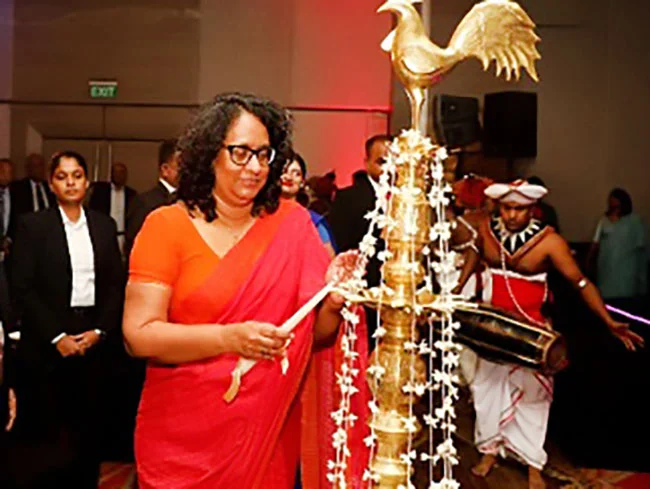
OPA 39th Annual Conference calls for Sri Lanka to move Beyond Recovery towards Sustainable Transformation
The Orgnisation of Professional Associations (OPA) successfully concluded its 39th Annual Conference, held recently at the Cinnamon Grand Colombo, under the theme “Envisioning Sri Lanka: Beyond Recovery”.
Held under the patronage of Jayantha Gallehewa, President of the OPA, with the leadership and guidance of Tisara De Silva, President-Elect and Chairman of the 39th Annual Conference, the Conference brought together leading professionals, academics, business leaders and representatives of the public and private sectors to deliberate on Sri Lanka’s next phase of national development.
The Inaugural Session, on August 2026, was graced by Prime Minister Dr. Harini Amarasuriya, as the Chief Guest; Andrew Patrick, British High Commissioner to Sri Lanka, as the Guest of Honour; and Murtaza Jafferjee, Chairman of the Advocata Institute, Sri Lanka, as the Keynote Speaker.
In her address, Prime Minister Dr. Harini Amarasuriya emphasised that overcoming the economic crisis alone should not be Sri Lanka’s ultimate objective, stressing that recovery must serve as the foundation for a broader economic and institutional transformation necessary for sustainable national progress. Reflecting on the difficult period experienced by the country, the Prime Minister noted that Sri Lanka had faced significant economic, social and institutional challenges, which had weakened public confidence and created uncertainty about the country’s future.
She stressed that “recovery only provides the foundation” and that Sri Lanka can move forward sustainably only by using that foundation to bring about meaningful transformation.
The Prime Minister observed that the theme of the OPA’s 39th Annual Conference, “Envisioning Sri Lanka: Beyond Recovery,” aptly encapsulated these national aspirations. She emphasised that Sri Lanka’s objective should not merely be to return to the conditions that existed before the crisis, but to forge a stronger national foundation characterised by robust institutions, a resilient economy, high-quality public services and an enabling environment in which every citizen has the opportunity to thrive.
She further underscored that Sri Lanka’s future development cannot be secured through economic growth and physical development alone. She emphasised that the effective mobilisation of the country’s knowledge, skills and professional expertise, is equally essential to achieving sustainable and inclusive national progress
The Technical Sessions held on 12 August 2026 brought together 19 distinguished experts and professionals representing academia, industry, banking and finance, public health, technology, management and business leadership. Their diverse expertise provided a multidisciplinary platform to examine the critical challenges, emerging opportunities and strategic choices that will shape Sri Lanka’s next phase of development, with particular emphasis on economic transformation, institutional strengthening, digitalisation, private-sector growth, human capital and sustainable development.
The deliberations were structured around four principal sub-themes: “Resilient Recovery and Sustainable Economic Development”; “Future Readiness: Innovation & Transformation”; “Policy for Impact: Advancing Equity, Sustainable Living, and National Well-Being”; and “Leadership, Governance and National Responsibility.”
Across these thematic areas, the sessions explored the structural reforms, institutional requirements and policy choices necessary to move Sri Lanka beyond economic stabilisation towards a more productive, competitive, resilient and inclusive economy. The discussions brought together diverse professional perspectives, enabling participants to examine national priorities through economic, technological, industrial, financial, social and governance lenses.
Particular emphasis was placed on the need to move beyond the diagnosis of problems towards pragmatic, evidence-based and implementable solutions. The deliberations recognised that sustainable national progress requires not only sound policies, but also effective institutions, professional competence, innovation, responsible leadership and the capacity to translate policy into tangible outcomes.
The sessions further underscored the importance of collaboration across sectors, recognising that Sri Lanka’s complex development challenges cannot be addressed in isolation. Stronger engagement among Government, private sector, professional associations, academia and civil society was identified as essential to fostering a coherent national response and ensuring that professional knowledge and expertise are effectively translated into policy and action.
Collectively, the Technical Sessions provided a substantive platform for knowledge exchange, critical reflection and forward-looking dialogue, reinforcing the OPA’s commitment to bringing the country’s professional expertise to bear on the task of building a resilient, innovative, equitable and prosperous Sri Lanka.
The OPA expressed its sincere appreciation to Prime Minister Dr. Harini Amarasuriya, the Chief Guest; Andrew Patrick, British High Commissioner to Sri Lanka and Guest of Honour; and Murtaza Jafferjee, Chairman of the Advocata Institute, Sri Lanka and Keynote Speaker, for their distinguished contributions to the Conference.
Much of what the 39th Annual Conference achieved would not have been possible without the leadership, commitment and generous contributions of Jayantha Gallehewa, President of the OPA; Tisara De Silva, President-Elect and Chairman of the 39th Annual Conference; Eng. Ravi Rupasinghe, General Secretary; Dharshana Wijemanne, Treasurer; Bhanu Wijayaratne, Convener & the Chairman of the Session Planning Committee of the 39th Annual Conference Committee, Past Presidents and Office Bearers; Presidents and representatives of Member Associations; members of the Executive Councils and General Forum; and the distinguished Session Chairmen, Resource Persons and professionals who shared their time, expertise and insights in pursuit of the Conference’s shared vision. The OPA remains immensely grateful to all those whose collective contributions enriched the 39th Annual Conference and strengthened its role as a meaningful platform for professional exchange, informed dialogue and national reflection.
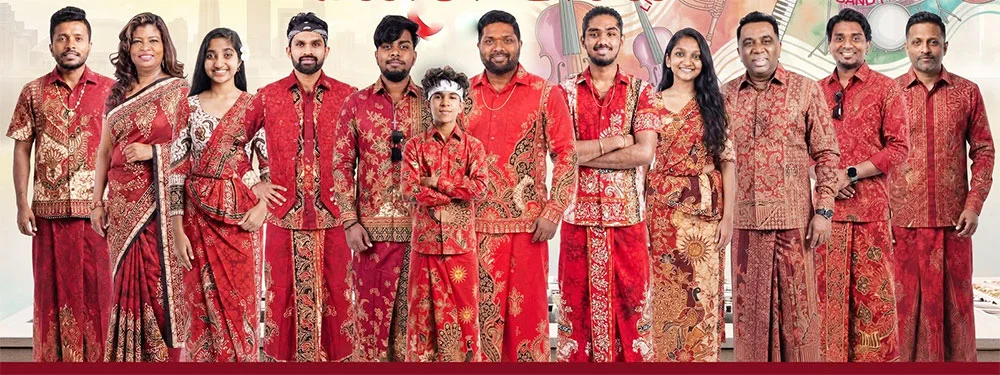
 For Sri Lankans living 14,000 kilometres from home, the sound of home has never felt closer — and that’s thanks to one man and his band.
Since stepping into the spotlight, Gamini Hemalal and the Ceymphony Band have turned into the heartbeat of the Sri Lankan community in Toronto.
Their mission is simple: bring the music, bring the memories, bring the people together. And it’s working.
What turned out to be the talk-of-the-town was their intimate musical evening with Sri Lanka’s legendary crooner Sohan Weerasinghe.

Sohan Weerasinghe: Had
everyone on their feet at the
Angus Glen Golf Club, in
Toronto, Canada
It was a ‘full house’ long before the big date. Tickets vanished within days — demand was that overwhelming.
According to those who were there, it was a truly amazing evening. The hall was packed, the energy electric. Sohan didn’t just sing — he owned the stage.
With his velvet vocals, his charm, and that signature style, he had everyone on their feet. The ladies, especially, couldn’t get enough. No wonder they call him “The Ladies’ Man!”
One attendee summed it up perfectly:
“We had so much fun. It is truly a blessing to have our kids around us, enjoying these beautiful moments together. Thank you, Gamini Hemalal, for such a wonderful evening, with an amazing crowd and an incredible atmosphere. Your hard work and dedication truly made it a special night.
“We also need to say a big thank you to the Ceymphony Band for delivering such an outstanding performance. You all were absolutely amazing! Our entire family had a fantastic time, and we truly enjoyed every moment.
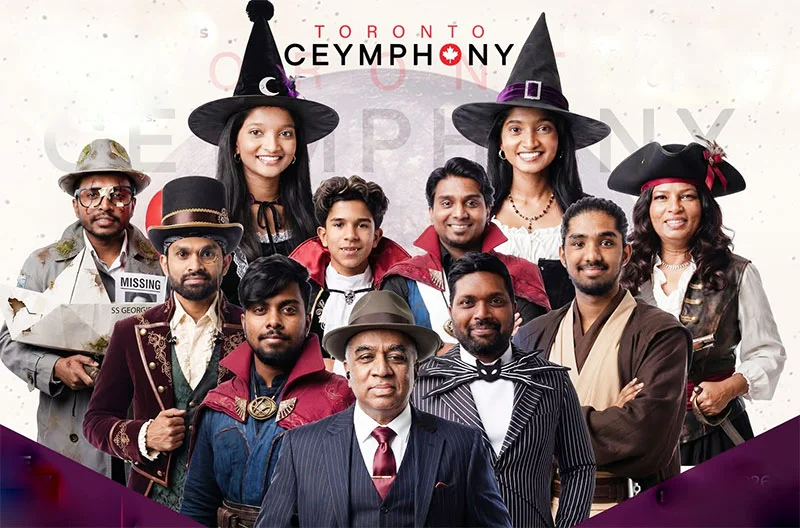
Ceymphony Band: Extremely popular in the scene in Toronto
“Wishing you all continued success. Keep up the amazing work, we can’t wait for the next.”
And the next is already on the cards: ‘Halloween Pissu Baila Party 2026,’ on Friday, 30th October, at the famous Angus Glen Golf Club.
Gamini promises a crazy night of baila, music, dancing and Halloween vibes with the Ceymphony Band. Action runs from 8:00 PM to 12:00 midnight, with plenty of prizes to be won.

Gamini Hemalal: Amazing work for the Sri Lankan community,
in Toronto, Canada
Gamini is also putting together a special event, connected with the 2027 Avurudu celebrations — ‘Avurudu Musical Show 2027,’ a uniquely styled musical Avurudu celebration … Ceymphony Band style.
It’s scheduled to be held on Saturday, 10th April, 2027, also at the Angus Glen Golf Club.
Through music, Gamini Hemalal and Ceymphony are doing what diaspora bands do best — they’re shrinking the distance between two worlds.
One baila beat at a time, one full house at a time, they’re making sure that even in Canada, Sri Lankans feel like home.
Yes, there is plenty of action, indeed, for the Sri Lankan community in Toronto, Canada.

Showers above 50 mm are likely in the Western, Sabaragamuwa and North-western provinces and in Kandy, Nuwara-Eliya, Galle and Matara districts

Patali alleges NPP conspiring to put off elections indefinitely

August 15 Super Dvora tragedy: Search continues for missing officer’s body

Tripartite MoU to expand free cardiothoracic surgeries at KDU Hospital

Jaffna to mark Int’l Day of the Disappeared

Unfolding El Niño and burning issues

‘Dates have the highest sugar content to fight Coronavirus’

Sunday Island 27 December – Headlines

#SundayIsland 17th December – Headlines

Sunday Island – 28th March

Sunday Island Headlines – 21 March

Sunday Island – 21st February – Headlines
-
 News6 days ago
Country’s first woman Surveyor General appointed
-
 Business5 days ago
SriLankan Airlines makes ShakthiSAT Mission possible for talented Sri Lankan student
-

 Features6 days ago
Medical education in Sri Lanka: Then and now
-
 Latest News6 days ago
Imran Khan moved to private hospital amid deteriorating health
-

 Latest News6 days ago
Government has declared 21, 22 and 23 August 2026 as national days of mourning
-
 Features4 days ago
My secondary schooling after Royal Primary
-

 Latest News5 days ago
Tharanga edges out Chopra in 88m javelin battle
-
 News6 days ago
22A: Opp. demands all available SC judges hear petitions