
News
Experts warn of risks to Sri Lanka’s economic recovery without political consensus on key reforms


LDM hosts discussion themed “Sri Lanka: Doomed without consensus
The discussion organised by the Lanka Democratic Movement focused on the need for political consensus on crucial economic reforms in Sri Lanka. The speakers pointed out that without a common agreement on key reforms, Sri Lanka’s recovery and its ongoing programme with the International Monetary Fund (IMF) could be at risk. The speakers emphasised the importance of implementing these reforms without failure and adhering to a plan for a reasonable period of time.
The Convener of the Lanka Democratic Movement, Rasika Jayakody, explained that Sri Lanka is not in a position to move away from the IMF bailout package as the country is in a disastrous situation as far as the economy is concerned. Therefore, Sri Lanka did not have the luxury of choosing when it had the opportunity to negotiate with the IMF on better terms. The country had to pursue the IMF option after becoming a bankrupt nation, and now, it has to swallow a better pill. Jayakody emphasised that it’s crucial to implement these reforms without failing, and policymakers must understand the gravity of the situation and move in one direction for at least five years.
Economist Rohan Masakorale emphasised the importance of policy stability in Sri Lanka. Masakorale explained that the country brought its economy on the right track in 1977, and there was significant progress between 1977 and 1982. However, after that, the country lost its way, and the riots in July 1983 caused many global companies that were exploring their investment prospects in Sri Lanka to go to Thailand. Moreover, the war erupted, and Sri Lanka paid a heavy price.
The biggest downfall in Sri Lanka was the successive governments’ failure to ensure policy stability. Masakorale pointed out that the Janasaviya programme was a progressive attempt to alleviate poverty through sustainable means. However, the government that came to power in 1994 politicised it and created a programme that did not produce the desired results. Sri Lanka must understand the gravity of the crisis and take corrective steps with consensus. Today, India has privatised all its ports, and Sri Lanka made a mockery of the plans related to the Easter Container Terminal at Colombo Port. The country wasted three years debating various conspiracy theories, and now it’s paying a heavy price for that.
Attorney at Law and Chairman of Citizens for Accountable Governance (CAG), Mangala Niyarepola, emphasised the absence of a master plan in Sri Lanka’s economy. He explained that political parties can include any fairy tale in their election manifestos as there is no mechanism to hold them accountable for their promises. Therefore, they end up doing ad-hoc projects without any rational basis, and they can manipulate the media and change public opinion closer to the election. That’s why Sri Lanka has ended up in this mess.
Niyarepola emphasised that when there is no master plan, no rule of law, no mechanism to hold politicians accountable, and no transparency, no serious investor will come to the country. The majority of so-called investors coming to such a country could be driven by vested interests, which is a failure in the system that Sri Lanka must address. The country needs a grand master plan that has constitutional protection, an all-encompassing document prepared by experts and technocrats. Political parties should not be allowed to deviate from the master plan without a referendum, and an institutional framework must be set up to implement this master plan with the participation of the public. This is the only way Sri Lanka can drive the much-talked-about “system change.”
The panelists highlighted that not having a common consensus on key reforms could derail Sri Lanka’s recovery and its ongoing program with the International Monetary Fund (IMF).
However, achieving political consensus is no easy task in Sri Lanka’s current political climate. The absence of a master plan, policy stability, and transparency has resulted in ad-hoc projects and a lack of accountability. Political parties can manipulate the media and change public opinion closer to elections, which ultimately leads to a lack of trust in the government.
The current crisis in Sri Lanka’s economy demands immediate attention and action. The government and policymakers must prioritise achieving political consensus on crucial economic reforms, implementing them effectively and efficiently, and working towards a grand master plan that will protect Sri Lanka’s economic future. Without political consensus, Sri Lanka’s economy may continue to face instability and challenges that could have far-reaching consequences for the country and its people.

Latest News
Sun directly overhead Bentota, Thiniyawala, Iththakanda, Udawalawe, and Kataragama about 12.08 noon t9day (06)


The sun is going to be directly over the latitudes of Sri Lanka from 28th of August to 07th of September due to its apparent southward relative motion.
The nearest places of Sri Lanka over which the sun is
overhead today (06) are Bentota, Thiniyawala, Iththakanda, Udawalawe, and Kataragama about 12.08 noon
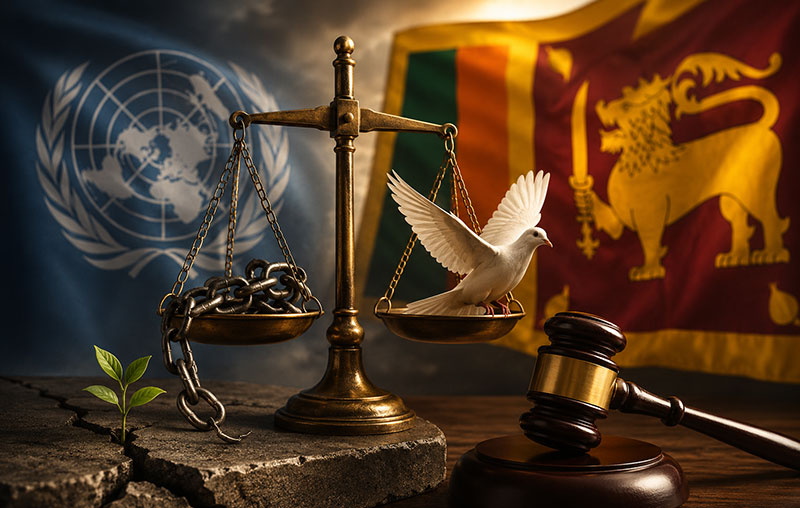
MONETABRIEF –The UN human rights chief on Thursday welcomed Sri Lanka’s robust anti-corruption drive but urged President Anura Kumara Dissanayake to apply the same vigour to ending impunity for continuing rights abuses.
In its latest report to the UN Human Rights Council in Geneva, High Commissioner Volker Turk noted that cases of torture and deaths in custody continued to be reported in Sri Lanka despite the change of administration.
“While it is encouraging that the Sri Lankan authorities have taken action to address corruption cases and some crimes linked to the post-war period, more needs to be done to end the long legacy of impunity in the country,” the rights chief said.
His report, covering October 2025 to July 2026, notes steps to tackle corruption, including high-profile arrests and investigations linked to political killings, enforced disappearances and the 2019 Easter Sunday attacks.
He said it had been a difficult period for Mr Dissanayake’s new government, following the devastating Cyclone Ditwah which killed some 650 people and devastated much of the island and a global spike in energy prices.
The report noted that the Human Rights Commission of Sri Lanka had documented 602 cases of torture and ill-treatment in 2025 and 138 cases by April 2026.
The local commission also reported 18 deaths in custody last year and a further three by April this year. In one such case, a 40-year-old inmate detained for a minor drug-related offence died at Welikada Prison in Colombo on 3 May, allegedly from severe beatings.
“This Government still has an opportunity to turn the tide on decades of abuse of executive power, repressive laws and custodial violence, and entrenched impunity,” Turk said.
He regretted that the government had yet to deliver on its promise of legal and institutional reforms and continued to apply the repressive Prevention of Terrorism Act (PTA), resulting in arbitrary arrests and prolonged detention without charge.
Civil society actors, activists and journalists remained subject to state surveillance, while tensions over land and religious sites continued to simmer, the report said.
It also highlighted violent riots at Negombo Prison in July, which left at least 32 dead, underscoring the urgent need for prison reform to address systemic issues, including severe overcrowding.
The UN Human Rights Office had received at least 16 allegations of surveillance against civil society actors, activists and journalists, the report said.
There was “a clear and continuing pattern of state surveillance, intimidation and reprisals by military and intelligence officials, including from the Criminal Investigations Department or the Terrorism Investigation Division”.
“Individuals are repeatedly questioned about their travels, especially to Geneva and engagement with UN human rights processes, as well as their organizational affiliations, funding sources, and participation in protests or commemorative events.”
While the Government had continued to denounce racism and promote national unity, wider efforts to ensure truth and justice risked stalling and the momentum for transformative change being lost, the report warned.
Failures to effectively investigate and prosecute crimes under international law allegedly committed during the armed conflict persisted.
“It is crucial that there is decisive and meaningful action toward accountability for crimes and violations by all parties during the more than two-decade armed conflict,” Turk said.
He noted the recent decision by the Attorney-General to indict former Eastern Province Chief Minister Sivanesathurai Chandrakanthan, also known as Pillayan, and three others in connection with the abduction and murder of former Eastern University Vice-Chancellor Professor Sivasubramaniam Raveendranath in 2006.
“It is, however, regrettable that many other serious emblematic cases remain stalled for years, including the killing of 17 Action Contre La Faim aid workers in Muttur 20 years ago,” he said, calling for meaningful steps to resolve such delays.
The High Commissioner urged Sri Lanka to redouble its reconciliation and accountability efforts. He called for a moratorium on the use of the Prevention of Terrorism Act pending its repeal, as well as the release of long-term detainees held under it.
He also called for all individuals credibly accused of human rights violations to be excluded from senior positions in government, the security sector or the diplomatic service until such allegations were genuinely addressed and resolved.
He urged the Government to support victims’ memorialisation initiatives and to release military-occupied lands.
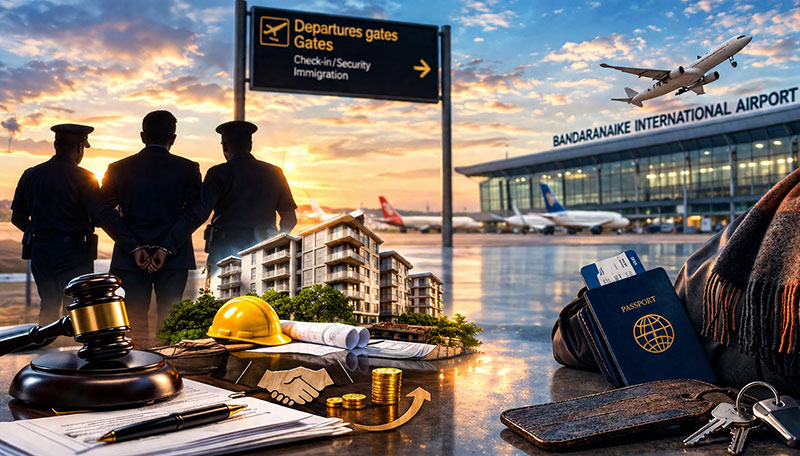
A dispute between a wholly owned subsidiary of Lanka Realty Investments PLC, Mulberry Holdings (Pvt) Ltd., and a contractor, Omni Engineering & Trading Solutions, that resulted in Executive Director Hisham Jamaldeen of Lanka Realty being stopped at Katunayake and prevented from leaving on a business visit to the UK has been resolved with Jamaldeen bailed and the travel ban imposed on him revoked by the Maligakanda Magistrate, Lanka Realty’s said in a Stock Exchange filing last week.
This followed Mulberry agreeing to pay Rs. 25 million to Omni on or before Sept. 26.
Following media reports of Jamaldeen being prevented from leaving the country at the BIA, Lanka Realty made two Stock Exchange filings on Sept. 3 – the first detailing the dispute between the two parties and the second indicating that the matter had been settled.
In the first filing, the Secretaries for Lanka Realty said:
“The article refers to Mr. Mohamed Hisham Jamaldeen, Executive Director of Lanka Realty Investments PLC and a Director of Mulberry Holdings (Pvt) Ltd, a wholly owned subsidiary of the Company and the developer of “Mulberry Residences” in Colombo 10.
“Mulberry Holdings (Pvt) Ltd entered into a construction contract with Mr. Randika of M/s Omni Engineering & Trading Solutions on 21st June 2022 for a sum of LKR 32,854,992.00), which is less than 1% of the total value of the “Mulberry Residences” Project which is around LKR 3.6 Billion.
“The said contract is governed by the CIDA/SBD1 Standard Bidding Document Conditions of Contract, which provides for adjudication and, if required, arbitration as the applicable dispute resolution process. The Company understands that the underlying matter relates to a contractual payment dispute involving Mulberry Holdings (Pvt) Ltd’s aforcsaid contract.
“Following a call received from the Colombo Crime Division (CCD), Mr. Jamaldeen went to the CCD on 25th August 2026 and provided a statement in relation to the matter inter alia explaining that the matter in dispute was arising from a civil contract. He was not arrested on that date and was not informed at that time or thereafter prior to receiving information at the Airport, that a travel ban had been imposed.
“On 2nd September 2026, while travelling overseas for business on a pre-arranged itinerary, Mr. Jamaldeen was informed at immigration of a travel ban imposed on 24th August 2026, following which he was arrested by the CCD. A bail application is expected to be made when Mr. Jamaldeen is produced before the Magistrate’s Court of Maligakanda today, 3rd September 2026.”

Shree Charani, Prema Rawat spin Pakistan out for 55 in one-sided contest

Sun directly overhead Bentota, Thiniyawala, Iththakanda, Udawalawe, and Kataragama about 12.08 noon t9day (06)

Showers above 75 mm are likely at some places in the Uva and Eastern provinces.

Tharanga creates history with Diamond League crown in Brussels

UN welcomes Lanka’s anti-graft drive, seeks end to impunity

Dispute which triggered listed company director being detained at BIA resolved

‘Dates have the highest sugar content to fight Coronavirus’

Sunday Island 27 December – Headlines

#SundayIsland 17th December – Headlines

Sunday Island – 28th March

Sunday Island Headlines – 21 March

Sunday Island – 21st February – Headlines
-

 Features7 days ago
When Sri Lankan stories find their own voice
-
 News7 days ago
BASL takes exception to Justice Ganepola being denied a place in SC
-

 News4 days ago
Denied of promotion to SC despite vacancies, justice Gurusinghe retires
-

 Latest News4 days ago
Grade 5 scholarship exam results released
-

 News4 days ago
22A: SC urged to suspend hearing, appoint full bench
-

 Midweek Review5 days ago
The local and global dynamics of Sri Lanka’s 22nd Amendment
-

 Business7 days ago
ADB-funded Thalaiyadi plant serves as blueprint for vulnerable dry zones in Sri Lanka
-

 News5 days ago
Ai-CHA expands Lankan footprint with new Negombo outlet