
Features
Sri Lanka under British rule : Neither Gemeinschaft nor Gesellschaft

By Uditha Devapriya

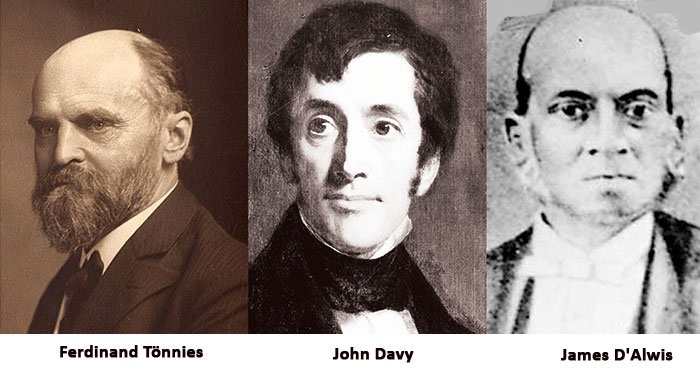
Since at least Marx and Malinowski, anthropologists have been fascinated by, and focused on, the links between “primitive-tribal” and “modern-secular” societies. I use these terms with a pinch of salt – hence the asterisks – for the simple reason that no society can be said to fit one case or the other. In its initial phase the social sciences did, admittedly, distinguish between the two, and took the teleological position that the one would lead to another: hence Ferdinand Tönnies’s idea of a progression from Gemeinschaft to Gesellschaft. Such progressions were depicted as long, eventual, but inevitable, and were accepted widely at a time when Europe, the harbinger of industrialisation and colonialism, had consolidated its position as the main, if not sole, locomotive of world history.
I have pointed out earlier, in this column, that Europe’s encounters with the non-West – Africa and Asia, basically – did not spur the kind of transition from tribalism to modernity which the most benighted missionary and colonial official had publicly advocated. This was no less true in India than it was in Sri Lanka. To give a simple and much used example, upon their annexation of Kandy, the colonial government did not do away with the caste-based duty system, and corvee labour, at once. Unlike scholars and romantics who envisioned a supposedly nobler role for the colonising West, the administrators and officials working on the ground saw the need to retain precapitalist, and thus primitive, social relations, in order to legitimise their rule over the newly acquired territories.
One discerns an intriguing, if fundamental, disconnect or contradiction here, between the supposed aims and the actual, lived experience of colonial rule. If the objective of colonial rule was indeed to transform the societies they had acquired by force and compulsion, then the relationship between the coloniser and colonised had to go beyond the position of mere dependence which colonised territories were subjected to. We know, however, that this was never the case. India, for instance, accounted for a quarter of the world’s industrial production, and British rule smothered its textile sector in the interests of ensuring a market for British textile exports. What this reveals is that, regardless of what scholars at the time may have believed, the West was primarily interested in sabotaging the national industries of the non-West, rather than in transforming their societies.
It was the destruction of these industries, as well as official patronage of precapitalist social relations, especially in regions like Kandy, that hindered the long progression from tribalism to modernity which the likes of Tönnies, Durkheim, and Henry Maine advocated. The latter were, strictly speaking, not propagandists or mouthpieces for colonialism: it would be wrong to consider them so on the basis of their Western and European background alone. But they were products of their time, and in their time the Western view of non-Western countries gradually being subsumed by colonialism and then developing into capitalist and modernist societies was more or less accepted. Even Marx, in his initial despatches on India, pondered whether British colonialism would beneficially impact that country’s historical and economic trajectory. Of course, Marx later changed his position, proving himself an exception.
In any case, these processes ran their course more discernibly, and thoroughly, in Sri Lanka than they did in India, where, perhaps because of its size or its plurality, colonial rule did not, and could not, destroy its industrial base or pre-empt the formation of an industrial (and somewhat anti-imperialist) bourgeoisie. In Sri Lanka, by contrast, British rule managed successfully to hinder the progression from feudalism to capitalism, thereby preventing it from achieving a transition from “tribalism” to “modernity.”
Since I have reflected on these concerns in my recent essay on Maduwanwela Dissawe and the temples of the South, I will limit my analysis here to another area where colonial rule had an undeniably distinct, and paradoxical, impact on local society.
Education had long been viewed, even by the Portuguese, and more prominently by the Dutch, as a useful instrument for the consolidation of colonial power. The Dutch, through their network of parish schools, were interested more in eradicating Portuguese power – with little to no effect, as the enduring popularity of Catholicism, even today, illustrates – than in educating local elites. The latter objective formed the cornerstone of British policy on education, particularly after the Colebrooke-Cameron reforms of 1833.
The British government was itself not in one mind over education, and it was hardly in agreement with missionary enclaves who were interested more in converting locals to their specific brand or denomination. But by and large, a sort of tacit understanding developed between the two that these schools would inculcate Western values, and educate a class of locals who could staff the civil administrative service.
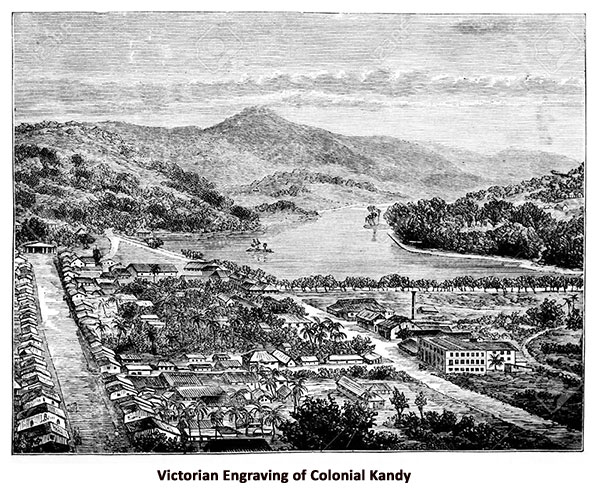
The first British officials to set foot in Kandy – among them, John Davy – were demonstrably surprised at the state of education there. Products of elite public schools and universities themselves, they were astonished by how much of a widespread institution education had become in the highlands, administered by the pansalas and limited to the male population. In Britain at the time, education had become the preserve of the old aristocracy and an emerging bourgeoisie. It was this model, based fundamentally on filtration theory – or the entrenchment of a minority, to the exclusion of the masses – which British officials sought to enforce in the island. By contrast, missionary bodies were interested in taking their gospel as far as possible, even preaching it in the vernacular. Yet even though they were in conflict with the government’s more utilitarian approach to education, over the years they conformed to that approach while pursuing their own objectives.
For obvious and logical reasons, the institutions of a colonial society – the superstructure, to borrow Marxist terminology – acutely reflect, or appropriate, that society’s economic base. In Sri Lanka, colonialism had transformed if not transmogrified precapitalist social relations without fundamentally challenging them: hence the government’s decision to retain rather than overhaul caste and rajakariya, and hence its decision to co-opt rather than eradicate the Kandyan aristocracy. Within such a setup, a transition from tribalism to modernity was simply not possible, particularly after the grafting of a plantation economy which reduced the peasantry to a position of dependence while undercutting them through the import of cheap, indentured, and perpetually exploited labour from South India.
It goes without saying that this setup was well reflected in the schools and other educational institutions that the colonial State established in the mid-19th century. How so? First and foremost, these schools reaffirmed the colonial State’s advocacy, and enforcement, of elite filtration, or education for a minority as opposed to the masses. In areas like Kandy, the State did not interfere when missionary bodies set up schools, because it provided them with the opportunity to educate the children of native elites and European planters. The colonial State itself did not own the kind of “superior” schools that missionary bodies did: it had the Colombo Academy, but that was in Colombo. Elsewhere, as far as the aims of the State and missionary enclaves went, laissez-faire ruled the day. Individual governors may have held views that were antithetical to the aims of these enclaves, but again, such rifts were temporary, and were in any case resolved by succeeding governors.
Secondly, the curriculum of these schools was, in comparison to the needs of a society that had yet not industrialised, hardly modern or progressive. The students of these institutions not only learnt the literature, history, and culture of a society far removed from them, their very education distanced them from the society to which they had been born. This had the dual effect of distancing themselves from their roots while failing to root them in the society of the “mother country”, or the metropole. James d’Alwis’s memoirs, in which he recounts the pressure to conform and uproot himself that he experienced at the Colombo Academy, illustrate this dilemma well. Many years later, Ralph Pieris could recount his childhood at the Academy – by then renamed Royal College – in just about the same terms. I quote him in full, simply because it sheds light on what these schools stood for.
“The Ceylon schools supported an authoritarian regime in the classroom where the rod was not spared, idealised ‘manly’ sports such as boxing and rugger, while a disciplined military apprenticeship was provided by the cadet battalion. Many adults have hankering fixation on school life, the joys of cricket; and masochistic adoration or the father-figures of teachers. even if they were responsible for sadistic and humiliating physical chastisement… All too frequently I have witnessed the tragicomic spectacle of elderly men leading a hollow existence, pitiful spectators of sports they can no longer actively participate in, who have rejoiced only in the transient marvel of their physical strength, [to] discover in later life that their range has become restricted and their interests few.”
Ralph Pieris, Sociology as a Calling: A Desultory Memoir
Modern Sri Lanka Studies, Vol. 3, No. 2, 1988, pp 1-33
Pieris’s observation leads me to my third point, which is that the elitism engendered and perpetuated by these institutions continued long after colonial rule, and in fact continues today. There are, of course, important differences between colonial and post-colonial society. The right to vote, and free education, emancipated the masses from the fields or “avocations” to which the colonial State had restricted them. These developments were not wholeheartedly accepted by the elite of the day: in criticising the Central School System, for instance, a member of the Colombo upper class remarked that the new schools would never be as good as the elite ones. Yet such reforms had in themselves been necessitated by the right to vote, and could not be prevented or pre-empted. Despite the machinations of the English-speaking bourgeoisie – which either accepted these reforms or chose to migrate from the country – free education became well established, even in the schools which they had attended, and to which many of them continued sending their sons.
In my essay on the Royal College Hostel, published last August, I noted that independence brought about a transfer of power from the legatees of British power to an indigenous class. In elite schools, I added, this transfer was not so much from the upper echelons to the lower classes as it was from an elite to an upward aspiring petty bourgeoisie, or intermediate elite. Such transformations did not fundamentally put to question, much less challenge, the elitist structures that had been implanted in these establishments by the British government. This is why Pieris’s memoirs paint an accurate picture of these institutions, not just from his time but also from ours: Pieris’s description of past pupils’ “hankering fixation on school life, the joys of cricket” and of “elderly men leading a hollow existence, pitiful spectators or sports they can no longer actively participate in”, to give one example, is amply visible at the many matches, parades, and functions organised by these schools today.
All this goes back to my original point, that British rule did not liberate colonial societies, like ours, from our tribalist past. A careful examination of the institutions which were set up by colonial officials here, during that period, should make that much clear. The transition from colonial to post-colonial society has not really challenged the status quo. If at all, it has only substituted the domination of one social class for that of another: the petty bourgeoisie, for the Anglicised colonial elite. Against such a backdrop, it behoves us to ask what exactly must be done to ensure, not merely the eradication of colonial-precapitalist remnants in these institutions, but the eventual progression, in our country, from the colonial-tribalist setup to which it continues to be tethered, 75 years after independence, to a truly modern, secular, and progressive society. Such a transformation requires a radical shift in our perceptions of education, governance, and political reform. Yet it is needed, especially at a time when mass anger against the elite class has reached fever pitch.
The writer is an international relations analyst, researcher, and columnist who can be reached at udakdev1@gmail.com.


 Despite some sections of the Trump administration persisting with the view that the possibility could not be entirely ruled out of there being a diplomatic solution to the current US-Iran hostilities in West Asia, the skeptic could not be blamed for thinking otherwise. The intensity, scale and frequency of the tit-for-tat strikes by the antagonists over the past few days against selected military targets and civilian infrastructure in particular in West Asia make the adoption of this stance excusable.
The continuing hostilities render the mentioning of the MOU signed between the warring parties in mid-June a laughable matter. While it could very well be that the foes are wishing privately for a cessation of hostilities before long, what seems to be uppermost on their minds right now is to negotiate with each other from a position of strength. This strategy compels them to incapacitate each other militarily to the extent possible, lest they have to concede too much to each other during negotiations. Hence the stepped-up hostilities.
However, even on the question of there being a negotiated political settlement in the West Asian theatre in the longer term, the skeptic could come to be seen as scoring over the optimist. Developments on the ground account for this.
At the time of writing Israel’s Netanyahu government is going ahead in fairly care-free fashion with the establishment of more Jewish settlements in the Gaza and the West Bank, and it’s all happening under the apparently complacent gaze of the US. In fact, some quarters estimate that Israel is in control of some 65% of the Gaza Strip. Ethnic cleansing, that is, is being drastically stepped-up.
Accordingly, in terms of the power relations of West Asia, the world is almost back to the status quo of the late forties of the last century when the state of Israel was established and the Palestinians were reduced to a microscopic minority in the land they came to inhabit. Therefore, even the impartial observer would be compelled to ask: ‘Will a negotiated peace be ever possible in the Middle East?’
The humanist in the observer would prefer to answer this question in the affirmative and it is indeed the ideal stance to adopt considering the staggering human and material costs of the conflict. But the way ahead to peace could be expected to be highly hazardous and arduous. Among other odds, it would also prove an uphill endeavour to win minds and hearts.
The US’ Trump administration would need to be counted out in this pursuit. This is on account of the fact that it has been far too wayward in its management of West Asian affairs in particular over the past couple of years. Given its unpredictable character it is a matter for conjecture whether it could be counted on to live up to its commitments.
Moreover, Israel could be expected to ‘go it alone’ in the Middle East regardless of whether US help is coming or otherwise. It has indicated as much in recent times and Israel could be doubted on this score only at the doubter’s peril. Because time and again Israel has demonstrated that it could steadfastly defend its interests even single-handedly in the Middle East. History bears this out.
However, a durable alliance with the US would stand Israel in good stead. On the matter of military and intelligence assistance, for example, the US’s help proved invaluable for Israel in the past and going forward this is bound to be so as well. Moreover, it is unlikely that the Trump administration would give up on Israel, considering that a strong Israel is crucial for the furtherance of the US’ strategic and economic interests in West Asia.
But whether the above factors would have a considerable bearing on the question of working out a durable solution to the West Asian tangle is an entirely different matter. Israel, as in the case of the Palestinian enclaves, is acutely security conscious and would need to satisfy itself fully that it could live in a security environment that would guarantee its complete safety, going forward.
The Middle East is badly in need of another peace effort on the lines of the Oslo Accords of the mid-nineties that brought the key actors together and helped hammer out a solution that addressed some of their notable concerns. To be sure, that process did not prove to be the ideal answer to the tangle, but it yielded some respite to the region and drove home that one-time sworn foes could indeed negotiate with a degree of success. The West Bank authority, although falling short of fulfilling some key Palestinian aspirations, is testimony that a degree of success is possible if the intent is right.
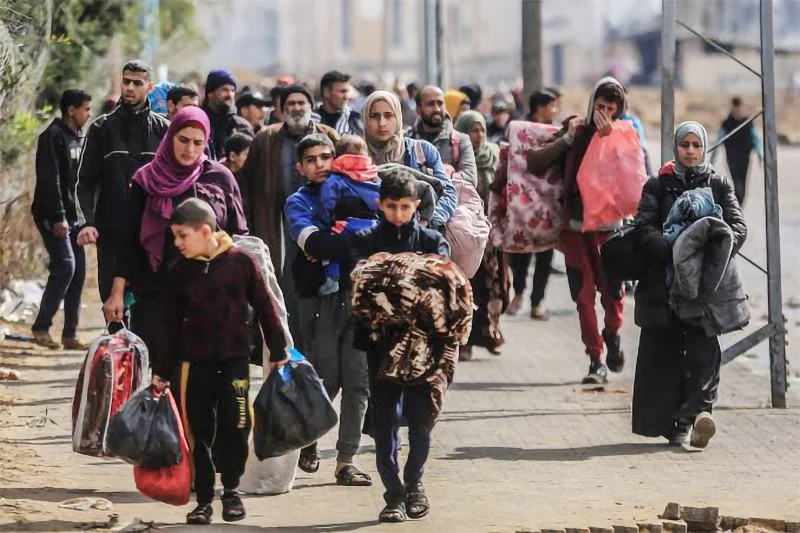
Given the current realities of West Asia, peace-making is bound to be an uphill challenge. The violence faced in recent times by the Palestinian community, in particular, has been nothing less than mind-numbing. Merciless has been the violence visited on them by the Israeli side. In such circumstances, durable peace in the region could smack of an idealist’s dream.
Nevertheless, there needs to be urgently, a meeting of minds over the divides. The US would need to be counted out as an honest broker in bringing the sides together but the rest of the West would do well to step up to the challenge.
In this exercise the onus would be on the world’s democracies to take the initiative and doggedly stay the course. An acceptable combination would be the EU and the UN. Given their credentials, the main sides in West Asia ought to find them the least controversial.
Even if the relevant institutional and political arrangements could be shored up to take a reconciliation process forward, winning hearts and minds for the peace drive would prove a grueling challenge. Over the past few years in particular tens of thousands of hearts and minds on both sides of the divide have been bruised badly in the runaway murderous violence that has come to define the Middle East.
These badly scarred personalities would need to experience healing without much delay. It is therefore a multi-faceted challenge that is at hand. Since wide-ranging expertise would be needed in the healing process, people’s participation in peace-making, ranging over the divides, would need to be made a durable reality. It will be a time for enthroning humanity and ensuring the rejection of all forms of violence and coercion.
 For many Sri Lankans, Thailand is the go-to holiday — beaches, temples, food, and that famous warm hospitality.
In fact, I’ve been to Amazing Thailand 24 times myself, and was honoured with the Friends of Thailand International Media Award by the Tourism Authority of Thailand for promoting Thai tourism.
The good news I have for you today is that you don’t even need a passport to get a taste of Amazing Thailand.
The Royal Thai Embassy, in Colombo, is bringing a vibrant slice of Thailand, to the city of Colombo, with Thai Festival 2026 — a cultural experience like never before.
Whether you are an avid enthusiast of Thai culture, a total novice, or simply just interested in exploring foreign cultures, Thai Festival 2026 is going to be the perfect opportunity for you to get more than just a glimpse into one of the most celebrated cultural heritages in South East Asia. And ENTRANCE IS FREE.
The festival will be held on the 1st and 2nd of August, 2026, at Siam Nivasa, 43, C.W.W. Kannangara Mawatha, Colombo 7, and the East Parking Area, of the Colombo Municipal Council, from 11:00am to 5:00pm.
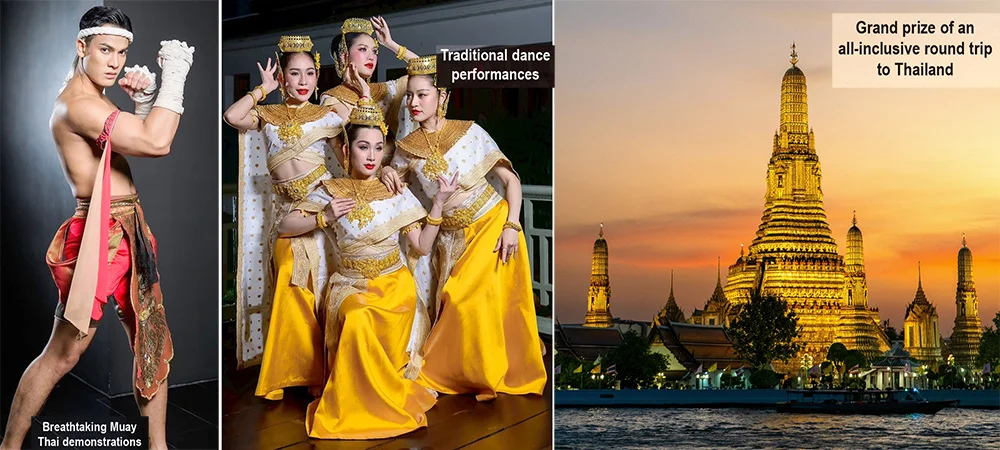
Both days will be full of live entertainment, and dispersed throughout with Thai cultural displays, including exhilarating traditional dance performances and breathtaking Muay Thai demonstrations.
Exploring art and craft specific to Thailand, tasting irresistible authentic Thai cuisine, and playing arcade games, are just a few more fun-filled events available for visitors at the festival premises.
An array of Thai products will also be available for purchase.
While at the festival, you will find Sri Lankan Alumni from Thai universities sharing their experiences with you and willing to answer any questions you might have, related to studying abroad in Thailand.
You can also register for the Muay Thai workshop that will be happening on the 7th and 8th of August, 2026, in Colombo.

Irresistible authentic Thai cuisine
Visitors can also stand a chance to win traditional Thai souvenirs, get exclusive photo opportunities, and, the big one — to enter the raffle draw, at the end of each day, for the grand prize of an all-inclusive round trip to Thailand.
Be sure to avail yourself of this exceptional opportunity and add a cultural spin to your weekend.
To keep up with the latest updates on Thai Festival 2026, head over to the Thai Festival official social media pages.
The Royal Thai Embassy in Colombo official webpage:
https://colombo.thaiembassy.org
Official social media:
Facebook: @RTEColombo
Instagram: @thaiembassysrilanka
Thai Festival official social media:
Facebook: Thai Festival in Colombo
Instagram: @thaifestival_colombo
TikTok: @thaifestival.incolombo

 Hair fall, in this heat, can be so frustrating, and noticing a thin patch is even more worrying. The good news is … yes, with a little care and kitchen ingredients, you can nourish your scalp and support healthy regrowth.
Try these four easy home remedies … even our grandmothers trusted:
* Coconut Oil and Curry Leaves Tonic:
Warm 04 tablespoons of coconut oil, with a handful of curry leaves, till the leaves turn black. Cool, strain, and massage into scalp 02-03 times a week. Leave for 01 hour, or overnight.
Why:
Coconut oil deeply nourishes, while curry leaves help strengthen roots and add shine.
* Onion Juice for Spot Treatment:
With cotton, dab the juice of 01 small onion, directly on the thin/bald patches. Leave for 20-30 minutes, and then wash with a mild shampoo. Use twice a week.
Why:
Rich in sulfur, onion juice helps boost blood circulation to the scalp.
* Aloe Vera and Castor Oil Mask:
Mix 02 tablespoons of fresh aloe vera gel and 01 tablespoon castor oil and apply to the scalp, focusing on thinning areas. Leave for 45 minutes, and then rinse with cool water.
Why:
Aloe vera soothes the scalp, while castor oil coats hair to make it look thicker.
* Fenugreek and Curd Strengthening Pack:
You will need 02 tablespoons fenugreek seeds, soaked overnight, and 02 tablespoons plain curd.
Grind to a paste, apply to scalp for 30 minutes, and then wash.
Why:
Fenugreek strengthens strands and reduces breakage.
Extra Tips for Healthy Hair:
Avoid tight hairstyles that pull on the scalp.
Eat iron and protein rich foods: greens, dhal, eggs, fish.
Use lukewarm water, not hot.
Be gentle when brushing and drying.
Manage stress — it plays a big role in hair fall.
Important: If bald patches are growing, or there is itching/redness, please consult a dermatologist.
Home remedies support hair health, but a doctor can find the exact cause.
Remember, healthy hair starts with a healthy, happy you.

Taskin Ahmed withdraws from LPL to prepare for Australia tour

US and Saudi Arabia announce nuclear cooperation deal

Navy seize Indian fishing trawler, nine fishermen poaching in Sri Lankan waters

Sri Lanka edge Qatar in Davis Cup opener

Dambulla Sixers hand Galle Gallants first defeat in LPL 2026

Jaffna Kings beat Colombo Kaps by five runs

‘Dates have the highest sugar content to fight Coronavirus’

Sunday Island 27 December – Headlines

#SundayIsland 17th December – Headlines

Sunday Island – 28th March

Sunday Island Headlines – 21 March

Sunday Island – 21st February – Headlines
-
 Features4 days ago
Two memorable excerpts from a former SLAF commander’s memoir
-

 Business4 days ago
‘Giving up was never an option’: The fisherman who fought back after losing millions in SL
-

 Latest News5 days ago
Davis cup Asia/Oceania Group IV 2026 to be held in Colombo from 20th to 25th July
-
 Features4 days ago
Erdoğan’s New Republic
-

 Life style4 days ago
Taste of the Swiss Alps comes to Colombo
-
 News5 days ago
Evidence recorded in money laundering case against Yoshitha Rajapaksa
-

 News5 days ago
Dengue outbreak gallops ahead: Infections surpasses 73,455, leaving 50 dead
-
 Midweek Review1 day ago
Three high-profile alleged suicides shaping key investigations