
Features
75 Years (3): Tom Nairn, AJ Wilson and the Break-up of States

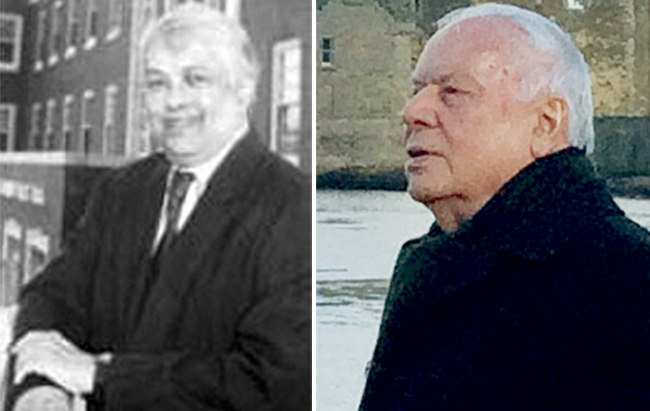
Rajan Philips
Tom Nairn, widely known for his 1977 book, The Break-up of Britain, considered by many as “the most significant book on British politics of the past half-century,” passed away on January 21, in Edinburgh, Scotland. He was 90 years old and had become a “guru figure” for Scottish Nationalists over the last few decades. Tributes have poured in from across Scotland’s political spectrum, both nationalists and unionists, including First Minister Nicola Sturgeon who would have been seven years old when Break-up first appeared, her predecessor Alex Salmond, as well as former Prime Minister Gordon Brown, the Scotsman from Glasgow. To writer David Greig, Nairn was “Scotland’s intellectual engine of civic contemporary nationalism.” Others have called Nairn, Scotland’s greatest modern philosopher.
The break-up book was not primarily an exposition or celebration of Scottish nationalism, but a breakdown of the crisis of the British State. In his 1977 introduction, Nairn acknowledges that “although no main part of the book was written in Scotland, that country’s problems were never far from the inspiration of all of them.” The introduction includes a list of Scottish intellectuals who helped him with comments and suggestions for the book, and the list includes Gordon Brown. Brown would have been 26 then, still six years before becoming a Member of Parliament, and was working on his PhD thesis at the University of Edinburgh, titled The Labour Party and Political Change in Scotland 1918–1929. The two had collaborated earlier, in 1975, in publishing the “The Red Paper on Scotland”, which Brown edited and to which Nairn was the lead contributor.
Gordon Brown stayed with the Labour Party in Scotland and in Britain, to become Britain’s longest serving Chancellor of the Exchequer and later Prime Minister. Nairn broke away first facilitating the formation of the Scottish Labour Party and then blessing its incorporation within the Scottish Nationalist Party. Brown’s passionate campaign against independence during the 2014 referendum was a factor in 55% of the people of Scotland voting against independence, a verdict that left Nairn hugely disappointed.
Brown was generous in his adulation of Tom Nairn after his death, describing him as “a great writer, thinker, intellectual and good man,” and acknowledging that Nairn “disagreed with me on many things but his books and scholarship will long be remembered.” Anthony Barnett, a former co-editor of the New Left Review, has called Tom Nairn and Gordon Brown “two towering political intellectuals,” who for nearly half a century “have wrestled over and shaped the Left’s view of the United Kingdom.” One of them (Brown) “directly shaped the Kingdom itself,” while the other (Nairn) played a direct “role in the emergence of modern Scotland.” Their “joint story” remains to be told.
Their story would be similar to the often-told Canadian story of Pierre Trudeau and Rene Levesque, two French Canadians and their intellectual and political fight over the status of Quebec in Canada. Here again, Trudeau as Prime Minister of Canada was able to thwart the attempt of Levesque, as the Premier of Quebec, to achieve quasi-separation for his Province through a constitutional arrangement called “sovereignty association.” As a political intellectual, Trudeau was quite dismissive of the statist aspirations of nationalism and characteristically said: “It is not the concept of nation that is retrograde, but its claim to sovereignty.”
Wilson’s Break-up
Eleven years after the publication of The Break-up of Britain, AJ Wilson published the first of his trilogy on the Sinhalese-Tamil conflict in Sri Lanka and titled it, The Break-up of Sri Lanka, perhaps emulating Nairn’s break-up title in Britain. Professor Wilson was not an advocate of political causes but a respected academic and Sri Lanka’s pre-eminent political scientist. The fact that Wilson was the son-in-law of SJV Chelvanayakam, Q.C., the father-figure leader of non-violent Tamil politics, did not diminish his reputation as an objective and detached academic. The affinal relationship certainly gave Wilson an intimate view of decision making in Tamil politics even as it gave him uniquely congenial access to Sri Lanka’s political leaders across the island’s many divides. Wilson was known for his affinity toward and admiration for Leftist leaders, NM Perera and Bernard Soysa; and his writings showed intellectual empathy for Prime Minister SWRD Bandaranaike and his well-intended, but failed, efforts to reconcile Sinhala-Tamil differences.
A product first of the University of Ceylon and then the London School of Economics, where he obtained his PhD and DSc, Professor Wilson had contributed immensely to the cause of political education in Sri Lanka directly as a teacher of several hundreds of political science students at Peradeniya, and indirectly through his popular and comprehensive textbook, Introduction to Civics and Government, that reached several thousands of students, in all three languages, in Sri Lanka’s schools until the book was banned by ultranationalist ignoramuses at the Department of Education in the early 1960s. Nonetheless, the book was more than a textbook and remained a constant companion for Sri Lanka’s political intellectuals like Rev. Paul Caspersz and Upali Cooray.
Wilson left Peradeniya in 1973 to accept the position as Chair of Political Science at the University of New Brunswick, Fredericton, Canada, where he remained until his retirement in 1993. Wilson’s break-up book directly arose out of his experience as a constitutional advisor to President Jayewardene between 1978 and 1983, and as a mediator between the President and the TULF leaders. The book is a historical narrative written by an academic from the standpoint of a political participant-observer. It is worth noting that the median over Sri Lanka’s national problem became totally out-sourced, post-Wilson and post-1983.
Now, several decades after the publications of the two break-up books and notwithstanding their premonitory titles, there has been no break-up either in Britain or in Sri Lanka. That is one superficial way of looking at it. A different view would be that over the last three decades there have been significant changes to the ruling structures of the two countries and they have contributed to the two states remaining unbroken. The truth is also that neither book carried a prognostic message or warning, but rather a critique and an analysis of the crisis in which each state was, and continues to be, embedded.
Tom Nairn went on to live for 45 years after the first break-up edition, revisited, modified or reinforced his arguments against a backdrop of rapid world changes, and wrote and published prolifically. Among the more significant books that followed the break-up are: The Enchanted Glass (1988), a substantive critique of and a polemical satire on the British monarchy; Faces of Nationalism (1997), in which Nairn widens his gaze beyond the British isles to make sense of the explosions of nationalism accompanying the implosions of the Soviet Union and Yugoslavia; and After Britain: and New Labour and the Return of Scotland (2000), a masterpiece on Blair’s “pseudo-conservative” Labourists as logical successors to Thatcher’s “pseudo-radical” Tories. In 2008, he targeted Gordon Brown, when he was Prime Minister, with an essay, Gordon Brown: The Bard of Britishness, which was published by the Institute of Welsh Affairs, as a symposium including responses to Nairn by others. As well, a new Verso edition of the Break-up was published in January 2022, 45 years after its first appearance.
Professor Wilson passed way in 2000, twelve years after the publication of The Break of Sri Lanka in 1988. He was in poor health but managed to publish two more books, to complete the trilogy and add to his impressive collection of nearly a dozen books on Sri Lankan politics. The second of the trilogy, published in 1994, was a political biography: SJV Chelvanayakam and the Crisis of Sri Lankan Tamil Nationalism, 1947-1977. His last word was published in 2000: Sri Lankan Tamil Nationalism: Its Origins and Development in the 19th and 20th Centuries. In between, he wrote articles to the Lanka Guardian and the Tamil Times, expressing his opinion on political events, including the one that he wrote with some optimism for positive changes when Chandrika Kumaratunga became Sri Lanka’s President in 1994.
Tom Nairn and Nationalism
Tom Nairn was born in Freuchie, Fife County, Scotland, not far from St. Andrew’s. After high school, he went first to Edinburgh College of Art but changed course for a degree in philosophy at the University of Edinburgh, followed by a stint at Oxford. Already steeped in Scottish history and culture, along with those of the Kingdom and the Empire, Nairn went to Italy on a British Council scholarship, where he learnt Italian and took to Gramsci. He would later recall that “If you were a Marxist [in Britain] you were a Stalinist or a Trotskyist, … but I was insulated against that by my Italian experience.” He was a compulsive writer, an academic and an activist. His academic activism, while a lecturer in 1968 at Hornsey College of Art, north London, in support of a sit-in protest, led to an administrative dismissal and quiet disbarment from teaching in British institutions. As a peripatetic academic, he roamed from Europe to Australia, before returning home to teach and write.
Nairn was a natural fit to the group of leftist intellectuals and activists who took over the publication of journal New Left Review (NLR), in London, in the 1970s. The journal had been in publication from 1960, launched by a group of British Marxists who, on the one hand, rejected the politics of the Labour Party and the legacy of Stalinism in the Communist Party of Great Britain, and, on the other, identified themselves wholeheartedly with the then vigorous Campaign for Nuclear Disarmament. The NLR became a conduit in English for the continental schools of Marxism and a respected forum for disseminating and debating the writings of interwar and postwar Marxists and progressive intellectuals like Antonio Gramsci, Gyorgy Lukacs, Karl and Hedda Korsch, Jean Paul Sartre and Simone de Beauvoir, EP Thompson, Louis Althusser, Nicos Poulantzas, and Charles Taylor.
The 1970s NLR group included, besides Tom Nairn, Perry Anderson, Robin Blackburn, Anthony Barnett, Fred Halliday, Nicolas Krasso, and Tariq Ali among others. Sri Lanka’s Upali Cooray, Marxist and Labour Lawyer, was active in the NLR circle. By the 1970s, NLR began taking positions in British politics and Anderson and Nairn formulated the famous Anderson-Nairn thesis on the decline and fall of Britain. The NLR supported Britain joining the European Community, setting itself apart from many in the Labour Party and much of the British Left at that time. Tom Nairn wrote and published a special issue of the journal in 1972, titled, “The Left against Europe?”
The Break-up of Britain, Nairn’s magnum opus, is a collection of articles that he wrote to the New Left Review (NLR) between 1970 and 1977. The articles were written at different times – 1970, 1974, 1975 and 1976, during a decade of alternating governments and severe political and economic crises. The book was published two years before Margaret Thatcher became Prime Minister. A postscript was added to the 1981 edition by which time Margaret Thatcher was into her third year as Prime Minister.
The book’s chapter headings are indicative of Nairn’s diagnoses of the crisis of Britain’s multi-national state. The first chapter, perhaps written last in 1976, was aptly titled “The Twilight of the British State.” There were two chapters on Scotland (Scotland and Europe, and Old and New Scottish Nationalism); two on England (English Nationalism: the case of Enoch Powell, and the English Enigma); one each on Wales (Culture and Politics in Wales) and Northern Ireland (Relic or Portent?); a penultimate chapter titled, Supra-Nationalism and Europe; and the final chapter: The Modern Janus, a powerful reflection on Marxism and nationalism that begins challengingly, “The theory of nationalism represents Marxism’s great historical failure.”
For students of nationalism, the Break-up’s publication presaged a surge of writings in English on the theory and manifestations of nationalism. Two pathbreaking books appeared in 1983. Benedict Anderson’s (older brother of Perry Anderson) Imagined Communities, brought into relief two principal processes of nation making. ‘Print capitalism’ that led to mass production of newspapers and languages in the hitherto vernaculars of the world, and ‘pilgrimage’ that made modern nomads out of state functionaries, and the two together enabled and facilitated the contemporaneous collective imagination of hitherto disparate groups of people. Anderson’s “preciously written” book somewhat overshadowed Ernest Gellner’s Nations and Nationalism that was also published in 1983.
Gellner’s assertive thesis is that the emergence of nations and nationalisms became feasible only because of industrialization and modernization. Gellner’s student, Anthony Smith, countered Gellner and asserted the ethnic-primordiality of nations in his book, The Ethnic Origins of Nations, published in 1986. Tom Nairn’s writings could be seen as synthesizing the two, modernity and pre-modernity, privileging the former without dismissing the latter. Esoterically speaking, modernity and post-modernity have made possible the national survival of many cultural groups which in Engels’s dismissive description should have been reduced to becoming “ethnographic monuments.”
Tom Nairn is considered to be among the four most cited writers on nationalism along with Benedict Anderson, Ernest Gellner and Anthony Smith. Many others have since enriched the universe of writings on nationalism. Two outstanding books on nationalism in the industrial cradle of Western Europe are, Patrick Geary’s (2002) The Myth of Nations: The Medieval Origins of Europe; and Joep Leerssen’s (2006, first published in the Dutch-language) National Thought in Europe: A Cultural History. Books on nationalism in postcolonial societies outside South Asia, include, Robert J. Foster’s (1995) edited symposium, Nation Making: Emergent Identities in Postcolonial Melanesia; Neil Lazarus’s (1999) Nationalism and Cultural Practice in the Postcolonial World; and Anthony Reid’s (2010) Imperial Alchemy: Nationalism and Political Identity in Southeast Asia.
A common feature of late-twentieth century writings on nationalism is the emphasis on culture and the reliance on cultural anthropology. Intervening at the political-intellectual level was Eric Hobsbawm, a contemporary of Ceylon’s Pieter Keuneman and India’s Mohan Kumaramangalam at Cambridge, Marxist and prolific historian, and an intellectual of the British Communist Party who fought Stalinism from within the Party. In his 1991 book, Nations and Nationalism Since 1780: Programme, Myth, Reality, and other writings, Hobsbawm countered the statist (and break-up) assertions of nationalism by powerfully pointing out the hopeless stalemates that contending national polities might generate if every national group, including majority groups, were to insist on a state of its own and reject any and all compromising alternatives. Hobsbawm’s warning comes alive in the two break-up narratives of Britain and Sri Lanka. A dubiously redeeming feature in Britain has been what Nain called the ‘English Enigma,’ a peculiar, imperially sustained, and culturally snobbish abstinence from nationalism by the English people. The tragically opposite indulgence in nationalisms has been the story of post-independence Sri Lanka. More on that – Next Week.

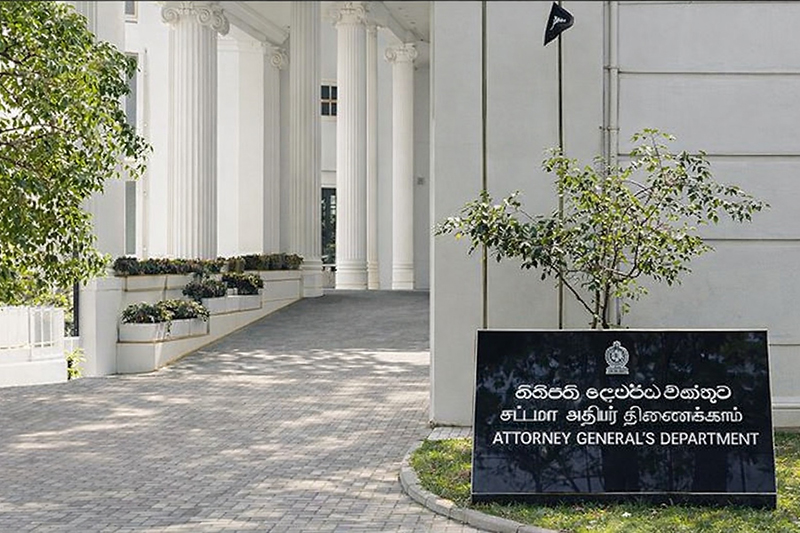
When the maritime provinces of Ceylon were under British occupation, colonial rulers adopted the Royal Charter of 1801, under which the office of the Governor was first established and Sir Frederick North was appointed as the first Governor. By the same Charter, the Supreme Court was first established in Ceylon in 1801. The Charter provided for the appointment of the Advocate Fiscal to prosecute criminals charged with grave crimes. The same Charter facilitated the admission of Advocates and Proctors of the Supreme Court. Advocate Fiscal was the Chief Prosecuting Officer on behalf of the Crown.
In 1833, after the Kandyan Provinces were also annexed to the maritime provinces, the jurisdiction of the Supreme Court was extended to the whole island and the Advocate Fiscal continued as the Principal Law officer of the Government. Later on, he was known as the ‘King’s Advocate’ (or ‘Queen’s Advocate’ as the case may be). Later, they introduced two offices as the Queen’s Advocate and the Deputy Queen’s Advocate. They were redesignated as ‘the Attorney General’ and ‘the Solicitor General’ in 1884. Since then, the Attorney General has been the Chief Law Officer as well as Chief Prosecutor of the Government. The evolution of this office has been discussed by Dr. D. F. H. Gunawardhana, J. in the case of H. M. N. Devapriya Vs. Chief Inspector of Police Headquarters (CA (Writ) No. 589/2024 C.A. Minute dated 17.07.2025)
The Office of the Attorney General continued after the adoption of the Ceylon Independence Act. Article 108 of the First Republican Constitution in 1972 also recognised the said office. During the reign of Sirimavo Bandaranaike (1970 -1977) the National State Assembly enacted the Administrative Justice Law No. 44 of 1973, by which the Office of Public Prosecutor was established for the purpose of prosecution in criminal cases.
Thereafter, the National State Assembly enacted the Administrative Justice Law No.44 of 1973 and under section 80-83 thereof, the Director of Public Prosecution was vested with the powers and duties of public prosecution. It functioned until 1978. Since the enactment of the Second Republican Constitution and the re-introduction of the Criminal Procedure Code, the sole power of prosecution has been exercised by the Attorney-General and his Department.
On Prime Minister Sirimavo Bandaranaike’s watch, the offices of the Public Prosecutor and the Bribery Commissioner came under severe criticism as they were not impartial. People lost their confidence in both offices as well as the government.
The situation took a turn for the worse when the then government abolished the Judicial Service Commission and the Public Service Commission and set up the toothless State Services Advisory Board, State Services Disciplinary Board, Judicial Services Advisory Board and Judicial Services Disciplinary Board. Mrs. Bandaranaike’s government came under heavy criticism for politicisation of the judiciary and the public service and it became rapidly unpopular and J. R. Jayewardena won a five-sixths majority in the National State Assembly in 1977.
The main reason for the abolition of the office of Public Prosecutor was its loyalty, partiality and loss of independence and integrity, which is an essential feature of an officer involved in the administration of justice. There were certain shortcomings in the Attorney General’s Department, too, but comparatively fewer. That is why Prime Minister Ranil Wickremesinghe in 2002, enacted the Removal of Public Officer Act No. 5 of 2002 to ensure that the Attorney General cannot be removed without passing an impeachment in Parliament. In other words, the power of removing the Attorney General, previously vested in the Executive, was transferred to the Legislature.
There are significant provisions contained in the 21st Amendment to the Constitution to ensure the independence of the Attorney General. Accordingly, the President is obliged to obtain the approval of the Constitutional Council prior to the appointment of the Attorney General.
It appears that the present government is keen to re-introduce the “Office of Public Prosecutor,” arguing that it will function independently without having any political influence or interference. It must be noted that assuming it is created in good faith, what will be the difference between the Attorney General and Public Prosecutor?
Qualifications for both officers shall be the same, and the appointment of both officers shall be done by the President with prior approval of the Constitutional Council,
Disciplinary control of both officers shall be under the disciplinary code applicable to public servants. (The removal of Public Officer Act No. 5 of 2002.) If a Public Prosecutor is appointed he has to be given the same assurance.
As for the Public Prosecutor, the President will have to appoint a qualified jurist with the approval of the Constitutional Council. In that context, the qualification, the procedure for appointment, disciplinary control and the procedure for removal of the Attorney General and the Public Prosecutor will be identical.
What is the guarantee that a Public Prosecutor will perform independently without any political influence or motivation?
No doubt that the independence of the administrative justice system in this country has to be independent and impartial. For that, there is no need to dismantle the well-established system that existed for 225 years except a brief period from 1973 to 1978.
We need simply one thing to guarantee the independence of the public prosecution in this country. That is, politicians must refrain from interfering with or influencing the Attorney-General and his Department.
We must also take note of the repercussions of the imprudent decisions to be made by the legislature. There was a tug of war that prevailed between the Attorney General’s Department and the Public Prosecutor during the period when both were functioning. The latest example comes from Kenya, where similar dual structures, established in 2013 (before the ODPP Act’s consolidation), led to months of jurisdictional disputes between the Attorney-General and Director of Public Prosecutions.
In Pakistan, after the separation of the Public Prosecutor’s Office from the Attorney-General (under the NAB Ordinance, 1999), the post became an instrument for political vendetta. Multiple NAB Chairmen and Prosecutors-General were removed or pressured to file politically motivated cases – eroding public trust in the justice system.
Introducing another prosecutorial body requires the creation of a new bureaucratic structure, budgetary allocations, rules of procedure and complex coordination with the police and judiciary which also will paralyse ongoing prosecutions.
In Nigeria, the introduction of state-controlled Public Prosecutors, under the Federal Attorney-General, in 1979, caused a decade of confusion, with state prosecutors refusing to pursue federal offences and vice versa. It took a constitutional amendment in 1999 to restore coherence.
Once there is a split, coordination between the two entities (AG and PP) will depend on political alignment rather than legal principle which will set a dangerous precedent.
The experience of the Philippines serves as a cautionary example of how introducing dual prosecutorial structures in the name of independence can in fact dismantle the integrity of the justice system. Following the creation of the Office of the Ombudsman (OMB) alongside the Department of Justice (DOJ), both institutions were vested with overlapping authority to investigate and prosecute corruption, abuse of power, and criminal offences involving public officials. This overlap bred continual jurisdictional conflicts, procedural confusion, and duplication of cases, leading to delays and the frequent dismissal of prosecutions on technical grounds.
The collapse of major cases, such as the Gloria Macapagal-Arroyo “ZTE” telecommunications scandal (2007–2016), illustrated how two competing prosecutorial bodies fragmented evidence, contradicted each other’s findings, and ultimately failed to secure convictions. Similarly, during the “Pork Barrel” embezzlement investigations (2013–2018), political rivalry between the Ombudsman and the DOJ led to accusations of selective justice and the dismissal of several corruption cases.
Under President Duterte’s “War on Drugs”, the conflict deepened, the DOJ pursued low-level offenders while the Ombudsman cleared senior officials, producing inconsistent and politically tainted outcomes that eroded public trust and drew international criticism, including from the International Criminal Court. The duplication of roles, political appointments, and absence of clear accountability turned the supposed independence of the Ombudsman into a façade. Instead of strengthening checks and balances, the divided structure weakened prosecutorial coherence, fostered inefficiency, and entrenched politicisation.
The Philippine model proves decisively that independence without unity and depoliticisation is a dangerous illusion and a warning directly applicable to Sri Lanka, where creating a separate Public Prosecutor’s Office, alongside the Attorney-General’s Department, would almost certainly repeat these institutional failures.
by Dr. Wijeyadasa Rajapskshe, President’s Counsel
Although some of us may not be familiar with the eureka moment, it is a sudden, unexpected flash of insight, inspiration or discovery when you realise a solution to a difficult problem or understand a complex concept. Sometimes the eureka moment is known as an ‘Aha! Moment.’ It is often characterised by a feeling of joy and the immediate clear realisation of truth.
Most of us may have experienced such a moment without knowing what to call it. If you look deep into the concept, you will realise that the eureka moment involves suddenness. Strangely, the insight appears abruptly when your mind is relaxed or not directly focussed on a given problem.
The Greek word ‘eureka’ means ‘I have found it.’ This simple word signifies a triumphant finding or a solution to a problem. The whole concept involves your brain forming unexpected new connections between previously unrelated information. Those who have felt it say the experience is usually accompanied by a rush of adrenalin.
Unusual spectacle
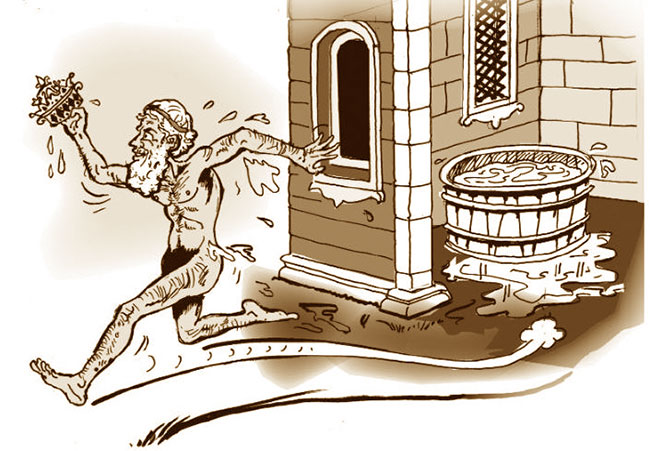
The first reported case of eureka moment comes from ancient Greece. The celebrated Greek mathematician Archimedes of Syracuse was perhaps one of the few people who had experienced a eureka moment. He goes down history as a man who ran naked along a busy street repeating the word ‘Eureka.’ The unusual spectacle stopped the rattle of the carts moving along the busy main street of the Sicilian town. The few women who happened to see a naked man running along the street were horrified. Although some people recognised him, others thought that he was an insane person. All of them had to wait till the following day to find out why he ran naked.
According to Hiero, a noted historian, the king of Syracuse had commissioned a goldsmith to make a crown out of pure gold. However, when the crown was delivered the king had suspicions that the goldsmith had mixed base metal with gold in making the crown. The king ordered the renowned mathematician Archimedes to find out whether the goldsmith had actually used inferior metal in making the crown.
Archimedes was puzzled for a few days not knowing how to find whether only pure gold had been used to make the crown. While thinking of the problem he went to the public bath and stood at the edge of a bathtub. Then he lowered himself into the bathtub. All of a sudden he jumped out of the bathtub and started running shouting loudly ‘Eureka! Eureka!’
Experiments
After returning home Archimedes did a few more experiments and realised that any object completely or partially submerged in a fluid (liquid or gas) experienced an upward buoyant force equal to the weight of the fluid it displaced. This force enabled objects to float if they were less dense than the fluid, as it opposed the downward pull of gravity. Thus, he was able to inform the king how much pure gold was there in the crown.
Archimedes’ father Pheidias was a kinsman of King Hiero. While Archimedes was busy with his inventions, the king commissioned him to make weapons of mass destruction to be used in the event of a war with his rivals. Archimedes wanted only a lever and a place on which to rest it. Eventually, the Roman General Marcellus laid siege on Syracuse. Hiero used the new weapons invented by Archimedes and sank many enemy ships in the sea.
Archimedes was not happy with his deadly weapons. In fact, he despised the mechanical contrivance that made him famous. He thought that his weapons of mass destruction were beneath the dignity of pure science. It may be one reason for him not to leave behind any of his writings. Even in the absence of his writings, historians and the scientific community consider him to be a great mathematician. He was perhaps the only ancient mathematician who had contributed anything of real value to the theory of mechanics.
Strange man
Although he was a great mathematician, we know very little about his personal life. According to historians, he was at times a strange man who could not be fathomed easily. Sometimes he had to be taken to the bath by force. While taking a bath he used to draw geometrical designs on the soap buds on his body! Whenever he solved a mathematical problem, he beamed with happiness like a child.
Although Archimedes’
weapons of destruction were able to keep the invading army at bay, Syracuse fell in 212 BC and he too was killed. Even when Syracuse was overrun by the Roman army, Archimedes might have remained nonchalant. He would have been drawing his geometrical figures quite unmindful of his impending fate. Roman General Marcellus was so aggrieved by the death of Archimedes that he bestowed special favours on the relatives of the slain mathematician. However, the human race will never see another Archimedes. Instead it will see more and more hollow men invading every sphere of human activity.
by R.S. Karunaratne
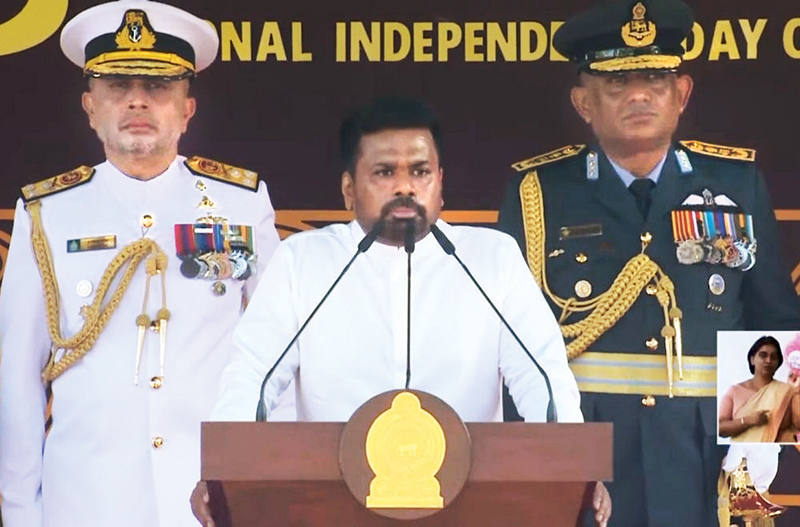
“The main theme of this year’s Independence Day is “Rebuilding Sri Lanka,” so spoke President Anura Kumara Dissanayaka as he ceremonially commemorated the island’s 78th independence anniversary. That was also President AKD’s second independence anniversary as President. Rebuilding implies that there was already something built. It is not that the NPP government is starting a new building on a vacant land, or whatever that was built earlier should all be destroyed and discarded.
Indeed, making a swift departure from NPP’s usual habit of denouncing Sri Lanka’s entire post independence history as useless, President AKD conceded that “over the 78 years since independence, we have experienced victories and defeats, successes and failures. We will not hesitate to discard what is harmful, nor will we fear embracing what is good. Therefore, I believe that the responsibility of rebuilding Sri Lanka upon the valuable foundations of the past lies with all of us.”
Within the main theme of rebuilding, the President touched on a number of sub-themes. First among them is the he development of the economy predicated on the country’s natural resources and its human resources. Crucial to economic development is the leveraging of our human resource to be internationally competitive, and to be one that prioritises “knowledge over ignorance, progress over outdated prejudices and unity over division.” Educational reform becomes key in this context and the President reiterated his and his government’s intention to “initiate the most transformative era in our education sector.”
He touched on his pet theme of fighting racism and extremism, and insisted that the government “will not allow division, racism, or extremism and that national unity will be established as the foremost strength in rebuilding Sri Lanka.” He laid emphasis on enabling equality before the law and ensuring the supremacy of the law, which are both necessary and remarkable given the skepticism that is still out there among pundits
Special mention was given to the Central Highlands that have become the site of repeated devastations caused by heavy rainfall, worse than poor drainage and inappropriate construction. Rebuilding in the wake of cyclone Ditwah takes a special meaning for physical development. Nowhere is this more critical than the hill slopes of the Central Highlands. The President touched on all the right buttons and called for environmentally sustainable construction to become “a central responsibility in the ‘Rebuilding Sri Lanka’ initiative.”. Recognizing “strong international cooperation is essential” for the rebuilding initiative, the President stated that his government’s goal is to “establish international relations that strengthen the security of our homeland, enhance the lives of our people and bring recognition to our country on a new level.”
The President also permitted himself some economic plaudits, listing his government’s achievements in 2025, its first year in office. To wit, “the lowest budget deficit since 1977, record-high government revenue after 2006, the largest current account balances in Sri Lanka’s history, the highest tax revenue collected by the Department of Inland Revenue and the sustained maintenance of bank interest rates at a long-term target, demonstrating remarkable economic stability.” He was also careful enough to note that “an economy’s success is not measured by data alone.”
Remember the old Brazilian quip that “the economy is doing well but not the people.” President AKD spoke to the importance of converting “the gains at the top levels of the economy … into improved living standards for every citizen,” and projected “the vision for a renewed Sri Lanka … where the benefits of economic growth flow to all people, creating a nation in which prosperity is shared equitably and inclusively.”
Rhetoric, Reform and Reality
For political rhetoric with more than a touch of authenticity, President AKD has no rival among the current political contenders and prospects. There were pundits and even academics who considered Mahinda Rajapaksa to be the first authentic leadership manifestation of Sinhala nationalism after independence, and that he was the first to repair the rupture between the Sri Lankan state and Sinhala nationalism that was apparently caused by JR Jayewardene and his agreement with India to end the constitutional crisis in Sri Lanka.
To be cynical, the NPP or AKD were not the first to claim that everything before them had been failures and betrayals. And it is not at all cynical to say that the 20-year Rajapaksa era was one in which the politics of Sinhala nationalism objectively served the interests of family bandyism, facilitated corruption, and enabled environmentally and economically unsustainable infrastructure development. The more positive question, however, is to ask the same pundits and academics – how they would view the political authenticity of the current President and the NPP government. Especially in terms of rejecting chauvinism and bigotry and rejuvenating national inclusiveness, eschewing corruption and enabling good governance, and ensuring environmental stewardship and not environmental slaughter.
The challenge to the NPP government is not about that it is different from and better than the Rajapaksa regime, or than any other government this century for that matter. The global, regional and local contexts are vastly different to make any meaningful comparison to the governments of the 20th century. Even the linkages to the JVP of the 1970s and 1980s are becoming tenuous if not increasingly irrelevant in the current context and circumstances. So, the NPP’s real challenge is not about demonstrating that it is something better than anything in the past, but to provide its own road map for governing, indicating milestones that are to be achieved and demonstrating the real steps of progress that the government is making towards each milestone.
There are plenty of critics and commentators who will not miss a beat in picking on the government. Yet there is no oppositional resonance to all the criticisms that are levelled against the government. The reason is not only the political inability of the opposition parties to take a position of advantage against the government on any issue where the government is seen to be vulnerable. The real reason could be that the criticisms against the government are not resonating with the people at large. The general attitude among the people is one of relief that this government is not as corrupt as any government could be and that it is not focused on helping family and friends as past governments have been doing.
While this is a good situation for any government to be in, there is also the risk of the NPP becoming too complacent for its good. The good old Mao’s Red Book quote that “complacency is the enemy of study,” could be extended to be read as the enemy of electoral success as well. In addition, political favouritism can be easily transitioned from the sphere of family and friends to the sphere of party cadres and members. The public will not notice the difference but will only lose its tolerance when stuff hits the fan and the smell becomes odious. It matters little whether the stuff and the smell emanate from family and friends, on the one hand, or party members on the other.
It is also important to keep the party bureaucracy and the government bureaucracy separate. Sri Lanka’s government bureaucracy is as old as modern Sri Lanka. No party bureaucracy can ever supplant it the way it is done in polities where one-party rule is the norm. A prudent approach in Sri Lanka would be for the party bureaucracy to keep its members in check and not let them throw their weight around in government offices. The government bureaucracy in Sri Lanka has many and severe problems but it is not totally dysfunctional as it often made out to be. Making government efficient is important but that should be achieved through internal processes and not by political party hacks.
Besides counterposing rhetoric and reality, the NPP government is also awash in a spate of reforms of its own making. The President spoke of economic reform, educational reform and sustainable development reform. There is also the elephant-in-the-room sized electricity reform. Independence day editorials have alluded to other reforms involving the constitution and the electoral processes. Even broad sociopolitical reforms are seen as needed to engender fundamental attitudinal changes among the people regarding involving both the lofty civic duties and responsibilities, as well as the day to day road habits and showing respect to women and children using public transport.
Education is fundamental to all of this, but I am not suggesting another new module or website linkages for that. Of course, the government has not created 78 reform modules as I say tongue-in-cheek in the title, but there are close to half of them, by my count, in the education reform proposals. The government has its work cut out in furthering its education reform proposals amidst all the criticisms ranged against them. In a different way, it has also to deal with trade union inertia that is stymieing reform efforts in the electricity sector. The government needs to demonstrate that it can not only answer its critics, but also keep its reform proposals positively moving ahead. After 78 years, it should not be too difficult to harness and harmonize – political rhetoric, reform proposals, and the realities of the people.
by Rajan Philips

Canada bowl against pace-heavy South Africa

Hong Kong court jails media tycoon and British citizen Jimmy Lai for 20 years

Muzarabani returns as Zimbabwe opt to bowl against Oman

Munsey and Leask spoil Italy’s T20 World Cup debut2

Italy captain Wayne Madsen injures shoulder in T20 World Cup opener

Canada look for early splash against favourites South Africa

‘Dates have the highest sugar content to fight Coronavirus’

Sunday Island 27 December – Headlines

#SundayIsland 17th December – Headlines

Sunday Island – 28th March

Sunday Island Headlines – 21 March

Sunday Island – 21st February – Headlines
-
 Features2 days ago
My experience in turning around the Merchant Bank of Sri Lanka (MBSL) – Episode 3
-

 Business3 days ago
Zone24x7 enters 2026 with strong momentum, reinforcing its role as an enterprise AI and automation partner
-

 Business7 days ago
SLIM-Kantar People’s Awards 2026 to recognise Sri Lanka’s most trusted brands and personalities
-
 Business2 days ago
Remotely conducted Business Forum in Paris attracts reputed French companies
-
 Business2 days ago
Four runs, a thousand dreams: How a small-town school bowled its way into the record books
-

 Business2 days ago
ComBank and Hayleys Mobility redefine sustainable mobility with flexible leasing solutions
-
 Business7 days ago
API-first card issuing and processing platform for Pan Asia Bank
-
 Business3 days ago
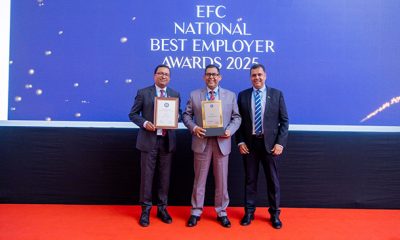
HNB recognized among Top 10 Best Employers of 2025 at the EFC National Best Employer Awards