
News
Hambantota International Port upbeat about its prospects after Lloyd’s certification

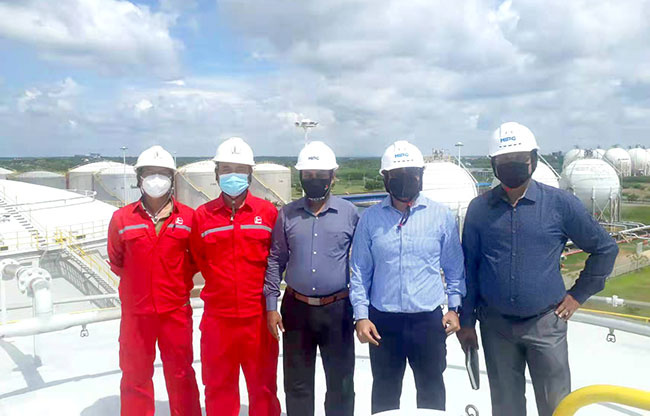
The Hambantota International Port (HIP), which continues to come under attack by the Opposition, has said it expects an impressive growth in time to come.
The HIP has in a media statement said it has received FSS certification (Fitness for Service) for their tank farm facility.
“The certification was issued by Lloyd’s Register (LR), the World’s leading provider of classification, compliance and consultancy services to marine and offshore industries. This is a landmark achievement that will further strengthen the HIP brand in the maritime world.
“The port was awarded Lloyd’s certification, after a comprehensive approval process and an impartial third-party assessment. The entire process was handled by HIP’s Department of Energy Services who worked with Lloyd’s Register Marine & Offshore Asia LLP, in achieving the recognition.
“Located just 10 nautical miles (19 km), from the world’s busiest maritime route linking Europe and Asia, HIP’s fully functioning tank farm facility for bunker fuel supply, provides a huge advantage to the vast number of vessels plying this route.
“The high performance in bunkering volumes handled by HIP last year, underpins the potential the port has for this business. Johnson Liu, CEO of Hambantota International Port Group (HIPG) says the recognition by a trusted International organisation like the Lloyd’s Register, will not only strengthen the confidence the international maritime community has in the port, but will also help boost Sri Lanka’s oil and gas industry.
“As we enter the new year, we are confident that we will see phenomenal growth rates not only in bunkering but also in other services offered by HIP. As much as we see the importance of safety protocols being maintained to the highest standards within the port, we are also confident that our efficiency in delivery continues to improve. It is the combination of all these factors that fuel our growth,” says the CEO.
There were two phases to the oil tank refurbishment project undertaken by HIPG. Both phases, i.e. the oil storage terminal and two oil jetties have been awarded FFS Certification by Lloyd’s. The storage network has 11 tanks, associated pipelines and eight loading/unloading arms of two jetties, which are all included in the certification. Currently HIP has a maximum storage capacity of 51,000 m3 for Very Low Sulphur Fuel Oil (VLSFO) and 23,000 m3 for Marine Diesel Oil (MDO), held in utmost safe conditions, verified by Lloyds.
The certification is in line with HIP’s objective of providing bunker fuels and related products that are compliant with international maritime organisation (IMO) standards. The IMO introduced a 0.5% m/m (mass by mass) Sulphur cap on bunkers for ships operating outside emission control areas in January 2020. With this regulation, the use of VLSFO will see a considerable increase in comparison with HSFO (High Sulphur Fuel Oil).

Latest News
PM holds bilateral meetings in the Philippines to strengthen cooperation in Education, Skills Development, and Agricultural Research

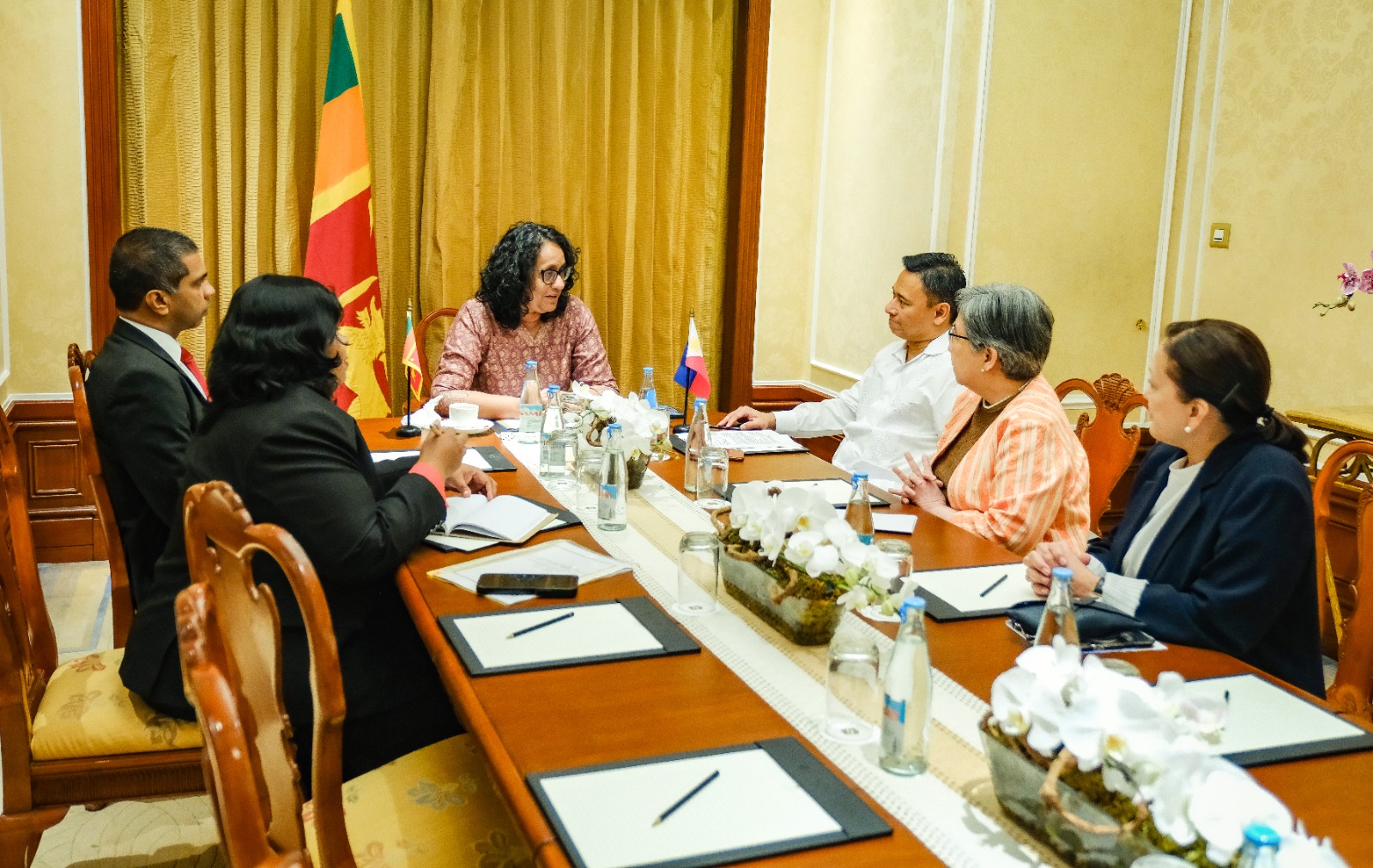
Prime Minister Dr. Harini Amarasuriya held a series of meetings with key Philippine institutions during her official visit to the Philippines from 09–11 March 2026, focusing on strengthening cooperation in education, higher education, technical skills development, and agricultural research.
On 09 March, the Prime Minister met with the Secretary of Education of the Philippines, Sonny Angara. Discussions focused on strengthening bilateral cooperation in the education sector, including sharing best practices in education policy, teacher training, curriculum reforms, and digital learning initiatives. The Prime Minister also briefed the Philippine delegation on Sri Lanka’s ongoing education reforms aimed at modernizing curricula and integrating technology into learning.
The Prime Minister also met with a delegation of the Commission on Higher Education of the Philippines (CHED), led by Chairperson Dr. Shirley C. Agrupis. Discussions centered on the development of higher education in both countries, with particular attention to research collaboration, academic partnerships between universities, student and faculty exchanges, and strengthening quality assurance frameworks.
In a separate meeting, the Prime Minister held talks with the Secretary and Director General of the Technical Education and Skills Development Authority (TESDA), Jose Francisco B. Benitez. The discussions focused on cooperation in technical and vocational education and training (TVET), including knowledge sharing, institutional partnerships, and possible alignment of qualifications frameworks to enhance skills recognition and workforce mobility.
The meetings reaffirmed the commitment of Sri Lanka and the Philippines, along with international research institutions, to strengthen collaboration in education, skills development, and agricultural research in support of sustainable development and human capital growth.
The Sri Lankan delegation included the Ambassador of Sri Lanka to the Philippines, Dr. Chanaka Talpahewa, and Senior Assistant Secretary to the Prime Minister, Ms. P.H. Piyumee Bandara.
[Prime Minister’s Media Division]
Latest News
Heat Index at Caution Level in the Western, Sabaragamuwa and North-western provinces and Monaragala district.

Warm Weather Advisory issued by the Natural Hazards Early Warning Centre of the Department of Meteorology at 3.30 p.m. on 09 March 2026, valid for 10 March 2026.
The public are warned that the Heat index, the temperature felt on the human body is likely to increase up to ‘Caution level’ at some places in Western, Sabaragamuwa and North-western provinces and in Monaragala district.
The Heat Index Forecast is calculated by using relative humidity and maximum temperature and this is the condition that is felt on your body.
This is not the forecast of maximum temperature. It is generated by the Department of Meteorology for the next day period and prepared by using global numerical weather prediction model data.

Effect of the heat index on the human body is mentioned in the above table and it is prepared on the advice of the Ministry of Health and Indigenous Medical Services.
ACTION REQUIRED
Job sites: Stay hydrated and takes breaks in the shade as often as possible.
Indoors: Check up on the elderly and the sick.
Vehicles: Never leave children unattended.
Outdoors: Limit strenuous outdoor activities, find shade and stay hydrated.
Dress: Wear lightweight and white or light-colored clothing.
Note:
In addition, please refer to advisories issued by the Disaster Preparedness & Response Division, Ministry of Health in this regard as well. For further clarifications please contact 011-7446491.

Prof. Priyanga Dunusinghe has warned that Sri Lanka could face a catastrophic situation due to a rapid and sharp drop in revenue caused by the escalating Gulf war.
Appearing on Derana ‘Big Focus’ yesterday, the Professor in Economics in the Department of Economics, and Head – Department of Information Technology, University of Colombo, Dunusinghe said that that drop in remittances from the Middle East, as well as exports, should be examined against the backdrop of runaway oil prices.
Dunusinghe said so responding to interviewer Pasan de Silva who sought expert opinion on the crisis. Referring to continuing Iranian retaliatory attacks on Gulf countries hosting US military bases, the academic pointed out that approximately one million Sri Lankans were employed in the region.
Global oil prices rose to over $100 per barrel on 08 March, for the first time since the Russia-Ukraine war erupted in February 2022. By noon prices were around USD 115 per barrel.
If a consensus couldn’t be reached soon, the consequences for Sri Lanka would be devastating, Dunusinghe said, suggesting that the government should seriously consider, what he called, a relatively small but immediate fuel hike to cushion the impact of future fuel price hikes.
Dunusinghe explained that in addition to the drop in remittances from the Middle East, Sri Lanka could lose employment opportunities in the war devastated region. Responding to the interviewer, the Prof said that if the situation further deteriorated the government would have to face the daunting challenge of evacuating Sri Lankans from the Middle East.
Referring to the devastating impact of Cyclone Ditwah, Dunusinghe pointed out that in terms of the agreement with the IMF, finalised in 2023, the debt repayment would have to be recommenced in 2028. The new Middle East war has placed the country in an extremely difficult situation, Dunusinghe said, while emphasising the responsibility on the part of the government to address the issues at hand immediately.
The rapidly changing oil markets indicated that regardless of optimism expressed by the US and Israel of swift victory, the ground realities were quite different, the academic said.
By Shamindra Ferdinando

Nepal election 2026: Counting continues with rapper Balendra Shah’s party close to super-majority

Madagascar military leader dissolves government in surprise move

ICC Board meetings in Doha called off due to West Asia conflict

Trump says some sanctions to be lifted on oil producers amid Iran war

PM holds bilateral meetings in the Philippines to strengthen cooperation in Education, Skills Development, and Agricultural Research

Heat Index at Caution Level in the Western, Sabaragamuwa and North-western provinces and Monaragala district.

‘Dates have the highest sugar content to fight Coronavirus’

Sunday Island 27 December – Headlines

#SundayIsland 17th December – Headlines

Sunday Island – 28th March

Sunday Island Headlines – 21 March

Sunday Island – 21st February – Headlines
-

 News5 days ago
University of Wolverhampton confirms Ranil was officially invited
-

 News6 days ago
Legal experts decry move to demolish STC dining hall
-

 News5 days ago
Female lawyer given 12 years RI for preparing forged deeds for Borella land
-

 News4 days ago
Peradeniya Uni issues alert over leopards in its premises
-

 Business6 days ago
Cabinet nod for the removal of Cess tax imposed on imported good
-
 News5 days ago
Library crisis hits Pera university
-
 News2 days ago
Repatriation of Iranian naval personnel Sri Lanka’s call: Washington
-

 Business7 days ago
Dialog partners with Ratmalana Audiology Centre for World Hearing Day 2026