
Business
500 Sri Lankan students pursuing MBBS at Kursk State Medical University in Russia


by Sanath Nanayakkare
About 500 Sri Lankan students interested in establishing themselves as medical doctors are currently pursuing their MBBS medical degree programme at Kursk State Medical University in Russia, The Island learnt recently.
“This six-year degree programme recognized by the World Health Organization (WHO) is also recognized by the relevant authorities across the world. Therefore, on successful completion of the programme, it gives Sri Lankan graduates the opportunity of starting their post-graduate studies for preferred specializations, or practice medicine in a country of their personal choice”, Dr.Lasantha Amarakoon – Chairman of REC Campus said.
He made these comments at a get-together and Alumni of Kursk State Medical University Russia held on 29th of April at REC Campus in Nugegoda. The momentous occasion was participated by the Rector of Kursk State Medical University in Russia, Prof.Viktor Anatolyevich Lazarenko and Dr.Mohamad Chahine – Director IMI of Kursk State Medical University (KSMU) and honorary consul of Sri Lanka in Kursk region Russia.
Ms.Natalia Kulshenko – Senior Officer of Russian Center in Colombo and a group of Sri Lankan doctors belonging to Kursk State Medical University’s Alumni Association were notable dignitaries at the event.
Dr.Mohamad Chahine said, “The University has an alumni of more than 1,000 Sri Lankan graduates from the past years and we came to Sri Lanka to commemorate their student life in Russia and have a discussion on comfortable and safe conditions for employment of doctors in Kursk Region,”
The event also saw the offering of the Award of Excellence to REC Campus by KSMU for the service it has rendered to the field of education in Sri Lanka.
“We have been collaborating with REC Campus for more than 20 years and they are our official representative in Sri Lanka. Once a student comes to REC Campus, he or she doesn’t have to worry about anything because the Campus handles the documentation process, conducts free language and pre-medicine classes, assists in the visa process and conducts the pre-departure programme to guide students about the process in the airport. REC Campus takes the responsibility of its students until up to the completion of their degree programmes. The most important factor is that they guide the students after the completion of their MBBS degree to move on to post-graduate studies in their preferred area, or begin their career as doctors,” Dr.Mohamad Chahine said.
When asked how encouraging are the numbers of Sri Lankan students enrolling KSMU over the years, he said,” We are happy to say that there are hundreds of Sri Lankan students joining KSMU every year. Due to the recognition of this degree and the excellent services given by REC campus, KSMU has become the university with the largest Sri Lankan student population in Russia.”
Talking about the university he said,” KSMU is specialized in the healthcare education; we offer programmes such as Medical, Dentistry, and Pharmaceutical among many others. We are proud of our international reputation in teaching and scientific research. There is a unique atmosphere on campus which gives students the opportunity to broaden their horizons within a safe and exciting environment. By the time a student graduates, he or she will leave this university with not only a world-class qualification, but also with friends that they would like to network with for lifetime.”
“Interestingly, there are plenty of Sri Lankan graduates who prefer to continue their post-graduate studies or find employment in Russia. Currently, some of the Sri Lankan graduates work in hospitals in Russia and some of them have joined the academic panel of KSMU as well. Overall, Russia is a great destination for international students to study, work and obtain permanent residency status quite easily,” he noted.
Prof.Viktor Anatolyevich Lazarenko and Dr.Mohamad Chahine met with Sri Lankan authorities at the Ministry of Health during their stay where they discussed further development of the health sector in Sri Lanka.
“Russia has been collaborating with Sri Lanka for many years helping to enhance its education, trade and the economy. The discussions we had with the Sri Lankan Minister of Health would help further strengthen the bond between the two countries,” they said.


First Capital Holdings PLC, a subsidiary of JXG (Janashakthi Group) and a pioneering force in Sri Lanka’s investment bank landscape recorded a Total Comprehensive Income of Rs. 3.23Bn for the nine months ended 31 December 2025, compared to Rs. 4.53Bn in the corresponding period of the previous year. For the third quarter of 2025/26, the Group reported a Total Comprehensive Loss of Rs. 0.17Bn, after accounting for a dividend tax expense of Rs. 0.41Bn.
The Group’s Net Income before Operating Expenses for the nine months of 2025/26 amounted to Rs.6.33Bn compared to Rs. 7.69Bn reported in the corresponding period of the previous year. Trading income was primarily driven by the Primary Dealer and Corporate Dealing Securities divisions, reinforcing the Group’s positioning across fixed income and equity market segments.
The Primary Dealer division reported a Profit after Tax of Rs. 1.64Bn for the nine months ended 31 December 2025 (1st nine months of 2024/25 – Profit after Tax of Rs. 2.45Bn). The results include trading gains on the government securities portfolio of Rs. 1.66Bn and net interest income of Rs. 1.41Bn (1st nine months of 2024/25 – trading gains of Rs. 3.18Bn and net interest income of Rs. 1.31Bn), reflecting movements in yields and trading conditions during the period.
The Corporate Finance Advisory and Dealing Securities division recorded a Profit after Tax of Rs. 1.86Bn for the nine months ended 31 December 2025 (1st nine months of 2024/25 – Profit after Tax of Rs. 1.94Bn). The business unit reported total trading gains of Rs. 2.33Bn on its equity portfolio, compared to Rs. 2.23Bn in the corresponding period of the previous year, supported by market participation and portfolio positioning.
The Wealth Management division reported a Profit after Tax of Rs. 78.1Mn for the nine months ended 31 December 2025 (1st nine months of 2024/25 – Profit after Tax of Rs. 90.1Mn). Assets under Management stood at Rs. 96.4Bn as at 31 December 2025, compared to Rs. 115.9Bn as at 31 March 2025, reflecting market conditions and client portfolio adjustments.
The Stock Brokering division recorded a Profit after Tax of Rs. 166.3Mn for the nine months ended 31 December 2025, compared to Rs. 39.5Mn reported in the corresponding period of the previous year, supported by increased trading activities.
Commenting on the Group’s performance, Rajendra Theagarajah, Chairman of First Capital Holdings PLC, stated, “The operating environment during the period was shaped by shifts in interest rates, capital market activities, and fiscal adjustments. Against this backdrop, the Group’s performance reflects the structural strength of its capital markets platform and its ability to generate income across multiple market cycles while maintaining financial discipline.”
Dilshan Wirasekara, Managing Director / CEO of First Capital Holdings PLC, said, “Our priority during the period was to manage each business line with a clear focus on risk, liquidity and execution. Improved performance in stock brokering and consistent contributions from corporate finance reflect our ability to respond to market conditions while aligning capital deployment with client and market opportunities.”

Keells is set to usher a new chapter in customer experience with the relaunch of Keells Nexus with the introduction of its all-new loyalty app on 13th February. For 25 years, Keells Nexus has been at the heart of Sri Lankan retail, pioneering coalition loyalty and even introducing mobile-based loyalty as early as 2014. The loyalty program is building on this legacy, combining state-of-the-art technology with richer, more personalized rewards and seamless integration across the Keells ecosystem with an intuitive mobile experience.
Today, Keells Nexus stands at over 2 million registered members, a reflection of the trust customers place in Keells and the brand’s commitment to improving the quality of life for the nation. The launch further strengthens Keells’ long-standing focus on tech-enabled retail efficiency, following innovative retail experiences to customers such as self-checkout counters and retail technology that drives efficiency such as advanced inventory management systems.
The new app therefore is the next logical step in this journey, bringing together rewards, offers, and account visibility in one intuitive, streamlined interface. The new Keells Nexus app brings together all deals, savings and partner offers in one place, giving customers complete visibility and control. Members can track their points in real time, scan a QR code at checkout to earn rewards instantly, and enjoy a more personalised, more connected shopping experience.
“At the heart of Keells Nexus is a simple but powerful belief that life is better when we’re connected,” said Nilusha Fernando Head of Marketing, Keells Supermarkets & Senior Vice President, John Keells Group.
Business
IDL, Clouds by SOZO and the Rukmini Tissanayagam Trust partner with the HSBC Ceylon Literary & Arts Festival 2026

The HSBC Ceylon Literary & Arts Festival 2026, taking place from 13 to 15 February at Cinnamon Lakeside, Colombo, promises to be one of those rare cultural moments that linger long after the last session ends. It is a gathering not only of writers, artists and thinkers, but of ideas, shared, challenged and celebrated in spaces where curiosity feels welcome.
The HSBC Ceylon Literary & Arts Festival 2026 is supported by several organizations through non-promotional CSR initiatives, including Clouds by SOZO and the Rukmini Tissanayagam Trust. International Distillers Limited contributes in a strictly neutral CSR capacity, providing logistical and resource support for the event without any brand promotion or product visibility.
The Festival celebrates Sri Lanka’s creative voice by showcasing literature, arts, and cultural talent from across the country. All supporting organizations participate solely in a philanthropic and educational role, ensuring that the focus remains on artistic expression and community engagement.
The Rukmini Tissanayagam Trust brings to the Festival a deep and enduring commitment to nurturing literature and the arts as essential pillars of society. Its work is driven by the belief that creative spaces are not optional additions, but vital platforms that shape how communities think, feel and engage with the world around them.
Speaking on this collaboration, Indhu Selvaratnam, Director of SOZO Beverages and Trustee
of The Rukmini Tissanayagam Trust, stated, “The Rukmini Tissanayagam Trust is delighted to partner with the Ceylon Literary Festival for the second time. We are deeply committed to enriching Sri Lanka’s intellectual and cultural landscape and admire the festival’s evolution in embracing literature, art, music, and initiatives that nurture emerging local talent. These efforts align closely with the Trust’s mission to support creative expression, and we look forward to continuing our support as the festival strengthens Sri Lanka’s global cultural presence.”
Adding a complementary dimension to this partnership is Clouds by SOZO, Sri Lanka’s premium mountain spring water brand, whose ethos of purity, sustainability and thoughtful living aligns naturally with the spirit of the Festival. Sourced from a pristine spring in the Knuckles mountain range, Clouds represents a return to authenticity, an idea that resonates strongly within creative and cultural spaces.
Speaking on the partnership, Dushyantha De Silva, Founder of SOZO Beverages (Pvt) Ltd, said, “The arts invite us to slow down, to observe, and to think more deeply, and Clouds comes from that same place of intention. Supporting the HSBC Ceylon Literary & Arts Festival is about being part of a space where ideas flow freely and thoughtfully. It’s a privilege for us to align with a platform that values creativity, dialogue and conscious choices.”
The HSBC Ceylon Literary & Arts Festival 2026 offers something increasingly rare: three uninterrupted days of ideas. Of language and imagination. Of conversations that do not require a screen to feel alive. It is a reminder of the power of gathering, of listening, discovering and engaging with perspectives that challenge and inspire.
As February approaches, the hope is simple: that more people choose to attend, to listen, and to support Sri Lankan creativity in all its forms. Because when a country invests in its writers and artists, it is not merely celebrating talent, it is shaping how it remembers, how it questions, and how it evolves.

Aryansh Sharma, Sohaib Khan power UAE to thrilling win over Canada

Royal Navy of Oman Vessel “SADH” departs island

Muzarabani, Bennett orchestrate famous Zimbabwe win

“We will not make decisions for rural level schools while sitting in Colombo” – PM

USA need to overturn history to beat Netherlands and stay alive

Paul Stirling ruled out of World Cup with knee injury

‘Dates have the highest sugar content to fight Coronavirus’

Sunday Island 27 December – Headlines

#SundayIsland 17th December – Headlines

Sunday Island – 28th March

Sunday Island Headlines – 21 March

Sunday Island – 21st February – Headlines
-
 Features6 days ago
My experience in turning around the Merchant Bank of Sri Lanka (MBSL) – Episode 3
-
 Business7 days ago
Zone24x7 enters 2026 with strong momentum, reinforcing its role as an enterprise AI and automation partner
-

 Business6 days ago
Remotely conducted Business Forum in Paris attracts reputed French companies
-
 Business6 days ago
Four runs, a thousand dreams: How a small-town school bowled its way into the record books
-
 Business6 days ago
ComBank and Hayleys Mobility redefine sustainable mobility with flexible leasing solutions
-

 Business3 days ago
Autodoc 360 relocates to reinforce commitment to premium auto care
-

 Midweek Review3 days ago
A question of national pride
-
 Business7 days ago
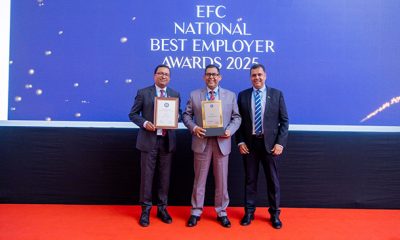
HNB recognized among Top 10 Best Employers of 2025 at the EFC National Best Employer Awards