
Features
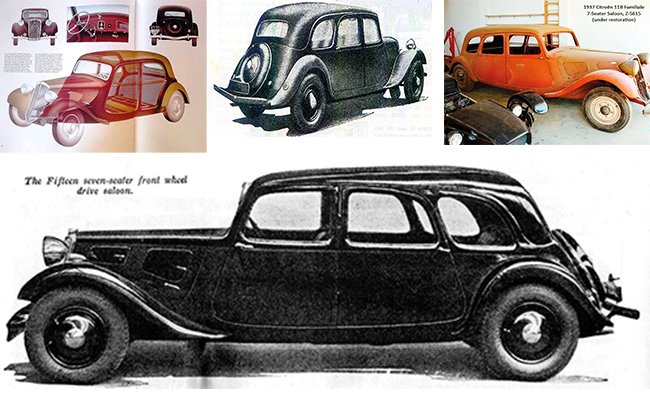
1937 CITROËN 11B FAMILIALE 7-SEATER SALOON, Z-5615

By Ali Azeez
HISTORY AND OWNERSHIP
Date of First Registration: 31.10.1937 (manufactured in France around 15.8.1937)
First owner: J.B. de Bonnetot of 690 Palmyrah Lodge, Colpetty, Colombo 3
Second owner: Henry de Jonk of 22 Pamankada Road, Wellawatte; from 31.7.1969
Third owner: Mohamed Ali Azeez; from 10.6.1999 (current owner)
The Vintage Car Owners’ Club (VCOC) organized the Oberoi Vintage Motor Show which was held from March 11-14, 1999. My nephew Yakoob Bin Ahamed, a member (like me) of the VCOC, was very active at the show. A visitor who had observed Yakoob approached him and said that he had an old Citroën he wanted to sell. The man gave his name and address as Randal de Jonk, of 241/A Galhitiyawa, Ganemulla. Yakoob mentioned this to me when we went home that evening. I was interested but not sure what model/type Citroën it was.
A few days later Yakoob and our driver David went to Ganemulla to see the car. They weren’t able to locate the house easily, wasting several hours looking for it. Finally they asked a boutique-keeper, who said that the house was only two or three doors away. Yakoob then met the owner and saw the car, which was in need of restoration. The price quoted was Rs. 700,000, and as usual the owner said that he had an offer close to it. Yakoob offered Rs. 100,000 and returned.
I was curious to know more about the type of car, so Yakoob opened my copy of the book Cars of the Thirties and Forties by Michael Sedgwick and showed me a picture of a 1930s Traction Avant model. He said that the car he’d seen was longer than the one in the book. This suggested that it was the 11B Familiale model, with three windows on each side (i.e. six-light saloon).
A few weeks later the owner contacted Farih Fauz, another member of the VCOC, and told him about the car, now quoting a price of Rs. 300,000. Knowing of my interest in the car, Farih negotiated with the owner on my behalf and succeeded in having the asking price reduced to Rs. 165,000 and agreed upon by both parties.
To transport the car to my property I contacted my friend Susantha Welgama of S.A. Welgama & Sons. He said that they only had lorries for transport, but he would provide a large one free of charge. However, this type of vehicle was not suitable as it meant having to manually lift the car onto the lorry. So I next spoke to VCOC member Lasantha Senaratne of Jayalath Transport at Baseline Road. He seemed more interested in the Citroën, and offered the use of a boom truck at a
price of Rs. 7,000 – a reduction from the normal hire cost of Rs. 12,000 – to which I agreed.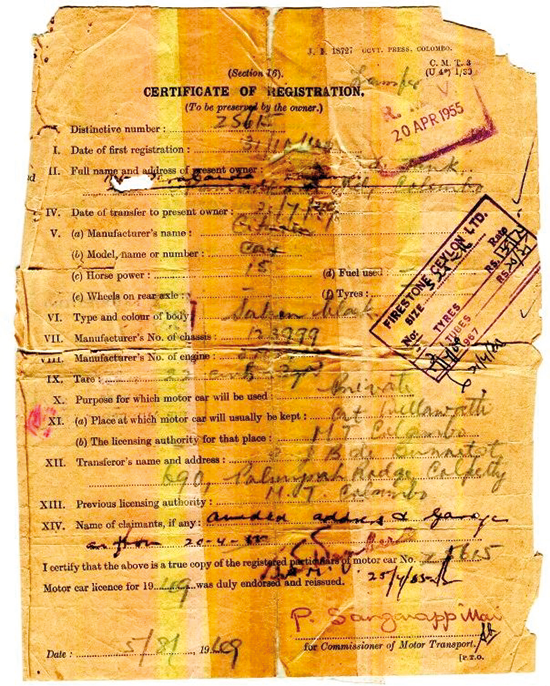
I went to Ganemulla with Yakoob and David, followed by the boom truck, on June 10, 1999. I met the owner, Randal de Jonk, and asked whether he was related to Randolph H. de Jonk, a classmate of mine at Royal College who travelled to school by train from Ganemulla. He said that Randolph was his elder brother who had migrated to England many years ago. Randal was an English teacher.
We tried to take the boom truck up to the garage, which was behind the house. Unfortunately, the gate posts were not wide enough. So the car was pushed out of the garage to the road where the truck was parked. While the car was being loaded onto the truck, many curious villagers turned up and said that this was ‘Jonk mahattaya’s’ car, and asked where it had been all these years. Randal was too embarrassed to answer them. Eventually the car was loaded, covered, and transported to my home at Bolgoda, Piliyandala.
On inspecting the car the next day, Yakoob discovered that not only was the cylinder head not bolted onto the engine block, but vital components such as pistons were missing, along with other parts. So Randal was contacted and another trip made to Ganemulla to collect all the missing parts, which were lying around in sacks at the de Jonk property. Apparently after the death of Randal’s father the car hadn’t run since 1972, despite attempts made to restore it. As the Citroën had been last licensed in 1972, I obtained a licence for it in 1999.
Yakoob began putting the parts together and started the engine. The electrical system was converted to 12V from 6V. Tinkering was done on the body, which was painted in red primer. When the gearbox was dismantled it was noticed that there was damage and wear to vital parts, which needed replacement as repairs were not feasible. At this time of writing (March 2023) several parts have yet to be located and fitted to the Citroën.
The Certificate of Registration was available but in poor physical condition. It was in the name of the second owner, Henry de Jonk who had passed away. Therefore, a procedure had to be followed for the vehicle to be transferred to my name by the Registrar of Motor Vehicles.
Randal had signed some documents, but a few more were needed. We spoke to him, but he never responded. He could not be contacted again, and we later learned that he had moved to Kandy.
TECHNICAL AND OTHER FEATURES
Citroën 11B Familiale Traction Avant six-light saloon
Type of Body:
4-Door 7-Seater Saloon (including 2 folding seats). All-steel monocoque, unitary construction
Chassis No.:
123999
Engine No.:
DMO2402
Engine:
4 cylinders, o.h.v. with push rods; wet liners; bore 78 mm, stroke 100 mm, capacity 1,911 cc; compression ratio 6.1 to 1. Develops 56 bhp at 4,200 rpm; R.A.C. rating of 15 hp. The complete power unit is flexibly mounted
Crankshaft with three main bearings; cast iron detachable engine head and block
Single downdraught Solex carburettor; AC mechanical fuel pump; fan cooling; coil and distributor ignition; firing order 1-3-4-2
Electrics:
6 volts
Steering:
Rack and pinion type
Transmission: Front-wheel drive; three forward speeds and reverse through helical toothed gears, and synchromesh engagement for top and middle ratios; single dry plate clutch; gear lever protrudes from dashboard; drive is taken from clutch to a gearbox just behind the radiator
Suspension:
The engine, gearbox and final drive form a compact unit housed in the scuttle structure of the body, and the front wheels (which are individually supported by transverse radius arms) are also sprung by torsion bars; hydraulic telescopic-type shock absorbers front and rear
Brakes:
hydraulic type on all 4 wheels
Wheels:
Steel; Tyres: 5.50 x 16
Weight:
22 cwt 3 qtrs 0 lb (1,160kg)
Overall length:
15 ft. 11 in; Width: 6 ft 2 in
Ground clearance:
7 in; Height: 5 ft
Wheelbase:
10 ft. 9 in; Track: 4 ft 8 in (front and rear); Turning circle: 45 ft
Capacities:
Petrol tank: 10 gallons; Oil sump: 8 pints; Radiator: 14 pints.
Top Speed:
80 mph
Colour:
Black
Special Features of Citroën Traction Avant
The Traction Avant series of Citroën cars was the brainchild of brilliant French engineer André René Lefèbvre, who was hired by André Citroën in 1933 to work on the project for a new type of car. Lefèbvre came with impeccable credentials, having previously worked for Voisin and Renault. His revolutionary concept and design of the Traction Avant, which endured in production for 23 years with seven basic variants produced, is testament to his ingenuity.
But it didn’t stop there for André Lefèbvre. He collaborated with designers Flaminio Bertoni and Paul Magès on three more world-famous Citroën types: the 2CV, in production for 42 years, rugged and as technically innovative and simple in its own way as was the Traction Avant; the iconic DS, which apart from its mechanical advances is still regarded as one of the world’s most iconic and beautiful automotive designs; and the HY van, resembling a corrugated-iron shed on four wheels but tough and adaptable to a huge variety of roles, even to this day.
As for the Citroën Traction Avant, it was fabricated in two major component parts: (a) detachable front-end including engine, gearbox, transmission, front axle assembly and radiator; and (b) back-end, comprising the welded steel body and integral floor, together with rear wheels and springing.
The above photo shows the welded steel body-and-floor unit with the open ‘jaws’ which attach to and support the front-end assembly. The engine and transmission assembly can be separated from the rear (body) section within a short space of time, which is convenient for repairs.


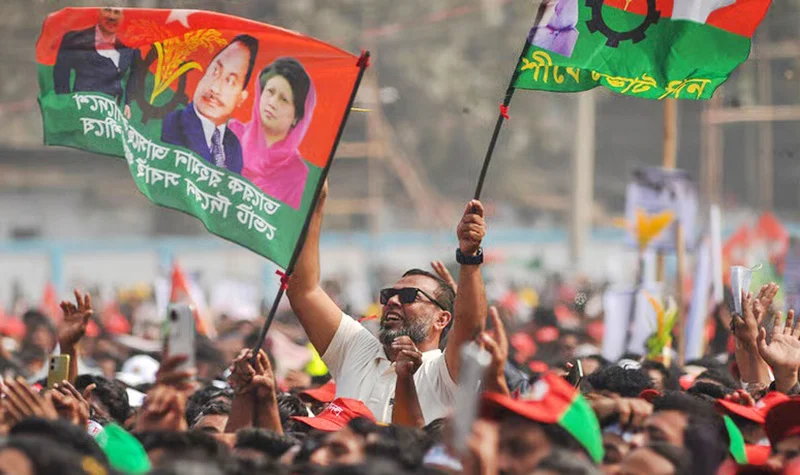
 Will the Bangladesh parliamentary election bring into being a government that will ensure ethnic and religious harmony in the country? This is the poser on the lips of peace-loving sections in Bangladesh and a principal concern of those outside who mean the country well.
The apprehensions are mainly on the part of religious and ethnic minorities. The parliamentary poll of February 12th is expected to bring into existence a government headed by the Bangladesh Nationalist Party (BNP) and the Islamist oriented Jamaat-e-Islami party and this is where the rub is. If these parties win, will it be a case of Bangladesh sliding in the direction of a theocracy or a state where majoritarian chauvinism thrives?
Chief of the Jamaat, Shafiqur Rahman, who was interviewed by sections of the international media recently said that there is no need for minority groups in Bangladesh to have the above fears. He assured, essentially, that the state that will come into being will be equable and inclusive. May it be so, is likely to be the wish of those who cherish a tension-free Bangladesh.
The party that could have posed a challenge to the above parties, the Awami League Party of former Prime Minister Hasina Wased, is out of the running on account of a suspension that was imposed on it by the authorities and the mentioned majoritarian-oriented parties are expected to have it easy at the polls.
A positive that has emerged against the backdrop of the poll is that most ordinary people in Bangladesh, be they Muslim or Hindu, are for communal and religious harmony and it is hoped that this sentiment will strongly prevail, going ahead. Interestingly, most of them were of the view, when interviewed, that it was the politicians who sowed the seeds of discord in the country and this viewpoint is widely shared by publics all over the region in respect of the politicians of their countries.
Some sections of the Jamaat party were of the view that matters with regard to the orientation of governance are best left to the incoming parliament to decide on but such opinions will be cold comfort for minority groups. If the parliamentary majority comes to consist of hard line Islamists, for instance, there is nothing to prevent the country from going in for theocratic governance. Consequently, minority group fears over their safety and protection cannot be prevented from spreading.
Therefore, we come back to the question of just and fair governance and whether Bangladesh’s future rulers could ensure these essential conditions of democratic rule. The latter, it is hoped, will be sufficiently perceptive to ascertain that a Bangladesh rife with religious and ethnic tensions, and therefore unstable, would not be in the interests of Bangladesh and those of the region’s countries.
Unfortunately, politicians region-wide fall for the lure of ethnic, religious and linguistic chauvinism. This happens even in the case of politicians who claim to be democratic in orientation. This fate even befell Bangladesh’s Awami League Party, which claims to be democratic and socialist in general outlook.
We have it on the authority of Taslima Nasrin in her ground-breaking novel, ‘Lajja’, that the Awami Party was not of any substantial help to Bangladesh’s Hindus, for example, when violence was unleashed on them by sections of the majority community. In fact some elements in the Awami Party were found to be siding with the Hindus’ murderous persecutors. Such are the temptations of hard line majoritarianism.
In Sri Lanka’s past numerous have been the occasions when even self-professed Leftists and their parties have conveniently fallen in line with Southern nationalist groups with self-interest in mind. The present NPP government in Sri Lanka has been waxing lyrical about fostering national reconciliation and harmony but it is yet to prove its worthiness on this score in practice. The NPP government remains untested material.
As a first step towards national reconciliation it is hoped that Sri Lanka’s present rulers would learn the Tamil language and address the people of the North and East of the country in Tamil and not Sinhala, which most Tamil-speaking people do not understand. We earnestly await official language reforms which afford to Tamil the dignity it deserves.
An acid test awaits Bangladesh as well on the nation-building front. Not only must all forms of chauvinism be shunned by the incoming rulers but a secular, truly democratic Bangladesh awaits being licked into shape. All identity barriers among people need to be abolished and it is this process that is referred to as nation-building.
On the foreign policy frontier, a task of foremost importance for Bangladesh is the need to build bridges of amity with India. If pragmatism is to rule the roost in foreign policy formulation, Bangladesh would place priority to the overcoming of this challenge. The repatriation to Bangladesh of ex-Prime Minister Hasina could emerge as a steep hurdle to bilateral accord but sagacious diplomacy must be used by Bangladesh to get over the problem.
A reply to N.A. de S. Amaratunga
A response has been penned by N.A. de S. Amaratunga (please see p5 of ‘The Island’ of February 6th) to a previous column by me on ‘ India shaping-up as a Swing State’, published in this newspaper on January 29th , but I remain firmly convinced that India remains a foremost democracy and a Swing State in the making.
If the countries of South Asia are to effectively manage ‘murderous terrorism’, particularly of the separatist kind, then they would do well to adopt to the best of their ability a system of government that provides for power decentralization from the centre to the provinces or periphery, as the case may be. This system has stood India in good stead and ought to prove effective in all other states that have fears of disintegration.
Moreover, power decentralization ensures that all communities within a country enjoy some self-governing rights within an overall unitary governance framework. Such power-sharing is a hallmark of democratic governance.

 Valentine’s Day is all about celebrating love, romance, and affection, and this is how some of our well-known personalities plan to celebrate Valentine’s Day – 14th February:
Merlina Fernando (Singer)
Yes, it’s a special day for lovers all over the world and it’s even more special to me because 14th February is the birthday of my husband Suresh, who’s the lead guitarist of my band Mission.
We have planned to celebrate Valentine’s Day and his Birthday together and it will be a wonderful night as always.
We will be having our fans and close friends, on that night, with their loved ones at Highso – City Max hotel Dubai, from 9.00 pm onwards.
Lorensz Francke (Elvis Tribute Artiste)
On Valentine’s Day I will be performing a live concert at a Wealthy Senior Home for Men and Women, and their families will be attending, as well.
I will be performing live with romantic, iconic love songs and my song list would include ‘Can’t Help falling in Love’, ‘Love Me Tender’, ‘Burning Love’, ‘Are You Lonesome Tonight’, ‘The Wonder of You’ and ‘’It’s Now or Never’ to name a few.
To make Valentine’s Day extra special I will give the Home folks red satin scarfs.
Emma Shanaya (Singer)
I plan on spending the day of love with my girls, especially my best friend. I don’t have a romantic Valentine this year but I am thrilled to spend it with the girl that loves me through and through. I’ll be in Colombo and look forward to go to a cute cafe and spend some quality time with my childhood best friend Zulha.
JAYASRI
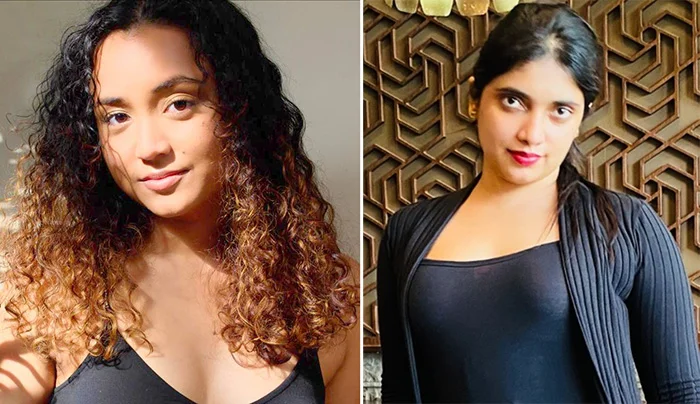
Emma-and-Maneeka
This Valentine’s Day the band JAYASRI we will be really busy; in the morning we will be landing in Sri Lanka, after our Oman Tour; then in the afternoon we are invited as Chief Guests at our Maris Stella College Sports Meet, Negombo, and late night we will be with LineOne band live in Karandeniya Open Air Down South. Everywhere we will be sharing LOVE with the mass crowds.
Kay Jay (Singer)
I will stay at home and cook a lovely meal for lunch, watch some movies, together with Sanjaya, and, maybe we go out for dinner and have a lovely time. Come to think of it, every day is Valentine’s Day for me with Sanjaya Alles.
Maneka Liyanage (Beauty Tips)
On this special day, I celebrate love by spending meaningful time with the people I cherish. I prepare food with love and share meals together, because food made with love brings hearts closer. I enjoy my leisure time with them — talking, laughing, sharing stories, understanding each other, and creating beautiful memories. My wish for this Valentine’s Day is a world without fighting — a world where we love one another like our own beloved, where we do not hurt others, even through a single word or action. Let us choose kindness, patience, and understanding in everything we do.
Janaka Palapathwala (Singer)
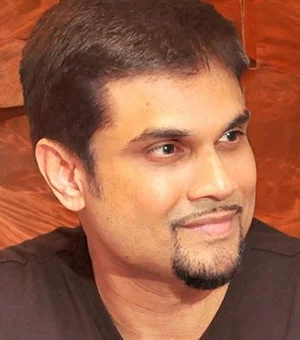
Janaka
Valentine’s Day should not be the only day we speak about love.
From the moment we are born into this world, we seek love, first through the very drop of our mother’s milk, then through the boundless care of our Mother and Father, and the embrace of family.
Love is everywhere. All living beings, even plants, respond in affection when they are loved.
As we grow, we learn to love, and to be loved. One day, that love inspires us to build a new family of our own.
Love has no beginning and no end. It flows through every stage of life, timeless, endless, and eternal.
Natasha Rathnayake (Singer)
We don’t have any special plans for Valentine’s Day. When you’ve been in love with the same person for over 25 years, you realise that love isn’t a performance reserved for one calendar date. My husband and I have never been big on public displays, or grand gestures, on 14th February. Our love is expressed quietly and consistently, in ordinary, uncelebrated moments.
With time, you learn that love isn’t about proving anything to the world or buying into a commercialised idea of romance—flowers that wilt, sweets that spike blood sugar, and gifts that impress briefly but add little real value. In today’s society, marketing often pushes the idea that love is proven by how much money you spend, and that buying things is treated as a sign of commitment.
Real love doesn’t need reminders or price tags. It lives in showing up every day, choosing each other on unromantic days, and nurturing the relationship intentionally and without an audience.
This isn’t a judgment on those who enjoy celebrating Valentine’s Day. It’s simply a personal choice.
Melloney Dassanayake (Miss Universe Sri Lanka 2024)
 I truly believe it’s beautiful to have a day specially dedicated to love. But, for me, Valentine’s Day goes far beyond romantic love alone. It celebrates every form of love we hold close to our hearts: the love for family, friends, and that one special person who makes life brighter. While 14th February gives us a moment to pause and celebrate, I always remind myself that love should never be limited to just one day. Every single day should feel like Valentine’s Day – constant reminder to the people we love that they are never alone, that they are valued, and that they matter.
I’m incredibly blessed because, for me, every day feels like Valentine’s Day. My special person makes sure of that through the smallest gestures, the quiet moments, and the simple reminders that love lives in the details. He shows me that it’s the little things that count, and that love doesn’t need grand stages to feel extraordinary. This Valentine’s Day, perfection would be something intimate and meaningful: a cozy picnic in our home garden, surrounded by nature, laughter, and warmth, followed by an abstract drawing session where we let our creativity flow freely. To me, that’s what love is – simple, soulful, expressive, and deeply personal. When love is real, every ordinary moment becomes magical.
Noshin De Silva (Actress)
Valentine’s Day is one of my favourite holidays! I love the décor, the hearts everywhere, the pinks and reds, heart-shaped chocolates, and roses all around. But honestly, I believe every day can be Valentine’s Day.
It doesn’t have to be just about romantic love. It’s a chance to celebrate love in all its forms with friends, family, or even by taking a little time for yourself.
Whether you’re spending the day with someone special or enjoying your own company, it’s a reminder to appreciate meaningful connections, show kindness, and lead with love every day.
And yes, I’m fully on theme this year with heart nail art and heart mehendi design!
Wishing everyone a very happy Valentine’s Day, but, remember, love yourself first, and don’t forget to treat yourself.
Sending my love to all of you.

 To create a powerful, natural, and hydrating beauty mask that soothes inflammation, fights acne, and boosts skin radiance, mix a mashed banana with fresh aloe vera gel.
This nutrient-rich blend acts as an antioxidant-packed anti-ageing treatment that also doubles as a nourishing, shiny hair mask.
* Face Masks for Glowing Skin:
Mix 01 ripe banana with 01 tablespoon of fresh aloe vera gel and apply this mixture to the face. Massage for a few minutes, leave for 15-20 minutes, and then rinse off for a glowing complexion.
* Acne and Soothing Mask:
Mix 01 tablespoon of fresh aloe vera gel with 1/2 a mashed banana and 01 teaspoon of honey. Apply this mixture to clean skin to calm inflammation, reduce redness, and hydrate dry, sensitive skin. Leave for 15-20 minutes, and rinse with warm water.
* Hair Treatment for Shine:
Mix 01 fresh ripe banana with 03 tablespoons of fresh aloe vera gel and 01 teaspoon of honey. Apply from scalp to ends, massage for 10-15 minutes and then let it dry for maximum absorption. Rinse thoroughly with cool water for soft, shiny, and frizz-free hair.

Prime Minister meets delegation from the European External Action Service

Moscas star as Italy dismantle Nepal for first World Cup win

Kim Jong Un chooses teen daughter as heir, says Seoul

Newly appointed ADB Country Director to Sri Lanka and delegation meet PM

School student transport services are being regulated

Shanaka and Rathnayake blow Oman away with frenetic half-centuries

‘Dates have the highest sugar content to fight Coronavirus’

Sunday Island 27 December – Headlines

#SundayIsland 17th December – Headlines

Sunday Island – 28th March

Sunday Island Headlines – 21 March

Sunday Island – 21st February – Headlines
-
 Features5 days ago
My experience in turning around the Merchant Bank of Sri Lanka (MBSL) – Episode 3
-
 Business6 days ago
Zone24x7 enters 2026 with strong momentum, reinforcing its role as an enterprise AI and automation partner
-

 Business5 days ago
Remotely conducted Business Forum in Paris attracts reputed French companies
-
 Business5 days ago
Four runs, a thousand dreams: How a small-town school bowled its way into the record books
-
 Business5 days ago
ComBank and Hayleys Mobility redefine sustainable mobility with flexible leasing solutions
-

 Business2 days ago
Autodoc 360 relocates to reinforce commitment to premium auto care
-
 Business6 days ago
HNB recognized among Top 10 Best Employers of 2025 at the EFC National Best Employer Awards
-
 Midweek Review2 days ago
A question of national pride