
Business
158% increase in volume of transactions across digital payment channels


Number of transactions on digital channels increase by 153%
Decisive shift in preference for contactless and cashless payment solutions
Over 250 enterprises successfully digitalized processes after the onset of the pandemic
Resistance to cashless transactions has rapidly given way to enthusiastic usage as an unprecedented number of Sri Lankans are switching to digital banking channels, according to HNB Head of Cards, Gauthami Niranjan.
Compared with 2020, the volume of transactions on digital channels grew by a remarkable 158% Year-on-Year (YoY) in 2021, while the value of digital transactions increased by a corresponding 153% YoY.
“Given that HNB had already captured the lion’s share of the market in digital merchant acquisition even before the pandemic, we leveraged these experiences to ensure that even businesses which were initially unsure of digital payments were able to seamlessly adapt and integrate these technologies into their total business model. The results of these efforts are compelling as reflected in the massive uptake in digital payment options- both from customers and businesses,” Niranjan said.
HNB IPG (Internet Payment Gateway) recorded a growth over 100% in merchants during the period, with businesses embracing the secure payment channel and services offered by the bank for online payments from any local or international debit, credit, VISA and MasterCard.
Similarly, merchants improved their cashless payment options with HNB MOMO, especially for cash on delivery services. As a result, the mobile solution for electronic payment cards holds a 50% market share in low-cost mobile POS terminals in Sri Lanka.
Such a rapid proliferation of digital payments creates a compelling financial incentive for almost any enterprise – particularly as an affinity for cashless transactions expands out of major urban centres and into all parts of the country.
“Developments in cashless payments are still only emerging. However, technologies like tokenisation – technology at the heart of ride-hailing and food delivery apps – is likely to expand in the coming months as more local businesses launch dedicated apps with payment features built-in. This is another area in which we have supported some of the most successful tech-based enterprises in the country by enabling card details to be securely linked to convenient payment portals.
“These dynamics will ultimately provide valuable and much-needed benefits for a broad spectrum of Sri Lankan enterprise – from small businesses and self-employed individuals to hospitality providers, large and small – and ultimately promote a broader and more resilient and equitable economic recovery. However, the barrier for entry into a digital transaction has never been lower, and our goal is to make sure that all Sri Lankan enterprises can compete in this new paradigm,” Niranjan concluded.
With 252 customer centres across the country, HNB is one of Sri Lanka’s largest, most technologically innovative banks, having won local and global recognition for its efforts to drive forward a new paradigm in digital banking. Over the recent past, the bank was ranked among the World Top 1,000 Banks list compiled by the prestigious UK-based Banker Magazine. HNB has a national rating of AA- (lka) by Fitch Ratings (Lanka) Ltd.
HNB was also declared Best Sub-Custodian Bank in Sri Lanka at the Global Finance Awards 2020, in addition to winning the coveted Best Retail Bank in Sri Lanka Award for the 11th time at the Asian Banker Awards 2020, in recognition of its sustainable growth and continuous improvements in processes, products and services amidst a challenging macroeconomic environment.


The Automobile Association of Ceylon (AAC) is looking beyond the traditional boundaries of mobility and road safety toward the future of mobility through sustainable developments in vertical mobility applications under the global guidance of the Fédération Internationale de l’Automobile (FIA).
AAC President Mr. Dhammika Attygalle believes AAC has the potential to contribute sustainable and proven systems, regulatory understanding, and international mobility frameworks toward developing Sri Lanka’s future mobility landscape while supporting the country’s broader economic development.
Representing Sri Lanka at the recent FIA Regional Drone and Vertical Mobility initiative held in Nepal was AAC Executive Committee Board Member Indula Sumithraarachchi, who participated alongside regional delegates and international mobility experts discussing the applications of vertical mobility systems and evolving regulatory frameworks covering mobility integration, safety, aviation and legal regulations.
“As mobility technologies evolve globally, we see vertical mobility as a natural extension of future mobility ecosystems. We believe vertical mobility is connected to sustainable areas not limited to future urban mobility, transport and logistics, infrastructure integration, safety frameworks, disaster and emergency response, and environmental efficiency,” he stated.
Drones are already being commercially utilized in Sri Lanka for dronegraphy (photography and videography using drones), agriculture, surveying and mapping, events, and marketing. However, it is important that greater attention is given toward safety standards, operational protocols, and aviation regulations, licensing, approvals and career professionalism as drone pilots within Sri Lanka in order to make these technologies safer and more accessible to the public.
International mobility experts increasingly recognize drones as part of a wider vertical mobility ecosystem operating alongside aviation and respective local regulatory frameworks. Experts explain that drone systems are helping countries establish regulatory structures, safety standards, technical expertise, aerial management systems, and operational frameworks that may eventually support broader future mobility technologies.
For AAC, the relationship between drones and vertical mobility represents a wider future mobility framework involving how people, services, safety, infrastructure, information, and transport systems may operate in more connected, intelligent, and efficient ways beyond conventional road-based transportation.
For decades, AAC has played an important role in Sri Lanka’s mobility sector through road safety advocacy, motoring assistance, tourism support services, driver awareness initiatives, and public mobility education. The association has continuously contributed toward improving safe mobility practices for Sri Lankan road users and motorists.
AAC now aims to position Sri Lanka within these evolving international mobility conversations while ensuring that future mobility development remains safe, responsible, and aligned with international standards.
The association also believes collaboration between regulators, aviation authorities, educational institutions, private sector innovators, and international mobility organizations will become increasingly important as future mobility ecosystems continue to develop globally.
Through FIA-supported international engagement and regional collaboration, AAC hopes to contribute toward building awareness and understanding of future mobility opportunities while ensuring Sri Lanka remains connected to emerging global transportation developments.
As mobility increasingly moves toward smarter, interconnected, and technology-driven systems worldwide, AAC’s initiatives into vertical mobility reflect its broader vision of supporting safe, progressive, and future-ready mobility solutions for Sri Lanka and future generations.
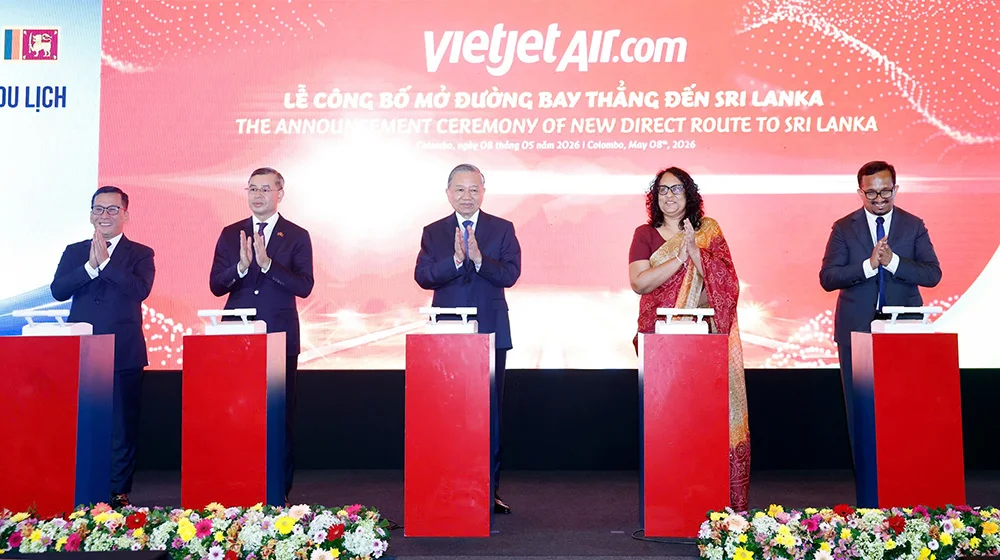
Vietjet Air, Vietnamese new-age hybrid airline, has announced its first direct service connecting Colombo to Ho Chi Minh City at the Sri Lanka – Vietnam Trade, Investment and Tourism Cooperation Forum. The announcement took place in the presence of General Secretary and President of Vietnam To Lam, Prime Minister of Sri Lanka Harini Amarasuriya, and senior officials from both countries.
This is the airline’s first direct service between Sri Lanka and Vietnam, supporting the airline’s international expansion while contributing to stronger economic, trade, tourism, and people-to-people ties between the two nations.
The Colombo – Ho Chi Minh City route is expected to commence in August 2026 with four round-trip flights per week. Travelers from Colombo will soon enjoy affordable fares and seamless connectivity to Vietnam’s leading tourism and business hubs, along with convenient access through Vietjet’s extensive international flight network to major destinations across the Asia-Pacific region, including Australia, Japan, South Korea, China, and beyond.
Business
SDB bank and Hayleys Mobility forge strategic partnership to advance sustainable mobility and private vehicle leasing
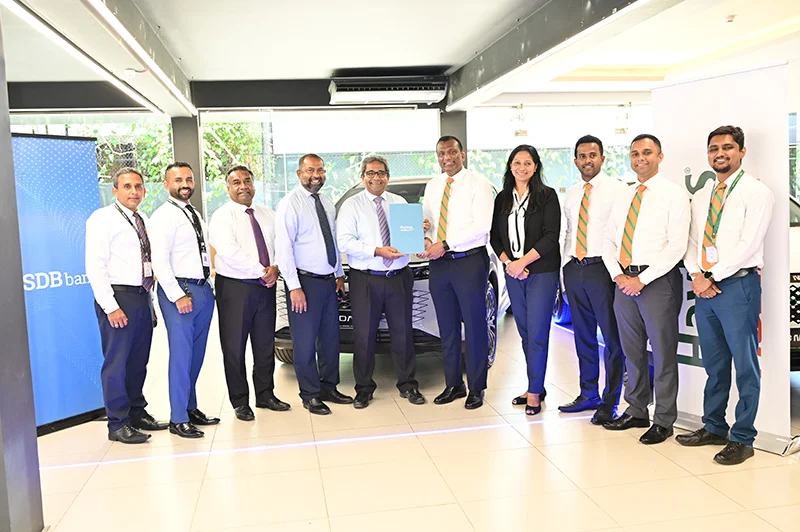
SDB bank has entered into a strategic partnership with Hayleys Mobility Limited through the signing of a Memorandum of Understanding, reinforcing the bank’s commitment to expanding access to structured mobility financing while advancing its broader sustainability banking agenda. The collaboration brings together two established institutions to support customers seeking leasing solutions for private vehicles, with a notable emphasis on electric vehicles as part of a more future-focused approach to transportation.
The MoU was signed recently at the Hayleys Mobility office in Union Place, in the presence of senior representatives from both organizations. Representing SDB bank Kapila Ariyaratne, Executive Director and Chief Executive Officer, Manoj Akmeemana, Deputy Chief Executive Officer, Chitral De Silva, Chief Business Officer, Lahiru Ekanayake, Head of Leasing and Tharanga De Silva Chief Manager, Business Banking were participated. Hayleys Mobility Limited was represented by Managing Director Hasith Prematillake, Director Roshani Dharmaratne, Mr. Panduka Rathnayake – General Manager Finance, and Mr. Suraj Chularathne – Assistant General Manager.
The partnership is designed to expand access to private and sustainable leasing solutions across Sri Lanka, while also responding to growing interest in cleaner and more responsible mobility choices. By placing special focus on electric vehicle leasing, the initiative reflects SDB bank’s recognition of changing customer preferences and the importance of supporting more sustainable transport options through accessible financing.
In addition to supporting conventional private vehicle financing, the collaboration enables customers to benefit from a more integrated experience that brings together vehicle selection and financing under a single proposition. Through the combined reach of SDB bank and Hayleys Mobility, the partnership is expected to improve accessibility and convenience for customers across the country, including professionals, self-employed individuals, business owners and other private vehicle buyers looking for reliable, structured leasing solutions.

Complete all projects funded under the LKR. 500 bllion allocation for Ditwah within this year – President

Development projects should be carried out in line with the practical needs of the people – PM

Ayesha Zafar’s rapid ton crushes Zimbabwe

Donald Trump lands in China for high-stakes meeting with Xi Jinping

Gujarat Titans go No.1 after Rabada and Holder rout Sunrisers Hyderabad

Showers will occur in the Western, Sabaragamuwa, Central, North-western and Northern provinces and in Anuradhapura, Trincomalee, Galle and Matara districts

‘Dates have the highest sugar content to fight Coronavirus’

Sunday Island 27 December – Headlines

#SundayIsland 17th December – Headlines

Sunday Island – 28th March

Sunday Island Headlines – 21 March

Sunday Island – 21st February – Headlines
-

 News7 days ago
MIT expert warns of catastrophic consequences of USD 2.5 mn Treasury heist
-

 News4 days ago
Lanka Port City officials to meet investors in Dubai
-
 News22 hours ago
Ex-SriLankan CEO’s death: Controversy surrounds execution of bail bond
-

 Editorial7 days ago
Clean Sri Lanka and dirty politics
-

 News5 days ago
SLPP expresses concern over death of former SriLankan CEO
-

 Editorial6 days ago
The Vijay factor
-

 News5 days ago
Police inform Fort Magistrate’s Court of finding ex-CEO of SriLankan dead under suspicious circumstances
-
Features2 days ago
High Stakes in Pursuing corruption cases