
News
104 Rohingya refugees fleeing to Indonesia rescued by Navy off northern coast


By Norman Palihawadane
The Navy rescued 104 Rohingya Muslims adrift off Sri Lanka’s northern coast, Navy spokesman Captain Gayan Wickramasuriya, said yesterday.
The Rohingya Muslims said that they had fled the country to escape violence in Myanmar, and hardships in Bangladesh refugee camps.
The boat was first detected by the Sri Lanka Navy when it was 3.5 nautical miles from shore and a search and rescue operation was launched to tow the vessel to a northern harbour on Sunday night, according to Captain Wickramasuriya.
“They have been handed over to the police. The police will present them before a Magistrate who will decide the next step,” the Navy Spokesman said, adding that 105 Rohingya Muslims, originally from Myanmar, had been heading to Indonesia when their boat developed engine trouble.
Wickramasuriya said that 39 women and 23 minors were among the rescued people, and an 80-year old man, one mother and her two children had been admitted to hospital.
Police said that the 105 Myanmar nationals would be produced before the Mallakam Magistrate’s Court.
The Kankesanthurai Police are conducting further investigations.









Approval of the Cabinet of Ministers has been granted at their meeting held on 19.05.2025 in order to introduce amendments to the Inland Revenue Act No. 24 of 2017 including the proposed tax revisions to enhance the tax structure paving way for state financial integrity based on revenue.
Accordingly, the revised draft bill has been prepared by the legal draftsman and clearance of the Attorney General has been received.
Therefore, the Cabinet of Ministers has granted approval for
the resolution furnished by the President in his capacity as the Minister of Finance, Policy Planning and Economic Development to publish the aforementioned draft bill in the government gazette notification and subsequently, forward the same to the Parliament for its concurrence.

The National Mineral Policy was prepared for the first time in the year 1999, and the aforementioned policy has been amended in 2023 to cover matters such as preparing an updated data system related to mineral resources, adding value to the export of minerals, encouraging mineral-related industrialists, extracting mineral resources and managing the environment sustainably, and resolving the issues related to the ownership of the land arising in extracting mineral resources.
The revised National Mineral Policy has been reupdated in line with the manifesto “A Sustainable Resource Utilization – Generation of the Highest Benefit” under the policy statement of the current government” A Thriving Nation – A Beautiful Life.”
Accordingly, the Cabinet of Ministers has approved the resolution presented by the Minister of Industries and
Entrepreneurship to implement the so-formulated “National Mineral Policy—2026.”

The Gampaha High Court has sentenced Twelve (12) individuals to death over the 2022 murder of former Polonnaruwa District Member of Parliament Amarakeerthi Athukorala and his security officer.

Amendment of the Inland Revenue Act No. 24 of 2017

Cabinet nod for “National Mineral Policy” – 2026

Twelve sentenced to death by Gampaha High Court
Ten new buses with facilities for people with special needs

Ghosts of 2016 writ large as England, West Indies meet again
Amendment to the regulations for registration of Subscriber SIM Cards (Subscriber Identity Modules- SIM) and reregistration of subscriber information related to the SIM cards obtained before 02-08-2019

‘Dates have the highest sugar content to fight Coronavirus’

Sunday Island 27 December – Headlines

#SundayIsland 17th December – Headlines

Sunday Island – 28th March

Sunday Island Headlines – 21 March

Sunday Island – 21st February – Headlines
-

 Features3 days ago
My experience in turning around the Merchant Bank of Sri Lanka (MBSL) – Episode 3
-

 Business4 days ago
Zone24x7 enters 2026 with strong momentum, reinforcing its role as an enterprise AI and automation partner
-

 Business3 days ago
Remotely conducted Business Forum in Paris attracts reputed French companies
-

 Business3 days ago
Four runs, a thousand dreams: How a small-town school bowled its way into the record books
-

 Business3 days ago
ComBank and Hayleys Mobility redefine sustainable mobility with flexible leasing solutions
-
 Business4 days ago
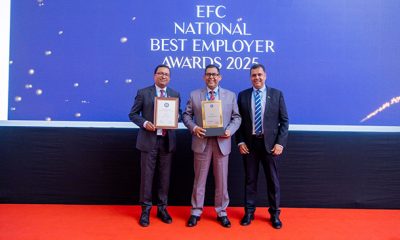
HNB recognized among Top 10 Best Employers of 2025 at the EFC National Best Employer Awards
-

 Editorial6 days ago
All’s not well that ends well?
-

 Business4 days ago
GREAT 2025–2030: Sri Lanka’s Green ambition meets a grid reality check