
Opinion
Send in clowns and be damned!

The Director-General of the Sri Lanka Tourism Develop Authority has given the thumbs up sign to the Director General of Health and IGP to allow foreign tourists to travel across districts/provinces in Sri Lanka through ‘bubble tourism’. This is despite the fact that Sri Lanka’s Immunology and Molecular Medicine authorities have now identified six new Covid-19 variants in Sri Lanka. These include variants from Denmark, Europe, Middle East, Nigeria and South Africa, including the deadly Indian B.1.617.
A golden wand of protection seems to attend the path of these foreign visitors across the island, while the public is prohibited from venturing into or through such areas to prevent the spread of the virus. It is an irrefutable fact that when foreign tourists are ferried across the Island and allowed to visit the provinces, there is an entourage of locals to assist them at their accommodation, in transport and at places of tourist interest. One of the first Covid-19 patients in Sri Lanka was a Tour Guide! The policy of ‘back to business as usual’, sporadic restrictions, onus of self-protection and ‘never mind the consequences’ has hitherto yielded horrendous results.
The cost of opening the country’s borders to foreign tourists from January 2021, with some short-term gains to hoteliers, has boomeranged on the nation’s production, manufacture and general socio economic well- being. Each new morning new widows and infants howl and mourn the deaths of loved ones. Death Rate and total Covid cases in Sri Lanka have now reached phenomenal levels. Hospitals cannot cope with the rising numbers of patients, who are being accommodated in makeshift sheds and warehouses, or asked to remain in their homes sans medical attention!
Who is really calling the shots in controlling the pandemic that has now reached crisis proportions in Sri Lanka? Does the Minister of Tourism, Prasanna Ranatunga, have special qualifications and abilities in the medical field, to warrant such decisions and directives to be given across the board by his petty minions and willing sycophants in the government bureaucracy? Is he not aware that the practice of bubble tourism is between countries that have relatively small incidence of Covid, as in the case of Australia and New Zealand, holding strong track records of implementing consistently rigorous anti-covid restrictions and regulations? Is not the Director General of Tourism, Ms. Kirmali Fernando, whose husband owns and runs Tourist Hotels, properly advised on the practices around the world? Or is short term pecuniary gain more important than ordinary human lives? In Sri Lanka ” a land like no other” when Ukraine was in a lockdown situation, their tourists were hosted in Sri Lanka.
According to the WHO, the coronavirus variant was first identified in India last year and was classified as a variant of global concern, with some preliminary studies showing that it spreads more easily and is increasingly classified as a variant of concern at a global level. WHO statistics reveal a sharp linear rise in the new Covid cases in India commencing from March 2021, even while our ‘Health Experts’ in the Tourism Ministry were encouraging and further promoting Bubble Tourism Agreements with India until late April 20, 2021
The recent fiasco in Piliyandala saw the local MOH up in arms over the blatant idiotic interference by the Minister Lokuge, in giving counter orders against the Ministry of Health and opening up Covid-19 areas, possibly due to requests of business cronies among his constituents. The subsequent death rate due to Covid in Piliyandala bears ample testimony to the demented exertions of this politico.
Blustering, blundering politicians apart, what of the high-powered Committees, consisting of retired senior government servants, expert medical personnel, deciding to administer the First Dose of anti-Covid-19 AstraZeneca Vaccine to approx. 9 lakhs of the population, while only retaining 03 lakhs for the Second Dose! Surely it is common sense to spread the vaccine in a manner that ensures that both doses are given during the prescribed period of at least 10 weeks! The logic of entering into a signed contract for supply of AstraZeneca to be given for the second dose, and opening a letter of credit, does not seem to have entered into the calculations of those charged with such responsibilities, who perhaps have reached the age of Dementia or careless indifference!
There was enough time to secure the required stock of AstraZeneca from January 2021, if not for political will considering that the Budget of December 2020 had no provision for anti-covid vaccines! Leaving the approx 600,000 of people particularly in the over 60 age group in dire straits, after their first dose of AstraZeneca, which cannot be mixed with other vaccines now available in the market, is tantamount to criminal negligence, breach of trust and inequitable governance. Even in the midst of such severe bungling, there are some politicos trying to pour down Vaccine Cocktails, hitherto never tried or tasted in other parts of the developed world, down the throats of these unfortunate victims.
The cronyism and nepotism rampant in the numerous and now commonplace accounts of people with ‘influential connections’’ getting the vaccine over others, shows a moral impoverishment of the country. It is a fact that today there are those who work in the front line of infection in their respective workplaces, who have not been given priority in the administration of the vaccine. However, Notables, VIPs and Politicians and their allies are given pride of place in getting the scarce second dose of the AstraZeneca, irrespective of the fact that this is considered more appropriate for senior citizens above the age of 55 or 60.
It is a time that the Public has seen through the lies, sheer hypocritical terminology and slanted data that might have hitherto lulled them towards the so-called resurgence of the virus in the “Avurudu Pokura”. Some amusing but insidious half-truths, and concealments are worth mentioning. The media gave the impression for a long time that the deaths were due to underlying conditions of non-communicable diseases such as diabetes and high blood pressure when the causative agent was Covid 19. The undeniable truth is that had it not been for the Covid-19 virus, those with underlying diseases might have lived to a ripe old age with the medications! It is only now, with the escalating deaths and ensuring chaos in the health sector, that the real causative agent of those afflicted with Covid-19 is being acknowledged as Covid pneumonia! The crass negligence of garment factory owners in the Brandix cluster, and resultant probe into criminal negligence is without any progress and lies hidden and dormant. The reluctance to admit that there was a community wide transmission across the island, and the continued lies that this is confined in the main to the Western Province, and that every case could be traced back to the Brandix or Peliyagoda Fish Market clusters is now a sad laughing matter!
Those of us who watched the TV news in the time leading up to the present crisis are privy to the spectacle of the representatives of the people (Politicians), at the pinnacle of power, neglecting to follow simple guidelines such as wearing a mask, avoiding crowded meetings, etc. The subtle interplay of attributing a particular age group to the Covid-19 casualty, the balancing of numbers of positive cases and deaths with limited PCR, and the relative lack of a Geographical Information System by which selective and targeted lockdowns could be imposed in severely affected areas, have contributed to maintaining a fog index over the actual situation prevailing in the country.
A nation that has seen its own Minister of Health and other politicians expound the virtues of a fake decoction called “Dhammika Peniya” as a possible Covid-19 preventive, cannot be too surprised thereafter to witness any worse inanities and tragic bungles!
In conclusion, a nation that with renewed hope changes its political pillow for a new government be it, SLFP, Yahapalanaya, alias SJB, Podujana Peramuna, appears to be doomed to certain abject disillusionment. The truth is plain to see. Any apolitical citizen can now realise that whether there be bond scams, major bribery and corruption charges, criminal negligence on terrorist massacres, the policy of no real remedial action, talk only and a series of commission reports, parading on remand, will be the final product. Except for some sprats down the line, the kingpin will continue their rampage. It is said that there is a certain camaraderie and wheeler dealing even amongst those who represent the people on either side of the divide in Parliaments. Where there is neither honour, principle nor true love of country and its people, in a system that is replete with sycophant”public” servants and moribund self-serving intelligentsia, the dark prescription still is “Send in the Clowns and be damned”.
SONALI WIJERATNE
Kotte


This article examines whether Sri Lanka faces the risk of once again moving towards a situation similar to the 2022 economic crisis. The 2022 crisis was not the result of a single cause, but a multidimensional crisis created by the combined effects of fiscal weaknesses, foreign exchange shortages, debt burdens, policy mistakes, and the weakening of the productive economy. Although foreign exchange reserves, the exchange rate, and the fiscal position have now stabilized to some extent, that stability remains fragile.
The continuity of the IMF programme, debt sustainability, investor confidence, and policy discipline are decisive factors in this regard. At the same time, poverty, the quality of employment, pressures on the SME sector, price levels, and income inequalities remain serious socio-economic challenges. Therefore, while it may not be accurate to say that the 2022 crisis will immediately recur, abandoning the reform path and failing to correct structural weaknesses could once again push Sri Lanka towards a crisis-prone path.
Recently, the Chief Executive Officer of the Advocata Institute issued an important warning regarding Sri Lanka’s economic future. That statement also received wide attention across various media platforms. His central argument was that if Sri Lanka moves away from the current path of economic reforms, there is a risk that a situation similar to the severe economic crisis experienced in 2022 could re-emerge.
This statement cannot be dismissed merely as a political or ideological remark. It is an important warning that deserves deeper consideration in relation to the country’s economic stability, policy continuity, and the future of the reform process. Therefore, the purpose of this note is to examine the strength and validity of that statement through selected macroeconomic indicators and structural economic factors.
A particularly important point to remember is that the 2022 economic crisis was not caused by a single factor or a single policy mistake. It was a complex economic crisis created by the accumulation of fiscal imbalances, excessive debt, foreign exchange shortages, weak export and investment growth, the decline of the productive economy, policy uncertainty, and weak institutional governance over many years.
Therefore, in assessing whether Sri Lanka could once again move towards such a situation, it is not sufficient to rely on a single indicator or a short-term trend. Instead, it is essential to consider a broad macroeconomic range, including the fiscal position, foreign exchange reserves, debt sustainability, investment and export performance, unemployment, poverty levels, the condition of small and medium-sized enterprises, price levels, interest rates, and the overall path of economic growth.
Our main question should not be whether the 2022 crisis will return tomorrow. The more important question is whether the fundamental structural weaknesses that caused that crisis have truly been corrected, or whether they have only been temporarily managed. Sri Lanka’s economic future will be determined by the answer to this question.
1. Foreign Exchange Reserves
By early 2022, Sri Lanka’s usable foreign exchange reserves had fallen to extremely low levels, making even payments for fuel, medicine, and other essential imports a serious challenge.
At present, foreign exchange reserves have recovered significantly, providing a stronger protective buffer compared with the situation in 2022. However, this stability could once again be weakened by a breakdown in the continuity of the IMF programme, a slowdown in foreign direct investment flows, a decline in tourism earnings or remittances, or disruptions to the debt restructuring process.
2. Exchange Rate Stability
In 2022, the rapid depreciation of the rupee was a major factor that increased import prices, production costs, and the cost of living.
Today, the exchange rate shows relative stability, but that stability depends on foreign exchange inflows, market confidence, and policy credibility. Therefore, if the IMF programme is disrupted, foreign exchange earnings decline, or investor confidence weakens, the rupee could once again come under severe pressure.
3. Fiscal Position
Among the root causes of the 2022 crisis were the collapse of government revenue, dependence on excessive borrowing, and the long-term weakening of fiscal discipline.
Under the IMF programme, the fiscal position has been strengthened to some extent through increased tax revenue and expenditure control. However, reversing tax reforms for political popularity, failing to reform loss-making state-owned enterprises, or losing control over public expenditure could once again widen fiscal imbalances.
4. Debt Sustainability
In 2022, Sri Lanka was forced to suspend external debt servicing for the first time in its history.
Although the debt restructuring process has now made considerable progress, debt sustainability depends on continuous economic growth, maintaining a primary budget surplus, and policy discipline. If these conditions weaken, concerns over debt stability could re-emerge.
5. Employment Conditions
Although the official unemployment rate appears to be under some control, problems relating to the quality of the labour market remain unresolved.
Many people have moved into low-income informal employment, while the shortage of employment opportunities among educated youth remains significant. In addition, the migration of skilled and educated workers has placed pressure on the country’s human capital and long-term productive capacity.
6. Poverty and Living Standards
With the 2022 crisis, poverty increased significantly. Although inflation has declined, the cost of living still remains a heavy burden for many families.
A large number of households continue to struggle to meet expenses related to food, transport, education, and health. Therefore, it is still difficult to say that the benefits of macroeconomic stability have adequately reached lower- and middle-income groups.
7. Small and Medium-Sized Enterprises
SMEs, which are a central source of employment and income generation in Sri Lanka, were severely affected by the crisis.
High interest rates, energy costs, raw material prices, and weak consumer demand forced many enterprises to close down, downsize, or become burdened with debt. The pace of economic recovery will depend heavily on the revival of this sector.
8. Weakness of the Productive Economy
A deeper structural cause of the 2022 crisis was the limited base of Sri Lanka’s productive economy.
Even today, the country remains heavily dependent on tourism earnings, remittances, and the services sector. High value-added industries, technology exports, knowledge-based services, and innovation-driven sectors have not grown at the expected pace. Without a structural transformation of the economy, long-term stability cannot be guaranteed.
9. Income and Distributional Inequalities
Although some economic groups recovered quickly after the crisis, a large section of the population has still not escaped economic pressure.
The gap between urban and rural areas, as well as between high- and low-income groups, appears to have widened. If the benefits of economic growth are not distributed more broadly, macroeconomic stability will not translate into social and political stability.
10. Price Levels and Inflation
Inflation has declined, but people are still facing price levels that have already risen and become entrenched.
A decline in inflation does not mean a decline in prices. If income growth does not keep pace with price levels, the real purchasing power and living standards of households will remain weak.
11. Interest Rates and Investment
Although interest rates have declined, private investment and new business activity have not yet grown at the expected pace.
Investment decisions are influenced not only by interest rates, but also by policy stability, legal clarity, the protection of property rights, market expectations, and investor confidence. Therefore, sustained investment growth requires broader institutional and policy stability.
12. What Could Happen If IMF Conditions Are Not Implemented?
The IMF programme is not merely a loan facility. It is a key foundation of the confidence that the international financial community places in Sri Lanka’s economic policies.
programme breaks down:
* IMF disbursements could be suspended.
* Support from development partners, including the World Bank and the Asian Development Bank, could weaken.
* Confidence among creditors and international markets could deteriorate.
* Foreign direct investment could slow down.
* Pressure on the rupee could increase.
* Interest rates could rise.
* Inflation could accelerate again.
* Fiscal crises could re-emerge.
* Economic growth could slow down.
* Jobs, incomes, and living standards could be adversely affected.
This does not mean that Sri Lanka would return to the 2022 situation overnight. However, it could gradually weaken the protective buffers required for economic stability and significantly increase the risk of the country being drawn back into a crisis-prone path.
by Prof. Ranjith Bandara, PhD (Qld.,)

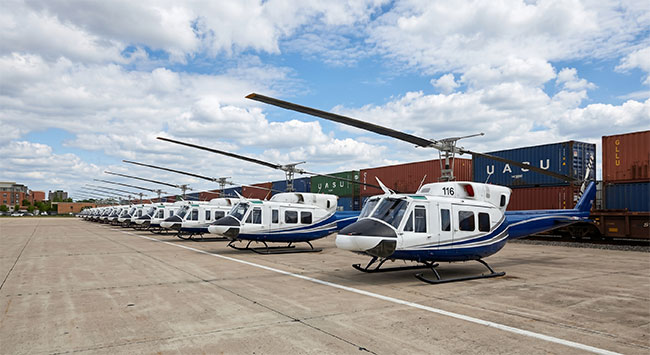
The US Government has gifted 10 Bell 206, Sea Ranger Helicopters to the SLAF for Training and Humanitarian Assistance and Disaster Relief (HADR) purposes. The full specifications are as follows.
Contractor:
Bell Helicopter Textron
Date Deployed: First flight: 1961; Operational: 1968
Propulsion: One Allison 250-C20BJ turbofan engine
Length: Fuselage – 31 feet (9.44 meters); Rotors turning – 39 feet (11.9 meters)
Height: 10 feet (3.04 meters)
Rotor Diameter: 35 feet 4 inches (10.78 meters)
Weight: 1595 pounds (725kg) empty, 3200 pounds (1455 kg) maximum take-off
Airspeed: 138 miles (222 km) per hour maximum; 117 miles (188 km) per hour cruising
Ceiling: 18,900 feet (5,761 meters)
Range: 368 nautical miles (420 statute miles, 676 km)
Crew: One pilot, four students
While they are good for training, I have my serious doubts whether these helicopters are ideal for HADR. As they have only a single engine and They can’t even operate into high rise helipads in hospitals and hotels in Colombo. The law requires twin engine helicopters! What happens if there is an engine failure while operating over the sea or in a mountainous area? There will be hell to pay!
Three twin engine versions would have been better.
How many helicopter pilots does the SLAF require anyway?
Will we be stuck with junk? Like two Russian KA -26’s during the Sirimavo Government and French Aerospatiale Dauphins SLAF acquired. which were not ‘tropicalised’, during the JRJ Government.
Will the Sea Ranger Spares support be available, free of charge?
I doubt it.
There will also be other Geopolitical strings attached. There is no such thing as a free lunch.
Guwan Seeya

Global warming policies were expected to drive a rapid shift toward a renewables-based energy system dominated by wind and solar. While growth in these sources did occur, it has not matched the pace that was widely anticipated. In the United States, the rise of cheap and abundant shale natural gas significantly reshaped the energy mix, displacing coal and limiting the relative share of wind and solar in electricity generation. In China and India, the situation has been different.
Coal remains dominant because it is widely available domestically, while natural gas is more limited or expensive to secure at scale. As a result, coal has retained its central role in both countries’ power systems. Solar and wind always provide intermittent, variable power. It was widely assumed that a cost-effective, utility-scale electricity storage solution would emerge to solve this problem, but that has not yet happened at the scale originally expected. In the pre-AI era, solar and wind were typically integrated into power systems alongside more reliable sources such as coal, natural gas, and nuclear energy.
For example, if the sun was shining on a Monday, electricity demand could be met largely by solar power during the day. At night, coal, natural gas, or nuclear plants would supply the required electricity. If the following Tuesday was cloudy or gloomy, generation would shift back toward coal, gas, or nuclear to maintain supply. AI introduces a new and more demanding challenge. AI data centers require continuous, high-quality, always-on electricity, which solar and wind alone struggle to guarantee without large-scale storage or back-up systems. In addition, they require very large amounts of power.
As a result, the AI industry is now actively searching for new and expanded sources of reliable electricity. One of the major challenges in powering AI systems is electricity transmission. High-voltage transmission lines are expensive, slow to build, and often face regulatory and land-use constraints. As a result, some companies are exploring more localized power solutions, sometimes referred to as microgrids. These are self-contained energy systems that can operate independently from the main electricity grid. Technologies such as small modular nuclear reactors are an example of such microgrids.
In such isolated systems, the focus is on highly reliable, always available power generated close to the point of use. In this context, solar and wind are expected to play a limited role because their output is variable and depends on weather conditions, making them less suited as primary sources in fully self-contained AI-focused microgrids. The pace of AI infrastructure development is extremely rapid in both the United States and China. AI systems are widely seen as transformative technologies that promise significant new wealth creation, which is driving aggressive and sustained investment. As a result, development is moving quickly, without waiting for long-term solutions such as large-scale energy storage to mature alongside renewable energy systems.
In this environment, electricity demand is rising faster than new infrastructure can be built. In the United States, this reinforces the role of natural gas as the dominant source of reliable power. In China and India, where coal remains more established and readily available, it is likely to continue playing a central role in meeting growing demand. In India, AI data centers have not yet been built at the scale seen in the United States and China. When India does reach that stage, it will need to supply large amounts of reliable electricity. India has placed strong emphasis on solar energy in particular and has had some success in meeting the needs of ordinary consumers through renewable expansion. However, the key question is what choices will be made when large-scale AI data centers begin to arrive.
Will India rely more on coal generation, which is relatively cheap, widely available, and highly reliable, or on solar power, which is intermittent, variable, and often more expensive when reliability is taken into account? My view is that India is more likely to turn to coal to meet this demand, given its existing infrastructure and the need for dependable electricity supply. Then there is an overall question. Solar and wind were already struggling in the pre-AI days to displace coal and natural gas at the system level, despite strong expectations that they would become dominant sources of electricity. Now that AI is here and electricity demand is rising rapidly, will they push solar and wind further behind in the energy mix? (The Statesman)
(The writer is an expert on energy and contributes regularly to publications in India and overseas.)
by SUNIL SHARAN

India A beat Sri Lanka A by 8 runs in thriller

T20 World Cup: Hosts, defending champions and a bunch of hopefuls in Group 2

Trump booed in New York as he becomes first US president to attend NBA Finals

Food Policy and Security Committee meets

Auguste, Andrew and Springer recalled to West Indies’ T20I squad

China’s Xi, North Korea’s Kim pledge to boost ties at rare Pyongyang summit

‘Dates have the highest sugar content to fight Coronavirus’

Sunday Island 27 December – Headlines

#SundayIsland 17th December – Headlines

Sunday Island – 28th March

Sunday Island Headlines – 21 March

Sunday Island – 21st February – Headlines
-

 Latest News6 days ago
Kusal Mendis, Pathum Nissanka, bowlers put Sri Lanka 1-0 up
-
 News6 days ago
New US tariffs proposed on 60 countries, including Sri Lanka
-
 Features5 days ago
Power crept into the Sangha and is now tearing it apart
-
 Features5 days ago
Kondachchi wind farm and battery storage project to boost energy security, says Power Ministry Secretary
-
 Features5 days ago
Saudi Arabia sets new benchmark in Hajj management as 1.7 million pilgrims complete sacred journey
-

 News3 days ago
Women’s T20 World Cup 2026 warm-up: Chamari Athapaththu’s 94 helps Sri Lanka beat Pakistan
-

 News4 days ago
Asst. Manager, security officer arrested over Rs 30 mn snatch at Horana PB branch
-

 Editorial2 days ago
Probe Sallay’s complaint