
Opinion
This Pretentious Plenitude


(loketa parakase, gedarata maragate )
“On 3 June, 1400, the Byzantine Emperor Manuel II Paleologus entered Paris. By the showy standards of contemporary state visits, Manuel cut a sory figure. Accompanied by fewer than sixty of his own attendants, speaking nothing but Greek, mounted on a borrowed white charger and dependent for his travelling expenses on his hosts, he had come to beg for money and troops in the hope of preserving his shrunken domains from the Ottoman Turks.”
– Cursed Kings, The Hundred Years War IV, 2015)
By Usvatte-aratchi
A few days ago, I went to Panadura to see my brother, 95 years old. We parked the car to go to the Arpico Supercentre at the southwestern corner of Galle Road and Nirmala Mawatha. From the park, I did not go into the store; I sat in the car. There were about 20 cars parked and people went into the store and drove away after making their purchases. There were more women shoppers than men. The women were distinctly well-clothed and appeared well-fed. They all wore slacks or skirts and upper garments, all in good taste with no garish hues. None wore a sari. All men wore slacks and shirts and none a kapati suit or sarong. All the cars glistened in the morning sun; none had scratches or worse damage. One car had a number plate BK; all the others had number plates with three letters. There was plenitude; where is the austerity the country is published to undergo? Or is austerity the burden borne by only one category of citizens? A few days later, as I entered through the gates to a hospital compound, I noticed that the man who issued tokens from a little cubicle in the heat and humidity wore a necktie. Public servants assembled before ministers invariably wearing a suit. The rooms are airconditioned to accommodate them. Doesn’t it make more sense to wear simple shirts in rooms cooled to a higher temperature to save fuel? Why this pretence of plenitude in this land of austerity? It is so poor that it bears the odium of having defaulted on its sovereign debt.
What are the rules of etiquette that require us to wear evening dress, no matter who the dignitary that one has to meet? Well, of course, anyone is entitled to wear funny clothes, even silken wigs in this high temperature and high humidity in torrid tropical weather. But in this impoverished hungry land, where children who attend school faint from starvation? There are reports of stunted and underweight children. I expect to read infant and maternal mortality rates for 2021, 2022 and 2023 higher than the excellent levels that our health services had ensured for us. The age cohorts born in 2020-2024 will bear the scars of this scourge throughout their lives.
Sometime in the mid-1980s, a friend of mine was the Indian Ambassador to Vietnam. She was very keen to learn Vietnamese. After a few weeks in the country, she hired someone to teach her Vietnamese. Although now written in Latin script, there is a range of diacritical marks to help one to speak a word with the proper tones -more complex than in Mandarin or Thai. (The Latin script was introduced in the 17th century by Portuguese Jesuit priests.) In the second week of lessons, the tutor took the liberty of raising a question with the Ambassador, one evening after the lesson. ‘Madam, with the flaps of the dress you wear, I can make a pretty blouse’. Isn’t it a pity that so much cloth must is wasted’? (Vietnamese are still small-made, perhaps genetically and the result of centuries of malnutrition.) The ambassador who was very sympathetic to what Vietnam was trying to achieve, was shocked by how right the tutor was. She took her lesson seriously. I was a student in Britain in the 1960s and stayed in my lodgings all summer, except to go to the theatre in London. One summer, I was invited to tea in the garden with the queen. Many students from Commonwealth countries were so invited. I had no suit to wear for the occasion nor did I consider it wise to invest in one, just to attend a tea party. (Mad Hatter might have considered it otherwise.) We are still a poor country and anyone who yearns for the use of expensive clothing must seek a fitting clime. Some of you must have observed the army-style warm collarless cardigan that President Volodymyr Zelensky wore when he addressed the US Congress, a rare honour bestowed on men from outside the US. Does a caparisoned elephant look more dignified than the real thing in the wild? Do murderers, plunderers, women abusers and forgers gain dignity when they wear kapati suits buttoned up to the chin? If clothes make for dignity, mannequins in shop windows must present the most dignified postures in the world.
Take the case of cars. In this small island with a short mileage of expressways and a speed limit of 100km per hour, where do people go in a Mercedes 350 or BMW 740 ? Those gas guzzlers, V8 vehicles which even Bhikkhu covet, are symbols of pretentious plenitude. I recall some MPs explaining in parliament that they needed expensive vehicles because they had to travel in their electorates on uneven roads. When NIssanka Wijewardene was the government agent in Badulla in the early 1960s, he toured the district on horseback and Uva is still not an area roads in good condition in that part of the country. Leonard Woolf, 123 years ago, toured the Hambantota district on horseback. Riding a horse on rough tracks and rural roads is no fun. I cannot see why MPs cannot travel about in cheaper cars which are less expensive to buy and also consume much less gas. All this plenitude is at the expense of rich and poor taxpayers. The frequent use of helicopters by the president and ministers is something we cannot afford. Once a relative of a president flew in a helicopter from Ratmalana to Maharagama, at government expense. A president travelled by helicopter several times to ‘inspect’ construction work on the Moragahakanda dam. I wondered how much engineering the man had in him to waste so many resources for so flimsy a reason. When a dam was built across Gal Oya at Inginiyagala in 1950-52 with two months to spare before the end of the contracted date, there was nobody flying around in helicopters. The Ampara-Siyambalanduwa road was a decade away and one had to drive to Chenkaladi to get to Inginiyagala, a tiring journey for a young man even in 1968-69. When a poor population struggles to climb higher in the income ladder, it does not help to grease it with opulent lifestyles by its leaders. That grease pulls down people back into poverty.
Our religious leaders do not help. The Durutu perahera was held a few weeks back. Navam perahera is on a grand scale. Then comes Avurudu when the whole country takes a holiday and eats and drinks as if there were no tomorrow. May is for vesak. June, and people sojourn in Anuradhapura. July is for many festivals in devale in the south. August puts up the spectacle in Mahanuvara. September opens a period of quietude in pansal only to begin again in November. Who objects to religiosity among believers but please undertake them without denying the rest of this economy resources. It is more important that a child goes to school regularly than that votive candles are lit on an altar.
Some places of religious importance in this country are mighty rich. Their daily income probably is in the millions. What is the educational institution or hospital that they financed to build and run? Even the Vidyodaya pirivena receives, to date a subvention out of taxpayers’ money. Why isn’t it maintained with the collections in the shrine with a Bo-tree in Kalutara? The collections are administered by the Public Trustee but why not give a sense of ownership to those that collect the money? The Venkateshwar kovil in Andhra Pradesh runs a fine university with a part of the huge income it earns. Superstitious politicians from our country contribute to that income. Satya Sai Baba organization in Bengaluru runs schools and provides pipe-borne water to villagers close to their offices. The Rama Krishna Mission in India has a brilliant record of having established and run many schools and colleges in India. Tatas have established research institutes that put out high-quality work. In the 13th and fourteenth centuries when England was probably poorer than Sri Lanka then and certainly poorer than even impoverished Sri Lanka today (2023), colleges that now comprise Oxford and Cambridge universities, were built and run by Roman Catholic churches, monasteries and rich individuals. Many Bishops established colleges in Oxford and Cambridge. Walter de Merton started Merton College in Oxford; Peterhouse in Cambridge had similar beginnings. They had to wait for Edward III and Henry VI to meet Royal benefactors of colleges. In the first settlements in Boston Bay, the immigrants established Harvard College (now Harvard University) in 1635 well before a systematic government came into being there. Someone needs to inquire why well-endowed religious establishments in this country, do not find it fitting that they establish educational facilities for bright students. They would rather gild with 13.5 kg of gold, a fence around a venerated tree.
Why do we so often mistake appearances for substance? More than 120 years ago, Thorstein Veblen coined the term ‘conspicuous consumption’ to identify behaviour patterns of people in opulent societies. What does one call this pretentious plenitude in a land where hunger haunts almost every household day after day?

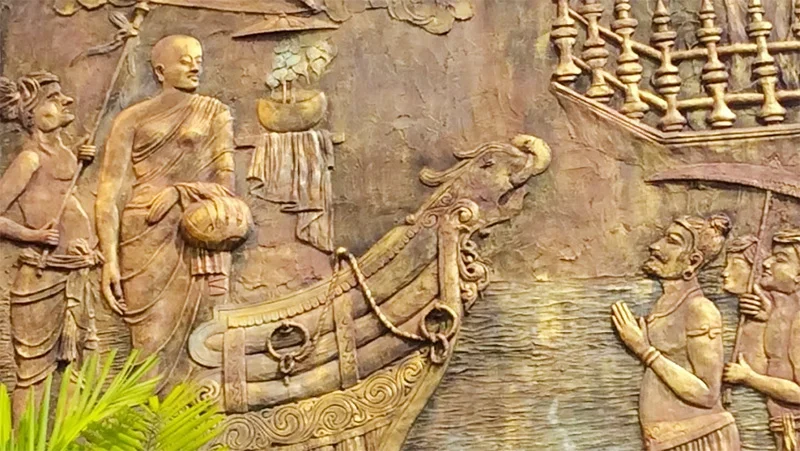
Unduvap Poya, which falls today, has great historical significance for Sri Lanka, as several important events occurred on that day but before looking into these, as the occasion demands, our first thought should be about impermanence. One of the cornerstones of Buddha’s teachings is impermanence and there is no better time to ponder over it than now, as the unfolding events of the unprecedented natural disaster exemplify it. Who would have imagined, even a few days ago, the scenes of total devastation we are witnessing now; vast swathes of the country under floodwaters due to torrential rain, multitudes of earth slips burying alive entire families with their hard-built properties and closing multiple trunk roads bringing the country to a virtual standstill. The best of human kindness is also amply demonstrated as many risk their own lives to help those in distress.
In the struggle of life, we are attached and accumulate many things, wanted and unwanted, including wealth overlooking the fact that all this could disappear in a flash, as happened to an unfortunate few during this calamitous time. Even the survivors, though they are happy that they survived, are left with anxiety, apprehension, and sorrow, all of which is due to attachment. We are attached to things because we fail to realise the importance of impermanence. If we do, we would be less attached and less affected. Realisation of the impermanent nature of everything is the first step towards ultimate detachment.
It was on a day like this that Arahant Bhikkhuni Sanghamitta arrived in Lanka Deepa bringing with her a sapling of the Sri Maha Bodhi tree under which Prince Siddhartha attained Enlightenment. She was sent by her father Emperor Ashoka, at the request of Arahant Mahinda who had arrived earlier and established Buddhism formally under the royal patronage of King Devanampiyatissa. With the very successful establishment of Bhikkhu Sasana, as there was a strong clamour for the establishment of Bhikkhuni Sasana as well, Arahant Mahinda requested his father to send his sister which was agreed to by Emperor Ashoka, though reluctantly as he would be losing two of his children. In fact, both served Lanka Deepa till their death, never returning to the country of their birth. Though Arahant Sanghamitta’s main mission was otherwise, her bringing a sapling of the Bo tree has left an indelible imprint in the annals of our history.
According to chronicles, King Devanampiyatissa planted the Bo sapling in Mahamevnawa Park in Anuradhapura in 288 BCE, which continues to thrive, making it the oldest living human planted tree in the world with a known planting date. It is a treasure that needs to be respected and protected at all costs. However, not so long ago it was nearly destroyed by the idiocy of worshippers who poured milk on the roots. Devotion clouding reality, they overlooked the fact that a tree needs water, not milk!
A monk developed a new practice of Bodhi Puja, which even today attracts droves of devotees and has become a ritual. This would have been the last thing the Buddha wanted! He expressed gratitude by gazing at the tree, which gave him shelter during the most crucial of times, for a week but did not want his followers to go around worshipping similar trees growing all over. Instead of following the path the Buddha laid for us, we seem keen on inventing new rituals to indulge in!
Arahant Sanghamitta achieved her prime objective by establishing the Bhikkhuni Sasana which thrived for nearly 1200 years till it fell into decline with the fall of the Anuradhapura kingdom. Unfortunately, during the Polonnaruwa period that followed the influence of Hinduism over Buddhism increased and some of the Buddhist values like equality of sexes and anti-casteism were lost. Subsequently, even the Bhikkhu Sasana went into decline. Higher ordination for Bhikkhus was re-established in 1753 CE with the visit of Upali Maha Thera from Siam which formed the basis of Siam Maha Nikaya. Upali Maha Thero is also credited with reorganising Kandy Esala Perahera to be the annual Procession of the Temple of Tooth, which was previously centred around the worship of deities, by getting a royal decree: “Henceforth Gods and men are to follow the Buddha”
In 1764 CE, Siyam Nikaya imposed a ‘Govigama and Radala’ exclusivity, disregarding a fundamental tenet of the Buddha, apparently in response to an order from the King! Fortunately, Buddhism was saved from the idiocy of Siyam Nikaya by the formation of Amarapura Nikaya in 1800 CE and Ramanna Nikaya in 1864 CE, higher ordination for both obtained from Burma. None of these Niakya’s showed any interest in the re-establishment of Bhikkhuni Sasana which was left to a band of interested and determined ladies.
My thoughts and admiration, on the day Bhikkhuni Sasana was originally established, go to these pioneers whose determination knew no bounds. They overcame enormous difficulties and obtained higher ordination from South Korea initially. Fortunately, Ven. Inamaluwe Sri Sumangala Thero, Maha Nayaka of Rangiri Dambulla Chapter of Siyam Maha Nikaya started offering higher ordination to Bhikkhunis in 1998 but state recognition became a sore point. When Venerable Welimada Dhammadinna Bhikkhuni was denied official recognition as a Bhikkhuni on her national identity card she filed action, with the support of Ven. Inamaluwe Sri Sumangala Thero. In a landmark majority judgement delivered on 16 June, the Supreme Court ruled that the fundamental rights of Ven. Dhammadinna were breached and also Bhikkhuni Sasana was re-established in Sri Lanka. As this judgement did not receive wide publicity, I wrote a piece titled “Buddhism, Bhikkhus and Bhikkhunis” (The Island, 10 July 2025) and my wish for this Unduvap Poya is what I stated therein:
“The landmark legal battle won by Bhikkhunis is a victory for common sense more than anything else. I hope it will help Bhikkhuni Sasana flourish in Sri Lanka. The number of devotees inviting Bhikkhunis to religious functions is increasing. May Bhikkhunis receive the recognition they richly deserve.” May there be a rapid return to normalcy from the current tragic situation.”
by Dr Upul Wijayawardhana
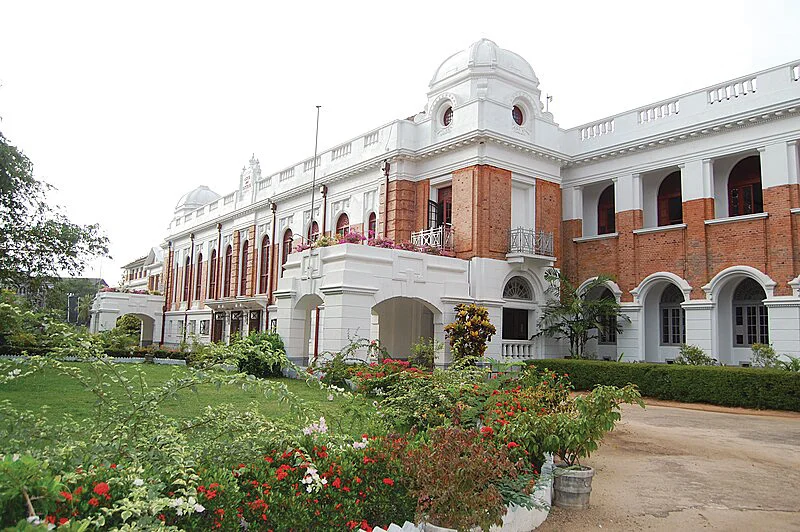
The gathering was actually of ‘Over Seventies’ but those of my generation present were mostly of the late eighties.
Even of them I shall mention only those whom I know at least by name. But, first, to those few of my years and older with whom speech was possible.
First among them, in more sense than one, was Nihal Seneviratne, at ninety-one probably the oldest present. There is no truth to the story that his state of crisp well-being is attributable to the consumption of gul-bunis in his school days. It is traceable rather to a life well lived. His practice of regular walks around the house and along the lane on which he lives may have contributed to his erect posture. As also to the total absence of a walking stick, a helper, or any other form of assistance as he walked into the Janaki hotel where this gathering took place.
Referencing the published accounts of his several decades-long service in Parliament as head of its administration, it would be moot to recall that his close friend and fellow lawyer, J E D Gooneratne, teased him in the following terms: “You will be a bloody clerk all your life”. He did join service as Second Assistant to the Clerk to the House and moved up, but the Clerk became the Secretary General. Regardless of such matters of nomenclature, it could be said that Nihal Seneviratne ran the show.
Others present included Dr. Ranjith de Silva, Surgeon, who was our cricket Captain and, to the best of my knowledge, has the distinction of never engaging in private practice.
The range of Dr. K L (Lochana) Gunaratne’s interests and his accomplishments within each are indeed remarkable. I would think that somebody who’d received his initial training at the AA School of Architecture in London would continue to have architecture as the foundation of his likes /dislikes. Such would also provide a road map to other pursuits whether immediately related to that field or not. That is evident in the leadership roles he has played in the National Academy of Sciences and the Institute of Town Planners among others. As I recall he has also addressed issues related to the Panadura Vadaya.
My memories of D L Seneviratne at school were associated with tennis. As happens, D L had launched his gift for writing over three decades ago with a history of tennis in Sri Lanka (1991). That is a game with which my acquaintance is limited to sending a couple of serves past his ear (not ‘tossing the ball across’ as he asked me to) while Jothilingam, long much missed, waited for his team mates to come for practices. It is a game at which my father spent much time both at the Railway sports club and at our home-town club. (By some kind of chance, I recovered just a week ago the ‘Fred de Saram Challenge Cup’ which, on his winning the Singles for the third time, Koo de Saram came over to the Kandana Club to hand over to him for keeps. They played an exhibition match which father won). D L would know whether or not, as I have heard, in an exhibition match in Colombo, Koo defeated Frank Sedgman, who was on his triumphant return home to Oz after he had won the Wimbledon tournament in London.
I had no idea that D L has written any books till my son brought home the one on the early history of Royal under Marsh and Boake, (both long-bearded young men in their twenties).
It includes a rich assortment of photographs of great value to those who are interested in the history of the Anglican segment of Christian missionary activity here in the context of its contribution to secondary school education. Among them is one of the school as it appeared on moving to Thurstan road from Mutwal. It has been extracted from the History of Royal, 1931, done by students (among whom a relative, Palitha Weeraman, had played a significant role).
As D L shows, (in contra-distinction to the Catholic schools) the CMS had engaged in a largely secular practice. Royal remained so through our time – when one could walk into the examination room and answer questions framed to test one’s knowledge of Christianity, Buddhism, Hinduism and Islam; a knowledge derived mostly from the lectures delivered by an Old Boy at general assembly on Friday plus readings from the Dhammapada, the Bhagavad Gita, the St. John’s version of the Bible or the Koran recited by a student at senior assembly on Tuesday / Thursday.
D L’s history of Royal College had followed in 2006.
His writing is so rich in detail, so precise in formulation, that I would consider this brief note a simple prompt towards a publisher bringing out new editions at different levels of cost.
It was also a pleasure to meet Senaka Amarasinghe, as yet flaunting his Emperor profile, and among the principal organisers of this event.
The encounter with I S de Silva, distinguished attorney, who was on Galle road close to Janaki lane, where I lived then was indeed welcome. As was that with Upali Mendis, who carried out cataract surgery on my mother oh so long ago when he was head of the Eye Hospital. His older brother, L P, was probably the most gifted student in chemistry in our time.
Most serendipitous perhaps was meeting a son of one of our most popular teachers from the 1950s, – Connor Rajaratnam. His cons were a caution.
by Gamini Seneviratne
Opinion
“Regulatory Impact Assessment – Not a bureaucratic formality but essentially an advocacy tool for smarter governance”: A response

Having meticulously read and re-read the above article published in the opinion page of The Island on the 27 Nov, I hasten to make a critical review on the far-reaching proposal made by the co-authors, namely Professor Theekshana Suraweera, Chairman of the Sri Lanka Standards Institution and Dr. Prabath.C.Abeysiriwardana, Director of Ministry of Science and Technology
The aforesaid article provides a timely and compelling critique of Sri Lanka’s long-standing gaps in evidence-based policymaking and argues persuasively for the institutional adoption of Regulatory Impact Assessment (RIA). In a context where policy missteps have led to severe economic and social consequences, the article functions as an essential wake-up call—highlighting RIA not as a bureaucratic formality but as a foundational tool for smarter governance.
One of the article’s strongest contributions is its clear explanation of how regulatory processes currently function in Sri Lanka: legislation is drafted with narrow legal scrutiny focused mainly on constitutional compliance, with little or no structured assessment of economic, social, cultural, or environmental impacts. The author strengthens this argument with well-chosen examples—the sudden ban on chemical fertilizer imports and the consequences of the 1956 Official Language Act—demonstrating how untested regulation can have far-reaching negative outcomes. These cases effectively illustrate the dangers of ad hoc policymaking and underscore the need for a formal review mechanism.
The article also succeeds in demystifying RIA by outlining its core steps—problem definition, option analysis, impact assessment, stakeholder consultation, and post-implementation review. This breakdown makes it clear that RIA is not merely a Western ideal but a practical, structured, and replicable process that could greatly improve policymaking in Sri Lanka. The references to international best practices (such as the role of OIRA in the United States) lend credibility and global context, showing that RIA is not experimental but an established standard in advanced governance systems.
However, the article could have further strengthened its critique by addressing the political economy of reform: the structural incentives, institutional resistance, and political culture that have historically obstructed such tools in Sri Lanka. While the challenges of data availability, quantification, and political pressure are briefly mentioned, a deeper analysis of why evidence-based policymaking has not taken root—and how to overcome these systemic barriers—would have offered greater practical value.
Another potential enhancement would be the inclusion of local micro-level examples where smaller-scale regulations backfired due to insufficient appraisal. This would help illustrate that the problem is not limited to headline-making policy failures but affects governance at every level.
Despite these minor limitations, the article is highly effective as an advocacy piece. It makes a strong case that RIA could transform Sri Lanka’s regulatory landscape by institutionalizing foresight, transparency, and accountability. Its emphasis on aligning RIA with ongoing national initiatives—particularly the strengthening of the National Quality Infrastructure—demonstrates both pragmatism and strategic vision.
At a time, when Chairmen of statutory bodies appointed by the NPP government play a passive voice, the candid opinion expressed by the CEO of SLSI on the necessity of a Regulatory Impact Assessment is an important and insightful contribution. It highlights a critical missing link in Sri Lanka’s policy environment and provides a clear call to action. If widely circulated and taken seriously by policymakers, academics, and civil society, it could indeed become the eye-opener needed to push Sri Lanka toward more rational, responsible, and future-ready governance.
J. A. A. S. Ranasinghe,
Productivity Specialty and Management Consultant
(rathula49@gmail.com)

President calls on Atamasthanadipathi Thero

US deploys two C-130J Super Hercules aircraft and personnel to assist in relief measures

Government prepares Anuradhapura farmers for Maha Season

Level III landslide warnings issued to the Districts of Kandy, Kegalle, Kurunegala and Matale extended till 1600 hrs on Monday [08]

A mechanism that goes beyond the normal state apparatus is needed to restore public life – President

President calls on the Mahanayake Thera of the Asgiri chapter

‘Dates have the highest sugar content to fight Coronavirus’

Sunday Island 27 December – Headlines

#SundayIsland 17th December – Headlines

Sunday Island – 28th March

Sunday Island Headlines – 21 March

Sunday Island – 21st February – Headlines
-
News5 days ago
Lunuwila tragedy not caused by those videoing Bell 212: SLAF
-
 News4 days ago
Level III landslide early warning continue to be in force in the districts of Kandy, Kegalle, Kurunegala and Matale
-
 Latest News6 days ago
Level III landslide early warnings issued to the districts of Badulla, Kandy, Kegalle, Kurunegala, Matale and Nuwara-Eliya
-
 Features6 days ago
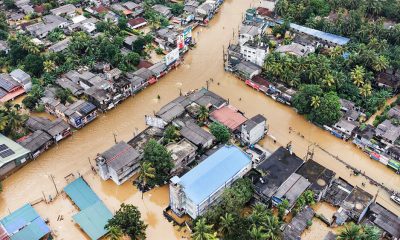
Ditwah: An unusual cyclone
-

 Latest News7 days ago
Updated Payment Instructions for Disaster Relief Contributions
-

 News2 days ago
CPC delegation meets JVP for talks on disaster response
-
 Business2 days ago
LOLC Finance Factoring powers business growth
-
 News2 days ago
A 6th Year Accolade: The Eternal Opulence of My Fair Lady