
Latest News
Sri Lanka’s World Cup winning team conduct coaching session in KL


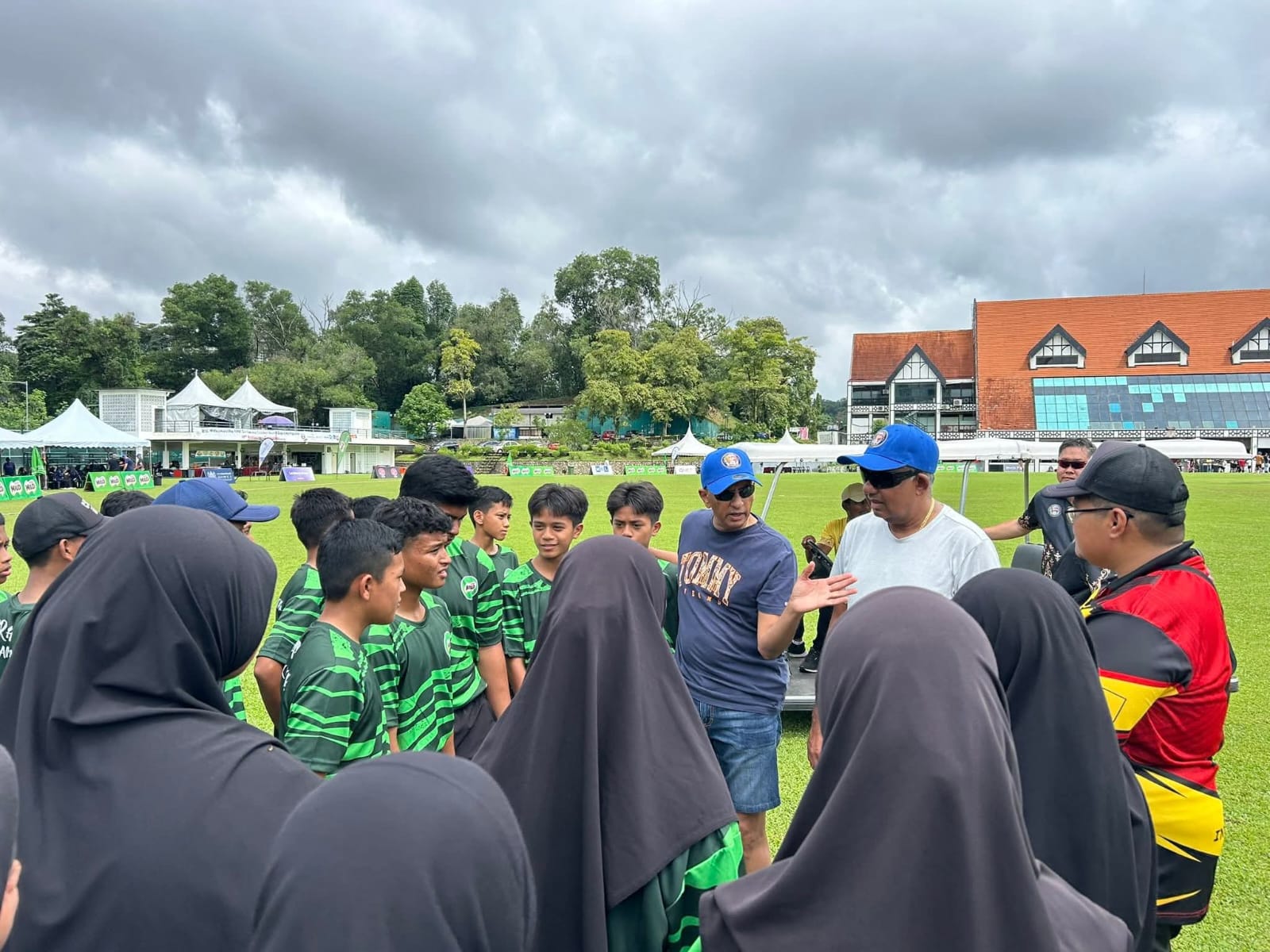
On day two of Sri Lanka’s World Cup winning cricket team’s tour of Malaysia, they conducted a coaching session for children at the Royal Selangor ground in Kuala Lampur.


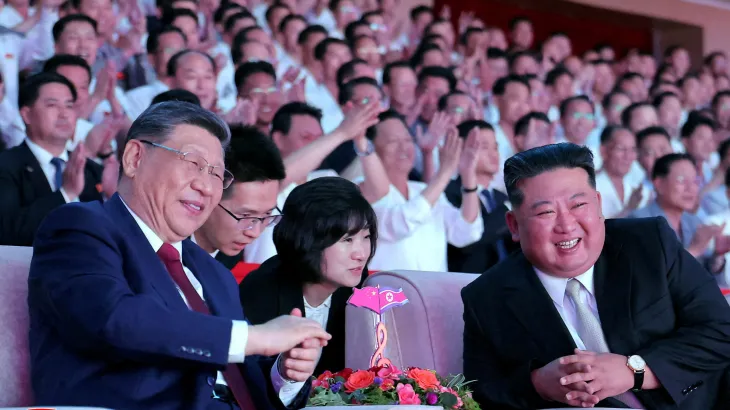
China’s President Xi Jinping and North Korean leader Kim Jong Un have pledged to deepen their cooperation, according to state media, as Xi made a rare visit to Pyongyang.
During a summit late on Monday, Xi told Kim he aimed to drive progress in ties, and both leaders agreed to strive for closer strategic communication, the official KCNA news agency reported on Tuesday
Kim, for his part, affirmed that North Korea and China will maintain their friendship as “the most important top-priority strategic work”, the KCNA reported.
Kim called Xi “the greatest state guest”, saying he views the fact that Xi chose North Korea as a destination for his first foreign travel this year as “the most encouraging support” to North Korea, according to KCNA.
Kim also reiterated Pyongyang’s support for Beijing’s “one China principle”, a reference to Beijing’s official position that Taiwan is an inalienable part of China’s territory. Kim and Xi also discussed international and regional issues and reached a broad agreement on strengthening strategic coordination to safeguard their shared interests, KCNA said.
China’s state broadcaster CCTV reported on Monday that Xi expressed China’s willingness to expand cooperation in a wide range of areas, including trade, agriculture, construction and technology.
Xi said the two countries should strengthen strategic cooperation and firmly safeguard their respective sovereignty and security interests, according to the report.
It was Xi’s first visit to North Korea in seven years. Xi and Kim last met in Beijing in September after viewing a military parade alongside Russian President Vladimir Putin and other foreign leaders.
Kim welcomed Xi with a red carpet, guard of honour and a 21-gun salute. The two leaders, accompanied by their wives and senior officials, attended a performance of Chinese and North Korean songs before Kim hosted a banquet for the Chinese delegation.
Xi marked the occasion – the 65th anniversary of the neighbours’ friendship treaty – by declaring that relations had reached “a new historical starting point”, according to KCNA.
It was not immediately clear if the leaders plan further talks on Tuesday, when South Korean media said Xi is likely to visit the Sino-Korean Friendship Tower in Pyongyang, which commemorates Chinese soldiers who died in the Korean War in the 1950s.
The two sides often describe their relationship as one forged in blood, in a reference to the Chinese intervention in the Korean War. But mistrust has strained ties in recent years, particularly after China backed international sanctions against North Korea’s nuclear programme.
“China is now trying to reassert its influence over a strategically important partner, which has increasingly turned to Russia for oil and aid in return for North Korean soldiers and weapons [in the war on Ukraine],” said Al Jazeera’s Jack Barton, reporting from Seoul.
Kim is eager to keep China close despite his warming ties with Russia, he said.
“Kim no doubt knows that Russian leverage will probably run out if and when the Ukraine war ends because Russia will no longer need North Korean troops or weapons,” Barton added. “Survival for North Korea depends on China.”
Experts said Xi would use China’s position as North Korea’s dominant trading partner to keep Pyongyang within its orbit.
“The North Korean military-industrial complex is now much more intertwined with the Russian one than the Chinese one,” he told Al Jazeera, describing the visit as an attempt by Xi “to remind the North Koreans who their main trading partner is”.
Young added that Xi was also likely to use the trip to expand Chinese tourism to North Korea, as part of what he called “red tourism” based on fostering revolutionary nostalgia tied to the Korean War era.
Separately, North Korean media did not say whether Pyongyang’s nuclear weapons programme or relations with the United States figured in Xi-Kim talks.
Before Xi’s arrival, Kim announced plans to increase nuclear production capacity exponentially. North Korea’s weapons programme has driven closer defence ties between the US, Japan and South Korea, something that Beijing has opposed.
Al Jazeera’s Katrina Yu, reporting from Beijing, noted the conspicuous absence of denuclearisation from the agenda. Yu said the state media reports in Beijing and Pyongyang show that the two leaders are sending a clear message that their relationship is stronger than ever.
“North Korea is also a priority for Xi, given that he’s hosted dozens of world leaders this year, including Vladimir Putin and Donald Trump. But this is the first time he’s actually left China to meet another leader. Both sides also talked about deeper cooperation. One specific line by Chinese state media really said it all, that China is going to help North Korea move towards modernisation,” she said.
“China is really using the carrot more than the stick approach, moving closer to Pyongyang and emphasising a warming of ties at a time when it’s increasing its rivalry with the United States.”
[Aljazeera]
Latest News
Iran and Israel say they will pause strikes but warn of retaliation if ceasefire breached again
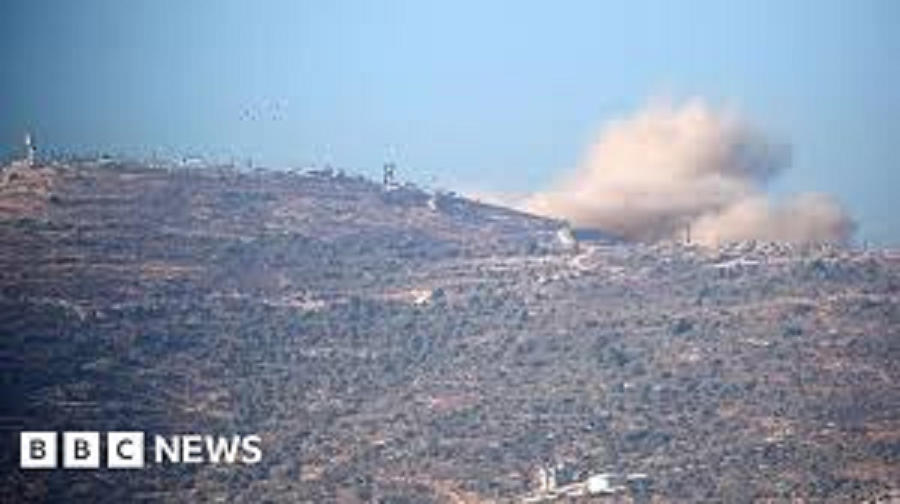
Iran and Israel say they have halted attacks on each other, after the two countries exchanged fire for the first time since April’s truce.
Israel’s Prime Minister Benjamin Netanyahu said on Monday that his country was holding fire “at the moment”. But he stressed that the struggle against Iran and Hezbollah was “not finished”.
It came hours after Iran’s armed forces said it had stopped operations following the delivery of a “painful response” to Israel.
It promised “more severe and crushing measures” if Israel carried out more strikes, including in Lebanon, where Israeli forces are fighting the Iran-backed group Hezbollah.
Tehran launched missiles at Israel on Sunday in retaliation for a strike on Beirut.
Israel responded in the early hours of Monday morning by targeting what it said were military sites in the Islamic Republic.
In a call with the BBC, US President Donald Trump denied that Netanyahu had defied his wishes by launching strikes.
“No, no. They had already gone. They had already gone. They were already on their way,” he said.
The White House confirmed that Trump had called Netanyahu to discuss the crisis. An Israeli official said Israel had halted its strikes at his request.
Asked how he had persuaded Netanyahu to stop attacking Iran, Trump responded: “All I did is say, ‘We have to use sense’. We’re very close to signing a very powerful deal, a very good deal.
“No nuclear weapons, no nothing. You know, we have to use a lot of common sense. It was fine.”
Trump also said of Netanyahu: “If I tell him to do something, he does it.”
The president told US news outlet Axios he had told Israel’s prime minister he might find himself fighting alone if he went back to war with Iran.
“I said, ‘Bibi, you better be careful, or you will be on your own very soon,'” Axios quoted him as saying.
In his televised statement on Monday, Netanyahu said he had told Trump that “Israel has a full right to self-defence, and we are exercising it as required”.
Sunday’s exchange of fire had continued on Monday morning, with Iran launching more missiles towards Jerusalem and central and southern Israel, according to Israeli authorities.
The Israel Defence Forces (IDF) said a second wave of air strikes had targeted a petrochemical complex in the south-western Iranian city of Mahshahr, where an Israeli military official said chemicals used for ballistic missiles were produced.
Iran’s Emergency Organisation chief, Jafar Miadfar, told Tasnim news agency that the strikes injured 14 people in Mahshahr and one in Tehran.
Casualties were also reported in Lebanon, where the health ministry said five people had been killed and eight wounded in an Israeli strike on Tyre in southern Lebanon on Monday. The Red Cross said four of its rescuers were among the injured.
Hezbollah, meanwhile, said it had fired a rocket barrage at a group of Israeli army vehicles and soldiers in southern Lebanon on Monday morning.
Trump publicly told both countries to “immediately stop ‘shooting'” because they were jeopardising negotiations between Washington and Tehran on a deal to end the regional war.
“Israel and Iran… are looking to do an immediate CEASEFIRE! Final negotiations on ‘Peace’ are proceeding, subject to ignorance or stupidity getting in its way,” he wrote on Truth Social.
The war began on 28 February, when Israel and the US launched a joint attack on Iran, killing Supreme Leader Ayatollah Ali Khamenei and several other top officials.
The hostilities spread quickly across the Middle East, as Iran retaliated by launching missiles and drones at Israel and Gulf Arab states hosting US military facilities. Iran also effectively blocked the crucial Strait of Hormuz waterway, causing a surge in the price of oil.
Lebanon was drawn into the conflict on 2 March, when Hezbollah launched rockets into Israel in retaliation for Khamenei’s assassination. Israel responded with air strikes across Lebanon and a ground invasion of a significant part of the country’s south.
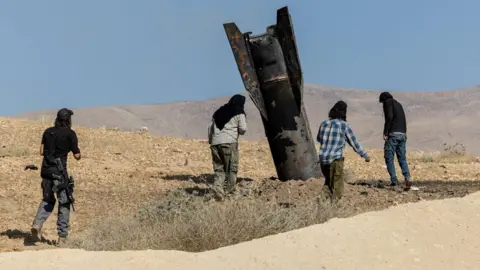
A US-brokered ceasefire deal between the Israeli and Lebanese governments has failed to end hostilities. Hezbollah has rejected the agreement, demanding a full Israeli withdrawal.
In recent weeks, the US has been pressing Israel to scale back its campaign to allow room for a wider deal with Iran, which has demanded that it also cover the conflict in Lebanon.
According to the US news outlet Axios, the Israeli strikes were carried out despite Prime Minster Netanyahu being told not to retaliate by President Trump, who was already angry that his warnings not to attack Beirut had been ignored.
Earlier, he reportedly told the Financial Times that the Israeli prime minister would have to accept any deal that the US secures with Iran because he “won’t have any choice”. “I call all the shots. He doesn’t call the shots,” he was quoted as saying.
The Israeli ambassador to the US, Yechiel Leiter, wrote on X: “No self-respecting country in the world would tolerate such an attack, and neither will Israel.”
Iran’s top negotiator Mohammad Baqer Qalibaf said in a Telegram post on Monday evening that “ceasefire violations and naval blockades” – in reference to the US’s blockade of Iranian ports – had “been the cause of recent tensions”.
He added that: “We are not going to fight or negotiate, but we are going to fight on our own time and negotiate on our own time.”
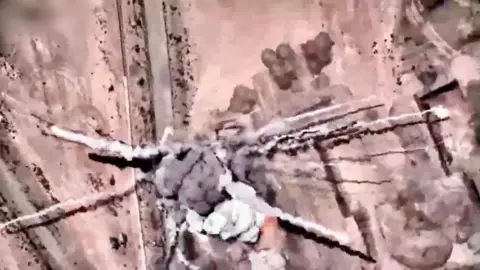
At least 3,468 people have been killed in Iran during the war, according to the country’s Martyrs Foundation. Iran’s Human Rights Activists News Agency (HRANA) has put the death toll from US and Israeli attacks at 3,636, including 1,701 civilians.
Another 3,613 people have been killed in Israeli attacks on Lebanon, the country’s health ministry says. Its figures do not differentiate between combatants and civilians.
Israeli authorities say 20 civilians have been killed in Iranian missile attacks in Israel, while four Palestinians have been killed in the occupied West Bank. Thirty Israeli soldiers and four civilians have been killed on both sides of the Israel-Lebanon border during the fighting with Hezbollah.
Another 29 people have been killed in Iranian attacks on Bahrain, Kuwait, Qatar, Saudi Arabia and the United Arab Emirates, according to local authorities.
Thirteen US service members have been killed, seven of them in Iranian attacks in the Gulf.
[BBC]
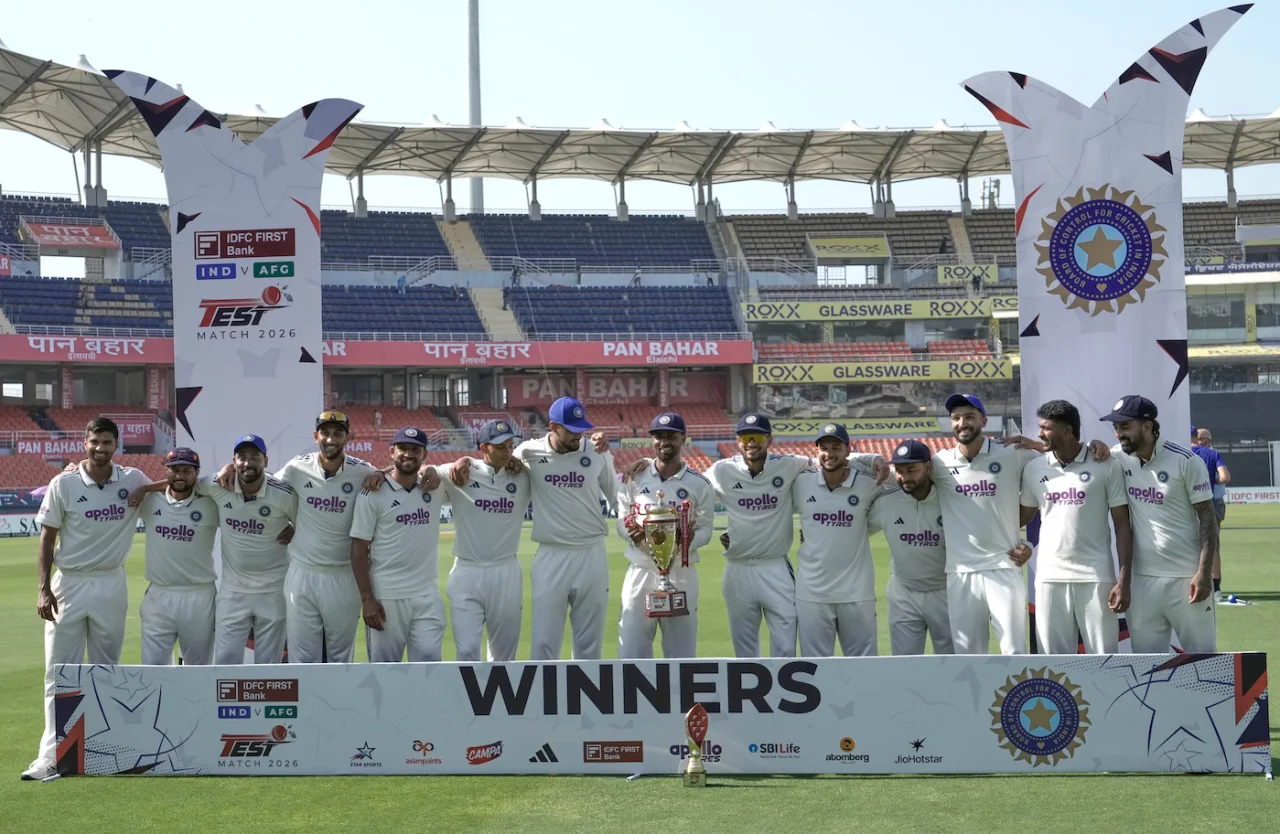
In the end, the Afghanistan batters did not die wondering. Their lower order swung away, time and again. Their patience was worn down in the sweltering New Chandigarh heat and India sealed a win by an innings and 300 runs, their biggest in Test cricket.
Afghanistan were up against it right away on the morning of day three of this one-off Test, only their second against India in the format. Debutant Manay Suthar resumed overnight on a three-for, and bowled with turn and guile on a pitch that had flattened out for everyone else. He ended with figures of 6 for 33 – the third best figures for an Indian bowler on a Test debut – and bundled out Afghanistan for 152.
India enforced the follow on. In their second effort, trailing by 412 runs, Afghanistan pushed Suthar back from his attacking lines by stepping down the pitch to him. Sediqullah Atal, who scored 42, led the charge by smashing him for a six and a four right before tea. In many ways, however, Suthar had already won the match for India by then.
Consistently bowling around the 90 kph mark, Suthar plucked out Sharafuddin Ashraf in Afghanistan’s first innings, spinning one past him. Then, he accounted for Rahmat Shah’s crucial wicket – the middle-order batter had brought up a stoic fifty off 100 balls, resisting India through the first hour and a half. Suthar bowled him around the legs, an expansive sweep was his undoing.
Rahmat was the eighth wicket to fall and it sealed Suthar’s five-for. A while later, he pinned Mohammad Saleem on the pads for his sixth. This last dismissal was the latest in a line of bad reviews (or lack thereof) from either side throughout the day. Suthar had pitched the delivery outside leg. For some reason, Saleem did not review and he was animated at the dugout as he walked back.
The tall Prasidh Krishna had begun the day from the other end, along with Suthar. Prasidh stuck to back-of-a-length deliveries, utilising the angles off the pitch to create jeopardy for the batters. He also struck the first blow for India, when he got the ball to jag back in, catch the inside edge onto the stumps, and send back Azmatullah Omarzai.
Mohammed Siraj came on for a spell of three overs, for five runs, the highlight of which was when he comically reviewed a clear inside-edge into the pads for an lbw. Soon, Washington Sundar came on from his end, and Kuldeep from the other, bowling in tandem. Kuldeep hesitated to put revs on the ball and for a period, both bowlers looked innocuous in comparison to Suthar.
However, Ashraf visibly struggled to bat with a groin injury. Kuldeep began lobbing up balls that Ashraf needed to step out to deadbat. Suthar returned to take advantage of his limited reach, and had him edging behind.
Washington also picked up the final wicket of Afghanistan’s first innings, when he had Ziaur Rahman going for a huge swipe across the line. Pant ran in to complete a catch. This would be his sole wicket in the first innings, but Suthar’s prodigious spin – and six-for – ensured that Sundar, the wily offspinner, would get his own turn in the spotlight next.
After lunch, Atal continued walking down the pitch, once in a while, to negate Suthar’s more threatening options. But India’s other two spinners, Washington and Kuldeep – who just could not get it to spin as much on a flat track – showed their versatility instead.
Washington was the star spinner in the second innings, using his drift through the air instead of big turn off the pitch. He picked up 4 for 36, bowling with smarts against an Afghanistan line-up that tried to follow Atal’s lead by attacking the spinners. Kuldeep struggled to hit consistent lines, but kept lobbing the balls up and waited for the Afghanistan batters to hit him across the line.
After lunch, Atal receded into a shell. On the other hand, his partners chose rash shots to force the issue for Afghanistan. Siraj had already prised out Atal’s opening partner, Abdul Malik, after a patient 40-ball eight by getting a delivery to jag into his pads. Then, Rahmanullah Gurbaz swiped Kuldeep across the line in a rush of blood, mistiming the ball straight to long-on. The wicket came against the run of play, with him already on 24 off 23, bossing a tiring India spin attack in the blistering heat of New Chandigarh.
Next, Rahmat – Afghanistan’s best batter from their first innings – danced down the pitch to Washington and holed out at wide mid-off. Fifteen minutes before tea, captain Hashmatullah Shahidi edged a tentative prod to Shubman Gill at first slip and Washington got his second wicket of the innings. Both these wickets were a result of a consistent line, attacking batters in the outside-off channel.
Afghanistan’s resistance broke down completely on the last ball before tea. Atal, who had batted patiently thus far, leaned into an ill-judged lofted drive, off Washington, hitting it straight to point.
When they returned to bat after tea, Afghanistan’s lower-order batters were in no mood to stick around. Suthar plucked out one last wicket, pinning Afsar Zazai on the pads off a front-foot defense. On the other hand, Azmatullah Omarzai, Nangeyalia Kharote, and Mohammad Saleem all fell while miscuing lofted shots. Saleem’s edge to B Sai Sudharsan at covers sealed an innings-win for India.
Scores:
India 564 for 8 dec in 127 overs (KL Rahul 100, Sai Sudarshan 81, Shubman Gill 126, Rishbah Pant 81, Washington Sundar 52*; Mohammed Saleem 6-140) beat Afghanistan 152 in 58.4 overs (Rahmat Shah 60; Prasidh Krishna 3-37, Manav Suthar 6-33 ) and 112 in 35.5 overs (Sediqullah Atal 42; Manav Suthar 1-29, Washington Sundar 4-36, Kuldeep Yadav 3-30) by an innings and 300 runs
[Cricinfo]

China’s Xi, North Korea’s Kim pledge to boost ties at rare Pyongyang summit

Iran and Israel say they will pause strikes but warn of retaliation if ceasefire breached again

Somali referee Artan barred from entering USA

PM launches the first phase of the National Education Management Information System

Poson Zone in Colombo under the Leadership of Sri Lanka Scout Association

Stokes, Atkinson under ECB investigation cloud following nightclub incident

‘Dates have the highest sugar content to fight Coronavirus’

Sunday Island 27 December – Headlines

#SundayIsland 17th December – Headlines

Sunday Island – 28th March

Sunday Island Headlines – 21 March

Sunday Island – 21st February – Headlines
-
 Latest News5 days ago
Kusal Mendis, Pathum Nissanka, bowlers put Sri Lanka 1-0 up
-
 News5 days ago
New US tariffs proposed on 60 countries, including Sri Lanka
-
 Features4 days ago
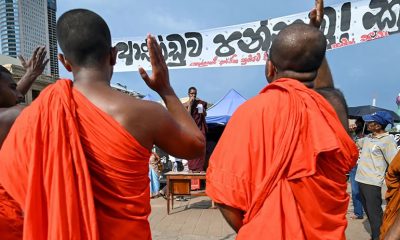
Power crept into the Sangha and is now tearing it apart
-

 Features4 days ago
Kondachchi wind farm and battery storage project to boost energy security, says Power Ministry Secretary
-
 Features4 days ago
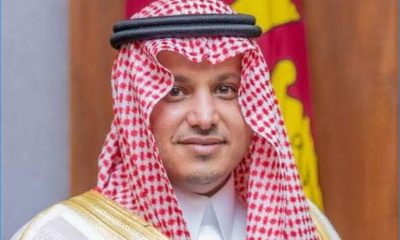
Saudi Arabia sets new benchmark in Hajj management as 1.7 million pilgrims complete sacred journey
-

 News3 days ago
Asst. Manager, security officer arrested over Rs 30 mn snatch at Horana PB branch
-

 News2 days ago
Women’s T20 World Cup 2026 warm-up: Chamari Athapaththu’s 94 helps Sri Lanka beat Pakistan
-

 Editorial1 day ago
Probe Sallay’s complaint