Business
Sri Lanka set to come out stronger State Minister Cabraal

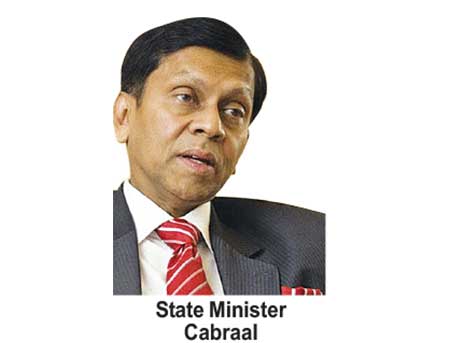
By Hiran H.Senewiratne
Sri Lanka will come out stronger with more resilience with an exuberant private sector that can withstand shocks, State Minister of Money and Capital Market and State Enterprise Reforms Ajith Nivard Cabraal said.
“Local investors and the business community have faith in a turnaround of the economy and in Sri Lanka’s fortunes, as the new government has already set these in motion. The government will implement in the future favourable measures and policies,” Cabraal told an investor forum titled, “Twenty 21 and Beyond”, organised by Softlogic Stockbrokers. The event was held at Movenpick Hotel on Tuesday.
Post-COVID-19, Cabraal said, exports have bounced back to near-normal, remittances were back on track and a lower oil bill was compensating for zero earnings from tourism. “I will say the external account today is not as bleak as it looked during COVID-19,” Cabraal said. “We have put and are putting in place the building blocks for high growth, despite challenges. We want the private sector to brace itself for a take-off, rather than losing hope, because there are plenty of positives of late, the state minister said.
Cabraal said the government is confident of high growth in the next five years, despite the challenges.
Cabraal said that between 2015 and 2019, the country suffered stagnant growth, rising unemployment, a dwindling rupee, low reserves with the export sector struggling and market capitalisation halving from $ 25 billion to $ 12.5 billion. “This wasn’t an aberration, but real, and everyone felt it,” he said. “These achievements are things which we couldn’t be proud of, but the resilience of the private sector, which is a hallmark, ensured Sri Lanka survived,” Cabraal said He said the previous government budget showed Rs. 2.2 trillion government revenue, but in reality the actual collection was Rs. 1.8 trillion, reflecting a Rs. 400 billion shortfall. “This was due to the downfall of the economy, and everyone felt it,” he opined.
Cabraal said that following the election of Gotabaya Rajapaksa as the President in November 2019, the new administration set its sights on key priorities, including stabilising the rupee (which fell from Rs. 131 to the dollar to Rs. 185 between 2015 and 2019), reducing interest rates and taxes etc. This was critical, though Sri Lanka and the rest of the world was impacted by the COVID-19 pandemic in early 2020. He said that post-COVID-19, the government had to take difficult steps and make a call whether to default on its sovereign debt, versus curbing forex guzzling jobs and lifestyle-impacting imports. “We opted for the latter, because we wanted to send a positive message to the rest of the world that we are a responsible government.



Port City Colombo, a multi-service Special Economic Zone (SEZ) and a regional financial centre and business hub, has made significant progress in capturing key investments, as the project gears up for a tenacious drive to attract prospective land development and business set-up investors from the South Asian, APAC, and Middle Eastern regions before the end of 2024, a Port City Colombo press release said.
The release added: ‘With a strong emphasis on capturing high-value Foreign Direct Investments, Port City Colombo has on-boarded approximately forty-one companies registered as Authorised Persons (AP’s), as approved by the Colombo Port City Economic Commission. Fifty-two percent (52%) of the project’s Marina District, which includes South Asia’s first-ever luxury yacht marina and 5-star hotel, has further already attracted investment. Reputed international and local corporate entities, including Asiri Port City Hospital (Private) Limited, TIQRI, CODEGEN INNOVATIONS, 99x Technology AS, IVIVA PTE Ltd, Echelon Trade (Pvt) Ltd, and Port City BPO (Pvt) Ltd, have been additionally designated as Businesses of Strategic Importance.
‘Approximately more than twenty prospective investors are presently in the pipeline to register as Authorised Persons, demonstrating strengthened confidence in Port City Colombo’s positive outlook as a competitive regional investment hotspot.
‘Positioned within the Colombo Port City Special Economic Zone, Port City Colombo presents a low-risk financial environment that enhances the ease of doing business for global investors in Sri Lanka, whilst being economically ring-fenced against domestic macroeconomic challenges. This visionary FDI investment destination also showcases a thriving commercial ecosystem and liveable master-planned city, enabling a diversity of businesses to set up operations against the backdrop of transactions in 16 different international currencies with no capital or exchange controls, 100% foreign ownership, and fiscal incentives for 25 plus years.
‘Port City Colombo provides investors two primary options of investment: land development investments, which include residential and commercial property development, and business set-up and investments, which encompass a variety of opportunities in IT/ITes, financial services, hospitality/tourism, logistics, and so forth. Commercial entities, who are interested in investing or setting up business operations, are required to become qualified as an Authorised Person, which is defined as any individual or entity permitted by the Colombo Port City Economic Commission (CPCEC) to conduct business within the vicinity and from the area of authority of the Colombo Port City Special Economic Zone.
‘As Port City Colombo progresses forward with its vigorous AP and BSI drive, the project aims to fulfil the ambition of transforming Sri Lanka into an attractive global investment destination, whilst emulating the successful international economic models of Dubai and Singapore. For more information about our investment opportunities, please visit www.portcitycolombo.lk. ‘

A six-a-side soft ball corporate cricket tournament was successfully held at the G H Buddhadasa Ground in Battaramulla recently with the participation of 28 teams representing leading companies in the island. The tournament was organized by the Rainbow Pages Welfare Society. Rainbow Pages is the National Business Directory in Sri Lanka managed by SLT-MOBITEL group.
The teams in the semi-finals were Winners Global, Sonasu Connect, GM Garments, and Salota International. Winners Global won the championship, while GM Garments and Salota International were both named co-runners-up in the Champions League corporate cricket tournament.

By Hiran H.Senewiratne
CSE activities were positive yesterday due to LOLC Group counters dominating the market. But there was an acute increase in Hayleys shares as well due to the company being one of six companies that tendered bids for the Sri Lanka Airlines divestiture, market analysts said.
Both indices moved upwards. The All Share Price Index went up by 77.50 points while S and P SL20 rose by 11.1 points. Turnover stood at Rs 2.5 billion with one crossing. The crossing was reported in Colombo Fort Lands, which crossed 1 million shares to the tune of Rs 30 million; its shares traded at Rs 30.
In the retail market top seven companies that mainly contributed to the turnover were; Browns Investments Rs 400 million (66 million shares traded), LOLC Finance Rs 318 million (44 million shares traded), Capital Alliance Rs 150 million (2.4 million shares traded), CIC Holdings Rs 97.9 million (1.3 million shares traded), Central Industries Rs 93.1 million (716,000 shares traded), Agsta Rs 92.9 million (11 million shares traded) and Dolphin Hotel Rs 91.3 million (2.2 million shares traded). During the day 207 million share volumes changed hands in 26000 transactions.
Yesterday the rupee opened stronger at Rs 300.00/40 to the US dollar in the spot market after closing at Rs 300.50/301.00 on Monday, dealers said. The rupee closed at 302.00/50 to the US dollar on Friday.
Bond yields were flat as buyers awaited the next development in sovereign bond re-structuring, market participants said. There were both positive and negative sentiments among bond investors, dealers said. Meanwhile, a bond maturing on 15.12.2026 was quoted at 11.32/40 percent from 11.30/40 percent on Monday. A bond maturing on 15.09.2027 was quoted at 11.92/12.00 percent, down from 11.95/05 percent. A bond maturing on 15.12.2028 was quoted flat at 12.15/25 percent.


Pant, Axar star in Delhi Capital’s nervy final-over win over Gujarat Titans

Heat Index at Caution level in Northern, North-central, Western, Sabaragamuwa, Eastern, Southern and North-Western provinces and Monaragala district

Spain’s PM Pedro Sánchez halts public duties as wife faces inquiry


-
 Business4 days ago
CEAT Kelani launches three new radial tyre variants in ‘Orion Brawo’ range
-
Business6 days ago
Dialog-Airtel Lanka merger comes centre stage
-
Business3 days ago
Ceyline Travels and MBA Alumni Association of University of Colombo sign MOU
-
Business6 days ago
SLFEA appoints JAT as a Facilitation Partner for training painters to provide overseas employment opportunities
-
Business4 days ago
Hayleys Fabric celebrates triple triumph at ISPO Textrends Spring/Summer 2026
-
Business5 days ago
Urgent appeal from Sri Lankan exporters on rupee appreciation
-
Business3 days ago
Maldivian to launch direct flights to Colombo
-
Sports4 days ago
Hello Madras, ‘ai api kaluda?’