
Editorial
Polls, youth, feints and hooks


Friday 6th January, 2023
The Opposition tends to suspect everything that the government does, these days, to be part of a grand conspiracy to postpone the local government (LG) polls although the Election Commission has called for nominations. The SLPP put off the LG polls last year, and the incumbent dispensation, which consists of the SLPP and the UNP, is scared of elections. So, it is only natural that a government undertaking to increase youth representation in the local government institutions has roused the Opposition’s suspicions.
Some Opposition MPs cried foul when Prime Minister Dinesh Gunawardena, in his capacity as the Minister of Provincial Councils and Local Government, presented a report on two motions that seek to increase youth representation and amend the Local Authorities Elections Act for that purpose. The SJB MPs demanded to know why a private member’s motion presented by SLPP MP Premanath Dolawatte had taken precedence over the one submitted by SJB MP Imthiaz Bakeer Markar about six months earlier. Pointing out that he was referring to both motions in his report, the PM lashed out at the Opposition for getting its facts wrong. JVP leader Anura Kumara Dissanayake said everybody agreed that youth representation had to be increased, but if a new law was passed to that effect immediately, that would give rise to discrepancies in the Local Authorities Elections Act and confuse the EC. He said the new law to be made pertaining to enhanced youth representation should not apply to the upcoming LG polls. Minister of Justice Dr. Wijeyadasa Rajapakshe sought to clear the air; he said the process of passing a law was frustratingly long and the LG polls would be over by the time the proposed law was made. Opposition Leader Sajith Premadasa raised the most important question: pointing out that since the government was seen to be trying to postpone the LG polls, everyone viewed its moves with suspicion, he asked whether the government would make necessary funds and facilities available for the EC to hold the mini polls. The Justice Minister said the government would not interfere in the EC’s work.
It is popularly said in this country that even if a tippler happens to drink a glass of milk near a coconut palm, people think he is imbibing toddy. So, one cannot be faulted for suspecting the government’s motives.
What one gathers from the Justice Minister’s assertion is that even if the motions seeking an increase in youth representation become law, it will not be applicable to the upcoming LG polls. That is, we will have to wait another five years to have more youth in the local councils.
It is however possible to enable more youth to enter the local bodies from March 2023 if the political parties really care for the youth and are genuinely desirous of empowering them politically. Yesterday, the leaders of the main political parties said in Parliament that they wholeheartedly endorsed the proposal for increasing youth representation; they said they were only opposed to the government’s mighty hurry to legislate for it at this juncture because they saw it as a sinister move to postpone the LG polls. So, what they have to do to achieve that goal is to nominate more youth candidates to contest the upcoming LG elections, and canvass for them so that an adequate number of youthful candidates will be returned.
However, it will have to be ensured that politicians do not field their progeny at elections on the pretext of promoting youth representation. The bane of this country as well as other nations in the region has been dynastic politics.
It may be true that the government’s move to increase youth representation in local councils is devoid of any ulterior motive, as the Prime Minister and the Justice Minister claim, but given the government’s fear of elections, one cannot help wondering whether the SLPP-UNP combine will come out with some other trick to prevent the LG polls. Maybe the ministerial report that threw Parliament into turmoil yesterday was only a feint, and the possibility of a killer hook in the form of some other Bill cannot be ruled out.


An AI-generated video of two rats engaged in a fierce fight, with a clowder of amused cats watching them, is doing the rounds in the digital space. It does not carry any caption interpreting the absurd scene, but, we believe, it can be used to describe the post-disaster situation in Sri Lanka. The government and the Opposition are at each other’s throat, oblivious to the danger they as well as the people are in. Cyclone Ditwah may be gone, but the possibility of another spate of extreme weather events cannot be ruled out. Heavy rains are lashing some parts of the country. Mountains are soaked and unstable; reservoirs are brimful, and rivers are swollen, with tens of thousands of displaced disaster victims languishing in temporary shelters. Another run of torrential rains is the last thing the country needs.
The NPP government failed to summon the Disaster Management Council and implement the National Disaster Management plan, the Opposition has alleged, insisting that there had been warnings of possible weather disasters two weeks prior to the landfall of Cyclone Ditwah, and the government had ample time to take action to mitigate the impact of weather disasters. Sri Lanka is no stranger to floods and landslides, and action should have been taken to warn the public and evacuate those living in disaster-prone areas to save lives. The Opposition says the government is now all out to cover up its lapses by silencing its critics with the help of Emergency regulations on the pretext of dealing with errant social media influencers responsible for personal attacks on President Anura Kumara Dissanayake and his ministers.
The UNP has lashed out at the JVP/NPP leaders for their failure to mitigate the impact of recent disasters. It has issued a hard-hitting statement, which could be considered a warning to the NPP that the current government leaders will have to face legal action when they lose power. Curiously, the UNP has ended its statement with a quote highlighting a section of the Supreme Court (SC) ruling in the fundamental right petitions, filed against former President Maithripala Sirisena and others for their failure to prevent the Easter Sunday terror attacks (2019). The SC held them responsible for negligence as they did not take action to prevent the carnage despite intelligence warnings. The last paragraph of the UNP statement reads: “We hold that when either executive action or inaction infringes the fundamental right to life resulting in harm or loss to a person or citizen, it is actionable as a constitutional tort ….” – Supreme Court in the Easter Attack cases. Effective as the UNP’s propaganda attack may be, it borders on an own goal in that the UNP was in power at the time of the Easter Sunday terrorist attacks, and Sirisena’s SLFP/UFPA had broken ranks with it. The JVP was supporting the Yahapalana rump led by Prime Minister and UNP leader Ranil Wickremesinghe. Most of all, the Presidential Commission of Inquiry which probed the Easter Sunday carnage held the entire Yahapalana government accountable for the terror attacks. The commission report says: “The dysfunctional government was a major contributory factor for the events that took place on 21st April 2019. The Government including President Sirisena and Prime Minister [Ranil Wickremesinghe] is accountable for the tragedy.” Wickremesinghe, current Opposition Leader Sajith Premadasa and several SJB heavyweights were in the Cabinet of the Yahapalana government, which the JVP and the TNA propped up.
The UNP’s propaganda assault on the JVP has reminded the public of the UNP-led Yahapalana government’s pathetic failure to prevent the Easter Sunday terror strikes despite repeated warnings of the impending attacks. So, the question is whether the UNP, its leaders and the SJB bigwigs who were in the failed Yahapalana government have any moral right to be critical of others for their failure to act on warnings of disasters. The JVP/NPP used to flay the previous governments during and after disasters, claiming that they had failed to mitigate the impact of catastrophic floods and landslides. Now, it is receiving heavy flak from its political opponents, especially former leaders.
The least the government and the Opposition can do at this juncture is to work out a rapprochement and concentrate on helping disaster victims, raise funds for reconstruction, and prepare the country to face future extreme weather events.

Saturday 6th December, 2025
The NPP government’s Budget 2026 was passed yesterday with a 157-vote majority. Its passage was a foregone conclusion, given the NPP’s supermajority in Parliament, but whether it can be implemented as previously planned is in doubt.
When Budget 2026 was presented on 07 November, it outlined revenue plans and expenditure allocations for 2026, based on the situation prevalent at the time, but Cyclone Ditwah has upended revenue and expenditure projections to the extent of making one doubt the viability of the budget. The Opposition called for Budget 2026 withdrawal and the presentation of a fresh one with the post-disaster economic realities factored in.
Commissioner General of Essential Services Prabath Chandrakeerthi has gone on record as saying the economic cost of the recent disasters could amount to about 6-7 billion US dollars or 3-5% of GDP. Thus, the workability of the budget hinges on the government’s ability to raise this huge amount of funds for reconstruction.
Restoring critical infrastructure is a prerequisite for maintaining economic growth momentum. The government is said to have curtailed capital expenditure to keep state expenditure low, but it will now have to change its strategy, and spend more on infrastructure. This is likely to shift the budget’s centre of gravity, so to speak.
Nothing is said to be more certain than the unexpected. The government was on cloud nine about a fortnight ago, boasting that the state coffers were overflowing under its watch. What it left unsaid was that taxes on vehicle imports had boosted state revenue exponentially. There was a sharp increase in vehicle imports, which had been suspended for several years in view of the country’s foreign currency woes; the current revenue bubble may burst when vehicle imports drop. When the government made the above-mentioned boastful claims, it may not have thought it would have to seek disaster assistance two weeks later. The uphill task the NPP has to accomplish is making its budget work vis-à-vis the post-disaster challenges.
The Opposition is right in having urged the government to take cognisance of the plight of disaster victims and make sufficient budgetary allocations for relief. However, one should not lose sight of the broader context. Disaster relief and reconstruction are essential, but the focus of a national budget has to be on growth. A contraction of the economy will adversely impact the disaster victims more than others. Hence the need for the Opposition to assess the current situation realistically and act rationally, taking the economic reality into account, without playing politics with the economy.
True, the government should have heeded the Opposition’s concerns about the post-disaster situation. However, Budget 2026 is now a fait accompli, and the task before Parliament is to make it work and find ways and means of raising funds for reconstruction and resettlement while maintaining growth momentum and enabling the state to resume debt repayment, according to schedule.
The Opposition has reportedly offered to support the government’s post-disaster expenditure plan. While this is a positive development, the sustainability of any expenditure plan depends on revenue generation, the be-all and end-all of a budget. Hence the need for cooperation among all parties to strengthen the economy and make it resilient to absorb shocks.
Friday 5th December, 2025
The JVP-led NPP government has laid bare its Jekyll-and-Hyde nature by deciding to use Emergency regulations to suppress the media. President Anura Kumara Dissanayake, in his address to the nation on 30 November, stressed that the state of Emergency, declared in view of recent weather disasters, would not be misused for undemocratic purposes, but on 02 December Deputy Minister of Public Security Sunil Watagala directed the police to use the draconian Emergency regulations against social media. Watagala told the police top brass, at a meeting in Malabe, that they must invoke Emergency regulations to deal with the social media activists who were carrying out personal attacks on President Dissanayake and ministers. He warned the media that all those arrested under Emergency regulations would be treated as offenders and not as suspects. So much for the new political culture the JVP/NPP promised!
The police, who are accused of acting as the JVP’s Gestapo, are likely to follow the government’s order at issue to the letter and go all out to suppress the media critical of the JVP/NPP bigwigs. Now that the JVP’s legal advisor and Central Committee member Watagala has defied an assurance given by President Dissanayake and directed the police to use Emergency regulations against the media, one wonders whether there is an alternative centre of power within the NPP government.
There is no gainsaying that nobody must be allowed to abuse media freedom to vilify anyone or disseminate lies. Social media has become a metaphor for smear campaigns. The self-styled social media influencers who resort to hate/rage baiting are driven by five motives, namely attention and engagement, polarisation, influencing public opinion, political or ideological leverage and, in most cases, monetary gain from viral outrage that drives advertising revenue and subscriptions. Many of them are in the pay of political parties and politicians and do not scruple to do dirty propaganda work. Whatever the motives, defamatory social media posts are a scourge that must be eradicated in the name of civility. However, there are ways and means of dealing with the culprits under ordinary laws, and using Emergency regulations for that purpose cannot be countenanced on any grounds.
The JVP or a government led by it has no moral right to use Emergency regulations against the media or any other institution or individuals; it opposed Emergency vehemently during previous governments. The JVP leaders themselves became victims of Emergency regulations during their so-called revolutionary days and therefore know what it is like to be arrested and detained indefinitely on trumped-up charges.
The JVP/NPP and its propaganda hitmen have been doing exactly what the current government is going to have some social media activists arrested for—launching smear campaigns. They opened a new low in Sri Lanka’s social media culture, demonising rival political leaders during previous governments and propagating diabolical lies to turn public opinion against their political opponents. They succeeded in their endeavour and formed a government. Now, the boot is on the other foot. They are still carrying out savage propaganda onslaughts on their opponents if their defamatory attacks on a young female speaker who attracted a great deal of media attention at the SLPP’s recent rally at Nugegoda are any indication. Shouldn’t the JVP/NPP and its propagandists do unto others as they would have others do unto them?
The JVP has a history of stifling dissent; old habits are said to die hard. In the past, it relied on mindless violence for this purpose, but it now appears to be attempting to use of Emergency regulations to achieve the same end under the pretext of controlling errant social media activists. This makes it all the more necessary to call a halt to the NPP government’s plan to misuse Emergency regulations for a witch-hunt against the media.

President calls on Atamasthanadipathi Thero

US deploys two C-130J Super Hercules aircraft and personnel to assist in relief measures

Government prepares Anuradhapura farmers for Maha Season

Level III landslide warnings issued to the Districts of Kandy, Kegalle, Kurunegala and Matale extended till 1600 hrs on Monday [08]

A mechanism that goes beyond the normal state apparatus is needed to restore public life – President

President calls on the Mahanayake Thera of the Asgiri chapter

‘Dates have the highest sugar content to fight Coronavirus’

Sunday Island 27 December – Headlines

#SundayIsland 17th December – Headlines

Sunday Island – 28th March

Sunday Island Headlines – 21 March

Sunday Island – 21st February – Headlines
-
News5 days ago
Lunuwila tragedy not caused by those videoing Bell 212: SLAF
-
 News4 days ago
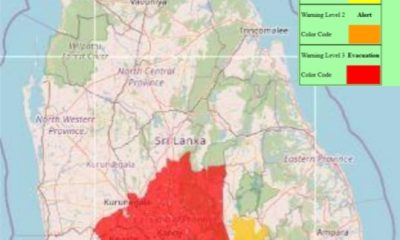
Level III landslide early warning continue to be in force in the districts of Kandy, Kegalle, Kurunegala and Matale
-
 Latest News6 days ago
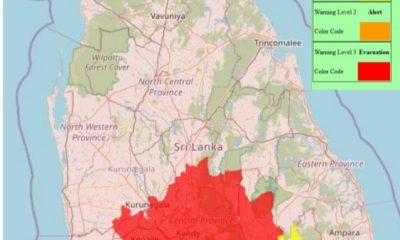
Level III landslide early warnings issued to the districts of Badulla, Kandy, Kegalle, Kurunegala, Matale and Nuwara-Eliya
-
 Features6 days ago
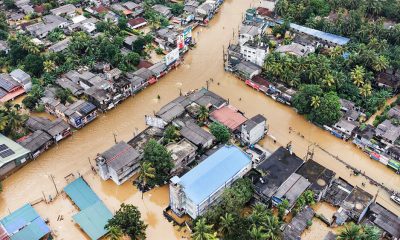
Ditwah: An unusual cyclone
-

 Latest News7 days ago
Updated Payment Instructions for Disaster Relief Contributions
-

 News2 days ago
CPC delegation meets JVP for talks on disaster response
-

 Business2 days ago
LOLC Finance Factoring powers business growth
-
 News2 days ago
A 6th Year Accolade: The Eternal Opulence of My Fair Lady