
News
No candidate vying for the presidency has announced plans to abolish executive powers – President


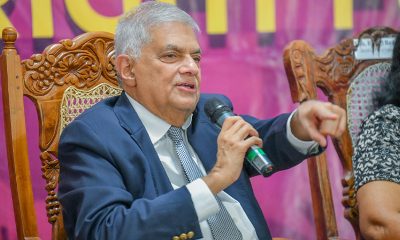
President Ranil Wickremesinghe participating in the “What’s New” dialogue on legal reforms with young legal professionals at a workshop held at the Presidential Secretariat.on Tuesday (28) reiterated that none of the candidates aspiring to run in the presidential election have announced their intention to abolish the executive powers associated with the position.
Elaborating further the President said:
“Sri Lanka boasts multiple governance systems. One resembles the English model, epitomized by the cabinet, while the other adopts the executive presidential system, where the President wields executive authority. The legislature holds legislative powers. Notably, the President and the legislature may hail from different political parties. Examining the Swiss parliamentary setup, parliament appoints seven individuals to the federal committee, granting executive authority to the Federal Council.
In adherence to a customary practice, the two primary parties receive two seats each, while the remaining parties are allocated one seat each. Subsequently, these councillors convene to discuss the distribution of responsibilities among institutions, collectively exercising executive authority. Additionally, the Prime Minister holds the authority to appoint and dismiss ministers within the cabinet. Annually, one of the seven councillors ascends to the Chairmanship.
Alternatively, the Donoughmore system, once employed in Sri Lanka, involved dividing the executive structure into seven components. Among these, one served as the speaker, while another was elected as the chairman, simultaneously assuming the role of minister. Further, a minister was designated as the Leader of the House. The governor appointed three additional secretaries, resulting in a council of ministers comprised of ten individuals. Among these, the chief secretary chaired the council, where decisions were deliberated and finalized.
Following the previous systems, the French model emerged, where the executive president is elected via popular vote and members of Parliament are chosen by the electorate. This approach is predominantly adopted in Sri Lanka, possessing both advantages and disadvantages. During President J. R. Jayawardena’s tenure as Executive President, significant strides were made for the country, marked by the implementation of major projects such as Mahaveli, Samanala wewa, and Lunugamvehera. Additionally, Kotte was elevated to the status of a capital city, and two trading zones were established. Notably, these developmental endeavours were executed amidst an eleven-year-long war.
Similarly, President Premadasa initiated the establishment of around two hundred garment factories. The presence of the executive presidency was pivotal in Sri Lanka’s victory in the war, thwarting foreign hopes of inducing crisis and government collapse. The ability to apply executive power, exemplified by President Mahinda Rajapaksa, facilitated the deployment of the military and eventual triumph in the conflict.
During the tenure of the good governance government, there was a notable disconnect between the Executive President and the rest of the government. The presence of executive powers was crucial in maintaining stability during the ‘Aragalaya’. This was evident when there was no clear successor for the premiership. On a particular occasion, when the President departed for Trincomalee, some individuals urged me to resign from my position as Prime Minister.
However, I asserted that I could only resign if there was a parliamentary majority, and even then, the resignation letter would need to be submitted to the President. Resigning under external pressure or due to personal reasons, such as threats to my residence, would risk the ascension of someone outside the democratic process to power.
In the future, we will hold the presidential election. None of the candidates vying for the position have announced plans to abolish its executive authority. It’s imperative that we develop a program geared towards reinforcing the parliament’s role and capabilities.
Currently, some executive powers have been delegated to the Provincial Council, while others have been assigned to various commissions. Furthermore, parliamentary oversight committees are operational. As more bills are introduced and debated in parliament, there will be a gradual shift of presidential powers to the Parliament, the legislative body.
Enacting laws that render the President accountable to Parliament is imperative. The government’s agenda for the next four years should be outlined through the newly introduced Economic Transformation Act. Progress on implemented programs each year ought to be reported to Parliament annually. Mr. Karu Jayasuriya’s proposed Jana Sabha system appears highly feasible. Additionally, it’s worth noting the practicality of the forthcoming gender equality law.”







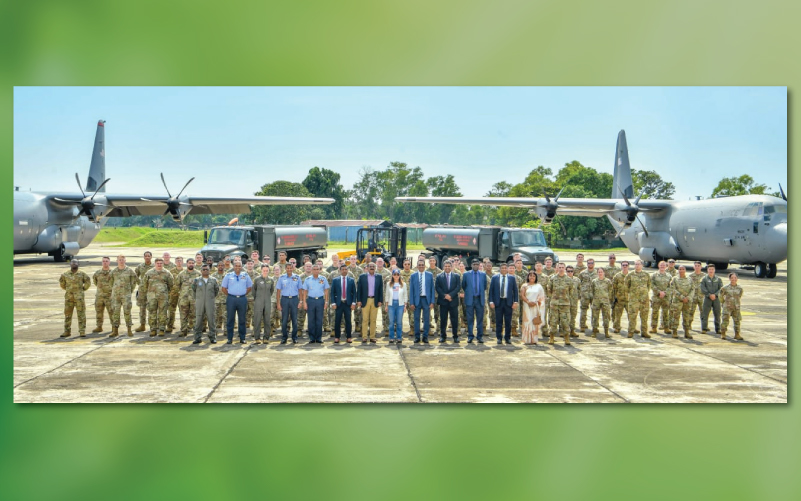
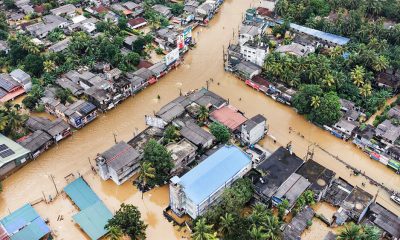
The United States has extended humanitarian assistance to Sri Lanka to support nationwide relief efforts in the aftermath of Cyclone Ditwah, which caused severe damage across multiple regions of Sri Lanka.
The latest round of assistance, included the deployment of two C-130J Super Hercules aircraft, equipment and US Air Force personnel. The US contingent will provide vital transportation and logistics support in areas identified by the Disaster Management Centre.
A formal handover took place this afternoon (07) at the Bandaranaike International Airport (BIA) with the support officially received on behalf of the Sri Lankan government by Minister of Science and Technology Prof. Chrishantha Abeysena, Deputy Minister of Ports and Civil Aviation, Janitha Ruwan Kodithuwakku and Deputy Minister of Defence Maj. Gen. Aruna Jayasekara (Rtd).
The assistance was presented by the United States through Julie Chung, Ambassador of the United States to Sri Lanka, and Lt. Col. Van Pinxteren of the United States Air Force.
As part of the support package, the United States contingent will provide logistics capacities needed to transport humanitarian supplies to affected communities in the Northern, Eastern and Central regions.
Sri Lankan officials expressed their gratitude for the timely support, which will bolster ongoing national efforts to reach displaced families and restore essential services in cyclone-affected areas.

President Anura Kumara Dissanayake instructed officials to prepare the farmers in the Anuradhapura District whose paddy cultivation was destroyed due to floods to re-cultivate during the upcoming Maha season.
Highlighting the need for all relevant institutions to work in proper coordination, treating this as a national necessity, the President instructed the authorities to provide compensation to farmers without delay and to ensure temporary irrigation water supply through provisional repairs.
The President further noted that the government is providing the highest amount of compensation in the country’s history for crop damages, with the expectation that cultivation activities will be commenced again promptly.
President Anura Kumara Dissanayake gave these instructions this morning (07) while attending a special coordination committee meeting at the Anuradhapura District Secretariat to review the programme being implemented to restore normalcy to the lives of people affected by the disaster situation and to rehabilitate damaged infrastructure in the district.
The President instructed officials to present, before this Friday, a report detailing the number of farmers who were completely affected, the extent of damaged farmland and the required financial allocations. He emphasised that compensation must be granted only to those who are genuinely entitled and that no one should receive it unjustly.
The President stated that the government is committed to providing compensation to the farming community and directed officials to foster confidence among farmers so that they will be encouraged to resume cultivation.
The President also inquired, separately, from the relevant institutions about the measures taken for the development of the district’s infrastructure including highways, irrigation and communication networks.
The President examined the programme for reopening obstructed roads and instructed that temporary repairs be expedited to meet the public’s transportation needs until permanent road development plans are implemented.
Officials of the Ceylon Electricity Board informed the meeting that 473 out of the 580 electricity transformers damaged due to the disaster have already been restored and that full electricity supply to the district could be achieved by tomorrow.
They further stated that 49,000 water connections had been affected, of which about 99% have now been restored, while water is being supplied by bowsers to the remaining areas. They noted that total restoration of water supply is expected within the next two days. Damaged community water projects are also being restored.
Well-cleaning activities are currently being carried out with the support of the Navy and the President instructed officials to complete these tasks swiftly through community participation coordinated by Divisional Secretariats.
Discussions were also held regarding the provision of compensation for crops such as Maize, restarting cultivation, restoring the livelihoods of those engaged in animal husbandry, normalising health services and rehabilitating religious sites including damaged temples.
The floods have caused total damage to 228 houses in the district. The President instructed officials to gather accurate information on whether affected families should be resettled on the same land or relocated elsewhere and to begin identifying suitable land for resettlement.
Officials reported that all schools in the district could reopen by 16 December. The President instructed that the Rs. 15,000 allowance promised by the Treasury for schoolchildren affected by the disaster be fully distributed before 31 December and that the list of beneficiaries be prepared without delay.
The President also expressed his gratitude to government officials, the Police and the Tri-Forces for their service in providing relief to the public and restoring infrastructure.
The meeting was attended by Co-Chair of the Anuradhapura District Development Committee, Minister of Trade, Commerce, Food Security and Cooperative Development Wasantha Samarasinghe, Minister of Housing, Construction and Water Supply Susil Ranasinghe , Anuradhapura District MPs Susantha Kumara Navaratna and Sena Nanayakkara, North Central Province Governor Wasantha Jinadasa, Chief Secretary J.M.R.P. Jayasinghe, representatives of local authorities; Secretary to the Treasury Dr Harshana Suriyapperuma, Anuradhapura District Secretary K.G.R. Wimalasuriya, ministry secretaries and other government officials.
Latest News
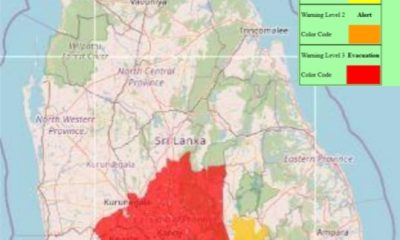
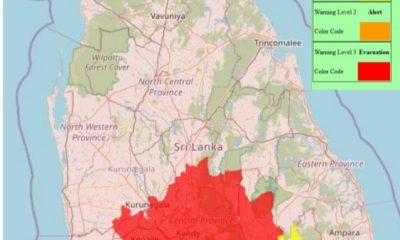
Level III landslide warnings issued to the Districts of Kandy, Kegalle, Kurunegala and Matale extended till 1600 hrs on Monday [08]
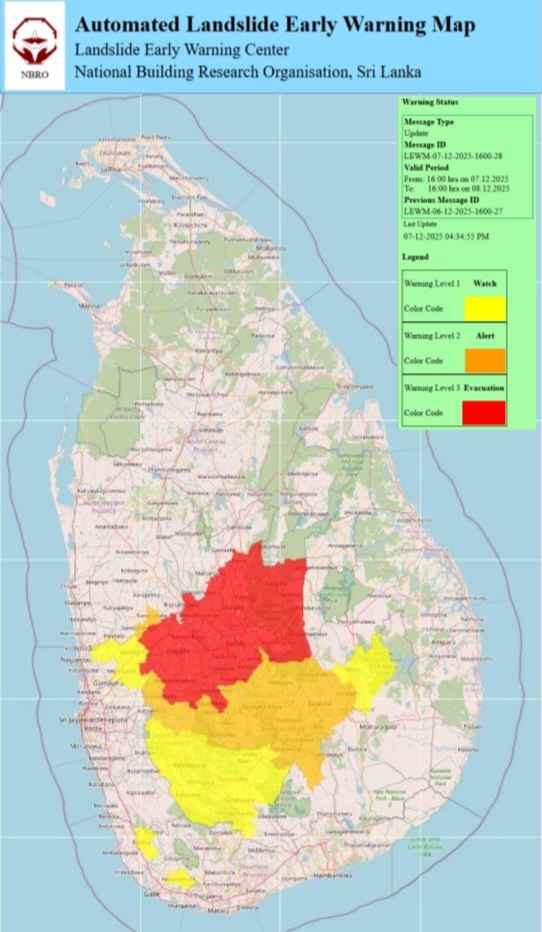
The Landslide Early Warning Center of the National Building Research Organisation [NBRO] has extended the RED landslide early warnings issued to the Districts of Kandy, Kegalle, Kurunegala and Matale until 1600hrs on Monday [8th December 2025].
Accordingly,
LEVEL III RED warnings have been issued to the Divisional Secretaries Division and surrounding areas of Pathadumbara, Pathahewaheta, Harispattuwa, Doluwa, Thumpane, Poojapitiya, Udunuwara, Gangawata Korale, Akurana, Minipe, Udapalatha, Hatharaliyadda, Kundasale, Panvila, Medadumbara, Ududumbara, Deltota, Pasbage Korale, Yatinuwara and Ganga Ihala Korale in the Kandy district, Bulathkohupitiya, Mawanella, Aranayaka, Galigamuwa, Warakapola, Kegalle, Yatiyanthota, and Rambukkana in the Kegalle district, Rideegama, Alawwa, Mawathagama, Mallawapitiya and Polgahawela in the Kurunegala district, and Rattota, Wilgamuwa, Laggala Pallegama, Ambanganga Korale, Ukuwela, Matale, Naula, Pallepola and Yatawatta in the Matale district.
LEVEL II AMBER warnings issued to the Divisional Secretaries Division and surrounding areas of Uva Paranagama, Badulla, Kandeketiya, Bandarawela, Soranathota, Hali_Ela, Meegahakivula, Ella, Welimada, Haputhale, Lunugala, Haldummulla and Passara in the Badulla district, Dehiowita, Ruwanwella, and Deraniyagala in the Kegalle district, Narammala in the Kurunegala district, Thalawakele, Ambagamuwa Korale, Norwood, Kothmale East, Kothmale West and Nuwara Eliya, Hanguranketha, Nildandahinna, Walapane, amd Mathurata in the Nuwara Eliya district and Godakawela, Kahawaththa and Kolonna in the Ratnapura district have also been extended.
LEVEL I YELLOW warnings have been issued to the Divisional Secretaries Division and surrounding areas of Elpitiya and Yakkalamulla in the Galle district, Mirigama, Divulapitiya and Attanagalla in the Gampaha district, Bibile and Medagama inthe Monaragala district, and Nivithigala, Kaltota, Pelmadulla, Elapatha, Ayagama, Kuruwita, Kalawana, Imbulpe, Eheliyagoda, Kiriella, Balangoda, Openayake and Ratnapura in the Ratnapura district

US deploys two C-130J Super Hercules aircraft and personnel to assist in relief measures

Government prepares Anuradhapura farmers for Maha Season

Level III landslide warnings issued to the Districts of Kandy, Kegalle, Kurunegala and Matale extended till 1600 hrs on Monday [08]

A mechanism that goes beyond the normal state apparatus is needed to restore public life – President

President calls on the Mahanayake Thera of the Asgiri chapter

President calls on the Mahanayake Thera of the Malwathu chapter

‘Dates have the highest sugar content to fight Coronavirus’

Sunday Island 27 December – Headlines

#SundayIsland 17th December – Headlines

Sunday Island – 28th March

Sunday Island Headlines – 21 March

Sunday Island – 21st February – Headlines
-
News5 days ago
Lunuwila tragedy not caused by those videoing Bell 212: SLAF
-
 News4 days ago
Level III landslide early warning continue to be in force in the districts of Kandy, Kegalle, Kurunegala and Matale
-
 Latest News6 days ago
Level III landslide early warnings issued to the districts of Badulla, Kandy, Kegalle, Kurunegala, Matale and Nuwara-Eliya
-
 Features6 days ago
Ditwah: An unusual cyclone
-

 Latest News7 days ago
Updated Payment Instructions for Disaster Relief Contributions
-

 News2 days ago
CPC delegation meets JVP for talks on disaster response
-
 News2 days ago
A 6th Year Accolade: The Eternal Opulence of My Fair Lady
-

 Business2 days ago
LOLC Finance Factoring powers business growth