
News
Mill shops in rural areas highlight role of vendor typology in shaping food consumption patterns


In rural areas, mill shops, which process rice and other grains into flour, are emerging as key food vendors, particularly in communities where access to larger retail outlets is limited, says findings of a new research by International Food Policy Research Institute (IFPRI), University of Peradeniya, and Johns Hopkins University.
The study perused on data collected on food environment in 45 Grama Niladahari Divisions across five Districts of rural Sri Lanka, from December 2020 to March 2024, says that while supermarkets, cafes, and juice bars are common in urban areas, mill shops stand out as one of the few food sources available in rural settings, offering locally processed flour on a consumer retail basis.
Mill shops are primarily concentrated in rural areas, where they serve not only as wholesale distributors of grain products but also provide essential retail services to consumers. These shops, which often cater to smaller, local needs, are an important lifeline for rural communities, where larger supermarkets and chain stores are either sparse or entirely absent.
The study also revealed significant differences in food vendor availability between urban, rural, and estate areas, with implications for consumer behaviour. Urban consumers have access to a wide variety of food vendors, including supermarkets, mini-markets, and cafes, reflecting broader trends in food consumption that favour dining out and purchasing ready-to-eat meals. On the other hand, rural areas, particularly those far from urban centres, rely more heavily on local vendors, such as mill shops, which are integral to daily food procurement.
Mill shops are a crucial resource in rural communities. While urban residents may have more options for convenience food, rural populations often depend on these smaller-scale operations for staples like flour, rice, and other basic ingredients.
In contrast to urban areas, where food consumption patterns tend to be more varied and centred around convenience, rural consumers often prioritize staple items for home cooking. The limited availability of specialized food vendors, such as cafes and juice bars, in these areas means that meals are largely prepared at home, often from locally sourced ingredients.
The study also examined the impact of vendor typology on food consumption in estate areas, where the picture is markedly different. Estate communities, typically located in more remote regions, experience even greater challenges in accessing diverse food sources. The high cost of food in local shops and the limited variety available has led many estate residents to travel outside their communities to nearby towns or urban centres, such as Nuwara Eliya and Kotapola, in search of affordable and varied food options.
The estate sector faces a unique challenge because of the high cost of local food and limited options, people are often forced to leave their communities to access more affordable and diverse food offerings in nearby towns.


The government’s failure to act on expert warnings, including advance forecasts on Cyclone Ditwah, had led to the worsening of disaster impact, Udaya Gammanpila, leader of the Pivithuru Hela Urumaya, said at a press conference in Colombo yesterday.
Gammanpila accused the NPP government of ignoring 14 key preventive measures, despite alerts from the Meteorology Department, foreign experts, and the media.
Gammanpila said the government had failed to lower the water levels in reservoirs, dredge estuaries, and deploy the armed forces for canal maintenance. Local government bodies were reportedly sidelined, and that led to a delay in cleaning of drains. He said the government had also failed to evacuate people in a timely manner from seven districts identified by the National Building Research Organisation as landslide-prone. It had delayed declaring emergencies or curfews and the deployment of tri-forces to evacuate people in such areas.
Gammanpila said an experienced public official should have been appointed as Secretary to the President to mobilise the state machinery swiftly during the disaster. He said the government had not convened the National Disaster Council.
“These failures worsened the disaster, causing immense hardship, disruption, and loss of life and property to the people,” Gammanpila said.
The government has denied the Opposition’s claims.

The Department of National Archives Friday made an urgent appeal for freezing capacity to protect from mould vital water damaged documents, particularly irreplaceable public records of legal value saying this would be be time buying exercise before mould destroys them permanently.
Dr. Nadeera Rupesinghe, Director General of National Archives, said in the appeal that “freezing water-damaged documents stops mould growth and stabilizes materials until proper conservation treatment is possible. It buys time.
Without freezing capacity, we will lose vital records, land registries, court documents, historical records, and the evidence millions of citizens need to rebuild their lives.
“These public institutions urgently need access to freezer facilities and mobile freezers across the country. Public records as bound volumes, and bundled records have to be frozen in large quantities. We understand this is an extraordinary request during an already difficult time. We are asking you to provide space in existing freezer facilities on a temporary basis (weeks to months).”
She said if anybody able to provide such facilities without cost, in return, the National Archives can support full documentation of your contribution for CSR reporting and national recognition as a partner in preserving Sri Lanka’s evidentiary landscape.
“These are not abstract historical records. These are the records our citizens need to prove who they are, what they own, and what they are owed. What we stand to lose –
Court records and legal evidence spanning decades
Personnel files affecting pensions and benefits
Financial records required for audits and accountability
Public records essential for maintaining administrative history
Historical documents that tell our national story”
Noting that the business community has always been a partner in Sri Lanka’s development, the National Archives Department asked it to be partners in preserving the documentary foundation on which business, law, and civil society depend.
“Every land transaction, every contract, every court case relies on records. Help us save them,” Rupesinghe said.
If your organisation has freezing capacity you can make available, please immediately contact Mr Anuradha Adikaram, Senior Archivist on 077 6815551 (Available 24 hours) .
The department will coordinate connecting those who can assist with organisations that are searching for freezer facilities.
“Time is the enemy. Every hour without freezing capacity means more records lost to mould. Every day of delay means more families without proof of their homes, their citizenship, their rights. We are asking for freezers, but we are really asking you to help preserve the documentary infrastructure of our nation,” Rupesinghe said.

The Department of Meteorology has warned that rainfall is expected to increase across the country in the coming days as the southwest monsoon becomes more active. From Tuesday, monsoon conditions are expected to persist, with stronger winds likely.
Rainfall is predicted to intensify on Dec. 10, 11, and 12, potentially affecting the Northern, North-Central, Northwestern, Eastern, and Uva provinces, with thunderstorms and rainfall between 75 and 100 mm, Director General of Meteorology Athula Karunanayake said.
Karunanayake added that other areas, including the southeastern region, could also see rain during the day or night, as a disturbance in the Bay of Bengal may further influence the monsoon.
He cautioned that heavy rain would be accompanied by strong winds, creating rough sea conditions. Fishermen and maritime communities are urged to exercise caution and follow official advisories during this period.

Opposition blames govt. inaction for severity of disaster impact

National Archives seeks freezing capacity to ward off mould from vital water-damaged documents

Met Dept. issues fresh weather warning

Budget 2026 passed

IFJ urges Lanka to protect freedom of expression amid emergency law concerns

HUTCH Joins Nation’s Rebuild Effort with Rs.60 Million Contribution to ‘Rebuild Sri Lanka’ Fund.

‘Dates have the highest sugar content to fight Coronavirus’

Sunday Island 27 December – Headlines

#SundayIsland 17th December – Headlines

Sunday Island – 28th March

Sunday Island Headlines – 21 March

Sunday Island – 21st February – Headlines
-
News4 days ago
Lunuwila tragedy not caused by those videoing Bell 212: SLAF
-
 News3 days ago
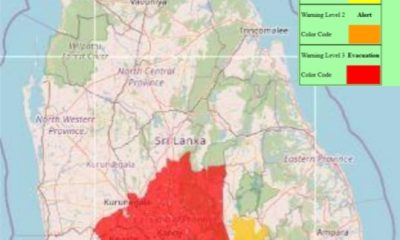
Level III landslide early warning continue to be in force in the districts of Kandy, Kegalle, Kurunegala and Matale
-
 Latest News5 days ago
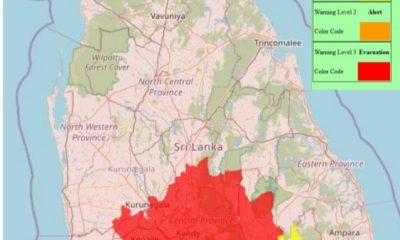
Level III landslide early warnings issued to the districts of Badulla, Kandy, Kegalle, Kurunegala, Matale and Nuwara-Eliya
-
 Features5 days ago
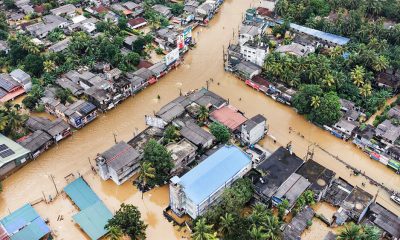
Ditwah: An unusual cyclone
-

 Latest News6 days ago
Updated Payment Instructions for Disaster Relief Contributions
-

 News1 day ago
A 6th Year Accolade: The Eternal Opulence of My Fair Lady
-

 Latest News6 days ago
Landslide Early Warnings issued to the Districts of Badulla, Colombo, Gampaha, Kalutara, Kandy, Kegalle, Kurunegala, Matale, Moneragala, Nuwara Eliya and Ratnapura
-

 News1 day ago
CPC delegation meets JVP for talks on disaster response