
Features
Labor wins in Australia!


By Dr Laksiri Fernando
Although the federal elections took place on Saturday, 21 May, Saturday. the people had the opportunity to cast their postal votes before. Even on the election day, the Electoral Commission allowed people to vote by telephone. In Australia along with 20 other countries voting is compulsory. Apart from the ‘right to vote’ these countries recognise, voting as a ‘citizen’s duty.’ In New Zealand, registration is compulsory, but not necessarily the voting.
Australia is also a federal country. Therefore, regular elections are held, both for the states and for the federal government. What was held in May was for the federal government. With six states and two self-governing territories, most of the day-to-day public affairs are conducted by these states, with regular elections and stable constitutions. There are clear separation of powers and functions. However, when it comes to economic affairs, international relations, and overall policies of the country, the federal government has the final say, most of the time conducted in conjunction with the states and territories.
Background
Australian Parliament is bicameral, with the House of Representatives and the Senate unlike Sri Lanka. Sri Lanka’s Senate was arbitrarily abolished in 1971. Australia’s House of Representatives is smaller than Sri Lanka’s Parliament, with only 151 members. But the size of the country and the population are bigger than Sri Lanka. Australia is an operational democracy with elections being held peacefully and calmly unlike in Sri Lanka. There has been no incident of election violence recorded during the campaign period or thereafter.
Australia’s number of active political parties are only a handful. In the case of Sri Lanka, the active number is three times bigger. Perhaps these facts and figures show that Australia is a stable democratic country while Sri Lanka has considerable instability. Elections are held not in five years but three years. The voters have a reasonable regular say.
There has been a continuous trend in Australian elections, with voter preferences moving away from traditional political parties towards third parties or independents. This was visible even at the last elections in 2019. Nevertheless, as a leading political party Labor has been able to muster a clear majority of 76 seats. It might be in the Senate that the Labor may have to depend on the ‘cross bench.’ Given the political culture in Australia, this might not be a major obstacle for the new government.
Since 1987, the Australian National University has been conducting election surveys (Australian Election Study – AES) and following was what they mentioned in the last 2019 report. “Many indicators point to citizen detachment from major political parties, including record low political partisanship, rising voter instability and voter distrust in government.”
The election was held after two years of the devastating Covid pandemic affecting economic activities, cost of living, industries, and particularly small and medium scale businesses. There were nearly 9 million cases of Covid and a thousand of deaths. Healthcare or Medicare was naturally a key issue at the election. Australia has been encountering devastating floods and bushfires, one after the other, especially in remote agricultural areas. This is one reason why the global warming and climate change became a central concern of many voters. Renewable energy is considered the promising solution.
Election Results
Labor won the elections after almost after 10 years. Between 2007 and 2013, there were two Labor governments, first majority and then a minority government. Since 2013, the Liberal National alliance was running the federal government. At the last elections, in 2019, although predictions were indicating, a Labor win, Liberals with Nationals obtained 77 seats to run a majority government, under Scott Morison’s Prime Minister position.
2019 2022
Labor Party 68 76
Liberal Party 61 41
National Party 16 16
Greens 01 04
Independents 03 10
Other Parties/Undecided 0 2 04
The above comparison of results shows the Liberal defeat, for several reasons, while Nationals retaining their 16 seats. The Labour gained from 68 seats to at least 76 seats under the leadership of Anthony Albanese who has emerged from an ordinary family to lead the Labor party. He was brought up by a single mother who was living in public housing and receiving disability pension.
The Labor party is the oldest political party in Australia, founded in 1901. Its roots go back to 1891 when the labor movement founded branches in different colonies, now states. It is considered the oldest Labor or social democratic party in the world with membership in the Socialist International. From the beginning, the party preferred to spell the name without a ‘u’ in the name. It is considered a centre-left party.
New Trends
At the elections, there is a clear trend of voters moving away from main two parties, Labor, and the Liberals. In 1950s it was counted that 90% of the voters rotated around the two main parties. However, at this election the number has come down to 60%. Primary votes for the Liberals (National included) have come down from 35.3% to 29.1%. Labor primary votes has come down from 31.9% to 30.5%.
Where have they gone? The Greens have been the main beneficiaries of voters moving away from the main two parties with a primary vote of nearly 15%. In certain electorates, there had been a preference for women candidates, whether Independent or party. From three seats at the last election, the Independents have gained 10 seats this time.
At the last elections, one of the main concerns of voters has been global warming and climate change. It might be a reason for the voters to select Labor against Liberals although in certain issues even the Labor was behind their expectations. The new House of Representatives has several other new features. Among the elected, women have a prominent place. Indigenous communities also have gained a prominent place with other minorities also getting elected. Multiculturalism is reflected in the new House of Representatives.
Australia’s electoral system is preferential voting both for the House of Representatives and the Senate. Two ballot papers are given to the voters for this purpose. If there are five candidates for a particular constituency/seat, voters are supposed to mark 1 to 5 in a preferential basis. When leading candidates fail to obtain more than 50%, then the preferences are counted to decide the winner. This is more or less the same for the Senate where the Greens and the Independents have a better representation. The final counting for the Senate might take another two weeks.
Labour Promises
The new Prime Minister, Anthony Albanese, has already been well into his new administration. After taking oaths as the PM, and forming a temporary cabinet, he left for the QUAD leaders meeting in Tokyo on 24 May where he met with Joe Biden (US), Narendra Modi (India) and Fumio Kishida (Japan) for discussions. One obligation fell on Australia was to look after the Pacific. Immediately after meeting the Foreign Minister Penny Wong went to Fiji. This is just before the Chinese Foreign Minister’s visit to the region who has, in fact, failed to put into effect a common agreement with the Pacific nations.
Another instant promise delivered was to release the Nadesalingam family, or popularly called the ‘Biloela family.’ Under the previous government they were kept in community detention, first in Christmas Island and then Perth. Husband (Nades) and wife (Priya) had come to Australia from Sri Lanka as asylum seekers. They met here and got married. They have two daughters. As they were very close and working hard in Biloela, a remote community in Queensland, people there were quite unequivocal in fighting for their cause. Now, they are back in Biloela on bridging visas until their cases are cleared in the courts.
There are other promises given by the Labor that might take time to fulfil. A full Cabinet will be formed soon. One area which should be emphasized is the Labor’s commitment to Uluru statement. Based on the principles of subsidiarity, it declares among other matters: “Ensuring that Aboriginal and Torres Strait Islander peoples, including survivors of the Stolen Generations and their descendants, lead in developing and implementing policy that affects their lives by resourcing flexible and appropriate Indigenous decision-making structures.”


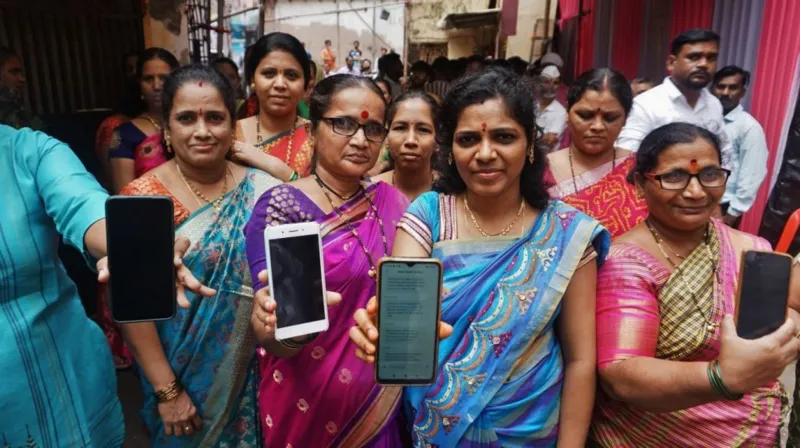
In a village in the central Indian state of Madhya Pradesh, a woman receives a small but steady sum each month – not wages, for she has no formal job, but an unconditional cash transfer from the government.
Premila Bhalavi says the money covers medicines, vegetables and her son’s school fees. The sum, 1,500 rupees ($16: £12), may be small, but its effect – predictable income, a sense of control and a taste of independence – is anything but.
Her story is increasingly common. Across India, 118 million adult women in 12 states now receive unconditional cash transfers from their governments, making India the site of one of the world’s largest and least-studied social-policy experiments.
Long accustomed to subsidising grain, fuel and rural jobs, India has stumbled into something more radical: paying adult women simply because they keep households running, bear the burden of unpaid care and form an electorate too large to ignore.
Eligibility filters vary – age thresholds, income caps and exclusions for families with government employees, taxpayers or owners of cars or large plots of land.
“The unconditional cash transfers signal a significant expansion of Indian states’ welfare regimes in favour of women,” Prabha Kotiswaran, a professor of law and social justice at King’s College London, told the BBC.
The transfers range from 1,000-2,500 rupees ($12-$30) a month – meagre sums, worth roughly 5-12% of household income, but regular. With 300 million women now holding bank accounts, transfers have become administratively simple.
Women typically spend the money on household and family needs – children’s education, groceries, cooking gas, medical and emergency expenses, retiring small debts and occasional personal items like gold or small comforts.
What sets India apart from Mexico, Brazil or Indonesia – countries with large conditional cash-transfer schemes – is the absence of conditions: the money arrives whether or not a child attends school or a household falls below the poverty line.
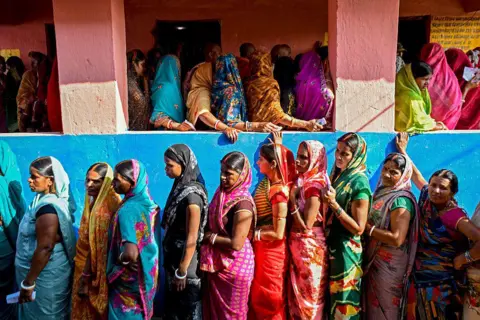
Goa was the first state to launch an unconditional cash transfer scheme to women in 2013. The phenomenon picked up just before the pandemic in 2020, when north-eastern Assam rolled out a scheme for vulnerable women. Since then these transfers have turned into a political juggernaut.
The recent wave of unconditional cash transfers targets adult women, with some states acknowledging their unpaid domestic and care work. Tamil Nadu frames its payments as a “rights grant” while West Bengal’s scheme similarly recognises women’s unpaid contributions.
In other states, the recognition is implicit: policymakers expect women to use the transfers for household and family welfare, say experts.
This focus on women’s economic role has also shaped politics: in 2021, Tamil actor-turned-politician Kamal Haasan promised “salaries for housewives”. (His fledgling party lost.) By 2024, pledges of women-focused cash transfers helped deliver victories to political parties in Maharashtra, Jharkhand, Odisha, Haryana and Andhra Pradesh.
In the recent elections in Bihar, the political power of cash transfers was on stark display. In the weeks before polling in the country’s poorest state, the government transferred 10,000 rupees ($112; £85) to 7.5 million female bank accounts under a livelihood-generation scheme. Women voted in larger numbers than men, decisively shaping the outcome.
Critics called it blatant vote-buying, but the result was clear: women helped the Bharatiya Janata Party (BJP)-led coalition secure a landslide victory. Many believe this cash infusion was a reminder of how financial support can be used as political leverage.
Yet Bihar is only one piece of a much larger picture. Across India, unconditional cash transfers are reaching tens of millions of women on a regular basis.
Maharashtra alone promises benefits for 25 million women; Odisha’s scheme reaches 71% of its female voters.
In some policy circles, the schemes are derided as vote-buying freebies. They also put pressure on state finances: 12 states are set to spend around $18bn on such payouts this fiscal year. A report by think-tank PRS Legislative Research notes that half of these states face revenue deficits – this happens when a state borrows to pay regular expenses without creating assets.
But many argue they also reflect a slow recognition of something India’s feminists have argued for decades: the economic value of unpaid domestic and care work.
Women in India spent nearly five hours a day on such work in 2024 – more than three times the time spent by men, according to the latest Time Use Survey. This lopsided burden helps explain India’s stubbornly low female labour-force participation. The cash transfers, at least, acknowledge the imbalance, experts say.
Do they work?
Evidence is still thin but instructive. A 2025 study in Maharashtra found that 30% of eligible women did not register – sometimes because of documentation problems, sometimes out of a sense of self-sufficiency. But among those who did, nearly all controlled their own bank accounts.
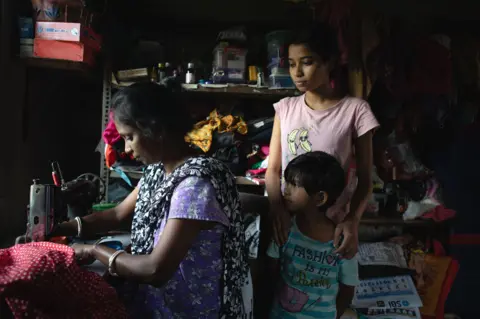
A 2023 survey in West Bengal found that 90% operated their accounts themselves and 86% decided how to spend the money. Most used it for food, education and medical costs; hardly transformative, but the regularity offered security and a sense of agency.
More detailed work by Prof Kotiswaran and colleagues shows mixed outcomes.
In Assam, most women spent the money on essentials; many appreciated the dignity it afforded, but few linked it to recognition of unpaid work, and most would still prefer paid jobs.
In Tamil Nadu, women getting the money spoke of peace of mind, reduced marital conflict and newfound confidence – a rare social dividend. In Karnataka, beneficiaries reported eating better, gaining more say in household decisions and wanting higher payments.
Yet only a sliver understood the scheme as compensation for unpaid care work; messaging had not travelled. Even so, women said the money allowed them to question politicians and manage emergencies. Across studies, the majority of women had full control of the cash.
“The evidence shows that the cash transfers are tremendously useful for women to meet their own immediate needs and those of their households. They also restore dignity to women who are otherwise financially dependent on their husbands for every minor expense,” Prof Kotiswaran says.
Importantly, none of the surveys finds evidence that the money discourages women from seeking paid work or entrench gender roles – the two big feminist fears, according to a report by Prof Kotiswaran along with Gale Andrew and Madhusree Jana.
Nor have they reduced women’s unpaid workload, the researchers find. They do, however, strengthen financial autonomy and modestly strengthen bargaining power. They are neither panacea nor poison: they are useful but limited tools, operating in a patriarchal society where cash alone cannot undo structural inequities.
What next?
The emerging research offers clear hints.
Eligibility rules should be simplified, especially for women doing heavy unpaid care work. Transfers should remain unconditional and independent of marital status.
But messaging should emphasise women’s rights and the value of unpaid work, and financial-literacy efforts must deepen, researchers say. And cash transfers cannot substitute for employment opportunities; many women say what they really want is work that pays and respect that endures.
“If the transfers are coupled with messaging on the recognition of women’s unpaid work, they could potentially disrupt the gendered division of labour when paid employment opportunities become available,” says Prof Kotiswaran.
India’s quiet cash transfers revolution is still in its early chapters. But it already shows that small, regular sums – paid directly to women – can shift power in subtle, significant ways.
Whether this becomes a path to empowerment or merely a new form of political patronage will depend on what India chooses to build around the money.
[BBC]

Some opposition political parties have striven hard to turn the disaster of Cyclone Ditwah to their advantage. A calamity of such unanticipated proportions ought to have enabled all political parties to come together to deal with this tragedy. Failure to do so would indicate both political and moral bankruptcy. The main issue they have forcefully brought up is the government’s failure to take early action on the Meteorological Department’s warnings. The Opposition even convened a meeting of their own with former President Ranil Wickremesinghe and other senior politicians who shared their experience of dealing with natural and man-made disasters of the past, and the present government’s failures to match them.
The difficulty to anticipate the havoc caused by the cyclone was compounded by the neglect of the disaster management system, which includes previous governments that failed to utilise the allocated funds in an open, transparent and corruption free manner. Land designated as “Red Zones” by the National Building Research Organisation (NBRO), a government research and development institute, were built upon by people and ignored by successive governments, civil society and the media alike. NBRO was established in 1984. According to NBRO records, the decision to launch a formal “Landslide Hazard Zonation Mapping Project (LHMP)” dates from 1986. The institutional process of identifying landslide-prone slopes, classifying zones (including what we today call “Red Zones”), and producing hazard maps, started roughly 35 to 40 years ago.
Indonesia, Thailand and the Philippines which were lashed by cyclones at around the same time as Sri Lanka experienced Cyclone Ditwah were also unprepared and also suffered enormously. The devastation caused by cyclones in the larger southeast Asian region is due to global climate change. During Cyclone Ditwah some parts of the central highlands received more than 500 mm of rainfall. Official climatological data cite the average annual rainfall for Sri Lanka as roughly 1850 mm though this varies widely by region: from around 900 mm in the dry zones up to 5,000 mm in wet zones. The torrential rains triggered by Ditwah were so heavy that for some communities they represented a rainfall surge comparable to a major part of their typical annual rainfall.
Inclusive Approach
Climate change now joins the pantheon of Sri Lanka’s challenges that are beyond the ability of a single political party or government to resolve. It is like the economic bankruptcy, ethnic conflict and corruption in governance that requires an inclusive approach in which the Opposition, civil society, religious society and the business community need to join rather than merely criticise the government. It will be in their self-interest to do so. A younger generation (Gen Z), with more energy and familiarity with digital technologies filled, the gaps that the government was unable to fill and, in a sense, made both the Opposition and traditional civil society redundant.
Within hours of news coming in that floods and landslides were causing havoc to hundreds of thousands of people, a people’s movement for relief measures was underway. There was no one organiser or leader. There were hundreds who catalysed volunteers to mobilise to collect resources and to cook meals for the victims in community kitchens they set up. These community kitchens sprang up in schools, temples, mosques, garages and even roadside stalls. Volunteers used social media to crowdsource supplies, match donors with delivery vehicles, and coordinate routes that had become impassable due to fallen trees or mudslides. It was a level of commitment and coordination rarely achieved by formal institutions.
The spontaneous outpouring of support was not only a youth phenomenon. The larger population, too, contributed to the relief effort. The Galle District Secretariat sent 23 tons of rice to the cyclone affected areas from donations brought by the people. The Matara District Secretariat made arrangements to send teams of volunteers to the worst affected areas. Just as in the Aragalaya protest movement of 2022, those who joined the relief effort were from all ethnic and religious communities. They gave their assistance to anyone in need, regardless of community. This showed that in times of crisis, Sri Lankans treat others without discrimination as human beings, not as members of specific communities.
Turning Point
The challenge to the government will be to ensure that the unity among the people that the cyclone disaster has brought will outlive the immediate relief phase and continue into the longer term task of national reconstruction. There will be a need to rethink the course of economic development to ensure human security. President Anura Kumara Dissanayake has spoken about the need to resettle all people who live above 5000 feet and to reforest those areas. This will require finding land for resettlement elsewhere. The resettlement of people in the hill country will require that the government address the issue of land rights for the Malaiyaha Tamils.
Since independence the Malaiyaha Tamils have been collectively denied ownership to land due first to citizenship issues and now due to poverty and unwillingness of plantation managements to deal with these issues in a just and humanitarian manner beneficial to the workers. Their resettlement raises complex social, economic and political questions. It demands careful planning to avoid repeating past mistakes where displaced communities were moved to areas lacking water, infrastructure or livelihoods. It also requires political consensus, as land is one of the most contentious issues in Sri Lanka, tied closely to identity, ethnicity and historical grievances. Any sustainable solution must go beyond temporary relocation and confront the historical exclusion of the Malaiyaha Tamil community, whose labour sustains the plantation economy but who remain among the poorest groups in the country.
Cyclone Ditwah has thus become a turning point. It has highlighted the need to strengthen governance and disaster preparedness, but it has also revealed a different possibility for Sri Lanka, one in which the people lead with humanity and aspire for the wellbeing of all, and the political leadership emulates their example. The people have shown through their collective response to Cyclone Ditwah that unity and compassion remain strong, which a sincere, moral and hardworking government can tap into. The challenge to the government will be to ensure that the unity among the people that the cyclone disaster has brought will outlive the immediate relief phase and continue into the longer term task of national reconstruction with political reconciliation.
by Jehan Perera

 In the short span of two or three days, Cyclone Ditwah, has caused a disaster of unprecedented proportions in our midst. Lashing away at almost the entirety of the country, it has broken through the ramparts of centuries old structures and eroded into areas, once considered safe and secure.
The rains may have passed us by. The waters will recede, shops will reopen, water will be in our taps, and we can resume the daily grind of life. But it will not be the same anymore; it should not be. It should not be business as usual for any of us, nor for the government. Within the past few years, Sri Lankan communities have found themselves in the middle of a crisis after crisis, both natural and man-made, but always made acute by the myopic policies of successive governments, and fuelled by the deeply hierarchical, gendered and ethnicised divides that exist within our societies. The need of the hour for the government today is to reassess its policies and rethink the directions the country, as a whole, has been pushed into.
Neoliberal disaster
In the aftermath of the devastation caused by the natural disaster, fundamental questions have been raised about our existence. Our disaster is, in whole or in part, the result of a badly and cruelly managed environment of the planet. Questions have been raised about the nature of our economy. We need to rethink the way land is used. Livelihoods may have to be built anew, promoting people’s welfare, and by deveoloping a policy on climate change. Mega construction projects is a major culprit as commentators have noted. Landslides in the upcountry are not merely a result of Ditwah lashing at our shores and hills, but are far more structural and points to centuries of mismanagement of land. (https://island.lk/weather-disasters-sri-lanka-flooded-by-policy-blunders-weak-enforcement-and-environmental-crime-climate-expert/). It is also about the way people have been shunted into lands, voluntarily or involuntarily, that are precarious, in their pursuit of a viable livelihood, within the limited opportunities available to them.
Neo liberal policies that demand unfettered land appropriation and built on the premise of economic growth at any expense, leading to growing rural-urban divides, need to be scrutinised for their short and long term consequences. And it is not that any of these economic drives have brought any measure of relief and rejuvenation of the economy. We have been under the tyrannical hold of the IMF, camouflaged as aid and recovery, but sinking us deeper into the debt trap. In October 2025, Ahilan Kadirgamar writes, that the IMF programme by the end of 2027, “will set up Sri Lanka for the next crisis.” He also lambasts the Central Bank and the government’s fiscal policy for their punishing interest rates in the context of disinflation and rising poverty levels. We have had to devalue the rupee last month, and continue to rely on the workforce of domestic workers in West Asia as the major source of foreign exchange. The government’s negotiations with the IMF have focused largely on relief and infrastructure rebuilding, despite calls from civil society, demanding debt justice.
The government has unabashedly repledged its support for the big business class. The cruelest cut of them all is the appointment of a set of high level corporate personalities to the post-disaster recovery committee, with the grand name, “Rebuilding Sri Lanka.” The message is loud and clear, and is clearly a slap in the face of the working people of the country, whose needs run counter to the excessive greed of extractive corporate freeloaders. Economic growth has to be understood in terms that are radically different from what we have been forced to think of it as, till now. For instance, instead of investment for high profits, and the business of buy and sell in the market, rechannel investment and labour into overall welfare. Even catch phrases like sustainable development have missed their mark. We need to think of the economy more holistically and see it as the sustainability of life, livelihood and the wellbeing of the planet.
The disaster has brought on an urgency for rethinking our policies. One of the areas where this is critical is education. There are two fundamental challenges facing education: Budget allocation and priorities. In an address at a gathering of the Chamber of Commerce, on 02 December, speaking on rebuilding efforts, the Prime Minister and Minister of Education Dr. Harini Amarasuriya restated her commitment to the budget that has been passed, a budget that has a meagre 2.4% of the GDP allocated for education. This allocation for education comes in a year that educational reforms are being rolled out, when heavy expenses will likely be incurred. In the aftermath of the disaster, this has become more urgent than ever.
Reforms in Education
The Government has announced a set of amendments to educational policy and implementation, with little warning and almost no consultation with the public, found in the document, Transforming General Education in Sri Lanka 2025 published by the Ministry of Education. Though hailed as transformative by the Prime Minister (https://www.news.lk/current-affairs/in-the-prevailing-situation-it-is-necessary-to-act-strategically-while-creating-the-proper-investments-ensuring-that-actions-are-discharged-on-proper-policies-pm), the policy is no more than a regurgitation of what is already there, made worse. There are a few welcome moves, like the importance placed on vocational training. Here, I want to raise three points relating to vital areas of the curriculum that are of concern: 1) streamlining at an early age; relatedly 2) prioritising and privileging what is seen as STEM education; and 3) introducing a credit-based modular education.
1. A study of the policy document will demonstrate very clearly that streamlining begins with Junior Secondary Education via a career interest test, that encourages students to pursue a particular stream in higher studies. Further Learning Modules at both “Junior Secondary Education” and “Senior Secondary Education Phase I,” entrench this tendency. Psychometric testing, that furthers this goal, as already written about in our column (https://kuppicollective.lk/psychometrics-and-the-curriculum-for-general-education/) points to the bizarre.
2. The kernel of the curriculum of the qualifying examination of Senior Secondary Education Phase I, has five mandatory subjects, including First Language, Math, and Science. There is no mandatory social science or humanities related subject. One can choose two subjects from a set of electives that has history and geography as separate subjects, but a Humanities/Social Science subject is not in the list of mandatory subjects. .
3. A credit-based, modular education: Even in universities, at the level of an advanced study of a discipline, many of us are struggling with module-based education. The credit system promotes a fragmented learning process, where, depth is sacrificed for quick learning, evaluated numerically, in credit values.
Units of learning, assessed, piece meal, are emphasised over fundamentals and the detailing of fundamentals. Introducing a module based curriculum in secondary education can have an adverse impact on developing the capacity of a student to learn a subject in a sustained manner at deeper levels.
Education wise, and pedagogically, we need to be concerned about rigidly compartmentalising science oriented, including technological subjects, separately from Humanities and Social Studies. This cleavage is what has led to the idea of calling science related subjects, STEM, automatically devaluing humanities and social sciences. Ironically, universities, today, have attempted, in some instances, to mix both streams in their curriculums, but with little success; for the overall paradigm of education has been less about educational goals and pedagogical imperatives, than about technocratic priorities, namely, compartmentalisation, fragmentation, and piecemeal consumerism. A holistic response to development needs to rethink such priorities, categorisations and specialisations. A social and sociological approach has to be built into all our educational and development programmes.
National Disasters and Rebuilding Community
In the aftermath of the disaster, the role of education has to be rethought radically. We need a curriculum that is not trapped in the dichotomy of STEM and Humanities, and be overly streamlined and fragmented. The introduction of climate change as a discipline, or attention to environmental destruction cannot be a STEM subject, a Social Science/Humanities subject or even a blend of the two. It is about the vision of an economic-cum-educational policy that sees the environment and the economy as a function of the welfare of the people. Educational reforms must be built on those fundamentals and not on real or imagined short term goals, promoted at the economic end by neo liberal policies and the profiteering capitalist class.
As I write this, the sky brightens with its first streaks of light, after days of incessant rain and gloom, bringing hope into our hearts, and some cheer into the hearts of those hundreds of thousands of massively affected people, anxiously waiting for a change in the weather every second of their lives. The sense of hope that allows us to forge ahead is collective and social. The response by Lankan communities, to the disaster, has been tremendously heartwarming, infusing hope into what still is a situation without hope for many. This spirit of collective endeavour holds the promise for what should be the foundation for recovery. People’s demands and needs should shape the re-envisioning of policy, particularly in the vital areas of education and economy.
(Sivamohan Sumathy was formerly attached to the Department of English, University of Peradeniya)
Kuppi is a politics and pedagogy happening on the margins of the lecture hall that parodies, subverts, and simultaneously reaffirms social hierarchies.
By Sivamohan Sumathy

A wage for housework? India’s sweeping experiment in paying women

Death toll 635 as at 06:00 AM today [09]

Heavy showers above 100 mm are likely at some places in the Northern and Eastern provinces and in Polonnaruwa district

Cyclone Ditwah leaves Sri Lanka’s biodiversity in ruins: Top scientist warns of unseen ecological disaster

Disaster: 635 bodies found so far, 192 listed as missing

More help from Pakistan

‘Dates have the highest sugar content to fight Coronavirus’

Sunday Island 27 December – Headlines

#SundayIsland 17th December – Headlines

Sunday Island – 28th March

Sunday Island Headlines – 21 March

Sunday Island – 21st February – Headlines
-
News6 days ago
Lunuwila tragedy not caused by those videoing Bell 212: SLAF
-

 News1 day ago
Over 35,000 drug offenders nabbed in 36 days
-
 News5 days ago
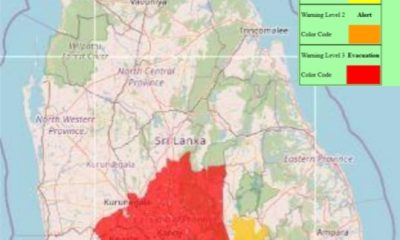
Level III landslide early warning continue to be in force in the districts of Kandy, Kegalle, Kurunegala and Matale
-

 Business3 days ago
LOLC Finance Factoring powers business growth
-

 News3 days ago
CPC delegation meets JVP for talks on disaster response
-

 News3 days ago
A 6th Year Accolade: The Eternal Opulence of My Fair Lady
-

 News1 day ago
Rising water level in Malwathu Oya triggers alert in Thanthirimale
-

 Midweek Review6 days ago
House erupts over Met Chief’s 12 Nov unheeded warning about cyclone Ditwah