
News
India ready to handle two-front threat from China and Pakistan


Gen Bipin Rawat declares
BY S VENKAT NARAYAN,
Our Special Correspondent
NEW DELHI:
India’s Chief of Defence Staff (CDS) General Bipin Rawat has declared that India is ready to handle a two-front threat from China and Pakistan.
He said Pakistan could try to take advantage of any threat developing along India’s northern borders with China, and warned that the neighbour’s army will suffer heavy losses if it attempts any misadventure amid rising tensions between India and China in the Ladakh sector.
The latest flashpoint in the north was triggered by provocative Chinese actions on the southern bank of Pangong Tso, after which India made counter-manoeuvres to occupy key heights.
Speaking at a seminar organised on Thursday by the United States-India Strategic Partnership Forum on Navigating New Challenges, Gen Rawat highlighted the threat of “coordinated action” by the militaries of China and Pakistan along the northern and western borders, and stressed that the Indian armed forces are capable of handling the joint threat.
The CDS said India’s military strategy to deal with a twin challenge will be based on identifying a primary and a secondary front for conducting operations.
His comments came on a day the Indian Army Chief General Manoj Mukund Naravane reached Leh for a two-day security review of the Ladakh sector, where armies of the two Asian giants have deployed almost 100,000 soldiers and weaponry in their forward and depth areas.
The Indian Army has rejigged its deployments at multiple points along the Line of Actual Control (LAC) in eastern Ladakh, including the northern bank of Pangong Lake, to prevent the Chinese People’s Liberation Army (PLA) from making aggressive manoeuvres to unilaterally alter the status quo in contested areas.
Tensions flared in the sensitive sector after the Indian Army occupied key heights on the southern bank of Pangong Lake a week ago to stop the PLA from grabbing Indian territory in a stealthy midnight move.
Brigade commander-ranked officers from the two sides met for the fourth time in Chushul on Thursday to de-escalate tensions, but the talks were inconclusive with neither army prepared to make concessions.
On Wednesday, Indian Air Force (IAF) Chief Air Chief Marshal RKS Bhadauria visited front-line bases under the Shillong (Meghalaya)-based Eastern Air Command to review the IAF’s operational readiness in the eastern sector.
India has strengthened its military posture across the length of the LAC —- from Ladakh to Uttarakhand, Sikkim and Arunachal Pradesh to deal with any provocation by the Chinese military.
India is also keeping a strict vigil on the western front to deter Pakistan from fishing in troubled waters and prevent what could turn out to be a two-front conflict.
Experts said collusive action by China and Pakistan was a possibility. “While hostility with Pakistan is out in the open, we are now witnessing military coercion by China in the Ladakh sector. It’s not out of the realm of possibility that they could collude militarily. They already have strategic collusion,” said Lieutenant General DS Hooda (retd), former Northern Army commander.
He, however, stressed that China might not pose a collusive threat if hostilities were to break out between India and Pakistan.
Gen. Rawat said India has border management protocols with China to promote peace and tranquility along the border. But, of late, there have been aggressive actions by China, and the Indian military is fully capable of handling them. He said India is keeping track of infrastructure development by China in the Tibet Autonomous Region (TAR) and its implications are being considered while devising military strategy.
Rawat said India and the US will shortly finalise the Basic Exchange and Cooperation Agreement (BECA) for sharing geospatial intelligence. He said India was seeking collaboration with the US to acquire high-end technologies in areas such as aerospace, space and artificial intelligence.
There is tremendous scope for investments in India with the foreign direct investment limit raised to 74%, he added.

Latest News
A mechanism that goes beyond the normal state apparatus is needed to restore public life – President


President Anura Kumara Dissanayake emphasised that a unified operational mechanism, which goes beyond the normal state administration, is required to restore public life after a disaster.
The President stated this while participating in the Kandy District Coordinating Committee meeting held at the Kandy District Secretariat on Saturday (06).morning
During the meeting, the President separately reviewed the progress of the programmes underway to restore essential infrastructure in the district, including the roadways, electricity, water and fuel supply, irrigation systems and communication facilities.
The President instructed officials to utilise the allocated provisions for the next 25 days to complete road clearing activities swiftly, until the permanent reconstruction of roads is completed.
The President also instructed that water supply in the district be fully restored within three days. Until then, the water requirements of the public should be met through bowsers and such activities must be carried out as an emergency measure beyond the usual procedure, with technical support from the Tri-Forces.
Further, he instructed that the cleaning of household wells be carried out under the coordination of Divisional Secretariats and that electricity supply in the district be restored by 31 December through temporary repairs, while major reconstruction work will be carried into the second phase.
The President pointed out the need to identify arable lands and give priority to cultivation. He instructed that cultivable paddy fields be identified urgently and supplied with the required irrigation water and highlighted the importance of coordinated action by the Department of Irrigation, Provincial Irrigation Department and the Department of Agrarian Development.
He also instructed officials to expedite the payment of the Rs. 200,000 compensation allocated to identified farmers and fields and to submit a report on the extent of vegetable cultivation affected in the district within two weeks. Accordingly, Rs. 150,000 per hectare will be paid as compensation to the affected vegetable farmers and necessary amendments will be made to provide the same compensation for losses incurred in banana cultivation.
The impact on the livestock sector due to the disaster was also broadly discussed. The President highlighted the need to maintain updated data regarding the number of farms and livestock.
He explained the need to restart damaged livestock farms swiftly, to restore income sources for the farmers and to meet the country’s food needs, including milk, poultry and eggs.
Discussions were also held regarding restoring fuel supply in the district. Due to road blockage, fuel supply has been disrupted in Pussellawa and Meetalawa. The President instructed that, through coordination between the Road Development Authority, the Tri-Forces and the Police, fuel be supplied to these areas by Saturday [06] evening.
The resumption of schools in the Kandy District was also discussed. The President instructed officials to minimise delays in reopening schools to ensure that examinations are held as scheduled.
The President also examined in detail the steps taken to restore the district’s health services, railways and communication facilities.
Discussions were held regarding housing damage and the resettlement of affected people. The roles of the Geological Survey and Mines Bureau and the required staffing needs were considered.
The President stated that state-owned lands in adjacent areas will be identified and presented for resettlement activities and necessary interventions will be made to release such lands through discussions with relevant institutions. He emphasised that the government’s objective is to resettle people safely and continuous assessment must be carried out to ensure that compensation provided for destroyed and partly damaged houses is used properly for reconstruction.
As all compensation payments will be made under the 2025 Budget, the President stressed the need to complete all payments before 31 December, to avoid a burden on the 2026 Budget. He said the dedication of all state officials is essential to successfully implement the programmes initiated to restore public life.
Attention was drawn to the garbage disposal problem in Gampola. As a long-term solution, the President instructed that, until the relevant Mahaweli land is released, land belonging to the Ceylon Electricity Board be temporarily allocated for the purpose.
Attention was also paid to the damage caused to state institutions due to the disaster situation.
While noting that natural disasters such as floods, storms and landslides cannot be prevented, the President emphasised that the loss of lives and property can be minimised. He stated that a proper study of the Central Highlands is needed and a long-term plan must be prepared to restore the eroding ecological system.
He further highlighted the need to enforce the powers of local authorities to prevent similar disasters in the future, stating that no room should be given for illegal constructions hereafter. He also noted that Ceylon Electricity Board should not provide electricity to such unauthorised locations.
The President stated that although some expected it would take a long time for the country to recover after the disaster, the government has already been able to restore public life to normalcy within a very short period. He added that by working together for a little longer, the desired goals can be achieved.
The President expressed special appreciation for the dedication shown by state officials and the Tri-Forces in carrying out these tasks.
Minister of Agriculture, Livestock, Land and Irrigation K.D. Lal Kantha, Deputy Minister of Transport and Highways Prasanna Gunasena, Deputy Minister of Health Hansaka Wijemuni, Members of Parliament Jagath Manuwarana and Thanura Dissanayake, as well as Central Province Governor Professor Sarath Abeykoon, Chief Secretary G.H.M.A. Premasinha, Kandy District Secretary Indika Udawatta and officials representing all line agencies including the Road Development Authority, Ceylon Electricity Board and the Irrigation Department attended the occasion.

President Anura Kumara Dissanayake on Saturday (06) morning visited the Asgiri Maha Viharaya and paid respects to the Mahanayake Thera of the Asgiri Chapter, Most Venerable Warakagoda Sri Gnanarathana Thera, from whom he received blessings.
The President briefed the Mahanayake Thera on the government’s programmes to provide relief to the people affected by the prevailing disaster situation and engaged in a brief discussion with him.
Thereafter, the President called on the Anunayake Thera of the Asgiri Chapter, Most Venerable Narampanawae Ananda Anunayake Thera and also held a brief discussion with him.

President Anura Kumara Dissanayake on Saturday (06) morning visited the Malwathu Maha Viharaya and paid respects to the Mahanayake Thera of the Malwathu Chapter, Most Venerable Thibbatuwawe Sri Sumangala Thera.
The President briefed the Mahanayake Thera on the government’s programmes to provide relief to the people affected by the prevailing disaster situation and engaged in a brief discussion.

A mechanism that goes beyond the normal state apparatus is needed to restore public life – President

President calls on the Mahanayake Thera of the Asgiri chapter

President calls on the Mahanayake Thera of the Malwathu chapter

Neser five-for trumps England’s belated resistance as Australia take 2-0 lead

Heavy rains hamper recovery as death toll from floods in Asia exceeds 1,750

Staff and tourists among 25 killed in Goa nightclub fire

‘Dates have the highest sugar content to fight Coronavirus’

Sunday Island 27 December – Headlines

#SundayIsland 17th December – Headlines

Sunday Island – 28th March

Sunday Island Headlines – 21 March

Sunday Island – 21st February – Headlines
-
News5 days ago
Lunuwila tragedy not caused by those videoing Bell 212: SLAF
-
 News3 days ago
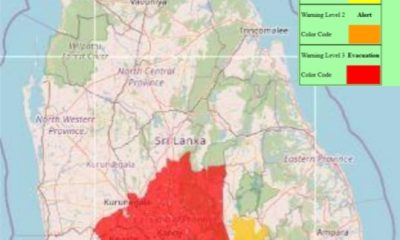
Level III landslide early warning continue to be in force in the districts of Kandy, Kegalle, Kurunegala and Matale
-
 Latest News6 days ago
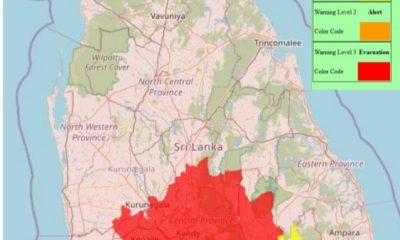
Level III landslide early warnings issued to the districts of Badulla, Kandy, Kegalle, Kurunegala, Matale and Nuwara-Eliya
-
 Features6 days ago
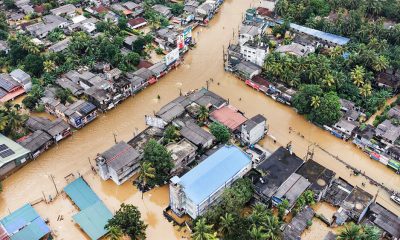
Ditwah: An unusual cyclone
-

 Latest News6 days ago
Updated Payment Instructions for Disaster Relief Contributions
-

 News2 days ago
CPC delegation meets JVP for talks on disaster response
-
 News2 days ago
A 6th Year Accolade: The Eternal Opulence of My Fair Lady
-

 Business2 days ago
LOLC Finance Factoring powers business growth