Opinion
Central Bank caught between peg and hard place

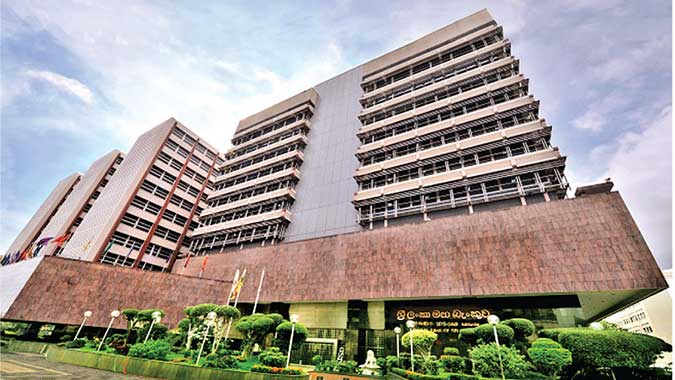
ECONOMYNEXT –Sri Lanka’s central bank has been aggressively injecting liquidity on a longer term in the past weeks reducing liquidity shortages in the banking system, which if overdone could lead to forex shortages and instability again.
The central bank has injected 340 billion rupees through term injections – largely replacing lending window operations from January 09 and overnight injections began on January 17.
While liquidity shortages beyond a certain point have no value, care should be taken to ensure that excess liquidity conditions do not re-emerge.A liquidity shortage emerges in Sri Lanka’s banking system because a pegged regime is operated, despite whatever claims to the contrary.
In past currency crises, almost all the liquidity shortages from dollar sales (losses of foreign reserves) made to defend a peg were filled permanently to maintain an artificially low policy rate.
Currency crises and balance of payments deficits do not come from defending pegs as claimed by post 1935 academics and economic bureaucrats, but from money printed through open market operations to mis-target rates and maintain an artificially low policy rate after intervening.In this currency crisis, the worst created in the history of the central bank of Sri Lanka, large volumes of liquidity were only filled overnight. This is better than filling permanently, as it may prevent banks from giving credit due to asset liability mis-matches.
The liquidity injections allow banks to lend without deposits and trigger forex shortages, expand the external current account deficit – unless they were used to buy assets from fleeing foreign investors and more forex losses.
Classical economists have called such injections ‘fictitious capital’ in a pegged regime.However US academics (led by Mercantilists like John H Williams) and economic bureaucrats who built the Bretton Woods and the International Monetary Fund, thought it was possible to do so as their knowledge of classical theory seemed to have been weak, and instead used statistics to claim that it was possible.
That it was not possible was proved with the collapse of the Bretton Woods. But third world countries – outside of East Asia and GCC – continue to believe that it is possible, with disastrous consequences and never-ending trips to the IMF.A third world country is necessarily pegged. No single anchor regime country will remain poor for long.In past currency crises, foreign reserves losses (losses of NFA) were filled permanent purchases of Treasury securities, so large liquidity shortages running into hundreds of billions of rupees were not seen.
Outside of the net foreign assets losses, in this currency crisis, due to downgrades of credit, foreign banks parked large volumes of cash in the central bank instead of lending in the overnight market in a private sterilization style activity.As a result, a few foreign banks ended up with over 300 billion rupees of excess cash.
This is similar to people withdrawing cash from the banking system and burying them in proverbial coffee tins in their backyard as reportedly happened in the US during the Great Depression.A third reason for expanding liquidity shortages was the roll-over of central bank held Treasury bills (zero coupon bonds) with interest.
As a result, Sri Lanka’s net credit to government went up, without any changes in net foreign assets – since the central bank has run out of reserves – while reserve money or at least notes in circulation fell.
Over the past few weeks, the central bank started injecting liquidity (printing money) on a longer term basis reducing the overnight shortages.In addition, the central bank also stopped banks with excess cash from depositing money in the repo window at 14.50 percent, encouraging them to lend in the overnight market or buy Treasury bills.
This has started to happen and Treasury bill yield are coming down.Any of foreign bank money, or newly injected money that is used to buy Treasury bills will end up in state banks.
The central bank should maintain a liquidity short to absorb any liquidity that foreign banks use up to buy Treasury bills.The central bank was blamed by many for the current high rates.
Though it is true that country’s chronically high rates – and the high rates of all third world soft-pegged countries – are due to monetary instability coming from the central bank’s mis-management of a soft-pegged exchange rate regime, in this currency crises the threat of a domestic debt re-structuring has also contributed.
This column has warned for many years that the central bank cannot inject liquidity to suppress rates when private credit picks up and maintain the peg. Each time it is done, forex shortages emerge and the corrective rates are higher than if the rates were allowed to go up a little naturally to balance domestic credit and savings.
After months of injections, the rupee then collapses and rates go up steeply. This has happened repeatedly and has worsened under flexible inflation targeting. A floating exchange rate regime is needed for any type of inflation targeting (to operate a domestic anchor based monetary regime the external anchor has to be abandoned).In this context caution should be exercised in the current liquidity injections.
Sri Lanka is maintaining a peg at 360 to the US dollar without any reserves at the moment. It is done by a surrender rule where forced sales are made at around that price to the central bank, injecting liquidity and selling the same dollars back to banks.
Depending to the spread, this activity can also lead to liquidity shortages. In fact, the Bank of Thailand many decades ago re-built foreign reserves devastated by Japanese driven money printing during World War II, through such a strategy.
This column has in the past advocated floating the exchange rate and re-pegging, to re-establish the credibility of the peg. Before any float the surrender rule should be removed.
Exporters are still not selling forward, indicating that there is no market credibility for the 360 peg, though the central bank has operated monetary policy consistent with such a regime through liquidity shortages and negative private credit through higher rates.
Until the credibility of the peg is fully restored, some overnight liquidity shortages should to be maintained, especially at state banks, for the following reasons, despite private credit being negative.
a) The Treasury has warned that it may still require printed money. Overnight liquidity short should be large enough to absorb any such injections.
b) The first quarter of any year is where a drought comes and electricity sector losses are financed with credit. This column in early 2021 that rates be hiked and the currency floated before the drought. (Sri Lanka has to hike rates, tourism recovery will not help end forex crisis: Bellwether)
c) The shift of private sterilized money from foreign banks to state bank DST accounts should be absorbed as mentioned before.
This is because any of the new liquidity injections, and the privately sterilized money shifting from foreign banks to state or other banks can create forex shortages if loaned to the Ceylon Petroleum Corporation or Ceylon Electricity Board, to import fuel.
Though private credit is negative and the risks of foreign shortages, re-emerging are reduced, credit given to state energy utilities hit the forex market direct.It is also not clear whether there will be any central bank profit transfers this year. In 2022 NFA was negative, but there are profits from domestic assets which if transferred as printed money can create forex shortages as they are used by the recipients.
That is why this column has advocated in the past that profit transfers be made in US dollars in the first instance and be done with it.Sri Lanka has not yet got the IMF program, therefore confidence is low and any excess liquidity can undermine the very fragile peg.
Though there has been net excess liquidity in the market for a few days, some banks were still short by 132 billion rupees.
The central bank is caught between a peg and hard a place, with a clamour by businesses to bring down rates.In past crises, rates have started to come down from about two to three months after the currency is successfully floated, private credit turns negative and budget deficits begin to narrow .
But there has been no successful float to create credibility of the exchange rate in the market, the IMF deal and the attendant inflows that accompany it are yet to come.
Therefore, despite private credit being negative, due to problems in the CEB in particular and generally the budget, caution has to be exercise in liquidity injections and it will be a prudent strategy to maintain a short overall of at least 50 billion rupees.
After the IMF program comes, or even before that if there is a successful float and re-pegging, the central bank should consider abandoning the floor repo rate.Many East Asian central banks do that and it helps economies recover faster.
The recent blocking of access to the repo window is a similar strategy, but is fraught some risks at the moment because the new liquidity is not coming from an acquisition of foreign assets but from domestic assets.
The central bank could also consider rolling over Treasuries at par through a legal change until they are sold down to re-build reserves after the IMF program comes. This will reduce the government interest bill and eliminate any risks from a single day profit transfer.
Having said that IMF programs are no solution to a trigger-happy pegged bank that injects liquidity through open market operations.
The State Bank of Pakistan is melting now within an IMF program. Sri Lanka had currency problems in both 2011 and 2018 within IMF programs which were temporarily suspended as liquidity injections were made amid high domestic credit which led to missed foreign reserve targets.Liquidity shortages lose their value beyond a certain point, so the recent injections may not be harmful.However care should be taken never to go to back to excess liquidity conditions except through net foreign asset acquisitions.




BY Dr B.J.C.Perera
Specialist Consultant Paediatrician and Honorary Senior Fellow, Postgraduate Institute of Medicine, University of Colombo, Sri Lanka.
It was indeed a catastrophe of epic proportions that occurred at the Fox Hill Supercross 2024 car racing event on 21 April 2024 in Diyathalawa. There were fatalities amongst the onlookers as well as some of the track staff and major injuries sustained by the spectators when a couple of cars went completely out of control at high speed. Seven died including a child and four Flag Marshals. There were 23 people injured, some quite severely. They were evacuated to the Diyatalawa Hospital. There probably were many contributory factors including poor visibility due to clouds of dust being made to spring up by the speeding cars. What we saw over the television screens were images of a kind of carnage that caused unbelievable chaos in the racing track itself, as well as the surrounding spectator areas. To compound matters further there was no worthwhile emergency response efforts and medical backup when the calamity occurred and some of the injured were carried away from the scene by other spectators in a most unsatisfactory and potentially harmful manner. It is generally not well appreciated that improper carrying of the injured can do more harm than good in such instances. People with neck and spinal injuries could be maimed and paralysed for life by such inappropriate transport of the afflicted.
All sporting events, especially those involving high-speed activities like car races, are exhilarating spectacles that draw crowds from far and wide. However, amidst the excitement, the thrills and even the spills, ensuring the safety of competitors as well as the spectators remains paramount. From the competitors pushing the limits to the spectators cheering them on, every individual involved must be safeguarded against potential risks. To achieve this, a meticulous approach to safety measures, including trained medical backup and comprehensive planning, is absolutely necessary. This author decided to write this piece as a sports person, in addition to having an abiding interest in Sport and Exercise Medicine.
Before delving into the necessary and mandatory arrangements that are required in such sporting scenarios, it is crucial to comprehend the inherent risks associated with sporting events, especially those involving high-speed vehicles. Car races, for instance, entail the potential for accidents resulting in injuries to drivers, pit crew members, track staff, and of course, even the spectators. The high velocities at which vehicles operate amplifies the severity of these risks. At the Fox Hill fiasco, there were many problems caused by well-meaning yet untrained individuals who even rushed to the aid of the afflicted with scant respect for their own safety with cars whizzing around at high speed.
At the outset, the absolutely essential availability and the role of trained medical backup teams should be stressed without any reservations whatsoever. All sporting events, particularly those involving motor racing, necessitate the presence of on-site medical teams, not just one but several, adequately equipped to handle various medical emergencies swiftly and effectively. These teams typically include paramedics, emergency physicians, and nurses trained in trauma care. In addition, establishing medical facilities within the vicinity of the event is vital. These facilities should be equipped with advanced medical equipment, including defibrillators, ventilators, and trauma kits, to provide immediate medical attention in case of accidents.
Seamless communication and coordination among medical personnel, event organisers, and local emergency services are imperative. This ensures that response times are minimised, and patients receive timely medical care. Nothing can be done usefully in the spur of the moment and in that sense conducting pre-event briefings and emergency response drills to familiarise the medical personnel with the event layout and potential scenarios they may encounter. This preparation enhances their readiness to tackle emergencies efficiently and ever so promptly.
There are accompanying infrastructure necessities like implementing track safety enhancements, such as impact-absorbing barriers, runoff areas, and improved fencing, which minimises the risk of serious accidents and mitigates their consequences.
Ensuring the safety of spectators is equally critical. Erecting sturdy barriers and grandstands at safe distances from the track reduces the likelihood of injuries in the event of an accident. Given the risk of fire in motor racing accidents, installing fire suppression systems along the track and in pit areas is essential. Additionally, providing fire-resistant clothing for competitors and pit crew members enhances their safety.
Enforcing stringent vehicle safety regulations, including mandatory safety features such as roll cages, fire extinguishing systems, and driver restraints, is imperative to minimise the risk of injuries to drivers. Conducting thorough risk assessments before the event enables organisers to identify potential hazards and develop effective mitigation strategies. Establishing clear emergency response protocols ensures a coordinated and efficient response to medical emergencies. These protocols should outline roles and responsibilities, communication channels, and evacuation procedures. Having well-defined evacuation procedures in place, including designated evacuation routes and assembly points, facilitates the safe and orderly evacuation of spectators and personnel in the event of an emergency. Access to medical evacuation resources, such as air ambulances and ground transport services, and four-wheel ambulances, is crucial for swiftly transporting critically injured individuals to advanced medical facilities for specialised care.
Conducting post-event debriefings allows organisers to assess the effectiveness of safety measures and emergency response protocols. Lessons learned from each event should be used to refine safety procedures for future events. Regular training sessions for medical personnel, event staff, and volunteers help to keep them abreast of the latest safety protocols and procedures. Additionally, providing education on injury prevention and first aid equips individuals with the skills necessary to respond effectively to emergencies. Embracing technological innovations, such as real-time monitoring systems and predictive analytics, can enhance safety by identifying potential hazards and enabling proactive risk mitigation measures.
As is evident from the above determinants, assuring safety in such events is a huge, HUGE, endeavour. All components of the initiative should work like a well-oiled machine to provide the best benefits to the people in need of medical assistance. Given the above-listed requirements, it is always useful to look back over the shoulder to see up to what kind of level the Fox Hill Race complied with them.
A core responsibility of any government is to ensure the safety of people and create conditions to promote the well-being of individuals and communities. The tragedy in Diyathalawa resulted in loss of life, distress, and disabilities to individuals, families, and communities, apart from a considerable loss of material resources including money, due to damage to property, compensation, and other expenses. It looks as if the powers-that-be have not been able to foresee and plan this event accordingly, which unfortunately led to this tragedy.
Has the government taken adequate steps to meet its responsibilities and duties to society and how did it do it? The entire event should be the result of adequate planning and practice by government agencies and private sector stakeholders which supported the event. Important questions need to be asked as to how approval was secured from the controlling authorities to stage this event. Did the government approve of the conduct of this event? Who approved it and were the criteria for safety fulfilled? It has been said that planning and executing the event was undertaken by the Sri Lanka Army in collaboration with the Automobile Association of Sri Lanka. One may be forgiven if one asks whether they had the adequate capacity to plan and execute such an important event.
Making the race track involves levelling off the ground, cutting trees, and ensuring proper drainage and landslide controls. Was there consultation with the Forest Department, Geological Surveys carried out, Water Resources Board consulted and the environment agencies tapped to prevent any possible disasters, short term, and long term?
One has also to ask whether the racing track was suitably laid out for an event of this nature. We saw a large amount of dust interfering with the vision of drivers. Who approved the track as suitable for such a race? Were the drivers and vehicles competent and technically sound to participate in such a race? We have now been told that some of the vehicles were not even registered with the Registrar of Motor Vehicles.
Had adequate steps been taken by the organisers to ensure the safety of all spectators by erecting barriers, having proper policing, training race officials, and ensuring communication methods to indicate danger? Did the organisations take all necessary steps to ensure there would be emergency services available in collaboration with the fire brigade, ambulance services and health authorities?
It would be to the benefit of all concerned if an independent fact-finding inquiry to ascertain the answers to the above is held urgently. Any recommendations resulting thereof should be implemented promptly for the benefit of our people. It will not be a witch-hunt but a progressive step in the right direction for the betterment of future generations.
Safety at sporting events, particularly those involving high-speed activities like car races, demands a multi-faceted approach encompassing trained medical backup, infrastructure enhancements, comprehensive emergency response plans, and continuous improvement initiatives. By prioritising safety and implementing robust measures to mitigate risks, organisers can ensure that both competitors and spectators can enjoy the excitement of sporting events with peace of mind. However, it is of the utmost importance to recognise that safety is an ongoing endeavour that requires vigilance, adaptability, and a commitment to excellence in every aspect of event management.
It was the iconic President of the USA of the distant past, Abraham Lincoln, who said, “Matters of war are too, serious, to be left in the hands of Generals”. It was heard over the grapevine that a wag had opined that “responsibility issues and legal matters are too, serious. to be left solely in the hands of certain types of powers-that-be.”

by Geewananda Gunawardana,
Ph.D.
Part one of this article appeared yesterday (22 April 2024)
The border area between Nepal and India known as the Tarai was a no-man’s land, particularly avoided by
Europeans due to risk of catching ‘Tarai fever,’ and only frequented by a few aboriginal people and hunting parties. On a hunting trip, Nepali official, Major Jaskaran Singh was told about a stone pillar near the village of Nigliva by the locals, and upon inspection he found an inscription on it. When the Nepali government asked for assistance to investigate it, Dr Lawrence Waddell instructed Dr Alois Fuhrer to assist them. Fuhrer made a rubbing of the inscription and sent it to his mentor in Germany for a translation. Waddell kept asking Fuhrer for a report but never got a response, until he saw a publication in a European journal three years later. The inscription identified the monument as the stupa of Buddha Konakamana, but Fuhrer failed to recognise its significance. Waddell knew this as the place near Kapilavastu mentioned in Chinese records, and using it as a reference, he estimated the location of Lumbini. However, Waddell failed to get government attention, and ended up publishing his findings in a Calcutta newspaper.
This publication received widespread attention, and the Bengali government finally allocated limited funds, obtained Nepali government authorisation, and assigned Fuhrer to carry out the field work. Not only did Fuhrer fail to find Lumbini, but he also ended up committing another major forgery.
In the year 1885, a local property owner, Duncan Rikketts, informed Vincent Smith, the city judge of Gorakhpur at the time, of a pillar found in his property near the village of Rummindei. Both Waddell and Smith had known about the inscription on this pillar, but the newfound evidence prompted Waddell to ask a British resident in Kathmandu to alert the Nepali team assigned to help find Lumbini. This prompted General Khadga Shamshar Jang Rana to take his team to the site and start excavations in the presence of Duncan Rikketts. The excavation uncovered a pillar 24ft high standing on a masonry platform bearing an inscription. According to Smith/Rikketts reports, Fuhrer arrived after the inscription was uncovered and made a copy. The inscription in Asokan Brahmi read:
King Piyadasi, beloved of the Devas, when anointed twenty years, came to this spot, and worshiped, saying, ‘Here was Sakyamuni born,’ and caused a stone pillar to be erected testifying ‘Here in the Lummini village was the Honourable One born.’
This could have been the final proof for the location of this all-important site, and an occasion for celebration. However, the unfortunate involvement of the unscrupulous figure Fuhrer cast doubt in some scholars’ minds about the authenticity of the inscription. Seeing the pristine condition of the inscription, and knowing Fuhrer’s reputation, some even suggested that Fuhrer may have carved the inscription himself. Others argue that he did not have sufficient in-depth knowledge of Brahmi script to accomplish that feat. Five months later, a life-size bas-relief depicting Queen Maya giving birth was found in a nearby Hindu temple providing credence to the identity of the place. Clearly, Fuhrer did not have any stone carving skills.
No further exploration or restoration took place at Lumbini for another half a century. The access to foreigners was restricted by Nepali rulers, but a German Indologist named Ernst Waldschmidt secretly visited the place in 1933. He described the place as neglected and overgrown with scattered excavations – the remnants of Sir Kaiser Shumsher’s work in 1939, and a crude but well-kept shrine built with old materials sheltering the bas-relief of the ‘nativity scene.’ In 1952, after a change in the Nepalese government, Giuseppe Tucci, a Western scholar, was allowed to visit the site. There was no proper road leading to the site and he had to ride an elephant. The site had been cleared and fields were growing in the surrounding area. He observed that the Asokan Pillar was split down the middle, likely due to a lightning strike.
Things changed in 1955 while preparing for the 2500th anniversary of the birth of Buddha the following year. King Mahendra, at the behest of Indian Prime Minister Nehru, made many improvements to public facilities, and became the first ever Nepalese king to visit Lumbini. Mahabodhi Society and the Newar community guided by Venerable Dhammaloka Mahathero, facilitated the development of Lumbini as a Buddhist pilgrimage site. This effort was continued by Aniruddha Mahathero, who studied at the Vidyalankara Pirivena and became fluent in many languages, by bringing alone Buddhists from other countries, especially from Tibet and Japan. Waldschmidt visited the site again in 1958, the same year that the Gautam Buddh Airport was opened in neighboring Siddharthanagar, formerly Bhairahawa. He described the place as barren and ordinary, without a trace of the beautiful grove of sal trees (Shorea robusta) described in the texts and was concerned about the way the antiquities were overlooked during the development work.
In 1967, U Thant, a Buddhist himself and the secretary general of the UN, visited the site. He was distressed by the desolate nature of the place and set up a UN committee to turn Lumbini into an international centre for peace. In 1968, UNESCO and UNDP got involved with restoration and development work and hired the Japanese architect, Kenzo Tange, famous for designing the Hiroshima Peace Memorial Museum to draw up plans. Lumbini was listed as a UNESCO World Heritage site in 1997.
Concerned with the impact of increased tourist and pilgrim visits and shortsighted restoration work on the antiquities, Nepal government and UNESCO jointly developed a three-year master plan to preserve and protect antiquities from future developments. This was supported by the Japanese Funds-in-Trust for UNESCO led by Professor Yukio Nishimura of Tokyo University. A team directed by Robin Coningham and Kosh Prasad Acharya was assigned to do the work.
It is well known that sites of religious importance were continuously restored and maintained by the devotees or rulers throughout history. Emperor Asoka had undertaken a massive project to restore all known Buddhist sites throughout India during his reign from 274 to 232 BCE. In modern archaeological excavations, Asoka’s constructions are considered as a landmark referred to as the Mauryan Horizon. In general, excavations would continue through post-Asokan construction layers, but would not go beyond the Mauryan Horizon as inscriptions uncovered provided definite information of the site’s history. However, in the case of Lumbini, a consensus was reached among all parties involved that excavation work may continue beyond this limit.
As expected, the archaeologists discovered several layers of construction beneath the Asokan brick foundation, the Mauryan Horizon. It became apparent that all older structures were built surrounding an empty space that was free of construction or debris. Beneath several layers of brick work, consisting of cardinally oriented curbs and platforms built around an irregular ‘Marker Stone’, they encountered the evidence of a wooden structure, and roof tiles. Based on sculptural depictions found at Bharhut, Sanchi, Bodh Gaya, Mathura, and Amravati, the archaeologist determined that what they were uncovering was the remnants of a wooden structure built around a living tree, referred to as bodhigara. Evidence for such structures were found in Sri Lanka as well, and Robert Knox had described them in his book, An Historical Relation of the Island Ceylon. In the empty space surrounded by these structures was found evidence for the presence of a tree at some point in the past.
The layer containing the potholes of the wooden structure dated to the 6th century BCE when analysed using carbon-14 and optically stimulated luminescence (OSL) techniques. This finding has significant implications on a long-standing scholarly debate: Even though the Theravada tradition stands firmly that the Parinirvana occurred in 543 BCE, the texts provide contradictory dates for it. Emperor Asoka’s consecration in the year 268 or 267 BCE is the reference point used by all documents and historians. Deepavamsa places Asoka consecration 118 years after Parinirvana whereas Atthasalini records it as 218 years. The Chinese version of Samantapasadika also places it or 118 years after it, but the Chinese “dotted record” tradition tabulates it to be 218 years. On the other hand, all Sanskrit documents place it 100 years after Parinirvana. Therefore, two chronologies -long and short – can be attested to this event based on texts. The significance of the scientific dating of the wooden structure to 6th century BCE is that it gives credence to the long chronology favoring the Theravada tradition that Prince Siduhath was born in the year 623 BCE.
The excavation by Coningham and Acharya allows for the reconstruction of the history of this most important Buddhist site. The strip of land south of the lower Himalayas spreading between Yamuna on the west and Brahmaputra River on the east is known as the Terai region, meaning the moist land. The dominant tree of the forest is the sal tree (Shorea robusta). This is not the cannon ball tree (Couroupita guianensis) that is ubiquitously found in Sri Lankan temple murals depicting the birth of Prince Siduhath. The excavation found evidence for agricultural activity around the site before the wooden structure was built. There may have been settlements or towns, and perhaps roads or trade routes connecting Kapilavastu and Devdaha. This may be the reason for Maya Devi and her entourage to take a longer Southern route to Devdaha from Kapilavastu instead of a shorter northern route. Perhaps, the marker stone was placed on the spot shortly after the event, and the wooden structure was built around the tree after the enlightenment, or the Parinirvana. By the time Emperor Asoka visited, the wooden structure may have disappeared, leaving only the marker stone. No wonder that Asoka broke down in tears, just as U Thant did two millennia later, upon seeing the site.
References: R. E. A. Coningham, Antiquity 87 (2013): 1104–1123; Charles Allen, The Search for the Buddha (2002); Etienne Lamotte, History of Indian Buddhism (1988); David Jackson, Eds. F.-K. Ehrhard and Petra Maurer (2013) Nepalica-Tibetica, vol. 1, pp. 295-314.
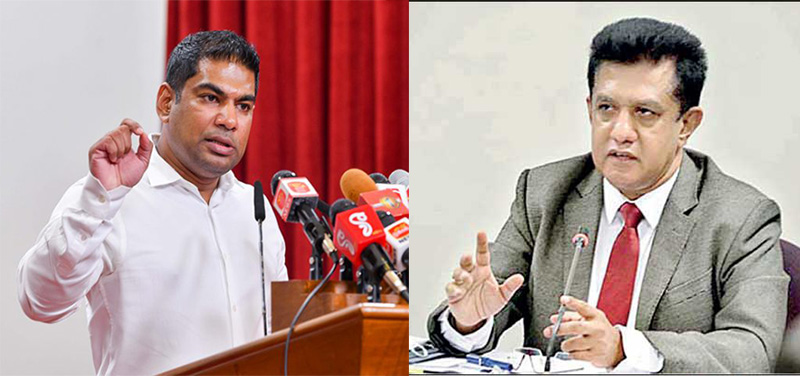
Prof. Charitha Herath’s letter to Minister of Power and Energy Kanchana Wijesekera
Having reviewed the recently published Sri Lanka Electricity Bill in the gazette, I wish to express my appreciation for the improvements made compared to previous drafts. It’s evident that considerable effort has been invested in refining this version of the bill, making it notably more comprehensive and effective.
Nevertheless, I have identified some fundamental issues in this draft as well. I believe that the forthcoming discussions on this draft will provide an opportunity to address these concerns. Given that the drafting committee appears to have finalized their positions on the matter, I suggest that the proposed changes to the bill should be subjected to scrutiny first in the Supreme Court and subsequently in the Parliament. I anticipate that certain comments and issues regarding the bill will be raised during the legal submission to the courts and in the policymaking exercise within the Parliament.
In the meantime, I wanted to share some of the issues I’ve noticed at the forefront of the bill with you. I believe your consideration, as the incumbent Minister of Power and Energy, is crucial regarding these matters. Thus, I aim to bring these issues into the national discussion surrounding this significant legislative process.
Reforms are Needed
As many would concur, I share the belief that reforms in the Power and Energy sector are paramount. This necessity has been a focal point in policy-level discussions over the past two decades. The current regulations governing the Power Sector, established under the Ceylon Electricity Board Act No. 17 of 1969 and the Electricity Act No. 20 of 2009, have highlighted numerous lapses and legal complexities. These issues have resulted in delays and, in some cases, hindered the development within the sector.
In my view, the reform requirement mentioned above was not adequately addressed by the gazetted bill on 17/4/2024. Instead, it appears to provide excessive leeway for political actors to intervene in the regulatory mechanism of the Power sector. In essence, the proposed bill could exacerbate existing difficulties in certain areas and potentially delegate decision-making power entirely to political entities.
When examining international experiences, Power sector reforms typically unfold in three stages:
1. Unbundling and corporatization, often adopting a single buyer model.
2. Establishment of a wholesale market.
3. Establishment of a retail market.
These stages represent a structured approach to reform aimed at enhancing efficiency and promoting competition within the sector.
The overarching goal of reform experiences is to transform initially highly regulated existing markets, where the regulator decides on allowed Revenue and Returns of Investment (ROI) except Power Purchasing Agreements (PPAs). Consequently, reforms typically advance towards deregulation, wherein prices are determined through competition. This progression aims to foster greater market efficiency and encourage innovation within the sector.
The gazetted Bill, dated 18/04/2024, outlines an initial proposal for unbundling and corporatization, operating within a single buyer model. Under this framework, the National System Operator (NSO) is tasked with purchasing electricity from Generation Companies (Gencos) and subsequently selling it to Distribution Companies (Discos). Additionally, the bill aims to establish a wholesale market model, wherein prices are determined through competition between Gencos and Discos. This approach signifies a pivotal step towards fostering market efficiency and promoting competition within the sector.
Given that approximately 85% of the cost of electricity in Sri Lanka is attributed to generation, it is imperative to prioritize the establishment of competition within the generation sector. Therefore, in alignment with the overarching reform expectations, it is crucial to thoroughly examine the gazetted bill. This careful scrutiny will ensure that the proposed reforms effectively address the need for competition in the generation sector, ultimately contributing to greater efficiency and affordability in the electricity market.
Some Observations
·
In order to effectively implement new reforms in the Power sector, there are two crucial aspects to consider at a conceptual level. Firstly, it is imperative to consult and involve the main stakeholders of the industry in the proposed legal and institutional reforms. It is essential to ensure that their voices are heard and that they are actively engaged in the process, regardless of whether all stakeholders are in agreement with the Bill. Secondly, it is vital to ensure that the proposed reforms adequately address the core issues at hand. Unfortunately, it is my belief that the Government has failed to address both of these highly important issues.
· The proposed bill signifies a notable shift towards increased Politicization of the Electricity Sector. It is clear that key institutions to be established under this bill will be subject to substantial political influence. For example, following the bill’s passage, entities like the Long Term Generation Expansion Plan (LTGEP), National System Operator (NSO), Power Sector Reform Secretariat (PSRS), and certain functions of the Public Utilities Commission of Sri Lanka (PUCSL) will come under direct political control.
· The independence of successor companies and corporate good governance will no longer be maintained, as management control will now rest with the Minister in Charge.
· The Electricity Reform Act no 28 of 2002(that was not implemented due to political reasons)had proposed the establishment of an independent agency known as the “Monitoring and Advisory Committee” to spearhead the reform project. This committee was intended to have the authority to advise the Minister on the appointment and dismissal of directors of the proposed successor companies. However, the recently gazetted new Bill (17/04/2024) does not include this independent mechanism, giving the Minister the power to appoint the Board of Directors of the successor companies. Furthermore, the Minister’s consent is now required for the appointment of the CEO of NSO, as outlined in Section 10 (1)(b) & (c) of the new Bill.
· The “Long Term Power System Development Plan” is formulated by NSO and then forwarded to the Minister for assessment, followed by submission to the Cabinet for approval (as outlined in the recently gazetted Bill, Section 10 (7) (b)).
· Weakening of the Regulator, PUCSL
· The PUCSL no longer holds the power to approve the “Long Term Power System Development Plan” as it has been transferred to the cabinet of Ministers, as per the newly gazetted Bill, Section 10 (7) (b).
· According to Section 3(1)(a) of the Sri Lanka Electricity Act 2009, the PUCSL has the authority to provide advice to the government on matters within their jurisdiction. Nevertheless, the recently gazetted Bill has revoked these powers and transferred them to the National Electricity Advisory Council, which will be appointed by the Minister (new Bill, Section 3 (3)).
· According to Section 20 (2) of the Bill that was gazetted in December 2023, the Regulator is required to simply “inform the Minister” when granting licenses for generation, transmission, and distribution. However, in the recently gazetted Bill, the Regulator now needs to seek the “concurrence of the Minister” before granting licenses.
· The Bill’s Section 4 (10) includes provisions that enable the bypassing of competitive tendering through the provision of incentives to select technologies.
· Illogical Timeline – proposed approach to rescind the current Acts in 6 months without any preconditions, unveiling the Transfer Plan after the specified date, and more.
· As per the new Act, the functions currently executed by CEB will be transferred to the newly formed successor companies within a maximum duration of six months. Section 1 (2) of the Act ensures automatic appointment within this timeframe.
· The process of setting up new successor companies includes drafting detailed Memorandums and Articles of Associations, reallocating assets, liabilities, and human resources, preparing new balance sheets, creating financial models for tariff development, and finalizing the incorporation of other supporting functions. The unrealistic timeline proposed in this new Act is a significant issue.
·It’s not just the impracticality, the legality of forming companies according to a transfer plan which has not been approved and gazetted is also another serious issue.
·Electricity Pricing – guaranteeing fair returns, measures to establish private monopolies, minister directs policy guidelines to encourage specific projects/technologies, no safeguards for regional trade below domestic market prices, permitting current generation licensees to engage with distribution licensees before entering the Wholesale market.
· The increase in electricity prices is tied to the requirement for a justifiable return on investment as outlined in the recently published Bill, Section 29 (5) and (9)(a). This will cause prices to rise, with the Regulator being legally required to ensure that profits are kept at a reasonable level. In times of high inflation or interest rates, electricity prices may see an uptick. The assurance of a reasonable ROI can be accomplished through tariff policies, which are not legally mandated, giving the Regulator the ability to lower profits during tough economic times.
·Granting free access and allowing Captive Generation without comprehensive study as stipulated under Section 12 could lead to the general public being unable to access cost-effective power plants, ultimately causing prices to escalate.
· Section 30(4) permits distribution licensees to engage in power purchase agreements with generation licensees before the Wholesale Electricity Market is established. The competition between distribution licensees for access to inexpensive power plants will drive up prices.
· In the December 2023 gazetted Bill, there was a provision that prohibited the acquisition of combinations of licenses without any qualifications (Section 19 (6)). However, in the new Bill, this prohibition only applies if a company owns more than 50% of the ownership. For instance, if a company owns 49% of the National Network service provider, it can still acquire a Distribution license and shares of multiple other companies as long as its ownership remains below 50%. Additionally, with the introduction of Additional Transmission Licenses, it is possible for a few companies to have control over more than 50% of the National Grid.
· Private companies have been granted Additional Transmission Licences under the new Bill, as stated in Section 14 (2). Nevertheless, Section 10 does not grant the NSO the authority to utilize transmission lines owned by these Additional Transmission Licensees in order to ensure a consistent electricity supply.
· The new Act does not include any provisions to address monopolies, anti-competitive practices, collusion, abuses of dominant position, and merger situations that could impact competition in the Electricity Industry. Rather than enacting specific laws to combat these issues, Section 28 grants the Minister the authority to issue policy guidelines.
· Additionally, as per Section 10(13)(b), it is stipulated that the terms of Electricity trading with foreign nations must receive approval from the Cabinet of Ministers. Given that this trading has a direct impact on the sovereignty of the nation, these terms should be ratified by Parliament, especially for fundamental conditions.
· The exportation of low-cost renewable energy to other countries may result in the deprivation of citizens from accessing affordable electricity. Regional trading lacks protection against prices below the local market costs.
As mentioned earlier, stakeholders and policymakers will have limited avenues for correcting the draft bill once it has been gazetted and tabled in parliament. One option is to seek determinations from the Supreme Court, while the other is to propose amendments during the Committee Stage of the parliamentary debate. However, given the current government’s approach to passing acts in parliament, there are doubts about the feasibility of making amendments through the parliamentary process. The considerable majority power of SLPP MPs is likely to heavily influence and potentially override discussions on the issue within parliament.
I urge the Honourable Minister to carefully consider the observations outlined above and take necessary steps to amend the bill accordingly from the government side. Furthermore, I strongly encourage the Honourable Minister to convey these observations to your advisory council for their expert input and recommendations in rectifying the identified issues. This proactive approach will ensure that the bill is revised comprehensively to address concerns and uphold the principles of fairness and effectiveness in the reform process.
Lastly, I would like to reference an important excerpt from Sally Hunt’s influential book, “Making Competition Work” (2002), which directly relates to the subject under discussion here: “In the US energy industry, it is fairly clear that the major problems with the old structure lay in the generation part of the industry – the efficiency of the investment decision, its regulation, and the tendency for decisions on generation to become politicised” (p. 28).
What I have observed throughout the process of drafting the new Electricity Act is a concerning trend towards politicization of decisions regarding generation. I strongly urge you to take decisive steps to halt this trend and address the issues present in the bill accordingly. It is imperative that we uphold the integrity of the legislative process and prioritize the best interests of the public and the energy sector as a whole.
Charitha Herath (MP)


Heat Index at Caution level in Northern, North-central, Western, Sabaragamuwa, Eastern, Southern and North-Western provinces and Monaragala district

Spain’s PM Pedro Sánchez halts public duties as wife faces inquiry

Showers may occur in Western, Sabaragamuwa, Central, North-western and Southern provinces


-
 Business4 days ago
CEAT Kelani launches three new radial tyre variants in ‘Orion Brawo’ range
-
Business6 days ago
Dialog-Airtel Lanka merger comes centre stage
-
Business3 days ago
Ceyline Travels and MBA Alumni Association of University of Colombo sign MOU
-
Business6 days ago
SLFEA appoints JAT as a Facilitation Partner for training painters to provide overseas employment opportunities
-
Business4 days ago
Hayleys Fabric celebrates triple triumph at ISPO Textrends Spring/Summer 2026
-
Business5 days ago
Urgent appeal from Sri Lankan exporters on rupee appreciation
-
Business3 days ago
Maldivian to launch direct flights to Colombo
-
Sports4 days ago
Hello Madras, ‘ai api kaluda?’