
News
Women Will take Lead in transforming the country into a Compassionate and Humane nation in upcoming decade- Prime Minister

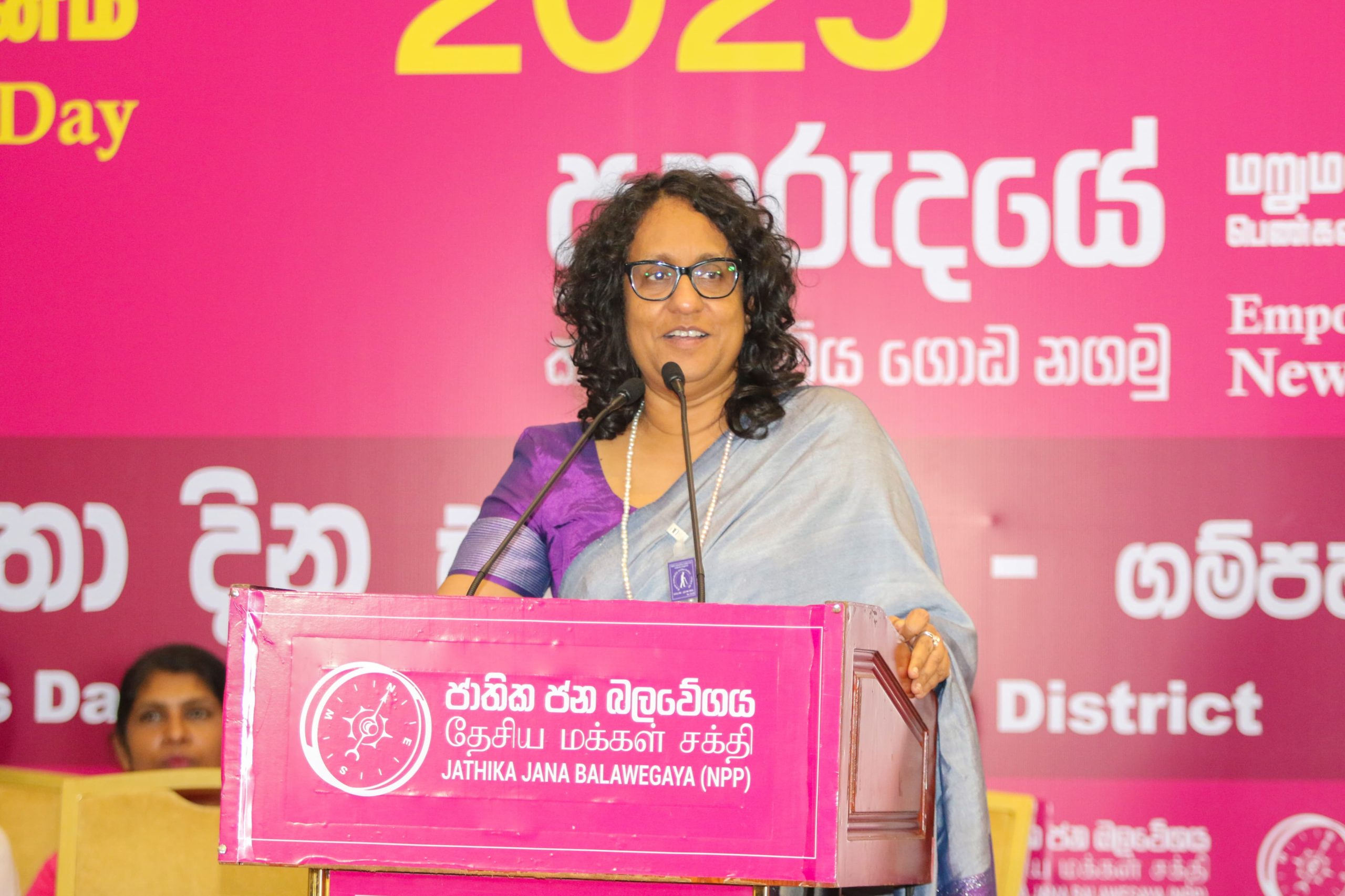
Addressing the Women’s Day celebration of Gampaha District held on Saturday (08) in Kadawatha under theme of “Rebuilding the Nation with Women’s Strength,” Prime Minister Dr. Harini Amarasuriya stated that women will take the lead in transforming this nation into a refined and humane nation in the upcoming decade.
The Prime Minister Dr. Harini Amarasuriya further stated:
Celebration of Women’s Day in this year is particularly significant as it marks the year in which the victories are achieved through years of struggles, protests and perseverance.
I will reflect how past governments used force against women when we stand for our rights. The women sitting here today were the ones who shielded me from water cannons during the protests. Savitri Paul Raj, who raised her voice for our rights back then, now holds the esteemed position of Minister of Women’s Affairs. The path to this victory was never easy.
However, this does not mark the end. The power we establish through protests does not satisfy our victory. It has only been three months since we came to power, and we have already presented a budget to implement our policies for the next nine months.
The opposition urges us to refrain from discussing the past, but the reality is that 80% of our current efforts are dedicated to fixing the problems they created. We are implementing the vision of the present government while cleaning up the mess they left.
We came into power with a vision to rebuild the nation. We work systematically, while carefully identifying the issues.
Women cannot step back now. This is a time to work harder than ever to establish the victories that have been achieved, and to move forward with the dedication of achieving goals.
Women are given significant responsibility in the upcoming local government elections to increase female representation to 25%. This is not an impossible task.
Women have stepped forward to build a new future and rewrite history. In order to achieve this social transformation, steps should be taken to initiate discussions within society, prepare the community and to take the lead.
Our role is not limited to politics or entering Parliament. Women must initiate the lead across different sectors.
When it comes to education, we need a system that produces capable e individuals who can provide the leadership this country requires. The best teachers and educational reforms are needed for that. To achieve these reforms, we must initiate discussions in society.
Even though changes can be determined through a conceptual transformation, attitudinal changes should be there in initiating the practical transformation. Just as we strive to give the best to our own children, we must work to provide the best for all children in this country. Transforming society requires collective effort, and each of us must take responsibility.
Love, compassion, solidarity, and empathy are not new concepts for women. I strongly believe that in the upcoming decade, women will take the lead in transforming this nation into a compassionate and humane country.
The event was attended by Gampaha District Leader and Minister Vijitha Herath, Member of Parliament Hemali Weerasekera, Gampaha District Executive Council Member Prof. Seetha Bandara, along with members and the representatives of the National People’s Power (NPP).


[Prime Minister’s Media Division]


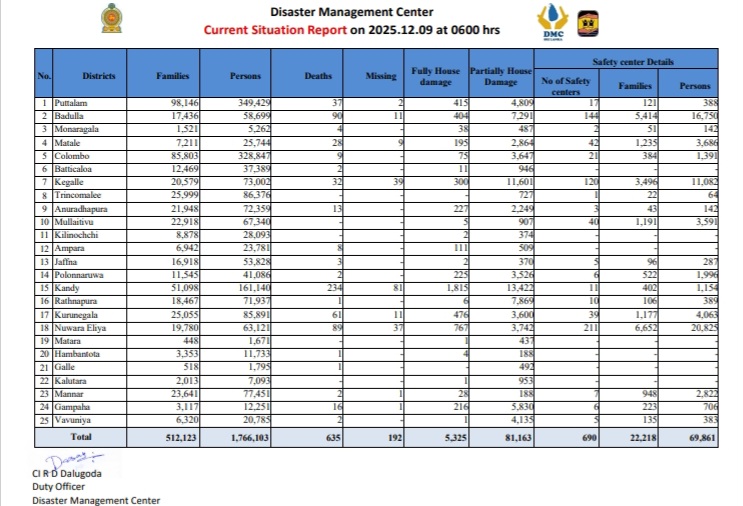
The Situation Report issued by the Disaster Management Center at 06:00 AM today [09th December] confirms that 635 persons have died due to floods and landslides that took place in the country within the past two weeks. The number of persons that are missing is 192.
News
Cyclone Ditwah leaves Sri Lanka’s biodiversity in ruins: Top scientist warns of unseen ecological disaster

Sri Lanka is facing an environmental catastrophe of unprecedented scale in the wake of Cyclone Ditwah, with leading experts warning that the real extent of the ecological destruction remains dangerously under-assessed.
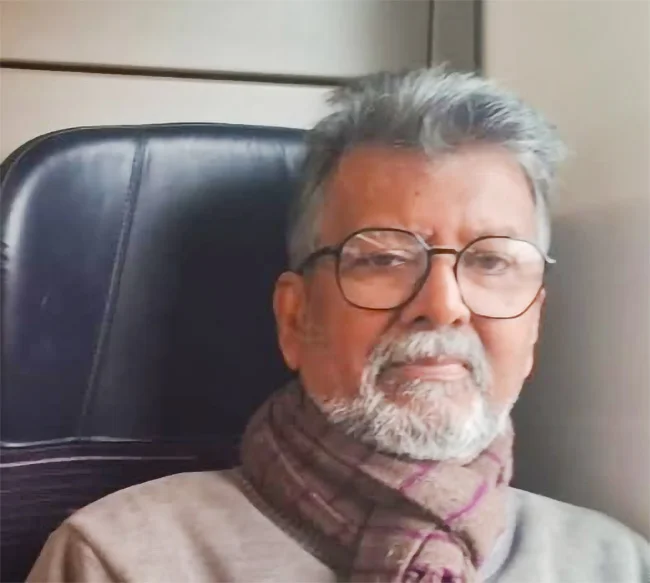
Research Professor Siril Wijesundara of the National Institute of Fundamental Studies (NIFS) issued a stark warning that Sri Lanka may be confronting one of the worst biodiversity losses in its recent history, yet the country still lacks a coordinated, scientific assessment of the damage.
“What we see in photographs and early reports is only a fraction of the devastation. We are dealing with a major ecological crisis, and unless a systematic, science-driven assessment begins immediately, we risk losing far more than we can ever restore,” Prof. Wijesundara told The Island.
Preliminary reports emerging from the field point to extensive destruction across multiple biodiversity-rich regions, including some of the nation’s most iconic and economically valuable landscapes. Massive trees have been uprooted, forest structures shattered, habitats altered beyond recognition, and countless species—many endemic—left at risk.
Among the hardest-hit areas are the Royal Botanical Gardens, Peradeniya, Seethawaka Botanical Garden, Gampaha Botanical Garden, and several national parks and forest reserves under the Department of Wildlife Conservation and the Forest Department. Officials describe scenes of collapsed canopies, destroyed research plots, and landscapes that may take decades to recover.
Prof. Wijesundara said the scale of destruction demands that Sri Lanka immediately mobilise international technical and financial support, noting that several global conservation bodies specialise in post-disaster ecological recovery.
“If we are serious about restoring these landscapes, we must work with international partners who can bring in advanced scientific tools, funding, and global best practices. This is not a situation a single nation can handle alone,” he stressed.
However, he issued a pointed warning about governance during the recovery phase.
“Post-disaster operations are vulnerable to misuse and misallocation of resources. The only safeguard is to ensure that all actions are handled strictly through recognised state institutions with legal mandates. Anything else will compromise transparency, accountability, and public trust,” Prof. Wijesundara cautioned.
He insisted that institutions such as the Department of Wildlife Conservation, the Forest Department, and the Botanical Gardens Department must take the lead—supported by credible international partners.
Environmental analysts say the coming months will be decisive. Without immediate, science-backed intervention, the ecological wounds inflicted by Cyclone Ditwah could deepen into long-term national losses—impacting everything, from tourism and heritage landscapes to species survival and climate resilience.
As Sri Lanka confronts the aftermath, the country now faces a critical test: whether it can respond with urgency, integrity, and scientific discipline to protect the natural systems that define its identity and underpin its future.
By Ifham Nizam
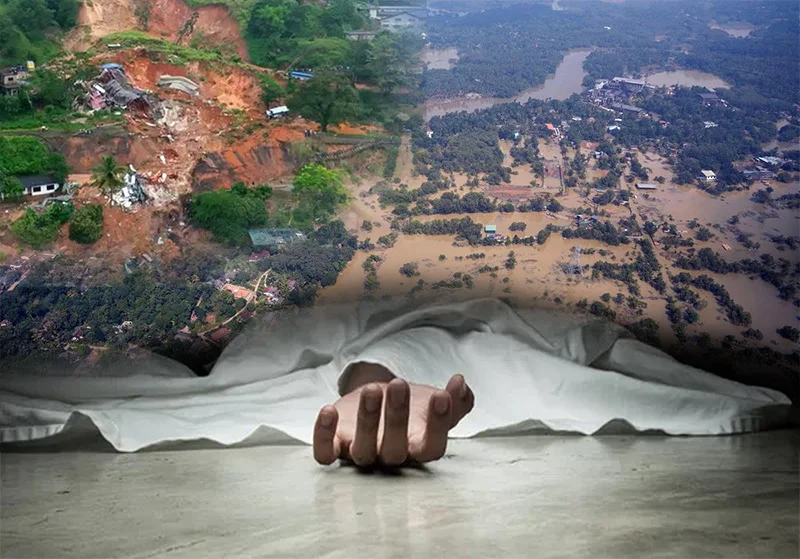
The Disaster Management Centre (DMC) has categorised 192 persons as missing as search operations were scaled down in flood-affected areas.
The death toll has been placed at 635, while the highest number of deaths was reported from the Kandy District. Kandy recorded 234 deaths.
According to the latest data, a total of 1,776,103 individuals from 512,123 families, in 25 districts, have been affected by the impact of Cyclone Ditwah.
The DMC has said that 69,861 individuals from 22,218 families are currently accommodated in 690 shelters established across the country.

A wage for housework? India’s sweeping experiment in paying women

Death toll 635 as at 06:00 AM today [09]

Heavy showers above 100 mm are likely at some places in the Northern and Eastern provinces and in Polonnaruwa district

Cyclone Ditwah leaves Sri Lanka’s biodiversity in ruins: Top scientist warns of unseen ecological disaster

Disaster: 635 bodies found so far, 192 listed as missing

More help from Pakistan

‘Dates have the highest sugar content to fight Coronavirus’

Sunday Island 27 December – Headlines

#SundayIsland 17th December – Headlines

Sunday Island – 28th March

Sunday Island Headlines – 21 March

Sunday Island – 21st February – Headlines
-
News6 days ago
Lunuwila tragedy not caused by those videoing Bell 212: SLAF
-

 News1 day ago
Over 35,000 drug offenders nabbed in 36 days
-
 News5 days ago
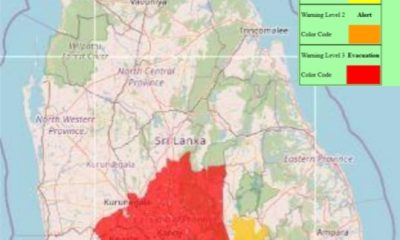
Level III landslide early warning continue to be in force in the districts of Kandy, Kegalle, Kurunegala and Matale
-

 Business3 days ago
LOLC Finance Factoring powers business growth
-

 News3 days ago
CPC delegation meets JVP for talks on disaster response
-

 News3 days ago
A 6th Year Accolade: The Eternal Opulence of My Fair Lady
-

 News1 day ago
Rising water level in Malwathu Oya triggers alert in Thanthirimale
-

 Midweek Review6 days ago
House erupts over Met Chief’s 12 Nov unheeded warning about cyclone Ditwah