
News
Japan grants $2.5M to Lanka to boost anti-corruption efforts

(UNDP) Corruption undermines sustainable development, the well-being of its citizens, their trust in institutions and tax morale. The cost of corruption is felt by all segments of society and the economy. Corruption significantly deters foreign investments, as it creates an unpredictable and risky business environment. Investors often perceive high levels of corruption as indicative of weak governance and regulatory frameworks, leading to concerns about the protection of their investments and the potential for unfair competition.
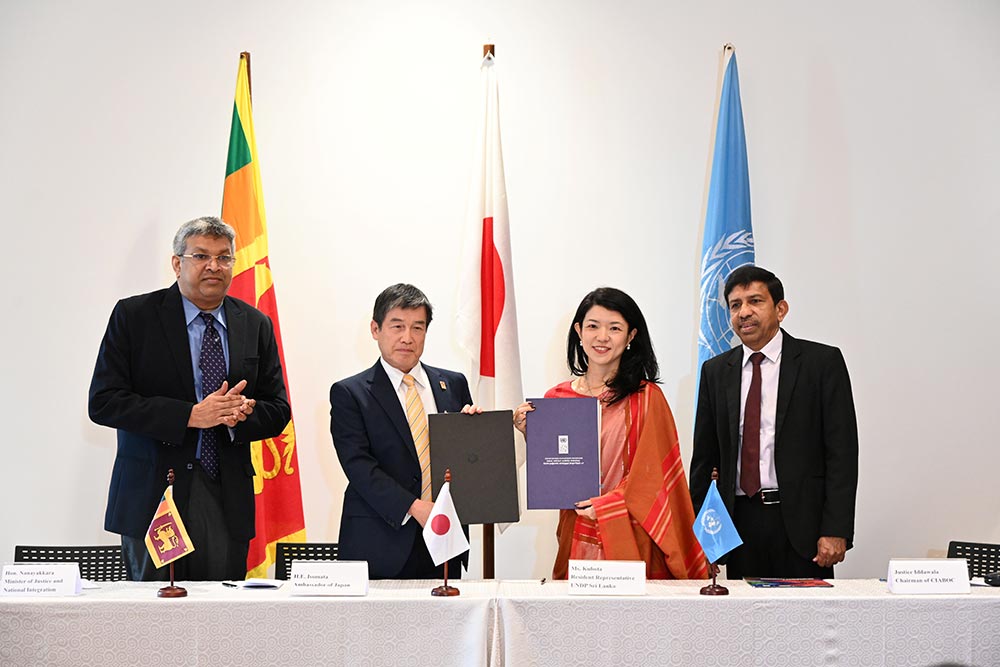
Akio Isomata, Ambassador of Japan to Sri Lanka and Azusa Kubota, Resident Representative, United Nations Development Programme (UNDP) in Sri Lanka, in the presence of the Minister of Justice, Harshana Nanayakkara, marked the launch of the new project titled ‘The Project for Promoting Prosecution of Corrupt Practices through the Establishment of Anti-corruption Mechanism’ through a signing ceremony in Colombo on Tuesday. High-level attendees present to mark the occasion included; Parinda Ranasinghe, Attorney General; K.B. Rajapakse and Chethiya Goonesekera P.C, Commissioners of Commission to Investigate Allegations of Bribery or Corruption (CIABOC); Dr. Nandika Kumanayake, Secretary to the President, along with representatives from participating agencies.
‘The Project for Promoting Prosecution of Corrupt Practices through the Establishment of Anti-corruption Mechanism’ is a 3-year project funded by the Government of Japan and implemented by the UNDP in Sri Lanka. This 2.5 million USD project aims to promote transparency, accountability, and integrity in governance and business practices through effective and institutionalised preventive mechanisms in the public and investment promotion sectors; strengthen institutions to enhance corruption related investigative processes, improve coordination with stakeholders, and ensure quality of prosecutions; and empower citizens to effectively mobilize against corruption and enhance social accountability. The project also seeks to engage and empower youth, children and journalists to actively contribute to the fight against corruption and promote a culture of integrity.
Highlighting Japan’s commitment to support the people of Sri Lanka, Akio Isomata Ambassador of Japan to Sri Lanka noted, “Eradication of corruption and good governance are a prerequisite for competitive and sustainable economy. They are an essential part of very basic infrastructure of any business society. It is imperative to regain confidence of foreign investors in the sound business environment in Sri Lanka. Japan is paying a close attention to changes happening in Sri Lanka’s social landscape with high regard for the new government’s efforts, and with high expectations. We would also like to see mid-term and long-term economic development strategy, including articulate sector-wise industrial promotion policies, under the new government, so that we can better understand what opportunities are available for making fresh investments in Sri Lanka. Japan continues to be closely together with Sri Lanka for all these future endeavors.”
Corruption undermines trust in public institutions and deters investors, leading to reduced foreign investment and stunted economic growth. It diverts resources from essential services, increasing poverty, weakening the Rule of Law, and threatening public health with inadequate medical care and sanitation. This can cause social instability, fuel unrest, and lead to violence. Ultimately, corruption threatens the safety, well-being, and sustainable development of communities.
Commenting on the role of UNDP, Azusa Kubota, Resident Representative for UNDP in Sri Lanka highlighted, “As Sri Lanka takes decisive steps to address corruption, this partnership with CIABOC facilitated by generous funding from the Government and people of Japan marks a pivotal moment in our collective journey towards good governance. The launch of this project is not just about strengthening institutions—it is about restoring public trust, empowering citizens, and creating a level playing field for all. Through the implementation of the National Anti-Corruption Action Plan 2025–2029, we aim to support a whole-of-society approach that dismantles systemic barriers for sustainable development and fosters a culture of transparency and accountability. UNDP remains committed to working alongside national partners to ensure that anti-corruption efforts are not only sustained but transformative.”
The overall objective of this Project is to ensure the effective implementation of the activities proposed in the National Anti-Corruption Action Plan 2025-2029 (NACAP), which will contribute to a more transparent, accountable, and resilient society, ultimately leading to a significant reduction in corruption and an enhancement of public trust in institutions. The project seeks to support a whole-of-society approach adopted in the NACAP to respond to corruption engendered barriers which hinder progress and development. Through targeted interventions, the project seeks to support the dismantling of these barriers, facilitating positive change and empowering communities to thrive.



The Situation Report issued by the Disaster Management Center at 06:00 AM today [09th December] confirms that 635 persons have died due to floods and landslides that took place in the country within the past two weeks. The number of persons that are missing is 192.
News
Cyclone Ditwah leaves Sri Lanka’s biodiversity in ruins: Top scientist warns of unseen ecological disaster


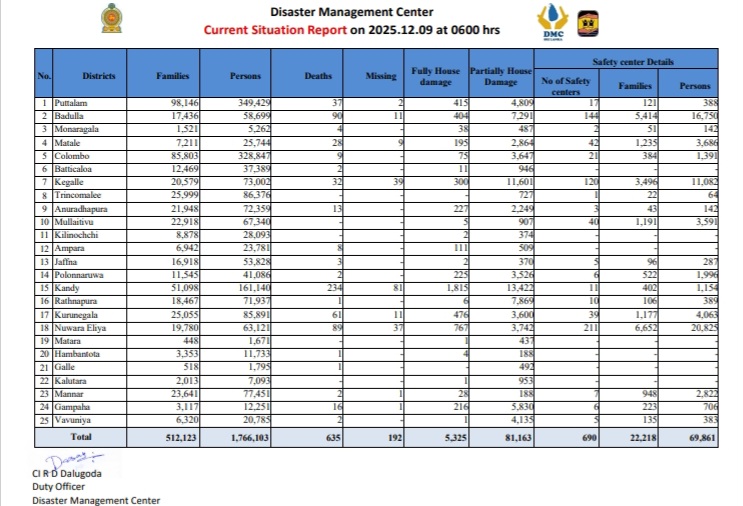
Sri Lanka is facing an environmental catastrophe of unprecedented scale in the wake of Cyclone Ditwah, with leading experts warning that the real extent of the ecological destruction remains dangerously under-assessed.
Research Professor Siril Wijesundara of the National Institute of Fundamental Studies (NIFS) issued a stark warning that Sri Lanka may be confronting one of the worst biodiversity losses in its recent history, yet the country still lacks a coordinated, scientific assessment of the damage.
“What we see in photographs and early reports is only a fraction of the devastation. We are dealing with a major ecological crisis, and unless a systematic, science-driven assessment begins immediately, we risk losing far more than we can ever restore,” Prof. Wijesundara told The Island.
Preliminary reports emerging from the field point to extensive destruction across multiple biodiversity-rich regions, including some of the nation’s most iconic and economically valuable landscapes. Massive trees have been uprooted, forest structures shattered, habitats altered beyond recognition, and countless species—many endemic—left at risk.
Among the hardest-hit areas are the Royal Botanical Gardens, Peradeniya, Seethawaka Botanical Garden, Gampaha Botanical Garden, and several national parks and forest reserves under the Department of Wildlife Conservation and the Forest Department. Officials describe scenes of collapsed canopies, destroyed research plots, and landscapes that may take decades to recover.
Prof. Wijesundara said the scale of destruction demands that Sri Lanka immediately mobilise international technical and financial support, noting that several global conservation bodies specialise in post-disaster ecological recovery.
“If we are serious about restoring these landscapes, we must work with international partners who can bring in advanced scientific tools, funding, and global best practices. This is not a situation a single nation can handle alone,” he stressed.
However, he issued a pointed warning about governance during the recovery phase.
“Post-disaster operations are vulnerable to misuse and misallocation of resources. The only safeguard is to ensure that all actions are handled strictly through recognised state institutions with legal mandates. Anything else will compromise transparency, accountability, and public trust,” Prof. Wijesundara cautioned.
He insisted that institutions such as the Department of Wildlife Conservation, the Forest Department, and the Botanical Gardens Department must take the lead—supported by credible international partners.
Environmental analysts say the coming months will be decisive. Without immediate, science-backed intervention, the ecological wounds inflicted by Cyclone Ditwah could deepen into long-term national losses—impacting everything, from tourism and heritage landscapes to species survival and climate resilience.
As Sri Lanka confronts the aftermath, the country now faces a critical test: whether it can respond with urgency, integrity, and scientific discipline to protect the natural systems that define its identity and underpin its future.
By Ifham Nizam
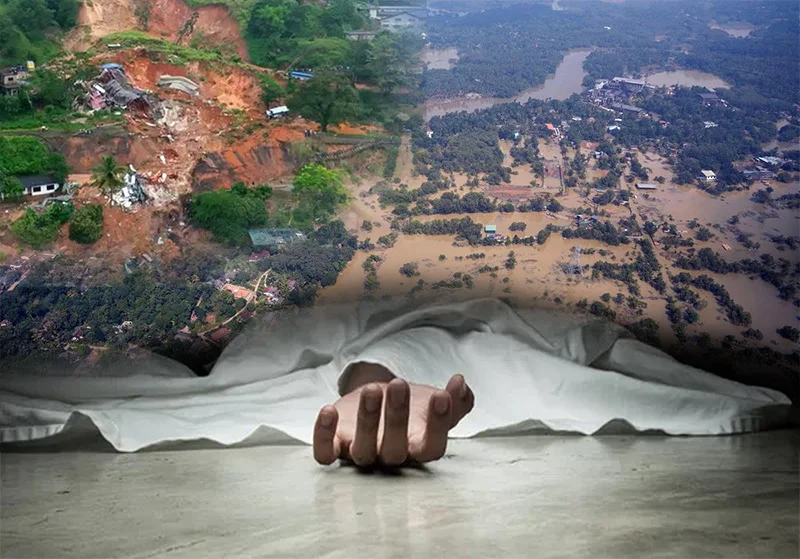
The Disaster Management Centre (DMC) has categorised 192 persons as missing as search operations were scaled down in flood-affected areas.
The death toll has been placed at 635, while the highest number of deaths was reported from the Kandy District. Kandy recorded 234 deaths.
According to the latest data, a total of 1,776,103 individuals from 512,123 families, in 25 districts, have been affected by the impact of Cyclone Ditwah.
The DMC has said that 69,861 individuals from 22,218 families are currently accommodated in 690 shelters established across the country.

A wage for housework? India’s sweeping experiment in paying women

Death toll 635 as at 06:00 AM today [09]

Heavy showers above 100 mm are likely at some places in the Northern and Eastern provinces and in Polonnaruwa district

Cyclone Ditwah leaves Sri Lanka’s biodiversity in ruins: Top scientist warns of unseen ecological disaster

Disaster: 635 bodies found so far, 192 listed as missing

More help from Pakistan

‘Dates have the highest sugar content to fight Coronavirus’

Sunday Island 27 December – Headlines

#SundayIsland 17th December – Headlines

Sunday Island – 28th March

Sunday Island Headlines – 21 March

Sunday Island – 21st February – Headlines
-
News6 days ago
Lunuwila tragedy not caused by those videoing Bell 212: SLAF
-

 News1 day ago
Over 35,000 drug offenders nabbed in 36 days
-
 News5 days ago
Level III landslide early warning continue to be in force in the districts of Kandy, Kegalle, Kurunegala and Matale
-

 Business3 days ago
LOLC Finance Factoring powers business growth
-

 News3 days ago
CPC delegation meets JVP for talks on disaster response
-

 News3 days ago
A 6th Year Accolade: The Eternal Opulence of My Fair Lady
-

 News1 day ago
Rising water level in Malwathu Oya triggers alert in Thanthirimale
-

 Midweek Review6 days ago
House erupts over Met Chief’s 12 Nov unheeded warning about cyclone Ditwah