
News
Indian scientists begin a voyage to map the Indian Ocean genome


BY S VENKAT NARAYAN
Our Special Correspondent
NEW DELHI, March 12:
A 30-member team of scientists and researchers from the National Institute of Oceanography (NIO) in Panaji (Goa) and another 30 crew members onboard its research vessel Sindhu Sadhana were flagged off at Visakhapatnam (also known as Vizag) in Andhra Pradesh on Thursday on a first-of-its-kind research project in this country to map the Indian Ocean genome.
They will spend the next three months traversing the course of over 10,000 nautical miles in the Indian Ocean on a research project to reveal the internal working of the body of the ocean at a cellular level.
The research project is aimed at understanding the biochemistry and the response of the ocean to climate change, nutrient stress and increasing pollution. Conceptualised over the last two to three years, the research project has been undertaken at a cost of INR 250 million and will take three years to complete, NIO Director Sunil Kumar Singh said.
The scientists and researchers, including six women, will sail across the Indian Ocean from India’s east coast, all the way to Australia, then onward towards Port Louis in Mauritius and up to the border of Pakistan, off India’s west coast. They will gather samples for genome mapping of microorganisms in the Indian Ocean. They will collect samples from various stretches of the ocean at an average depth of about 5 km.
Just like gene-mapping is carried out on blood samples collected from humans, the scientists will map these in the bacteria, microbes found in the ocean. The mapping of the Deoxyribonucleic acid (DNA) and Ribonucleic acid (RNA) will show the nutrients present in them, and also those lacking in different parts of the ocean.
NIO Director Singh says this will help scientists understand the internal working of the ecosystem of the Indian Ocean. The research will enable scientists to identify the factors controlling the changes in RNA, DNA in the oceans, and various stressors impacting them.
The ocean has several micronutrients like nitrates, sulphates and silicates, minerals like iron ore and zinc, and trace metals like cadmium or copper. The genome mapping will show the presence of which these microbes have adapted to, in addition to their reaction to atmospheric carbon dioxide. This will help in identifying which part of the ocean has a greater concentration of which mineral or element.
The scientists will then use these as tracers to tackle the causative factors for excess or lack of a certain mineral or element and suggest possible solutions for their mitigation. In addition, the large pool of RNA, DNA library of the oceans will be utilised for using the Indian Ocean to human benefit in the future.
According to the NIO, rapid advances in sequencing technologies and bioinformatics have enabled exploration of the ocean genome. “Exploring the ocean genome will enable an increase in the growing number of commercial biotechnology applications, extending from multiple anticancer treatments to cosmetics and industrial enzymes, to antiviral molecules… Exploration of the ocean at a genetic level will result in new insights into taxonomy and adaptive capacity that can help optimize conservation efforts,” the NIO said in its project abstract.
Trace metals like cadmium or copper are supplied to oceans via continental run-offs, atmospheric deposition, hydrothermal activities and continental shelf interaction. They are essential for ocean productivity. Scientists say that it is important to understand the interactions of trace metals with marine biota “for having a holistic understanding about nutrient cycling and productivity of the oceans”.
Apart from their reactions on marine life, isotopic forms of trace metals can be utilised to track the movement of water masses responsible for ocean circulation and as tools to study the biological, geochemical and ecosystem processes and food web analyses.
The NIO’s project is expected to generate new information about trace metals from underexplored regions of the Indian Ocean, the third largest water body in the world, covering about 20 per cent of the Earth’s water surface.
The team of scientists will stay aboard their research vessel for about 90 days with refuelling scheduled at Mauritius. The route is from Visakhapatnam to the mouth of the Ganga then down the ocean to Australia, then westward to Mauritius and up to the Pakistan border. At various stages and stretches, samples will be collected by lowering a Kevlar cable of up to 8 km with a set of 24 teflon coated bottles to collect samples. They have a capacity of 12 litres.
The Kevler cable and the Teflon coating are to ensure that metals are not inadvertently introduced into the water by the vessel itself. The samples will be collected and the bacteria will be stored at -60 degrees Celsius with the help of liquid nitrogen. While some samples will be tested at six laboratories on board the vessel, several samples will be brought back to NIO for study and analysis over the next three years.

News
Cyclone Ditwah leaves Sri Lanka’s biodiversity in ruins: Top scientist warns of unseen ecological disaster

Sri Lanka is facing an environmental catastrophe of unprecedented scale in the wake of Cyclone Ditwah, with leading experts warning that the real extent of the ecological destruction remains dangerously under-assessed.
Research Professor Siril Wijesundara of the National Institute of Fundamental Studies (NIFS) issued a stark warning that Sri Lanka may be confronting one of the worst biodiversity losses in its recent history, yet the country still lacks a coordinated, scientific assessment of the damage.
“What we see in photographs and early reports is only a fraction of the devastation. We are dealing with a major ecological crisis, and unless a systematic, science-driven assessment begins immediately, we risk losing far more than we can ever restore,” Prof. Wijesundara told The Island.
Preliminary reports emerging from the field point to extensive destruction across multiple biodiversity-rich regions, including some of the nation’s most iconic and economically valuable landscapes. Massive trees have been uprooted, forest structures shattered, habitats altered beyond recognition, and countless species—many endemic—left at risk.
Among the hardest-hit areas are the Royal Botanical Gardens, Peradeniya, Seethawaka Botanical Garden, Gampaha Botanical Garden, and several national parks and forest reserves under the Department of Wildlife Conservation and the Forest Department. Officials describe scenes of collapsed canopies, destroyed research plots, and landscapes that may take decades to recover.
Prof. Wijesundara said the scale of destruction demands that Sri Lanka immediately mobilise international technical and financial support, noting that several global conservation bodies specialise in post-disaster ecological recovery.
“If we are serious about restoring these landscapes, we must work with international partners who can bring in advanced scientific tools, funding, and global best practices. This is not a situation a single nation can handle alone,” he stressed.
However, he issued a pointed warning about governance during the recovery phase.
“Post-disaster operations are vulnerable to misuse and misallocation of resources. The only safeguard is to ensure that all actions are handled strictly through recognised state institutions with legal mandates. Anything else will compromise transparency, accountability, and public trust,” Prof. Wijesundara cautioned.
He insisted that institutions such as the Department of Wildlife Conservation, the Forest Department, and the Botanical Gardens Department must take the lead—supported by credible international partners.
Environmental analysts say the coming months will be decisive. Without immediate, science-backed intervention, the ecological wounds inflicted by Cyclone Ditwah could deepen into long-term national losses—impacting everything, from tourism and heritage landscapes to species survival and climate resilience.
As Sri Lanka confronts the aftermath, the country now faces a critical test: whether it can respond with urgency, integrity, and scientific discipline to protect the natural systems that define its identity and underpin its future.
By Ifham Nizam
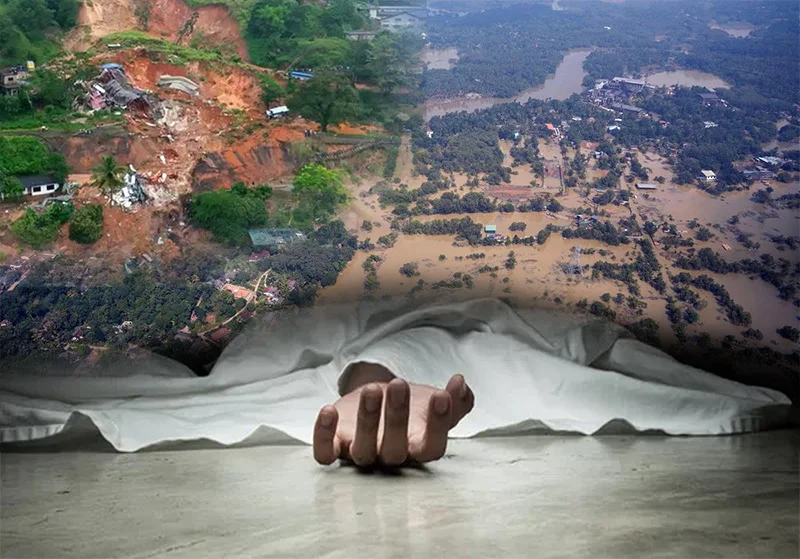
The Disaster Management Centre (DMC) has categorised 192 persons as missing as search operations were scaled down in flood-affected areas.
The death toll has been placed at 635, while the highest number of deaths was reported from the Kandy District. Kandy recorded 234 deaths.
According to the latest data, a total of 1,776,103 individuals from 512,123 families, in 25 districts, have been affected by the impact of Cyclone Ditwah.
The DMC has said that 69,861 individuals from 22,218 families are currently accommodated in 690 shelters established across the country.

The High Commission of Sri Lanka in Islamabad facilitated an air-cargo shipment carrying 20 tons of emergency relief items from there to Colombo to support communities affected by the recent cyclone and severe weather conditions, the Foreign Ministry here said.
Under the patronage of the Government of Pakistan, the National Disaster Management Authority (NDMA), in coordination with the Sri Lanka High Commission in Islamabad, has arranged another bulk shipment of relief items via SriLankan Airlines from Lahore to Colombo.
The High Commission extends its sincere appreciation to the Government of Pakistan and the National Disaster Management Authority (NDMA) for their support and coordination in dispatching the relief items.
The High Commission of Sri Lanka in Islamabad will continue to work with the respective authorities to ensure the smooth delivery and distribution of the assistance.

Cyclone Ditwah leaves Sri Lanka’s biodiversity in ruins: Top scientist warns of unseen ecological disaster

Disaster: 635 bodies found so far, 192 listed as missing

More help from Pakistan

H’tota Port says it was fully operational during extreme weather

Pathfinder EdTech Institute opens new Colombo Campus to strengthen Sri Lanka’s digital talent

Post-Ditwah relief efforts receive Chinese boost

‘Dates have the highest sugar content to fight Coronavirus’

Sunday Island 27 December – Headlines

#SundayIsland 17th December – Headlines

Sunday Island – 28th March

Sunday Island Headlines – 21 March

Sunday Island – 21st February – Headlines
-
News6 days ago
Lunuwila tragedy not caused by those videoing Bell 212: SLAF
-

 News1 day ago
Over 35,000 drug offenders nabbed in 36 days
-
 News5 days ago
Level III landslide early warning continue to be in force in the districts of Kandy, Kegalle, Kurunegala and Matale
-

 Business3 days ago
LOLC Finance Factoring powers business growth
-

 News3 days ago
CPC delegation meets JVP for talks on disaster response
-

 News3 days ago
A 6th Year Accolade: The Eternal Opulence of My Fair Lady
-

 News1 day ago
Rising water level in Malwathu Oya triggers alert in Thanthirimale
-

 Midweek Review6 days ago
House erupts over Met Chief’s 12 Nov unheeded warning about cyclone Ditwah