
Features
When Passion Became Profession: My Consulting and Training Journey

LESSONS FROM MY CAREER: SYNTHESISING MANAGEMENT THEORY WITH PRACTICE – PART 25
A Review of the Past
Looking back, I realise how each phase of my career quietly shaped the consultant and trainer I would later become. In my previous articles, I spoke about the lessons I drew from every workplace I passed through — lessons that went far beyond technical knowledge. My journey began humbly at the State Engineering Corporation as a trainee, where curiosity and enthusiasm were my greatest assets. Before long, I found myself entrusted with the Building Research Centre, later known as the National Building Research Organisation. That early responsibility taught me how knowledge and leadership could combine to create impact.
From there, my path took me to the Tyre Corporation as an Industrial Engineer, then to the Sri Lanka Institute of Co-operative Management as General Manager, and later to the Ceylon Ceramics Corporation, again as General Manager. Each move added a new layer of understanding — of people, systems, and how organisations could be guided to perform better. My education in Engineering and Accountancy, complemented by my CIMA and MBA, gave me the frameworks. But it was the experiments, challenges, and day-to-day realities of those workplaces that gave me true insight.
So when I was appointed Chairman of the Employees’ Trust Fund Board at the age of 39, I didn’t feel overwhelmed. Instead, I sensed continuity — as though all my past experiences had prepared me for what lay ahead. The knowledge I had gathered from such diverse environments allowed me to approach problems with a calm sense of foresight. My three-month training in Japan added another dimension, deepening my appreciation of discipline, efficiency, and participative management — lessons that would later influence my consulting style profoundly.
Fate, however, had more lessons in store. The ETF held a substantial shareholding in Dankotuwa Porcelain, a company struggling to survive. Since no other Board member showed much interest, I was nominated to represent the ETF — and soon found myself serving as Chairman there as well. It was an unexpected turn, but one that taught me some of the most powerful lessons of my career: how to manage transformation, build morale, and navigate the complexities of privatisation — one of Sri Lanka’s first at the time. Looking back, that experience was a bridge — from managing organisations to understanding them deeply enough to guide others.
A New Chapter Begins
By 1994, I knew my days as Chairman of the Employees’ Trust Fund Board were numbered. The political winds were shifting — the incumbent government had already lost the Southern Provincial Council, and a change at the top seemed inevitable. I had often been invited to deliver lectures and conduct seminars — usually free of charge — and I realised how much I enjoyed the process of sharing knowledge and motivating others. So, even before the elections, I made up my mind: once my tenure ended, I would take a leap into consultancy and training.
That is how Productivity Techniques (Pvt) Ltd was born — a modest beginning, but one filled with excitement and purpose. When the elections were over and my resignation duly requested, I was already prepared to embark on this new adventure with optimism and energy.
My first series of seminars
Productivity improvement techniques at the enterprise level were one of my pet subjects. I booked a hall at the Colombo Hilton and advertised a seminar on the subject. I was also involved with the Japan-Sri Lanka Technical & Cultural Association (JASTECA) at the same time. I was nominated to attend a seminar in Japan, and left for the seminar after sending out circulars for my seminar. This was the first time Sri Lanka had a seminar of this nature on productivity. While I was in Japan, my wife, who was also a director of the new company and assigned to register participants and related matters, called me and said the registrations are now well over the hall’s capacity. We booked the hall for an extra date two weeks hence and informed the overflow participants. By the time I returned, we had enough participants for three seminars on that single advertisement.
Adapting to Technology
I gradually learned PowerPoint and even bought a digital camera to take pictures for my presentations. I migrated from packages such as WordStar, dBase, and Harvard Graphics to the new Microsoft packages. Although my first productivity seminars used transparent slides on overhead projectors, the latest PowerPoint programme was a hit. Many of the middle-level participants would stare in awe at the colourful slides projected onto the screen. Hitherto, they had only seen transparencies on overhead projectors. Laptops were not standard at the time, and I remember having to cart my desktop and monitor in suitcases to the hotels where I was holding the seminars.
The hotels told me that carrying these suitcases through the lobby was too ugly, and I had to use the service entrance to take them in. It was hard work. My wife handled all the hand-outs, logistics, and registrations. Hardly a participant realised that it was a husband-and-wife operation, and would refer to my wife as “your secretary”, “your girl”, or “your assistant” and so on. I maintained it the same way, being distant while giving her instructions, lest they conclude that my relationship with my “secretary” was a little too intimate.
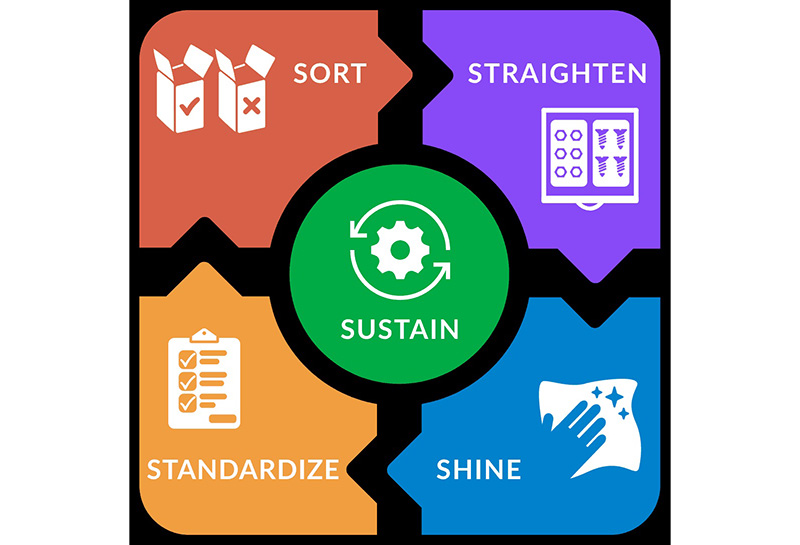
I recommend to my participants that the most effective way to implement what they learn is to do it the very next day. My lessons were broken into small, manageable chunks. I was mainly teaching practical stuff and very little theory. My recommendations had some effect, as I recall that after one 5S seminar, the Chairman of a group who had sent participants from his garment factory called me to say that, the very next day, these participants were clearing up and arranging the workplace according to 5S principles. He also commented that this was the first seminar his people had attended where they actually implemented what they learned. This boosted my enthusiasm to continue with seminars and consultancy.
The Rise of 5S
To those unfamiliar with “5S”, it is a five-step programme to improve productivity, quality, reduce costs, improve on-time delivery, and improve safety and worker morale. It originated in Japan. It ranges from simple methods to more advanced techniques and could be implemented anywhere, even in homes. It creates a better-organised individual, too. 5S was soon becoming a hit.
I was invited by one of the garment factories in a group with several factories to deliver an in-house seminar on 5S. Fortunately, I made the presentation on PowerPoint. At the end, the CEO told me that their staff were very sophisticated and would not have even bothered to listen to me if I had used the old-fashioned overhead projectors and transparencies. I was invited to many of their other factories, and this group is still one of the best in Sri Lanka for 5S.
A great success was a ceramics ornamental company where I assisted in implementing 5S. In fact, the first sight one encountered upon entering the gate before 5S was the overflowing garbage bin. All these were changed, and the factory looked beautiful and well organised after 5S. A few weeks later, I arrived at a council meeting of the Employer’s Federation when I spotted some of the union leaders from this same factory. They had come to resolve a labour dispute with the management. Despite this issue, as they saw me, they came running up to me. They told me how excellent the factory was now, and that, most of all, they feel so relaxed and less tired compared to the previous scene, when the mess and disorderliness were the first sight in the morning and caused stress and tiredness even before they started work.
At another factory in Biyagama, where I addressed their 3,000 workers on 5S, I got a call from the management representative about three weeks later. He said the workers had implemented many of the 5S elements and, being proud of what they had done, wanted me to come and see their progress. I willingly obliged and noticed their unbelievable enthusiasm. The CEO and the senior management had implemented many novel initiatives to encourage implementation and motivate the staff. Leadership was the key.
Not All Were Successful
Not all my training was successful, though. At one factory in the Panadura industrial zone where I addressed all their staff, I found that many of them had glum faces. Still, I thought some elements of the 5S concepts would sink in. About two months later, the CEO called me and complained that nothing had happened after my training. I asked him what initiatives he took to promote and implement 5S, and he said, “I did nothing. I expected them to implement” I had to advise him politely that the responsibility to implement and make it successful is his, and it is his job to make it happen. He wasn’t very pleased. I suspected it right along when I first saw the glum faces. It wasn’t a very happy workplace. The leadership was poor.
I could see this right at the start from the participants’ faces in some of the places where I undertook training. They all look glum, they never ask questions, and it seems they were brought into the training hall like ‘lambs to slaughter’. It never would take root in such an environment. I could spot the vibrancy in others, how they joke, ask for clarifications, and make comments. The most vibrant organisation I addressed was a multinational, followed by the large garment group.
I was invited to address many elite Colombo schools on 5S, but there were no results. Perhaps it was because the elite schools offered many other sports and extracurricular opportunities and other distractions, and because they came from homes with servants and ayahs, and therefore had a mentality that they have the privilege to be disorganised and messy because 5S would be done by the servants. On the other hand 5S was taken up very well in rural schools an even spread to children’s homes..
Managing Change
I always advocated that the organisation implement a change management process before suddenly calling in an expert for a seminar or training programme. Senior management should paint a future vision for the organisation and surface what is lacking and what needs improvement. The lecture or seminar should be a remedy for the gaps identified, and the staff at every level must be involved in the exercise to implement and achieve the vision.
Many of the organisations I worked with were dynamic, constantly dissatisfied with the current state of affairs, and highly motivated to adopt new concepts and techniques. Some organisations that had tried many western-oriented concepts soon found that, though they were suitable at the strategic level, they failed to impress at the operational level. The Japanese concepts and techniques were not fads but very sound concepts and techniques that could be adapted and adopted after removing the Japanese culture-specific parts, such as lifetime employment and seniority-based promotions, and strengthening the culture-free parts and techniques that fit Sri Lanka’s socio-cultural milieu. Direct transplanting may be a disaster.
Those organisations that succeeded had several common characteristics, such as strong leadership, modern human resource practices, treating employees as partners with brains rather than mere pairs of hands, and respecting employees at all levels. In fact, during a course I followed at the Toyota Institute of Management in Nagoya, the lecturers kept repeating the need to respect employees at every level.
Facing Unethical Practices
I had my share of bad experiences. I had a full repertoire of seminars, ranging from Japanese techniques such as Quality Circles, 5S, Total Productive Maintenance, and Kaizen, to others such as designing Incentive Schemes, Benchmarking, Productivity Techniques, and Ergonomics.
There was one foreign organisation which wanted me to conduct all my seminars within a few months for the benefit of their clientele. Later, I found that it was the idea of their Sri Lankan coordinator. I had no reason to suspect, and besides, I was getting paid. Later, I found that the coordinator had resigned from this organisation, set up his own training outfit, and was conducting seminars on the same subjects using all my content and hand-outs. I had spent years developing these hand-outs, using my personal experiences as examples, too. He had everything tailor-made, copying all my hard work. The worst was when I was conducting a seminar; one participant accused me of plagiarism, and I had no choice but to enlighten him that it was the other way around.
Even if I repeat a seminar a few months later, I always search the internet for new material and new concepts. While perusing the internet one day, I suddenly stumbled across a complete hand-out for my Productivity seminar, including my graphics and images, intact on one of the productivity sites. I recognised the slides at once, but only my name was missing. A well-known consultant had inserted his name after removing mine. I knew him, and he was at that time a consultant to an international organisation too. My initial fury made me prepare a letter to the international organisation. Still, later, I decided to let it pass and drop the matter. I had mentioned this to some of my friends. This hand-out was later removed from the site. Since then, I only provide PDF versions for making copies. It was a shock to learn the hard way that even the so-called respectable trainers would resort to such unethical practices.
Laughter Along the Way
I have had many humorous experiences, which made my lectures even livelier. Addressing a group of plantation managers one day, I explained the first step of 5S: the advanced concept is to reduce working capital, but the simple idea to start with is to reduce clutter and get rid of unwanted items. The first step to calming and relaxing your mind is to have an organised wallet, with only currency bills, arranged in order of denominations, and no unwanted chits or bills. I exhorted the participants to “always keep your wallet clean and organised”, whereupon one participant raised his hand and said, “My wallet is always clean, Mr Wijesinha. My wife cleans it regularly, but there is only one problem, she cleans out the cash and leaves the chits behind”.
At another seminar, I was talking about cleaning of machines and equipment daily and how that concept originated in Japan after World War 2. The war had destroyed most of the factories. When it ended, the Japanese government instructed the factories to preserve the remaining machinery and treat them like family treasures, because the population would otherwise starve. Don’t let there be breakdowns, the instructions said. Their reputation for one of the lowest machine breakdown rates in the world stemmed from this initiative.
The story goes that Japanese factory workers would clean and lubricate the machines, just as they would look after their wives. Some would even go so far as to give the machine the wife’s name and paste it on the machine. Every morning, the operator would worship the machine and look after it with tender loving care. When I told this story, one participant raised his hand and says “I would not encourage it in my factory, sir, because what if the operator has had a fight with the wife in the morning and comes to work furious with the wife, and sees the machine with the wife’s name, I am sure my machine would be in for some rough treatment“. Another participant says he, too, has reservations about this method and explains that if the regular operator is on leave and a relief operator works on the machine, it will be a problem, especially on the night shift when the regular operator would be having nightmares thinking about who is working the machine with his wife’s name on it!
I recall the first “5S” seminar I had at the Hilton. It was attended by many CEOs and other senior executives from the private sector. After the seminar, I was relaxing at home after dinner when the phone rang. It was the wife of a participant. Of course, I knew this family well. She asked me, “My husband came for your seminar today. What on earth did you teach him? Since he arrived home, he has been clearing out the cupboards and throwing out his old clothes, keeping his shoes and slippers in a particular corner. He was such a disorganised man earlier, and now he is totally transformed.
A senior administrator was appointed chairman of a government entity and I was asked to address the staff on 5S which I did. The staff received my lecture well. A week later he called me and said he had been asked to resign by the Minister after a dispute, and then he jokingly said “It’s all your fault. Remember you said the first step is to get rid of unwanted things. The Minister implemented it to the letter and got rid of me“.
I enjoyed my consultancy and training, and I am so proud that these small efforts have spread like wildfire, making many government and private-sector organisations more productive and competitive. Today, 5S is very popular nationwide.
My next episode will feature more stories about how I became involved with the government in its National Productivity drive.
by Sunil G Wijesinha
(Consultant on Productivity and Japanese Management Techniques
Retired Chairman/Director of several Listed and Unlisted companies.
Awardee of the APO Regional Award for promoting Productivity in the Asia Pacific Region
Recipient of the “Order of the Rising Sun, Gold and Silver Rays” from the Government of Japan.
He can be contacted through email at bizex.seminarsandconsulting@gmail.com)


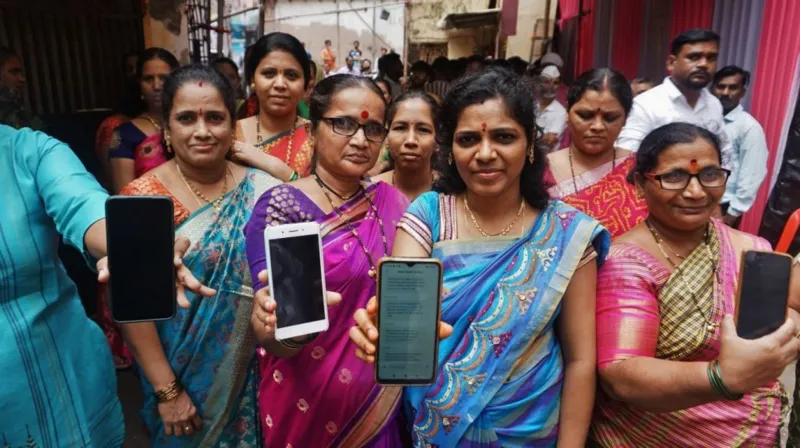
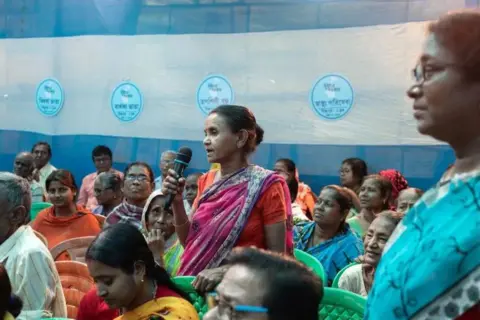
In a village in the central Indian state of Madhya Pradesh, a woman receives a small but steady sum each month – not wages, for she has no formal job, but an unconditional cash transfer from the government.
Premila Bhalavi says the money covers medicines, vegetables and her son’s school fees. The sum, 1,500 rupees ($16: £12), may be small, but its effect – predictable income, a sense of control and a taste of independence – is anything but.
Her story is increasingly common. Across India, 118 million adult women in 12 states now receive unconditional cash transfers from their governments, making India the site of one of the world’s largest and least-studied social-policy experiments.
Long accustomed to subsidising grain, fuel and rural jobs, India has stumbled into something more radical: paying adult women simply because they keep households running, bear the burden of unpaid care and form an electorate too large to ignore.
Eligibility filters vary – age thresholds, income caps and exclusions for families with government employees, taxpayers or owners of cars or large plots of land.
“The unconditional cash transfers signal a significant expansion of Indian states’ welfare regimes in favour of women,” Prabha Kotiswaran, a professor of law and social justice at King’s College London, told the BBC.
The transfers range from 1,000-2,500 rupees ($12-$30) a month – meagre sums, worth roughly 5-12% of household income, but regular. With 300 million women now holding bank accounts, transfers have become administratively simple.
Women typically spend the money on household and family needs – children’s education, groceries, cooking gas, medical and emergency expenses, retiring small debts and occasional personal items like gold or small comforts.
What sets India apart from Mexico, Brazil or Indonesia – countries with large conditional cash-transfer schemes – is the absence of conditions: the money arrives whether or not a child attends school or a household falls below the poverty line.
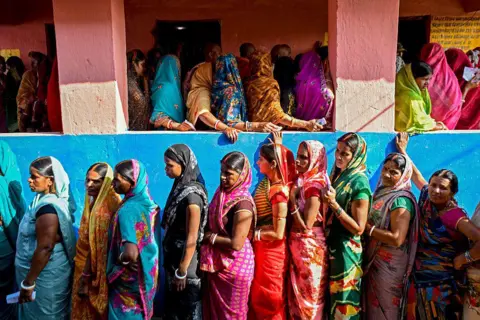
Goa was the first state to launch an unconditional cash transfer scheme to women in 2013. The phenomenon picked up just before the pandemic in 2020, when north-eastern Assam rolled out a scheme for vulnerable women. Since then these transfers have turned into a political juggernaut.
The recent wave of unconditional cash transfers targets adult women, with some states acknowledging their unpaid domestic and care work. Tamil Nadu frames its payments as a “rights grant” while West Bengal’s scheme similarly recognises women’s unpaid contributions.
In other states, the recognition is implicit: policymakers expect women to use the transfers for household and family welfare, say experts.
This focus on women’s economic role has also shaped politics: in 2021, Tamil actor-turned-politician Kamal Haasan promised “salaries for housewives”. (His fledgling party lost.) By 2024, pledges of women-focused cash transfers helped deliver victories to political parties in Maharashtra, Jharkhand, Odisha, Haryana and Andhra Pradesh.
In the recent elections in Bihar, the political power of cash transfers was on stark display. In the weeks before polling in the country’s poorest state, the government transferred 10,000 rupees ($112; £85) to 7.5 million female bank accounts under a livelihood-generation scheme. Women voted in larger numbers than men, decisively shaping the outcome.
Critics called it blatant vote-buying, but the result was clear: women helped the Bharatiya Janata Party (BJP)-led coalition secure a landslide victory. Many believe this cash infusion was a reminder of how financial support can be used as political leverage.
Yet Bihar is only one piece of a much larger picture. Across India, unconditional cash transfers are reaching tens of millions of women on a regular basis.
Maharashtra alone promises benefits for 25 million women; Odisha’s scheme reaches 71% of its female voters.
In some policy circles, the schemes are derided as vote-buying freebies. They also put pressure on state finances: 12 states are set to spend around $18bn on such payouts this fiscal year. A report by think-tank PRS Legislative Research notes that half of these states face revenue deficits – this happens when a state borrows to pay regular expenses without creating assets.
But many argue they also reflect a slow recognition of something India’s feminists have argued for decades: the economic value of unpaid domestic and care work.
Women in India spent nearly five hours a day on such work in 2024 – more than three times the time spent by men, according to the latest Time Use Survey. This lopsided burden helps explain India’s stubbornly low female labour-force participation. The cash transfers, at least, acknowledge the imbalance, experts say.
Do they work?
Evidence is still thin but instructive. A 2025 study in Maharashtra found that 30% of eligible women did not register – sometimes because of documentation problems, sometimes out of a sense of self-sufficiency. But among those who did, nearly all controlled their own bank accounts.
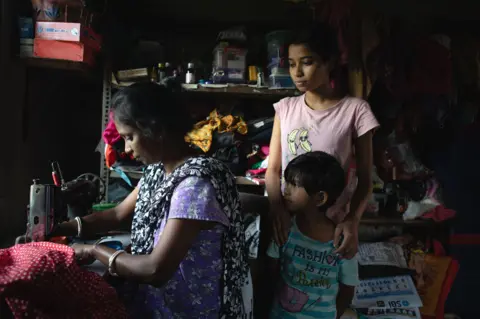
A 2023 survey in West Bengal found that 90% operated their accounts themselves and 86% decided how to spend the money. Most used it for food, education and medical costs; hardly transformative, but the regularity offered security and a sense of agency.
More detailed work by Prof Kotiswaran and colleagues shows mixed outcomes.
In Assam, most women spent the money on essentials; many appreciated the dignity it afforded, but few linked it to recognition of unpaid work, and most would still prefer paid jobs.
In Tamil Nadu, women getting the money spoke of peace of mind, reduced marital conflict and newfound confidence – a rare social dividend. In Karnataka, beneficiaries reported eating better, gaining more say in household decisions and wanting higher payments.
Yet only a sliver understood the scheme as compensation for unpaid care work; messaging had not travelled. Even so, women said the money allowed them to question politicians and manage emergencies. Across studies, the majority of women had full control of the cash.
“The evidence shows that the cash transfers are tremendously useful for women to meet their own immediate needs and those of their households. They also restore dignity to women who are otherwise financially dependent on their husbands for every minor expense,” Prof Kotiswaran says.
Importantly, none of the surveys finds evidence that the money discourages women from seeking paid work or entrench gender roles – the two big feminist fears, according to a report by Prof Kotiswaran along with Gale Andrew and Madhusree Jana.
Nor have they reduced women’s unpaid workload, the researchers find. They do, however, strengthen financial autonomy and modestly strengthen bargaining power. They are neither panacea nor poison: they are useful but limited tools, operating in a patriarchal society where cash alone cannot undo structural inequities.
What next?
The emerging research offers clear hints.
Eligibility rules should be simplified, especially for women doing heavy unpaid care work. Transfers should remain unconditional and independent of marital status.
But messaging should emphasise women’s rights and the value of unpaid work, and financial-literacy efforts must deepen, researchers say. And cash transfers cannot substitute for employment opportunities; many women say what they really want is work that pays and respect that endures.
“If the transfers are coupled with messaging on the recognition of women’s unpaid work, they could potentially disrupt the gendered division of labour when paid employment opportunities become available,” says Prof Kotiswaran.
India’s quiet cash transfers revolution is still in its early chapters. But it already shows that small, regular sums – paid directly to women – can shift power in subtle, significant ways.
Whether this becomes a path to empowerment or merely a new form of political patronage will depend on what India chooses to build around the money.
[BBC]


Some opposition political parties have striven hard to turn the disaster of Cyclone Ditwah to their advantage. A calamity of such unanticipated proportions ought to have enabled all political parties to come together to deal with this tragedy. Failure to do so would indicate both political and moral bankruptcy. The main issue they have forcefully brought up is the government’s failure to take early action on the Meteorological Department’s warnings. The Opposition even convened a meeting of their own with former President Ranil Wickremesinghe and other senior politicians who shared their experience of dealing with natural and man-made disasters of the past, and the present government’s failures to match them.
The difficulty to anticipate the havoc caused by the cyclone was compounded by the neglect of the disaster management system, which includes previous governments that failed to utilise the allocated funds in an open, transparent and corruption free manner. Land designated as “Red Zones” by the National Building Research Organisation (NBRO), a government research and development institute, were built upon by people and ignored by successive governments, civil society and the media alike. NBRO was established in 1984. According to NBRO records, the decision to launch a formal “Landslide Hazard Zonation Mapping Project (LHMP)” dates from 1986. The institutional process of identifying landslide-prone slopes, classifying zones (including what we today call “Red Zones”), and producing hazard maps, started roughly 35 to 40 years ago.
Indonesia, Thailand and the Philippines which were lashed by cyclones at around the same time as Sri Lanka experienced Cyclone Ditwah were also unprepared and also suffered enormously. The devastation caused by cyclones in the larger southeast Asian region is due to global climate change. During Cyclone Ditwah some parts of the central highlands received more than 500 mm of rainfall. Official climatological data cite the average annual rainfall for Sri Lanka as roughly 1850 mm though this varies widely by region: from around 900 mm in the dry zones up to 5,000 mm in wet zones. The torrential rains triggered by Ditwah were so heavy that for some communities they represented a rainfall surge comparable to a major part of their typical annual rainfall.
Inclusive Approach
Climate change now joins the pantheon of Sri Lanka’s challenges that are beyond the ability of a single political party or government to resolve. It is like the economic bankruptcy, ethnic conflict and corruption in governance that requires an inclusive approach in which the Opposition, civil society, religious society and the business community need to join rather than merely criticise the government. It will be in their self-interest to do so. A younger generation (Gen Z), with more energy and familiarity with digital technologies filled, the gaps that the government was unable to fill and, in a sense, made both the Opposition and traditional civil society redundant.
Within hours of news coming in that floods and landslides were causing havoc to hundreds of thousands of people, a people’s movement for relief measures was underway. There was no one organiser or leader. There were hundreds who catalysed volunteers to mobilise to collect resources and to cook meals for the victims in community kitchens they set up. These community kitchens sprang up in schools, temples, mosques, garages and even roadside stalls. Volunteers used social media to crowdsource supplies, match donors with delivery vehicles, and coordinate routes that had become impassable due to fallen trees or mudslides. It was a level of commitment and coordination rarely achieved by formal institutions.
The spontaneous outpouring of support was not only a youth phenomenon. The larger population, too, contributed to the relief effort. The Galle District Secretariat sent 23 tons of rice to the cyclone affected areas from donations brought by the people. The Matara District Secretariat made arrangements to send teams of volunteers to the worst affected areas. Just as in the Aragalaya protest movement of 2022, those who joined the relief effort were from all ethnic and religious communities. They gave their assistance to anyone in need, regardless of community. This showed that in times of crisis, Sri Lankans treat others without discrimination as human beings, not as members of specific communities.
Turning Point
The challenge to the government will be to ensure that the unity among the people that the cyclone disaster has brought will outlive the immediate relief phase and continue into the longer term task of national reconstruction. There will be a need to rethink the course of economic development to ensure human security. President Anura Kumara Dissanayake has spoken about the need to resettle all people who live above 5000 feet and to reforest those areas. This will require finding land for resettlement elsewhere. The resettlement of people in the hill country will require that the government address the issue of land rights for the Malaiyaha Tamils.
Since independence the Malaiyaha Tamils have been collectively denied ownership to land due first to citizenship issues and now due to poverty and unwillingness of plantation managements to deal with these issues in a just and humanitarian manner beneficial to the workers. Their resettlement raises complex social, economic and political questions. It demands careful planning to avoid repeating past mistakes where displaced communities were moved to areas lacking water, infrastructure or livelihoods. It also requires political consensus, as land is one of the most contentious issues in Sri Lanka, tied closely to identity, ethnicity and historical grievances. Any sustainable solution must go beyond temporary relocation and confront the historical exclusion of the Malaiyaha Tamil community, whose labour sustains the plantation economy but who remain among the poorest groups in the country.
Cyclone Ditwah has thus become a turning point. It has highlighted the need to strengthen governance and disaster preparedness, but it has also revealed a different possibility for Sri Lanka, one in which the people lead with humanity and aspire for the wellbeing of all, and the political leadership emulates their example. The people have shown through their collective response to Cyclone Ditwah that unity and compassion remain strong, which a sincere, moral and hardworking government can tap into. The challenge to the government will be to ensure that the unity among the people that the cyclone disaster has brought will outlive the immediate relief phase and continue into the longer term task of national reconstruction with political reconciliation.
by Jehan Perera

 In the short span of two or three days, Cyclone Ditwah, has caused a disaster of unprecedented proportions in our midst. Lashing away at almost the entirety of the country, it has broken through the ramparts of centuries old structures and eroded into areas, once considered safe and secure.
The rains may have passed us by. The waters will recede, shops will reopen, water will be in our taps, and we can resume the daily grind of life. But it will not be the same anymore; it should not be. It should not be business as usual for any of us, nor for the government. Within the past few years, Sri Lankan communities have found themselves in the middle of a crisis after crisis, both natural and man-made, but always made acute by the myopic policies of successive governments, and fuelled by the deeply hierarchical, gendered and ethnicised divides that exist within our societies. The need of the hour for the government today is to reassess its policies and rethink the directions the country, as a whole, has been pushed into.
Neoliberal disaster
In the aftermath of the devastation caused by the natural disaster, fundamental questions have been raised about our existence. Our disaster is, in whole or in part, the result of a badly and cruelly managed environment of the planet. Questions have been raised about the nature of our economy. We need to rethink the way land is used. Livelihoods may have to be built anew, promoting people’s welfare, and by deveoloping a policy on climate change. Mega construction projects is a major culprit as commentators have noted. Landslides in the upcountry are not merely a result of Ditwah lashing at our shores and hills, but are far more structural and points to centuries of mismanagement of land. (https://island.lk/weather-disasters-sri-lanka-flooded-by-policy-blunders-weak-enforcement-and-environmental-crime-climate-expert/). It is also about the way people have been shunted into lands, voluntarily or involuntarily, that are precarious, in their pursuit of a viable livelihood, within the limited opportunities available to them.
Neo liberal policies that demand unfettered land appropriation and built on the premise of economic growth at any expense, leading to growing rural-urban divides, need to be scrutinised for their short and long term consequences. And it is not that any of these economic drives have brought any measure of relief and rejuvenation of the economy. We have been under the tyrannical hold of the IMF, camouflaged as aid and recovery, but sinking us deeper into the debt trap. In October 2025, Ahilan Kadirgamar writes, that the IMF programme by the end of 2027, “will set up Sri Lanka for the next crisis.” He also lambasts the Central Bank and the government’s fiscal policy for their punishing interest rates in the context of disinflation and rising poverty levels. We have had to devalue the rupee last month, and continue to rely on the workforce of domestic workers in West Asia as the major source of foreign exchange. The government’s negotiations with the IMF have focused largely on relief and infrastructure rebuilding, despite calls from civil society, demanding debt justice.
The government has unabashedly repledged its support for the big business class. The cruelest cut of them all is the appointment of a set of high level corporate personalities to the post-disaster recovery committee, with the grand name, “Rebuilding Sri Lanka.” The message is loud and clear, and is clearly a slap in the face of the working people of the country, whose needs run counter to the excessive greed of extractive corporate freeloaders. Economic growth has to be understood in terms that are radically different from what we have been forced to think of it as, till now. For instance, instead of investment for high profits, and the business of buy and sell in the market, rechannel investment and labour into overall welfare. Even catch phrases like sustainable development have missed their mark. We need to think of the economy more holistically and see it as the sustainability of life, livelihood and the wellbeing of the planet.
The disaster has brought on an urgency for rethinking our policies. One of the areas where this is critical is education. There are two fundamental challenges facing education: Budget allocation and priorities. In an address at a gathering of the Chamber of Commerce, on 02 December, speaking on rebuilding efforts, the Prime Minister and Minister of Education Dr. Harini Amarasuriya restated her commitment to the budget that has been passed, a budget that has a meagre 2.4% of the GDP allocated for education. This allocation for education comes in a year that educational reforms are being rolled out, when heavy expenses will likely be incurred. In the aftermath of the disaster, this has become more urgent than ever.
Reforms in Education
The Government has announced a set of amendments to educational policy and implementation, with little warning and almost no consultation with the public, found in the document, Transforming General Education in Sri Lanka 2025 published by the Ministry of Education. Though hailed as transformative by the Prime Minister (https://www.news.lk/current-affairs/in-the-prevailing-situation-it-is-necessary-to-act-strategically-while-creating-the-proper-investments-ensuring-that-actions-are-discharged-on-proper-policies-pm), the policy is no more than a regurgitation of what is already there, made worse. There are a few welcome moves, like the importance placed on vocational training. Here, I want to raise three points relating to vital areas of the curriculum that are of concern: 1) streamlining at an early age; relatedly 2) prioritising and privileging what is seen as STEM education; and 3) introducing a credit-based modular education.
1. A study of the policy document will demonstrate very clearly that streamlining begins with Junior Secondary Education via a career interest test, that encourages students to pursue a particular stream in higher studies. Further Learning Modules at both “Junior Secondary Education” and “Senior Secondary Education Phase I,” entrench this tendency. Psychometric testing, that furthers this goal, as already written about in our column (https://kuppicollective.lk/psychometrics-and-the-curriculum-for-general-education/) points to the bizarre.
2. The kernel of the curriculum of the qualifying examination of Senior Secondary Education Phase I, has five mandatory subjects, including First Language, Math, and Science. There is no mandatory social science or humanities related subject. One can choose two subjects from a set of electives that has history and geography as separate subjects, but a Humanities/Social Science subject is not in the list of mandatory subjects. .
3. A credit-based, modular education: Even in universities, at the level of an advanced study of a discipline, many of us are struggling with module-based education. The credit system promotes a fragmented learning process, where, depth is sacrificed for quick learning, evaluated numerically, in credit values.
Units of learning, assessed, piece meal, are emphasised over fundamentals and the detailing of fundamentals. Introducing a module based curriculum in secondary education can have an adverse impact on developing the capacity of a student to learn a subject in a sustained manner at deeper levels.
Education wise, and pedagogically, we need to be concerned about rigidly compartmentalising science oriented, including technological subjects, separately from Humanities and Social Studies. This cleavage is what has led to the idea of calling science related subjects, STEM, automatically devaluing humanities and social sciences. Ironically, universities, today, have attempted, in some instances, to mix both streams in their curriculums, but with little success; for the overall paradigm of education has been less about educational goals and pedagogical imperatives, than about technocratic priorities, namely, compartmentalisation, fragmentation, and piecemeal consumerism. A holistic response to development needs to rethink such priorities, categorisations and specialisations. A social and sociological approach has to be built into all our educational and development programmes.
National Disasters and Rebuilding Community
In the aftermath of the disaster, the role of education has to be rethought radically. We need a curriculum that is not trapped in the dichotomy of STEM and Humanities, and be overly streamlined and fragmented. The introduction of climate change as a discipline, or attention to environmental destruction cannot be a STEM subject, a Social Science/Humanities subject or even a blend of the two. It is about the vision of an economic-cum-educational policy that sees the environment and the economy as a function of the welfare of the people. Educational reforms must be built on those fundamentals and not on real or imagined short term goals, promoted at the economic end by neo liberal policies and the profiteering capitalist class.
As I write this, the sky brightens with its first streaks of light, after days of incessant rain and gloom, bringing hope into our hearts, and some cheer into the hearts of those hundreds of thousands of massively affected people, anxiously waiting for a change in the weather every second of their lives. The sense of hope that allows us to forge ahead is collective and social. The response by Lankan communities, to the disaster, has been tremendously heartwarming, infusing hope into what still is a situation without hope for many. This spirit of collective endeavour holds the promise for what should be the foundation for recovery. People’s demands and needs should shape the re-envisioning of policy, particularly in the vital areas of education and economy.
(Sivamohan Sumathy was formerly attached to the Department of English, University of Peradeniya)
Kuppi is a politics and pedagogy happening on the margins of the lecture hall that parodies, subverts, and simultaneously reaffirms social hierarchies.
By Sivamohan Sumathy

Level III landslide warnings issued to to the Districts of Kandy, Kegalle, Kurunegala and Matale extended

G.C.E. Advanced Level Examination will resume on 12th January 2026

The aim of the Government is to ensure a safe life for every citizen -President

A wage for housework? India’s sweeping experiment in paying women

Death toll 635 as at 06:00 AM today [09]

Heavy showers above 100 mm are likely at some places in the Northern and Eastern provinces and in Polonnaruwa district

‘Dates have the highest sugar content to fight Coronavirus’

Sunday Island 27 December – Headlines

#SundayIsland 17th December – Headlines

Sunday Island – 28th March

Sunday Island Headlines – 21 March

Sunday Island – 21st February – Headlines
-
News7 days ago
Lunuwila tragedy not caused by those videoing Bell 212: SLAF
-

 News2 days ago
Over 35,000 drug offenders nabbed in 36 days
-
 News5 days ago
Level III landslide early warning continue to be in force in the districts of Kandy, Kegalle, Kurunegala and Matale
-
 Business4 days ago
LOLC Finance Factoring powers business growth
-

 News4 days ago
CPC delegation meets JVP for talks on disaster response
-
 News4 days ago
A 6th Year Accolade: The Eternal Opulence of My Fair Lady
-

 News2 days ago
Rising water level in Malwathu Oya triggers alert in Thanthirimale
-

 Midweek Review7 days ago
House erupts over Met Chief’s 12 Nov unheeded warning about cyclone Ditwah