
Latest News
Establish a clean local governance system that utilizes budget allocations transparently for rural development – Prime Minister

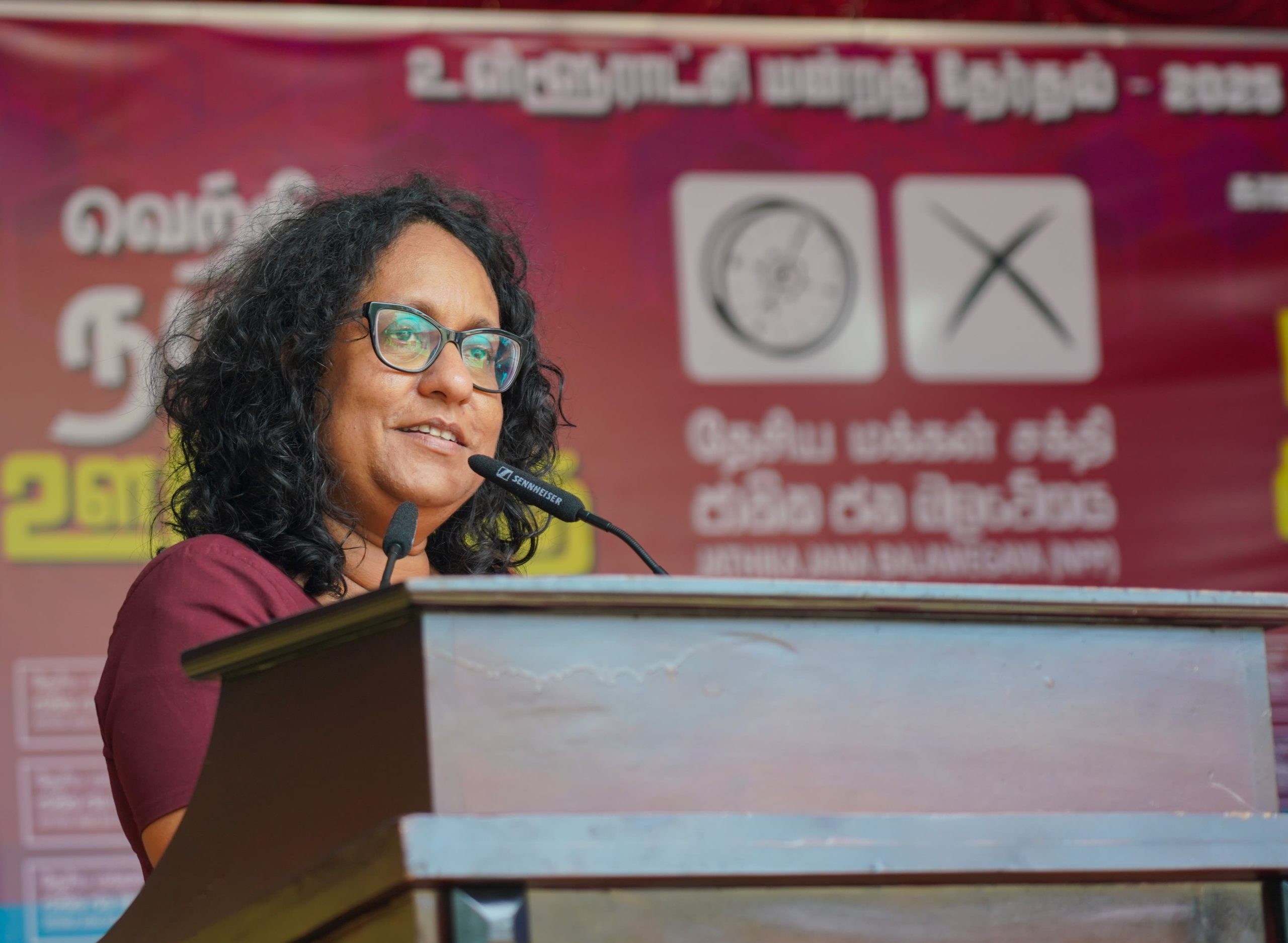
Prime Minister Dr. Harini Amarasuriya emphasized the need to create a clean and transparent local governance system that effectively utilizes budget allocations for the development of the rural sector.
The Prime Minister made these remarks on Friday (11), while addressing a public gathering held in Karainagar, Jaffna.
Elaborating further, Prime Minister Dr. Harini Amarasuriya stated:
“This country is rich in cultures and traditions and inherits a proud and prosperous history.
I was deeply moved by the information I received about Karainagar. In 1977, around 80,000 people lived in Karainagar. Unfortunately, today it has dropped to 10,500. What happened to the rest of the people? I also learned that Karainagar is home to some of the most educated and affluent people in the Northern Province. That is remarkable, but the issue is that in order to become educated and affluent, they were forced to leave Karainagar.
Who speaks up for those who could not leave? They are citizens of this country. They are entitled to have equal rights like everyone else does. As the Minister of Education, I looked into the education system in Karainagar. I discovered that there are only two schools offering GCE Advanced Level education, with only two teachers in total. Further, all students who have passed the Grade 5 scholarship exam leave Karainagar to Jaffna for further education.
Throughout the years, there were changes in governments, presidents, national administrations, members of parliament representing this area, local governments, and provincial councils but what have they done to uplift the education of Karainagar?
Education increases the value and prosperity of people. Education is vital as such. However, for decades, the right to quality education has been denied in this region. In addition, there is a severe water issue in Karainagar. Access to clean drinking water which is a basic necessity, comes at a cost to the people in this area. Various projects launched to provide drinking water have never been completed due to corruption.
Further, roads, transport, and many other services have deteriorated due to corruption at the local level. It has been 16 years since the war ended yet what has changed since then? Why have these issues not yet been resolved? That is why the upcoming local government elections are crucial. Problems at the local level must be addressed by local government institutions.
About a month ago, the first budget of the government has been passed.
A significant allocation has been made from all local government accounts for education, health, public welfare, infrastructure, and public transportation but these funds must be spent wisely.
For that, local governments should be governed by clean and corruption-free environment. Therefore, in this election, we must elect people who are free from corruption and dedicated to the purpose of serving the public. In 2024, the people of this country made a decision to change the political culture. On May 6, they will once again have the opportunity to make a thoughtful decision for the betterment of their villages.”
During the event, Minister of Fisheries . Ramalingam Chandrasekar also shared his views:
“Today, the political morality we expected for has taken root in this country. Unlike the governance of previous governments, the representatives of the current government are not exercising the power to enrich themselves and some even do not hesitate to return their salaries for serving the general public.
Today, the public service receives higher salaries, and the government is taking possible decision for the benefit of the people.”
The event was attended by Members of Parliament Shri Bhavan and Ilayankumar, along with other public representatives and candidates contesting in the local government elections.


[Prime Minister’s Media Division]





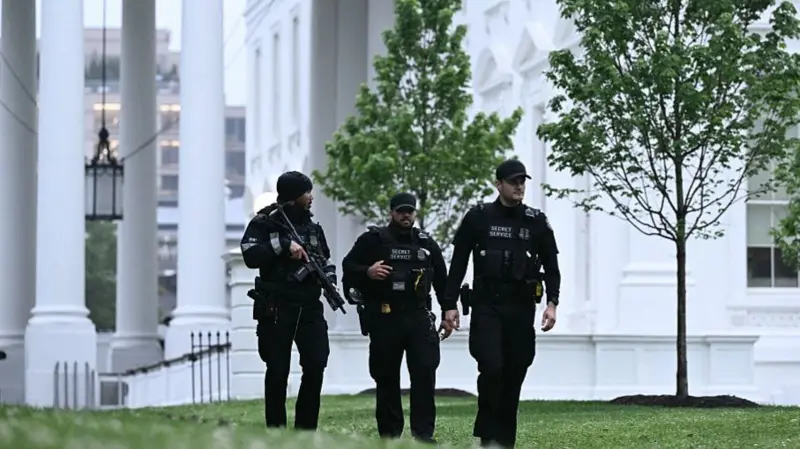
A person has been shot and killed after they opened fire outside the White House, the US Secret Service has confirmed.
Here is their statement in full:
Shortly after 6 p.m Saturday an individual in the area on 17th street and Pennsylvania Avenue pulled a weapon from his bag and began firing.
Secret Service police returned fire striking the suspect who was transported to an area hospital where he was pronounced deceased. During the shooting one bystander was also struck by gunfire.
No injuries were sustained by officers. The President was in the White House during the incident, however no protectees or operations were impacted.
This incident remains under investigation and additional information will be released as it becomes available.
Suspect identified, had previous ‘run-in’ with Secret Service – CBSpublished at 07:45
The deceased suspect in the shooting outside the White House has been identified as 21-year-old Nasire Best, a person familiar with the investigation has told BBC’s US media partner CBS.
The source said that the suspect had already been arrested by the US Secret Service in July 2025 after he tried to gain entry to the White House, and he was sent to a psychiatric ward for mental health issues in the aftermath.
(BBC)

US President Donald Trump says an agreement with Iran has been “largely negotiated” and details will be announced soon.
The deal would include the reopening of the Strait of Hormuz, he said on Saturday, without giving further details.
Iranian foreign ministry spokesman Esmaeil Baqaei earlier told state television that US and Iranian positions had been converging in the last week, but warned that did not mean agreements would be reached on key issues and accused the Americans of “contradictory statements”.
On social media, Trump said he had a “very good call” with the leaders of Saudi Arabia, the United Arab Emirates, Qatar, and others about a “Memorandum of Understanding pertaining to PEACE”.
“An agreement has been largely negotiated, subject to finalization between the United States of America, the Islamic Republic of Iran, and the various other Countries, as listed,” Trump said.
“Final aspects and details of the deal are currently being discussed, and will be announced shortly.”
He also said he had a call on Saturday with Israeli Prime Minister Benjamin Netanyahu, which “went very well”.
The president has not given any further details on the deal, but has insisted any agreement would “absolutely” prevent Iran from obtaining a nuclear weapon.
Later, Pakistan’s Prime Minister Shehbaz Sharif said: “I congratulate President Donald Trump on his extraordinary efforts to pursue peace,” and said the phone call had been “very useful and productive”.
Pakistan has been helping to negotiate a peace deal serving as an intermediary.
“We hope to host the next round of talks very soon,” he wrote in the statement on X.
The US and Israel launched wide-ranging strikes on Iran on 28 February, sparking conflict across the Middle East. Iran responded by launching attacks on Israel and US-allied states in the Gulf.
A ceasefire in Iran was agreed in early April, and since then Washington and Tehran have engaged in talks over a long-term peace deal.
(BBC)

A firefighting 87 from Sophie Devine propelled New Zealand from a perilous 11 for 4 to a series-squaring 14-run win over England in the second women’s T20I at Canterbury.
Already 1-0 down, the tourists were floored when reduced to 5 for 3 after just nine balls – New Zealand women’s joint-lowest total at the fall of the third wicket in T20Is. They were soon four-down in the fourth over, with Linsey Smith (3 for 25) the main destructor, her wily brand of slow left-arm swing flummoxing the top-order.
But Devine and Maddy Green, who finished with an unbeaten 56, rebuilt and then thrived with a stand of 159 that ended with Devine’s run-out off the final ball of the innings. Regular boundaries between the pair – including eight sixes, six belonging to Devine – ensured the White Ferns did not miss out on the pristine batting conditions that convinced Melie Kerr to bat first upon winning the toss.
Yet again, Lauren Bell struck early, dismissing Izzy Gaze at the end of her first over having dismissed Georgia Plimmer with the first delivery of the opening T20I at Derby. Plimmer had the ignominy of a second successive golden duck when she got herself in a tangle to gift Smith a return catch at the start of the second over.
But Devine and Green ensured there would be no repeat of Wednesday’s defeat. England’s target would have been more manageable than 171 had Smith effected a run-out at the non-striker’s end midway through her third over. It would have removed Devine for 48 in the 14th over. She struck 39 off her remaining 20 deliveries, and faced 57 in all before finally being run out off the final ball of the innings.
In their reply, England were above the rate at the three-over mark, before Sophia Dunkley was dismissed for a sprightly 26, caught off Nensi Patel, the offspinner having come into the side for Suzie Bates. And New Zealand assumed the ascendancy out when set batters Heather Knight (25) and Maia Bouchier (38) were dismissed in successive balls. It was particularly poor from Bouchier, finding the fielder at long-on off Patel, moments after Knight had been run out after aborting a second run following a late call.
The silver lining for England was that it brought hard-hitting allrounders Freya Kemp and Dani Gibson to the middle at the death. But with too much to do, Gibson was bowled by Bree Illing hacking across the line, and Kemp became the returning Leah Tahuhu’s 99th T20I wicket when caught on the fence with 23 required from the final four balls.
Issy Wong, replacing Sophie Ecclestone who sat out with a tight hamstring, lofted the final ball over the boundary, reducing the margin of defeat. It also highlighted a key difference between the two teams. It was only England’s second six, a third as many as Devine had managed on her own.
It has been an excellent first half of the year for Sophie Devine. Saturday’s half-century was her third so far, giving her an average of 48 and strike rate of 160. While admittedly from a sample size of seven innings, it speaks to a player focussed on going out on a high. This, by the way, is now her second highest score in the format, slotting beneath her sole century that came against South Africa in February 2020.
“I’m enjoying my cricket and enjoying what I got left on the international scene,” Devine said during her play of the match interview. Retiring at the end of the upcoming T20 World Cup, the 36-year old is gunning for the sweetest swansong.
England were warned. On, Wednesday in a similar situation, Devine counterpunched with 45 off 22 from less shakier ground – 13 for 2 in the fourth over – but was eventually trimmed off by Gibson. The difference this time was not just carrying on (especially after the life on 48) but support from Green.
Overall, Green was only striking at 116.66, but she was able to keep pace for the majority of what became a maiden T20I fifty. A brace of fours off Gibson took Green to 40 from 33, with Devine watching on appreciatively, 49 off 38 to her name.
That passage of five overs after the midway point saw Green momentarily assume senior status, facing 20 balls and allowing Devine to rest up for the final push. The 56 from the final four overs – 36 from Devine – put New Zealand out of reach.
“It shows the growth of the group, to be able to rebound and put on a score of 170,” said Devine. “For a player like me, I don’t really like sitting back. It’s a real battle of the mind regarding what you want to do.
“We absorbed pressure really well and then to be able to throw it back at them at the backend. It’s a fantastic confidence builder for us.”
“They keep playing her like a left-arm spinner – they need to play her like a left-arm swing bowler,” said Nasser Hussain on Sky. In between celebrating Linsey Smith’s brilliance, the former England men’s captain could not help but lament New Zealand’s approach to the left-arm orthodox bowler.
At the toss, Melie Kerr revealed the team had discussed how best to combat Smith, who had flummoxed them in the first T20I. Stifling the White Ferns scoring with 15 dot balls among her 1 for 10 from her four overs, Kerr called for a more pro-active batting effort. Unfortunately, she could not lead as an example, out LBW sweeping her first ball, gifting Smith her second dismissal halfway through her first over.
Blindly swinging across the line was surely not a tactic formulated in that brainstorming session. Georgia Plimmer attacking immediately – a return catch giving her a second successive golden duck – was a little too cavalier. Left-hander Brooke Halliday’s initiative to advance down the crease felt the most appropriate, even if that resulted in a straight-forward catch to Bouchier at long off.
Smith has added a fascinating dimension to the XI, as a slower bowler thriving in the Powerplay. And it will be interesting to see how opposition batters deal with her at the World Cup given what she’s shown weeks out from the competition.
As Hussain states, tit may be wiser to approach Smith like a seamer, focussing on the movement through the air rather than what revolutions there may be on the ball. It was instructive that Smith, speaking ahead of the match, revealed she had got into trouble for forgetting to shine the ball, a regular habit for quick bowlers but something this spinner needs to remember to do given how much of her success is coming from swing rather than spin.
Most of New Zealand’s right-handers have had little joy trying to heave her to leg. Might more joy be found making room and accessing the off side, particularly during the first six overs? We may be about to find out.
That England happened to get their strongest hitters Kemp and Gibson out there in the final five overs was entirely by accident. Even if they had managed the 52 required from the remaining 26 deliveries, the main takeaway should be that they were introduced too late.
Angling for what would have been the side’s third-highest successful chase, perhaps Kemp, off the back of a handy 31 not out to finish the first T20I, should have come out when Capsey fell at the end of the 10th over. At that point, the required rate was on the verge of reaching double figures. By the time Knight and Bouchier were done, both allrounders would have had to strike at 200 to get England home.
Head coach Charlotte Edwards has focussed on adding more heft to the lower order, and there is no doubt Kemp and Gibson give opponents something to fear. Gibson’s consecutive fours off Devine sparked momentary jeopardy before her dismissal. A little more time and maybe her and/or Kemp could have made a decisive impact. No doubt an error to learn from ahead of the main event next month.
Brief scores:
New Zealand Women 170 for 5 in 20 overs (Sophie Devine 87, Maddy Green 56*; Lauren Bell 1-22, Linsey Smith 3-25) beat England Women 156 for 6 in 20 overs (Sophia Dunkley 26, Alice Capsey 22, Maia Bouchier 38, Heather Knight 25, Freya Kemp 14, Dani Gibson 12; Bree Illing 1-27, Nensi Patel 2-25, Lea Tahuhu 1-32, Mellie Kerr 1-28) by 14 runs
[Cricinfo]

Suspect killed after shooting at Secret Service agents, officials confirm

Trump says Iran deal ‘largely negotiated’ including reopening Strait of Hormuz

Showers expected in the Western, Sabaragamuwa and North-western provinces and in Galle, Matara, Kandy and Nuwara-Eliya districts

Devine intervention brings New Zealand back from the dead

US police responding to dozens of shots fired near the White House

Sri Lanka cricket finances ‘greater than feared’: interim chief

‘Dates have the highest sugar content to fight Coronavirus’

Sunday Island 27 December – Headlines

#SundayIsland 17th December – Headlines

Sunday Island – 28th March

Sunday Island Headlines – 21 March

Sunday Island – 21st February – Headlines
-

 Features4 days ago
Octopus, Leech, and Snake: How Sri Lanka’s banks feast while the nation starves
-
 News3 days ago
Steps underway to safeguard Sri Lanka’s maritime heritage
-

 Opinion3 days ago
Murder of Ehelepola family, Bogambara Wewa and Sightings of Wangediya
-

 Editorial3 days ago
A play without its protagonist
-

 Sports4 days ago
Sri Lanka women’s volleyball team ready for Central Asian challenge
-
 Midweek Review4 days ago
Overall SLPP failures stressed in new Aragalaya narrative
-

 Opinion2 days ago
The need to reform Buddhist ecclesiastical order
-

 Latest News5 days ago
At least 100 dead in Ebola outbreak in DR Congo, official says