
Foreign News
COP28 president denies UAE using UN climate talks to seek oil deals


The Emirati president of the United Nations Climate conference in Dubai has denied reports that he has used his role at the negotiations to pursue fossil fuel deals.
A day before the talks are due to begin, Sultan al-Jaber, who also is the CEO of the state-run Abu Dhabi National Oil Co (Adnoc), rejected allegations made in a joint investigation by the Centre for Climate Reporting (CCR) and the BBC.
“These allegations are false, not true, incorrect and not accurate,” Jaber told reporters on Wednesday ahead of the talks, which will draw world leaders and tens of thousands of delegates to Dubai over the next two weeks.
“It’s an attempt to undermine the work of the COP28 presidency. Let me ask you a question: Do you think the UAE or myself will need the COP or the COP presidency to go and establish business deals or commercial relationships?”
Leaked documents show that al-Jaber planned to discuss fossil fuel deals in bilateral meetings at the climate summit, the CCR said.
According to the non-profit investigative journalism group, the documents include more than 150 pages of briefings prepared by COP28 staff from July to October and obtained by the CCR and the BBC from an anonymous whistle-blower. The documents indicate Jaber planned to discuss commercial interests with almost 30 countries, according to CCR.
The briefing notes, detailed in reports published on Monday, signalled Adnoc’s willingness to work with countries including China, Germany and Egypt to develop oil and gas projects.
Former United States Vice President Al Gore, who won the Nobel Peace Prize for campaigning for climate action, said the allegations “have confirmed some of the worst fears” around al-Jaber while former UN climate chief Christiana Figueres said the COP28 host had been caught “red-handed”.
“The global community’s gaze is fixed upon these leaders, expecting them to embody the very essence of integrity, untainted by bias and national or personal gain,” said Tasneem Essop, executive director of Climate Action Network International. “Any deviation from this path represents a betrayal of the trust placed in them by the world and a failure in their duty to future generations,” she wrote on X.
Al-Jaber, a 50-year-old longtime climate envoy, is a trusted confidant of the leader of the United Arab Emirates, Mohammed bin Zayed Al Nahyan. He’s been behind tens of billions of dollars spent or pledged towards renewable energy in the UAE.
He has weathered other controversies over alleged conflict of interest since being appointed COP28 president this year, including calls from US and European lawmakers for his replacement.
Supporters, including US climate envoy John Kerry, said al-Jaber is uniquely positioned to broker compromise at the COP28 talks, where world leaders will be confronted by their lack of progress in curbing global warming in a record-breaking hot year.
Reining in the use of fossil fuels and carbon emissions are expected to top the agenda of the 13-day summit, which runs from Thursday until December 12. International funding to help countries adapt to climate change will also be hotly debated as developing countries have been demanding more contributions from industrialised nations.
An ambitious loss and damages fund agreed last year to support poorer nations to help manage the negative effects of climate change is also going to be one of the main issues covered in the negotiations. World leaders agreed to the fund at COP27 last year, but they have failed to reach consensus on the most important questions of all – which states will pay into it and how much
The CCR said that alongside the briefings, it has also seen emails and meeting records “which raise serious questions about the COP28 team’s independence from Adnoc”.
“Please, for once, respect who we are, respect what we have achieved over the years and respect the fact that we have been clear, open and clean and honest and transparent on how we want to conduct this COP process,” al-Jaber said.
(Aljazeera)

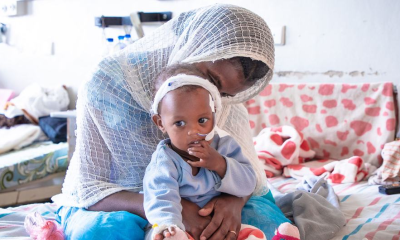









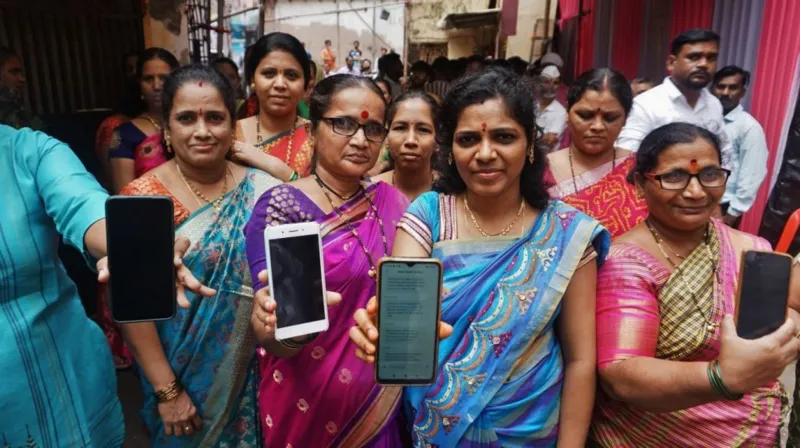
In a village in the central Indian state of Madhya Pradesh, a woman receives a small but steady sum each month – not wages, for she has no formal job, but an unconditional cash transfer from the government.
Premila Bhalavi says the money covers medicines, vegetables and her son’s school fees. The sum, 1,500 rupees ($16: £12), may be small, but its effect – predictable income, a sense of control and a taste of independence – is anything but.
Her story is increasingly common. Across India, 118 million adult women in 12 states now receive unconditional cash transfers from their governments, making India the site of one of the world’s largest and least-studied social-policy experiments.
Long accustomed to subsidising grain, fuel and rural jobs, India has stumbled into something more radical: paying adult women simply because they keep households running, bear the burden of unpaid care and form an electorate too large to ignore.
Eligibility filters vary – age thresholds, income caps and exclusions for families with government employees, taxpayers or owners of cars or large plots of land.
“The unconditional cash transfers signal a significant expansion of Indian states’ welfare regimes in favour of women,” Prabha Kotiswaran, a professor of law and social justice at King’s College London, told the BBC.
The transfers range from 1,000-2,500 rupees ($12-$30) a month – meagre sums, worth roughly 5-12% of household income, but regular. With 300 million women now holding bank accounts, transfers have become administratively simple.
Women typically spend the money on household and family needs – children’s education, groceries, cooking gas, medical and emergency expenses, retiring small debts and occasional personal items like gold or small comforts.
What sets India apart from Mexico, Brazil or Indonesia – countries with large conditional cash-transfer schemes – is the absence of conditions: the money arrives whether or not a child attends school or a household falls below the poverty line.
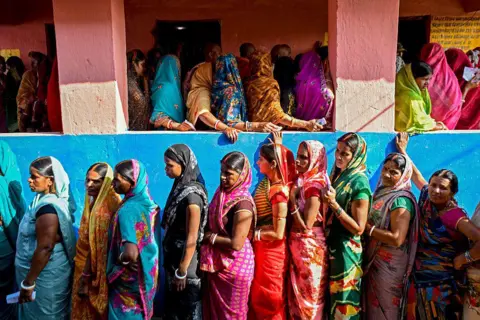
Goa was the first state to launch an unconditional cash transfer scheme to women in 2013. The phenomenon picked up just before the pandemic in 2020, when north-eastern Assam rolled out a scheme for vulnerable women. Since then these transfers have turned into a political juggernaut.
The recent wave of unconditional cash transfers targets adult women, with some states acknowledging their unpaid domestic and care work. Tamil Nadu frames its payments as a “rights grant” while West Bengal’s scheme similarly recognises women’s unpaid contributions.
In other states, the recognition is implicit: policymakers expect women to use the transfers for household and family welfare, say experts.
This focus on women’s economic role has also shaped politics: in 2021, Tamil actor-turned-politician Kamal Haasan promised “salaries for housewives”. (His fledgling party lost.) By 2024, pledges of women-focused cash transfers helped deliver victories to political parties in Maharashtra, Jharkhand, Odisha, Haryana and Andhra Pradesh.
In the recent elections in Bihar, the political power of cash transfers was on stark display. In the weeks before polling in the country’s poorest state, the government transferred 10,000 rupees ($112; £85) to 7.5 million female bank accounts under a livelihood-generation scheme. Women voted in larger numbers than men, decisively shaping the outcome.
Critics called it blatant vote-buying, but the result was clear: women helped the Bharatiya Janata Party (BJP)-led coalition secure a landslide victory. Many believe this cash infusion was a reminder of how financial support can be used as political leverage.
Yet Bihar is only one piece of a much larger picture. Across India, unconditional cash transfers are reaching tens of millions of women on a regular basis.
Maharashtra alone promises benefits for 25 million women; Odisha’s scheme reaches 71% of its female voters.
In some policy circles, the schemes are derided as vote-buying freebies. They also put pressure on state finances: 12 states are set to spend around $18bn on such payouts this fiscal year. A report by think-tank PRS Legislative Research notes that half of these states face revenue deficits – this happens when a state borrows to pay regular expenses without creating assets.
But many argue they also reflect a slow recognition of something India’s feminists have argued for decades: the economic value of unpaid domestic and care work.
Women in India spent nearly five hours a day on such work in 2024 – more than three times the time spent by men, according to the latest Time Use Survey. This lopsided burden helps explain India’s stubbornly low female labour-force participation. The cash transfers, at least, acknowledge the imbalance, experts say.
Do they work?
Evidence is still thin but instructive. A 2025 study in Maharashtra found that 30% of eligible women did not register – sometimes because of documentation problems, sometimes out of a sense of self-sufficiency. But among those who did, nearly all controlled their own bank accounts.
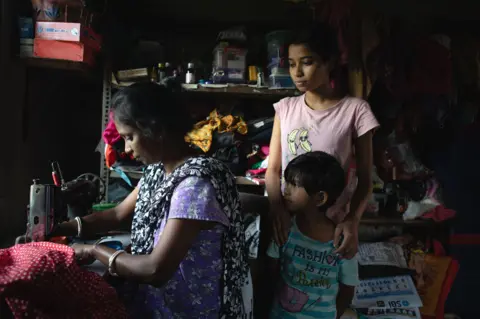
A 2023 survey in West Bengal found that 90% operated their accounts themselves and 86% decided how to spend the money. Most used it for food, education and medical costs; hardly transformative, but the regularity offered security and a sense of agency.
More detailed work by Prof Kotiswaran and colleagues shows mixed outcomes.
In Assam, most women spent the money on essentials; many appreciated the dignity it afforded, but few linked it to recognition of unpaid work, and most would still prefer paid jobs.
In Tamil Nadu, women getting the money spoke of peace of mind, reduced marital conflict and newfound confidence – a rare social dividend. In Karnataka, beneficiaries reported eating better, gaining more say in household decisions and wanting higher payments.
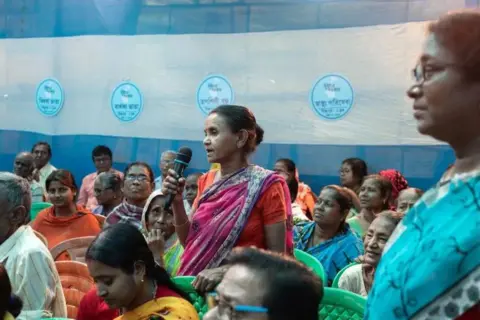
Yet only a sliver understood the scheme as compensation for unpaid care work; messaging had not travelled. Even so, women said the money allowed them to question politicians and manage emergencies. Across studies, the majority of women had full control of the cash.
“The evidence shows that the cash transfers are tremendously useful for women to meet their own immediate needs and those of their households. They also restore dignity to women who are otherwise financially dependent on their husbands for every minor expense,” Prof Kotiswaran says.
Importantly, none of the surveys finds evidence that the money discourages women from seeking paid work or entrench gender roles – the two big feminist fears, according to a report by Prof Kotiswaran along with Gale Andrew and Madhusree Jana.
Nor have they reduced women’s unpaid workload, the researchers find. They do, however, strengthen financial autonomy and modestly strengthen bargaining power. They are neither panacea nor poison: they are useful but limited tools, operating in a patriarchal society where cash alone cannot undo structural inequities.
What next?
The emerging research offers clear hints.
Eligibility rules should be simplified, especially for women doing heavy unpaid care work. Transfers should remain unconditional and independent of marital status.
But messaging should emphasise women’s rights and the value of unpaid work, and financial-literacy efforts must deepen, researchers say. And cash transfers cannot substitute for employment opportunities; many women say what they really want is work that pays and respect that endures.
“If the transfers are coupled with messaging on the recognition of women’s unpaid work, they could potentially disrupt the gendered division of labour when paid employment opportunities become available,” says Prof Kotiswaran.
India’s quiet cash transfers revolution is still in its early chapters. But it already shows that small, regular sums – paid directly to women – can shift power in subtle, significant ways.
Whether this becomes a path to empowerment or merely a new form of political patronage will depend on what India chooses to build around the money.
[BBC]
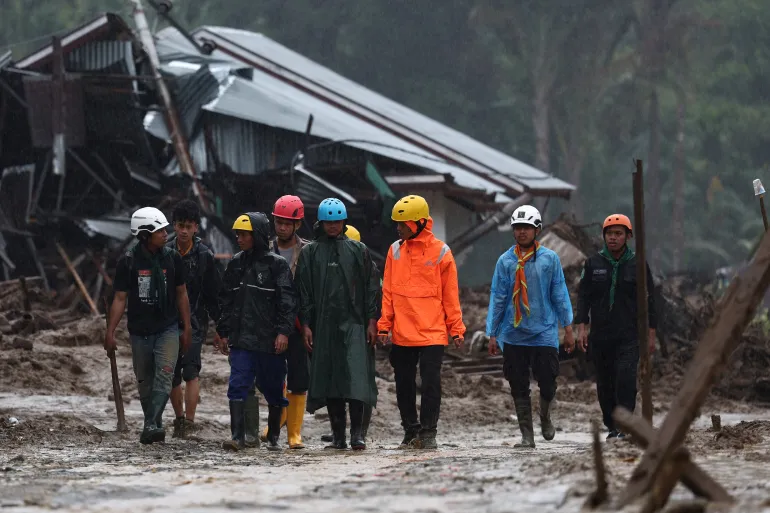
Nearly 1,000 people have been killed, and close to one million displaced, Indonesia has said a week after torrential rains triggered catastrophic floods and landslides.
The National Disaster Management Agency (BNPB) reported late on Sunday that 961 people had been killed, with 234 people missing and about 5,000 injured across the Aceh, North Sumatra and West Sumatra provinces.
The agency also recorded damage to more than 156,000 homes, and 975,075 people had taken refuge in temporary shelters.
Floodwaters have begun to recede in several coastal districts, although large areas in the central highlands are still cut off, BNPB said. However, heavy rain is forecast for parts of the island in the coming days, raising concerns for displaced people.
Indonesia’s rainy season, which usually peaks between November and April, frequently brings severe flooding.
Environmental groups and disaster specialists have warned for years that rapid deforestation, unregulated development and degraded river basins have increased the risks.
Several other countries in Southeast Asia, including Sri Lanka and Thailand, have been hit hard by storms and floods in recent weeks.
Risk to billions
The Asian Water Development Outlook 2025, published by the Asian Development Bank (ADB) on Monday, warned that the impact of climate change on Asia’s water systems poses a risk to billions.
The research said accelerating ecosystem decline and funding shortfalls for investment in critical water infrastructure threaten to plunge many in the sprawling region into water insecurity.
That could jeopardise gains over the past 12 years that have seen more than 60 percent of Asia-Pacific’s population – about 2.7 billion people – escape extreme water insecurity, the report says.
“Asia’s water story is a tale of two realities, with monumental achievements on water security coupled with rising risks that could undermine this progress,” said Norio Saito, the ADB’s senior director for water and urban development.
“Without water security, there is no development,” Saito said, adding that the report showed that urgent action was needed to restore ecosystem health, strengthen resilience, improve water governance, and deploy innovative finance to deliver long-term water security.
Rising disaster threat
The report said extreme weather events such as storm surges, rising sea levels, and saltwater intrusion, along with rising water-related disasters, threaten the region, which already accounts for more than 40 percent of the world’s floods.
That includes the disasters that ravaged Indonesia and other countries in the region in recent weeks.
From 2013 to 2023, the Asia Pacific region experienced 244 major floods, 104 droughts, and 101 severe storms, causing widespread damage to life and property and undermining crucial development gains.
The report said accelerating ecosystem decline was also a serious threat to water security in the region, with rivers, aquifers, wetlands and forests that sustain long-term water security deteriorating rapidly.
It said water ecosystems were deteriorating or stagnating in 30 of the 50 Asian countries it looked at, as they face threats from pollution, unchecked development and the conversion of land to other uses.
Under investment in water infrastructure is another threat to water security.
Asian nations will need to spend $4 trillion for water and sanitation between now and 2040, an outlay of about $250bn a year, the report said.
Currently, governments are collectively spending about 40 percent of that, an annual shortfall of more than $150bn.
[Aljazeera]

Benin’s president has appeared on television to reassure citizens of the West African nation that the situation was now “totally under control” following an attempted coup earlier in the day.
“I would like to commend the sense of duty demonstrated by our army and its leaders, who have remained… loyal to the nation,” Patrice Talon said, looking calm during the live evening broadcast.
The government said it had thwarted the mutiny hours after a group of soldiers declared a takeover on national television.
Later in the afternoon, huge explosions were heard in Cotonou, Benin’s largest city and seat of government. They were thought to have been the result of an air strike.
Prior to the explosions, flight-tracking data showed that three aircraft had entered Benin’s airspace from neighbouring Nigeria before returning home.
A spokesman for Nigeria’s president later confirmed that its fighter jets had gone in to “take over the airspace to help dislodge the coup plotters from the national TV and a military camp where they had regrouped”.
There have been a series of coups in West Africa before Sunday’s thwarted attempt in Benin, heightening fears that the security of the region could worsen.
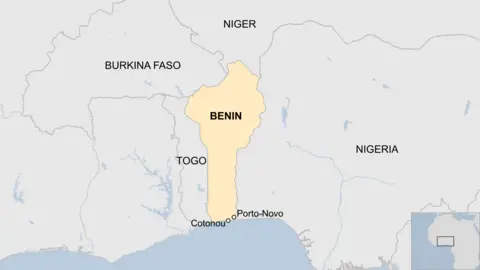
Benin, a former French colony, has been regarded as one of Africa’s more stable democracies. But Talon has faced accusations of suppressing criticism of his policies.
The nation is one of the continent’s largest cotton producers, but ranks among the world’s poorest countries.
Nigeria, Benin’s large neighbour to the east, has described the coup attempt as a “direct assault on democracy”.
“This commitment and mobilisation enabled us to defeat these opportunists and avert disaster for our country. This treachery will not go unpunished,” he added.
“I would like to reassure you that the situation is completely under control and therefore invite you to go about your business peacefully this evening.”
It is not clear if there have been casualties, but the president expressed his condolences “to the victims of this senseless adventure, as well as to those still being held by fleeing mutineers”.
Earlier, government spokesperson Wilfried Leandre Houngbedji told news agency Reuters that 14 people had been arrested in connection with the attempted coup.
A journalist in Benin told the BBC that, of those reportedly arrested, 12 are believed to have stormed the offices of the national TV station – including a soldier who had previously been sacked.
Eyewitnesses told the BBC gunfire was heard near the presidential residence early on Sunday morning, as a group of soldiers announced on national TV that they were suspending the constitution.
They also said some journalists working for the state broadcaster had been held hostage for a few hours.
The French and Russian embassies urged their citizens to remain indoors, while the US embassy’s advice was to stay away from Cotonou, especially the area around the presidential compound.
The rebel soldiers, led by Lt Col Pascal Tigri, justified their actions by criticising Talon’s management of the country, complaining first about his handling of the “continuing deterioration of the security situation in northern Benin”.
Benin’s army has suffered losses near its northern border with insurgency-hit Niger and Burkina Faso in recent years, as jihadist militants linked to Islamic State and al-Qaeda spread southwards.
The soldier’s statement cited “the ignorance and neglect of the situation of our brothers in arms who have fallen at the front and, above all, that of their families, abandoned to their sad fate by Mr Patrice Talon’s policies”.
The rebels also hit out at cuts in health care, including the cancellation of state-funded kidney dialysis, and taxes rises, as well as curbs on political activities.
Talon, who is regarded as a close ally of the West, is due to step down next year after completing his second term in office, with elections scheduled for April.
A businessman known as the “king of cotton”, he first came to power in 2016. He promised not to seek a third term, despite Benin’s current two-term limit for presidencies, and has endorsed Finance Minister Romuald Wadagni as his successor.
Talon has been praised by his supporters for overseeing economic development, but his government has also been criticised for suppressing dissenting voices.
In October, Benin’s electoral commission barred the main opposition candidate from standing on the grounds that he did not have enough sponsors.
Last month, constitutional amendments were passed by MPs, including the creation of a second parliamentary chamber, the Senate.
Terms for elected officials were extended from five to seven years, but the presidential two-term limit remained in place.
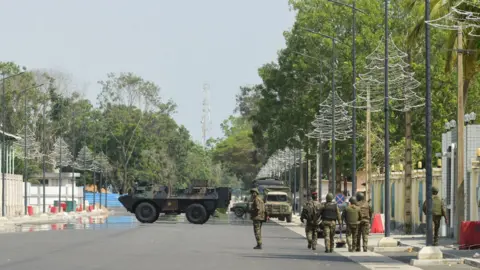
Sunday’s attempted coup comes just over a week after Guinea-Bissau’s President Umaro Sissoco Embaló was overthrown – though some regional figures have questioned whether this was staged.
In recent years, West Africa has also seen coups in Burkina Faso, Guinea, Mali and Niger, prompting concerns about the region’s stability.
Russia has strengthened its ties with these Sahel countries over recent years – and Burkina Faso, Mali and Niger have left the West African regional bloc Ecowas to form their own group, the Alliance of Sahel States.
News of the attempted takeover in Benin was hailed by several pro-Russian social media accounts, according to BBC Monitoring.
Ecowas and the African Union (AU) have both condemned the coup attempt.
A contingent from Ecowas’s standby force is to be deployed to preserve the “constitutional order and the territorial integrity of the Republic of Benin”, the regional bloc has said in a statement.
AU Commission chair Mahmoud Ali Yousouf reiterated the pan-African organisation’s “zero tolerance stance toward any unconstitutional change of government, regardless of context or justification”.
[BBC]

A wage for housework? India’s sweeping experiment in paying women

Death toll 635 as at 06:00 AM today [09]

Heavy showers above 100 mm are likely at some places in the Northern and Eastern provinces and in Polonnaruwa district

Cyclone Ditwah leaves Sri Lanka’s biodiversity in ruins: Top scientist warns of unseen ecological disaster

Disaster: 635 bodies found so far, 192 listed as missing

More help from Pakistan

‘Dates have the highest sugar content to fight Coronavirus’

Sunday Island 27 December – Headlines

#SundayIsland 17th December – Headlines

Sunday Island – 28th March

Sunday Island Headlines – 21 March

Sunday Island – 21st February – Headlines
-
News6 days ago
Lunuwila tragedy not caused by those videoing Bell 212: SLAF
-

 News1 day ago
Over 35,000 drug offenders nabbed in 36 days
-
 News5 days ago
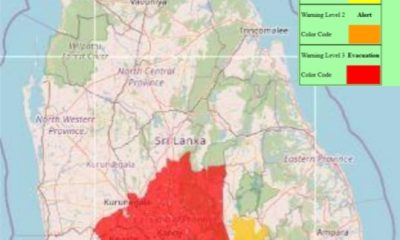
Level III landslide early warning continue to be in force in the districts of Kandy, Kegalle, Kurunegala and Matale
-

 Business3 days ago
LOLC Finance Factoring powers business growth
-

 News3 days ago
CPC delegation meets JVP for talks on disaster response
-

 News3 days ago
A 6th Year Accolade: The Eternal Opulence of My Fair Lady
-

 News1 day ago
Rising water level in Malwathu Oya triggers alert in Thanthirimale
-

 Midweek Review6 days ago
House erupts over Met Chief’s 12 Nov unheeded warning about cyclone Ditwah