
News
Third DNA test on Sarah: SJB questions veracity of police claim, asks Prez to dig deep


Easter Sunday carnage
By Shamindra Ferdinando
The main Opposition Samagi Jana Balawegaya (SJB) yesterday (30) questioned the veracity of a police headquarters declaration that one of the Easter Sunday bombers Achchi Muhammadu Mohamed Hasthun’s wife Pulasthini Mahendran alias Sarah Jasmin had been killed on the night of April 26, 2019 at Sainthamaruthu.
The media was told at the Opposition Leader’s Office at No 30 Sir Marcus Fernando Mawatha that the SJB was quite disturbed and surprised by the police headquarters statement issued on the basis of the Government Analyst’s findings.
Top SJB Spokesperson Mujibur Rahuman said that the Wickremesinghe-Rajapaksa government owed an explanation as to how a third DNA test proved Sarah Jasmin’s death when the two previous DNA tests failed. The former MP said that the two previous tests had been conducted during the tenures of President Maithripala Sirisena and President Gotabaya Rajapaksa.
Sarah Jasmin’s husband Hasthun is believed to be one of the bomb makers of the now proscribed National Thowheed Jamaath (NTJ) blamed for the series of near simultaneous blasts. Explosions caused by suicide bombers claimed the lives of about 270 persons including dozens of foreigners.
Rahuman told The Island that he would like to remind President Ranil Wickremesinghe, who is also the Defence Minister that Easter Sunday carnage was meant to undermine the yahapalana government in which Wickremesinghe served as the Prime Minister. “We expect the President to look into this matter. The possibility of a conspiracy cannot be ruled out,” the former lawmaker said.
Authoritative sources said that the likes of ex-MP Rahuman was seeking political advantage from the Easter Sunday fallout. The Colombo District politician repeatedly questioned the investigation for reasons best known to him, sources said, alleging interested parties were working overtime to substantiate conspiracy theories.
Rahuman challenged the government to reveal the status of the investigation into the arrest of a police officer under the Prevention of Terrorism Act (PTA) for helping Sarah Jasmin to flee Sri Lanka. The former UNPer said that the police officer’s role in Sarah Jasmin’s escape transpired in the Presidential Commission of Inquiry (P CoI) into the Easter Sunday carnage.
The Batticaloa High Court granted bail to Chief Inspector Nagoor Thambi Aboobucker who had been arrested on July 13, 2020, a few weeks before the last general election, after he filed a fundamental rights application. The law enforcement officer had been held in custody for a period of 32 months.
Rahuman noted that Abdul Cader Fathima Saadiah, the wife of 2019 Easter Sunday attacks mastermind Zahran Hashim, too, had been granted bail. She had been held under the PTA for almost four years.The SJB official emphasized that regardless of repeated assurances given by successive governments, the Easter Sunday massacre remained a mystery. Rahuman said that SJB MPs Harin Fernando and Manusha Nanayakkara, who had been severely critical of the Easter Sunday investigations and repeatedly alleging a conspiracy, switched allegiance to the Wickremesinghe-Rajapaksa government in last May. However, the SJB wouldn’t allow the incumbent government to suppress the truth, he said.
The former lawmaker asked whether the new partners had reached a consensus on the matter, therefore interested parties were busy covering up tracks.Rahuman said that those at the helm should be ashamed that the P CoI recommendations were never implemented. Demanding punishment to those who neglected their responsibilities, Rahuman said the current dispensation should know the conspirators, too, should be dealt with.






News
Cyclone Ditwah leaves Sri Lanka’s biodiversity in ruins: Top scientist warns of unseen ecological disaster


Sri Lanka is facing an environmental catastrophe of unprecedented scale in the wake of Cyclone Ditwah, with leading experts warning that the real extent of the ecological destruction remains dangerously under-assessed.
Research Professor Siril Wijesundara of the National Institute of Fundamental Studies (NIFS) issued a stark warning that Sri Lanka may be confronting one of the worst biodiversity losses in its recent history, yet the country still lacks a coordinated, scientific assessment of the damage.
“What we see in photographs and early reports is only a fraction of the devastation. We are dealing with a major ecological crisis, and unless a systematic, science-driven assessment begins immediately, we risk losing far more than we can ever restore,” Prof. Wijesundara told The Island.
Preliminary reports emerging from the field point to extensive destruction across multiple biodiversity-rich regions, including some of the nation’s most iconic and economically valuable landscapes. Massive trees have been uprooted, forest structures shattered, habitats altered beyond recognition, and countless species—many endemic—left at risk.
Among the hardest-hit areas are the Royal Botanical Gardens, Peradeniya, Seethawaka Botanical Garden, Gampaha Botanical Garden, and several national parks and forest reserves under the Department of Wildlife Conservation and the Forest Department. Officials describe scenes of collapsed canopies, destroyed research plots, and landscapes that may take decades to recover.
Prof. Wijesundara said the scale of destruction demands that Sri Lanka immediately mobilise international technical and financial support, noting that several global conservation bodies specialise in post-disaster ecological recovery.
“If we are serious about restoring these landscapes, we must work with international partners who can bring in advanced scientific tools, funding, and global best practices. This is not a situation a single nation can handle alone,” he stressed.
However, he issued a pointed warning about governance during the recovery phase.
“Post-disaster operations are vulnerable to misuse and misallocation of resources. The only safeguard is to ensure that all actions are handled strictly through recognised state institutions with legal mandates. Anything else will compromise transparency, accountability, and public trust,” Prof. Wijesundara cautioned.
He insisted that institutions such as the Department of Wildlife Conservation, the Forest Department, and the Botanical Gardens Department must take the lead—supported by credible international partners.
Environmental analysts say the coming months will be decisive. Without immediate, science-backed intervention, the ecological wounds inflicted by Cyclone Ditwah could deepen into long-term national losses—impacting everything, from tourism and heritage landscapes to species survival and climate resilience.
As Sri Lanka confronts the aftermath, the country now faces a critical test: whether it can respond with urgency, integrity, and scientific discipline to protect the natural systems that define its identity and underpin its future.
By Ifham Nizam

The Disaster Management Centre (DMC) has categorised 192 persons as missing as search operations were scaled down in flood-affected areas.
The death toll has been placed at 635, while the highest number of deaths was reported from the Kandy District. Kandy recorded 234 deaths.
According to the latest data, a total of 1,776,103 individuals from 512,123 families, in 25 districts, have been affected by the impact of Cyclone Ditwah.
The DMC has said that 69,861 individuals from 22,218 families are currently accommodated in 690 shelters established across the country.

As Sri Lanka experienced one of the worst flood situations in its recorded history, which crippled national infrastructure and forced operations to suspend at the Port of Colombo, Hambantota International Port (HIP), however, remained fully operational, the HIP has said in a media statement. Although Hambantota also faced heavy rains, it lay outside the storm’s direct path, enabling continuous port activity, it said.
The statement issued by the company quoted Bindu Ranasinghe, Deputy General Manager – Commercial & Marketing, of Hambantota International Port Group (HIPG), as having said: “While the bad weather did affect Hambantota to an extent, conditions here were far better than in Colombo and along the western coastline,”. “Our teams, across operations, navigation, marine services, security and outsourced personnel, demonstrated exceptional resilience. Thanks to their commitment, HIP continued to operate 24/7 without suspension, throughout adverse weather.
The past week clearly highlighted the national necessity of a second fully functional international port capable of handling every category of cargo. The disruptions along the western coastline reinforced HIP’s importance as a reliable alternative when other ports face weather-related constraints. “HIP’s ability to process container, RORO, bulk, and oil and gas cargo, under challenging conditions, is a clear statement of its value as a critical national asset,” Ranasinghe emphasised.
This strategic role became particularly evident when an LPG vessel, unable to discharge in Colombo due to adverse weather conditions, was diverted to Hambantota. At the request of LAUGFS, based on instructions from the Ministry of Finance and the Commissioner of Essential Services, and further coordinated through the Sri Lanka Ports Authority, HIP facilitated the arrival and discharge of the LPG carrier PGC PATRES. This intervention highlighted the port’s readiness and capability to support the nation during critical contingencies. Bindu Ranasinghe noted that HIP is fully equipped to handle such vessels safely and efficiently, ensuring continuity in essential supply chains.
Despite heavy intermittent rainfall, HIP did not experience any slowdown significant enough to halt operations. Container and RORO handling continued with only minor, precautionary adjustments to protect cargo from exposure. Bulk operations, which are often paused at ports worldwide during rain, proceeded uninterrupted, thanks to HIP’s enclosed warehouse system that ensured full protection and zero contamination. Navigation teams also berthed and unberthed vessels without delay, maintaining safe and efficient movement, even under challenging weather conditions.
The Port’s strong performance comes during what is shaping up to be a record-breaking year for HIP. RORO throughput is expected to reach the highest levels in the Port’s history, while container volumes are on course for an all-time high. Bulk cargo volumes are similarly projected to hit record levels, and HIP’s total TEU movement has already surpassed eight times last year’s figures. Wilson Qu, CEO of HIPG and HIPG Management, confirmed that 2025 will end as one of the Port’s best operational years, highlighting how teams successfully managed unusually high and often unexpected surges in import volumes.
The past week’s events have reinforced the strategic value of Hambantota International Port as a dependable, all-weather facility that strengthens Sri Lanka’s maritime resilience. HIP remains fully operational and continues to support the nation’s import, export, energy, and logistics needs without interruption.

Cyclone Ditwah leaves Sri Lanka’s biodiversity in ruins: Top scientist warns of unseen ecological disaster

Disaster: 635 bodies found so far, 192 listed as missing

More help from Pakistan

H’tota Port says it was fully operational during extreme weather

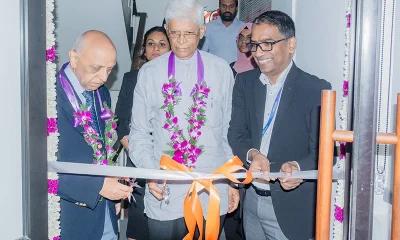
Pathfinder EdTech Institute opens new Colombo Campus to strengthen Sri Lanka’s digital talent

Post-Ditwah relief efforts receive Chinese boost

‘Dates have the highest sugar content to fight Coronavirus’

Sunday Island 27 December – Headlines

#SundayIsland 17th December – Headlines

Sunday Island – 28th March

Sunday Island Headlines – 21 March

Sunday Island – 21st February – Headlines
-
News6 days ago
Lunuwila tragedy not caused by those videoing Bell 212: SLAF
-

 News1 day ago
Over 35,000 drug offenders nabbed in 36 days
-
 News5 days ago
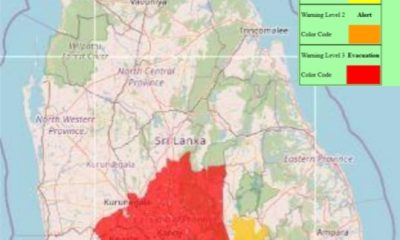
Level III landslide early warning continue to be in force in the districts of Kandy, Kegalle, Kurunegala and Matale
-

 Business3 days ago
LOLC Finance Factoring powers business growth
-

 News3 days ago
CPC delegation meets JVP for talks on disaster response
-

 News3 days ago
A 6th Year Accolade: The Eternal Opulence of My Fair Lady
-

 News1 day ago
Rising water level in Malwathu Oya triggers alert in Thanthirimale
-

 Midweek Review6 days ago
House erupts over Met Chief’s 12 Nov unheeded warning about cyclone Ditwah